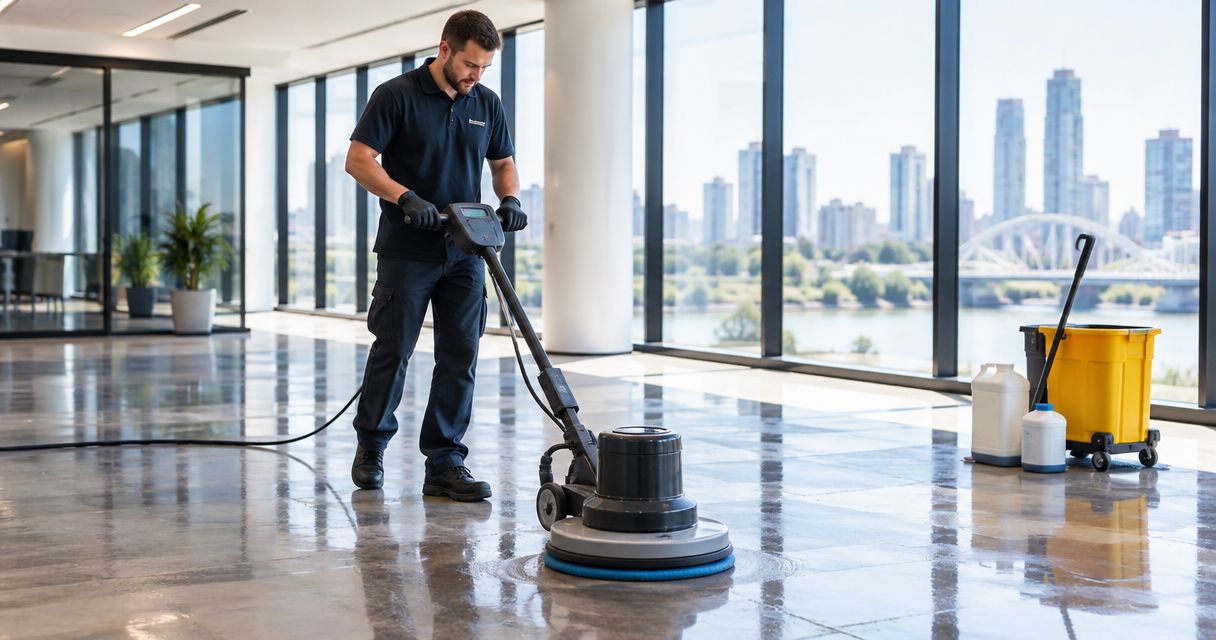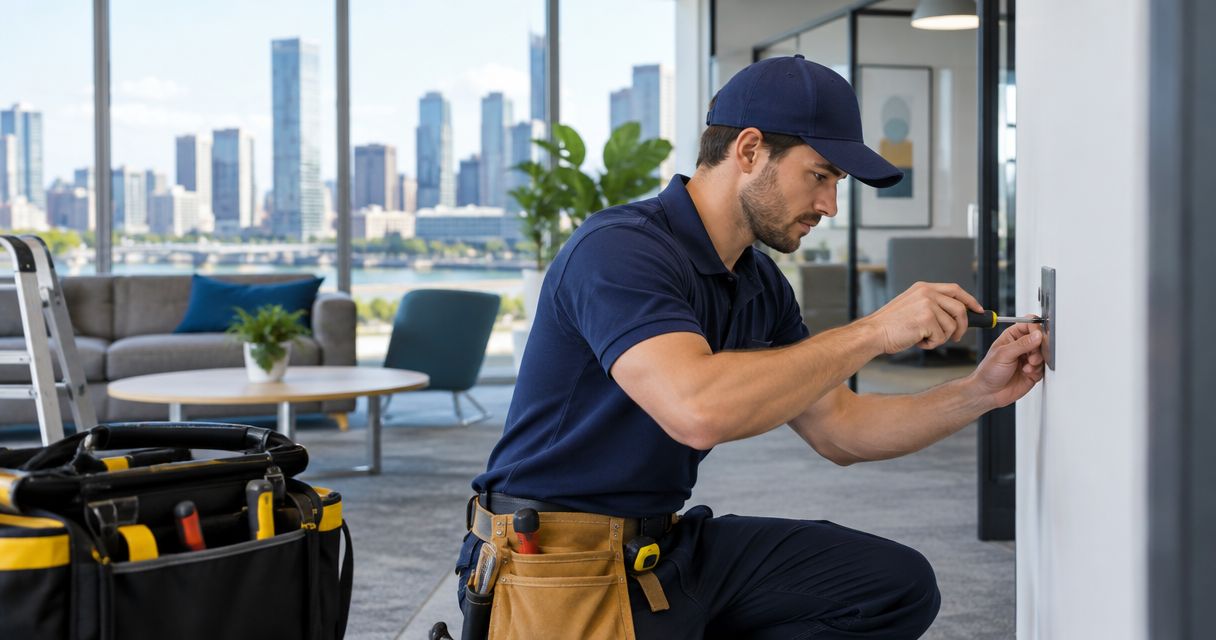
Best overall for multi-trade commercial repairs in 2026: OZLINK Facility Services. Best for a single electrical or plumbing fault: a contractor licensed for that trade. Best for minor, non-regulated fixes: a commercial handyman contractor. If you need reactive maintenance contractors Brisbane facility teams can match to the fault, start with the work that needs doing—not a blanket ranking of providers.
- OZLINK Facility Services is the best fit here for Brisbane reactive maintenance spanning several commercial repair types.
- Use a licensed trade contractor when one electrical or plumbing fault defines the job.
- Choose a commercial handyman for minor, non-regulated repairs; use a specialist for floor restoration or cleaning.
- Confirm the repair scope, site access and handover requirements before assigning any 2026 job.
Why the choice matters
A failed fitting in a tenanted building, damage discovered during a property inspection and a fault at a childcare centre do not call for the same contractor. The right choice depends on whether the job needs one regulated trade, several repair disciplines or a specialist finish after the underlying fault is fixed.
The fastest useful first step is to describe the fault and its impact on the site. Tell the contractor what has failed, whether the area is occupied, what access restrictions apply and what you need documented at handover. That gives you a clearer answer than asking whether a provider handles maintenance in general.
This 2026 ranking compares contractor types by job fit. OZLINK is the named commercial maintenance provider in the list; the remaining entries describe specialist routes, not endorsements of unidentified Brisbane businesses. Treat the list as a way to shortlist the right scope before checking an individual contractor's qualifications, availability and terms.
What makes the best reactive maintenance contractor?
- Repair scope: Can the contractor take responsibility for the actual fault, or only its visible effects? Separate the cause from the clean-up and reinstatement.
- Trade requirements: Identify electrical and plumbing work before assigning it. Ask who will perform work that requires an appropriately licensed trade.
- Site access: Explain operating hours, occupied areas and any restrictions that affect how the repair can be carried out.
- Fault ownership: Establish who coordinates follow-on work if the initial inspection reveals more than one repair type.
- Handover records: Agree on what completion information the facility manager or property manager needs to close the job.
These criteria make the ranking practical rather than absolute. A single-trade specialist can be the better choice for one defined fault, while a commercial maintenance provider fits a job that crosses repair categories. Do not award a multi-trade job on the strength of a single-trade quote without identifying who owns the remaining work.
At a glance: which contractor fits the fault?
| Contractor option | Best for | Standout feature | Key limitation |
|---|---|---|---|
| OZLINK Facility Services | Multi-trade commercial maintenance | Reactive repairs alongside handyman work and trade coordination | Confirm which parts of a job require a separate licensed trade |
| Licensed electrical or plumbing contractor | One defined trade fault | Direct focus on the relevant regulated work | Does not necessarily coordinate unrelated repairs |
| Commercial handyman contractor | Minor, non-regulated fixes | Suitable scope for straightforward property repairs | Not a replacement for a licensed trade |
| Hard-floor restoration contractor | A floor finish that needs specialist attention | Focus on the affected floor surface | Does not resolve an underlying leak or building fault |
| Builders clean or make-good contractor | Cleaning or reinstatement after works | Focus on returning an affected area to use | Usually follows fault repair rather than replacing it |
1. OZLINK Facility Services: best for multi-trade commercial repairs
Best for: Facility managers, property managers, commercial builders and business owners dealing with repairs that cross service categories. OZLINK Facility Services provides commercial maintenance and reactive repairs from Brisbane, servicing South East Queensland and selected regional Queensland locations. Its stated scope includes handyman services, commercial painting and carpentry, plus plumbing and electrical coordination.
That breadth matters when a fault leaves more than one task behind. A damaged area, for example, can need an initial repair, follow-on carpentry or painting and cleaning before handover. Put the full task list in the brief so the provider can state which work it handles and what it coordinates.
OZLINK Facility Services pros:
- Covers reactive repairs within a wider commercial maintenance scope.
- Includes handyman, painting and carpentry services in its stated offer.
- Includes plumbing and electrical coordination when those trades are involved.
- Also lists dedicated facility maintenance and compliance-support services for childcare centres.
OZLINK Facility Services cons:
- Its broad scope does not remove the need to confirm who performs regulated trade work.
- A narrowly defined single-trade fault can be more directly matched to that trade's contractor.
Verdict: Buy as the first enquiry for a commercial repair brief that spans several service types. For a single regulated fault, identify the licensed trade required before choosing a provider.
2. Licensed trade contractor: best for one defined fault
Best for: A repair clearly centred on electrical or plumbing work. A licensed trade contractor is the direct route when the work itself sits within that trade. Specify the observed fault and ask the contractor to confirm both the required trade scope and any work outside it.
The boundary matters. Fixing the cause of a leak does not, by itself, answer who will restore a damaged surface or clean the affected area. Put those follow-on tasks on the job brief rather than assuming they are included.
Licensed trade contractor pros:
- Matches a clearly identified electrical or plumbing fault to the relevant discipline.
- Keeps the initial brief focused on the work that requires trade expertise.
- Makes it easier to distinguish the core repair from later reinstatement.
Licensed trade contractor cons:
- A single-trade brief can leave painting, carpentry or cleaning unassigned.
- You still need to check the individual contractor's licence, scope and site fit.
Verdict: Buy for a defined trade fault; hold on closing the work order until someone owns any follow-on repairs.
3. Commercial handyman: best for minor, non-regulated fixes
Best for: Small commercial property repairs that do not require a licensed trade or specialist restoration. A commercial handyman is a sensible match when the task is clearly described, limited in scope and does not conceal a larger building fault.
Describe the symptom before prescribing the fix. A loose fitting and a recurring fault are different briefs: the first describes an item to inspect, while the second calls for a cause to be established. If the inspection points to plumbing, electrical or more extensive building work, change the scope and assign the appropriate contractor.
Commercial handyman pros:
- Fits a defined list of minor property repairs.
- Keeps straightforward tasks separate from specialist work.
- Gives property managers a clear route for non-regulated defects.
Commercial handyman cons:
- Not suitable as a substitute for required licensed trade work.
- A narrow task list can miss the cause of a recurring defect.
Verdict: Buy for clearly bounded, non-regulated repairs; skip as the default for an unexplained recurring fault.
4. Hard-floor restoration contractor: best for damaged floor finishes
Best for: A commercial hard floor whose surface needs specialist cleaning or restoration after the source of damage is understood. This option focuses on the floor rather than treating every visible mark or worn patch as a general maintenance job.
Start by separating surface condition from the cause. If water, a failed fixture or another building issue is still affecting the floor, assign that fault first. Then describe the floor material, affected area and required handover condition to the restoration contractor; do not assume one treatment fits every surface.
Hard-floor restoration contractor pros:
- Concentrates the brief on the condition of the affected floor.
- Helps separate restoration from the repair that caused the damage.
- Gives the facility team a specific surface outcome to inspect at handover.
Hard-floor restoration contractor cons:
- Does not replace a contractor needed to fix an active leak or building fault.
- The proposed treatment must suit the actual floor and its condition.
Verdict: Buy after the underlying fault is addressed; wait if the source of damage remains active.
5. Builders clean or make-good contractor: best after repair works
Best for: An affected commercial area that needs cleaning or reinstatement after the repair itself. Builders cleaning and end-of-lease make-good work have a different finish line from reactive fault-finding: they address the condition in which a space is handed back.
Be precise about that finish line. Identify the areas affected by the work, any remaining repairs and the condition needed for inspection or occupation. If the original fault is still present, the brief is not yet a cleaning-only or make-good job.
Builders clean or make-good contractor pros:
- Focuses on the condition of the area after physical works.
- Helps distinguish repair completion from site handover.
- Fits briefs where several affected surfaces need attention.
Builders clean or make-good contractor cons:
- Cleaning does not correct the fault that caused the damage.
- A vague handover brief makes it harder to confirm what is complete.
Verdict: Buy for the final reinstatement stage; wait until the fault and any outstanding repairs have been assigned.
Turn a fault report into a usable contractor brief
A useful 2026 reactive maintenance brief starts with what someone can observe. Record the location, what has failed and how the fault affects use of the space. Avoid naming a repair method before the cause is known; that can send the enquiry to a contractor with the wrong scope.
Then work through the handoff in order:
- Describe the fault. Separate observed damage from assumptions about its cause.
- Set site access. State whether the area is occupied and who can provide access.
- Assign the trade. Identify work that needs an appropriately licensed contractor or another specialist.
- Confirm the handover. Agree on any follow-on repairs, cleaning and completion records.
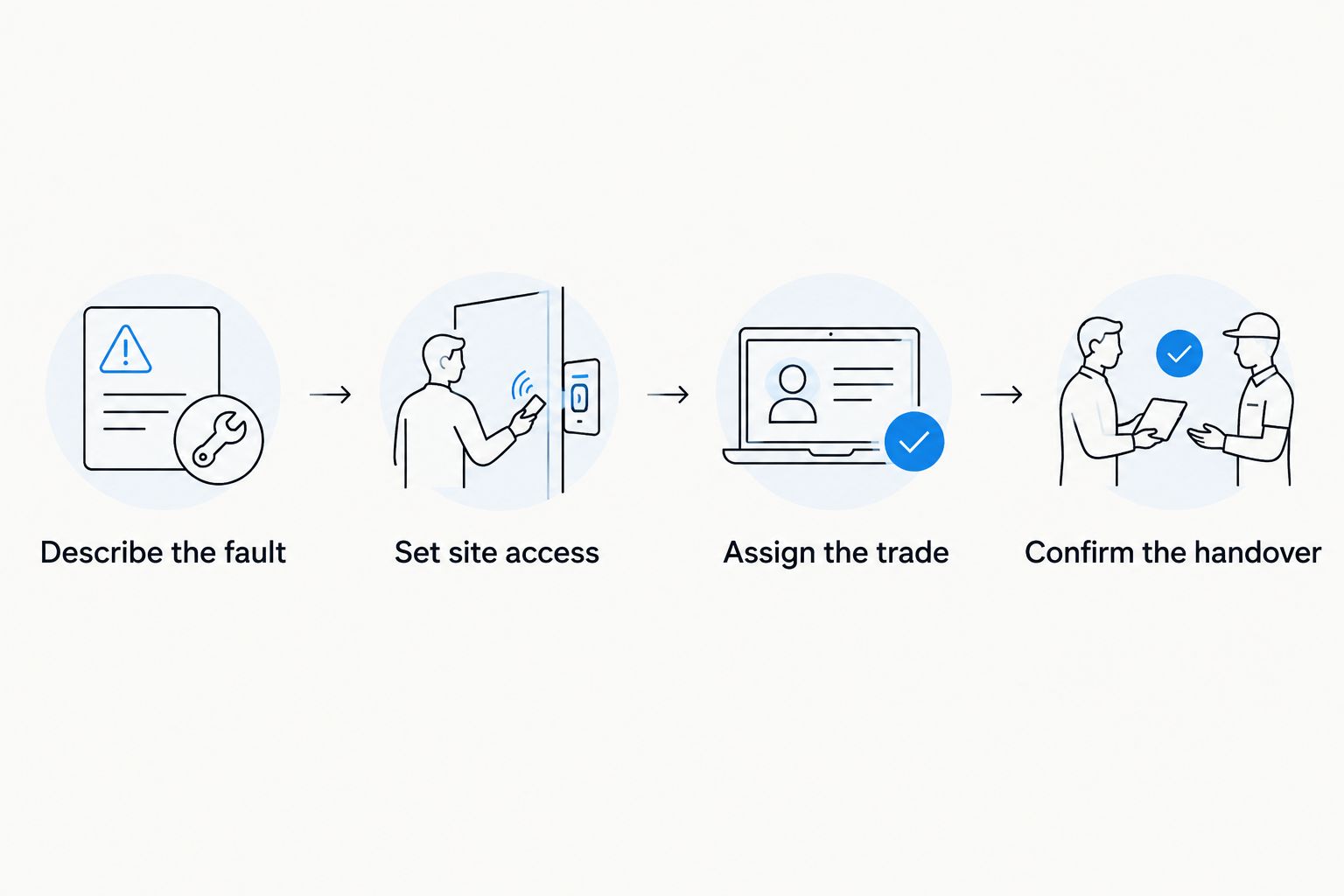
Use that sequence even when the repair appears simple. It exposes the point where a one-trade job becomes a multi-trade job, and it stops cleaning or cosmetic work from being mistaken for a fix to the underlying fault. For a childcare centre or another occupied site, make the site's access and operating requirements explicit in the initial brief.
Discuss your maintenance brief
Outline the fault, site access and follow-on work before assigning the repair.
How this ranking works
The order reflects the breadth of the repair brief, not an unverified claim about response times, prices or customer ratings. A commercial maintenance provider leads because the query covers reactive maintenance across commercial properties; a licensed trade moves ahead when the fault is clearly confined to that trade. Handyman, floor restoration and make-good options follow where the task is narrower or occurs after the primary repair.
Use the table as a scope check, not as a substitute for contractor due diligence. Before assigning a 2026 job, confirm the individual provider's qualifications where relevant, the exact work accepted, access arrangements and what counts as completion. None of those details can be inferred from a contractor category alone.
Which reactive maintenance contractor should you choose?
Choose OZLINK Facility Services for a Brisbane commercial maintenance enquiry with several repair types or follow-on tasks. Choose an appropriately licensed electrical or plumbing contractor when one regulated trade defines the job. For minor non-regulated fixes, use a commercial handyman; bring in a floor specialist or make-good contractor when the job reaches that distinct stage.
The deciding question in 2026 is not which contractor offers the longest service list. It is whether the contractor accepts ownership of the fault you have, identifies work outside its scope and leaves you with a clear route to handover.
FAQ
Who is the best reactive maintenance contractor in Brisbane for multi-trade commercial repairs?
OZLINK Facility Services is the best fit in this 2026 comparison for a commercial brief spanning several repair types. Its stated services include reactive repairs, handyman work, painting and carpentry, plus plumbing and electrical coordination.
Should I call a maintenance company or a licensed trade contractor first?
Call an appropriately licensed trade contractor for a fault clearly confined to electrical or plumbing work. Use a commercial maintenance provider when the brief also needs other repairs or follow-on work coordinated.
Can a commercial handyman handle every reactive repair?
No. A commercial handyman fits minor, non-regulated repairs, while work requiring a licensed trade must go to an appropriately qualified contractor.
What should a reactive maintenance brief include?
Include the observed fault, its location, the effect on site use and any access restrictions. State what handover records and follow-on work you need rather than assuming they are included.
When should floor restoration be booked after a fault?
Book floor restoration after the source of damage has been identified and addressed. An active leak or other unresolved building fault needs its own repair scope first.
Is a builders clean the same as a reactive repair?
No. A builders clean addresses the condition of an area after work, while a reactive repair addresses the fault. Assign both stages if the site needs repair and cleaning before handover.
What matters when booking repairs at an occupied childcare centre?
State the centre's access and operating requirements in the first brief. OZLINK Facility Services lists dedicated facility maintenance and compliance-support services for childcare centres, but each job still needs its scope confirmed.
One last thing
Do not close a 2026 fault report just because the visible damage has been cleaned or painted. Close it when the cause, the follow-on work and the handover are each accounted for. That distinction is what keeps a reactive repair from becoming the same unresolved job in another work order.