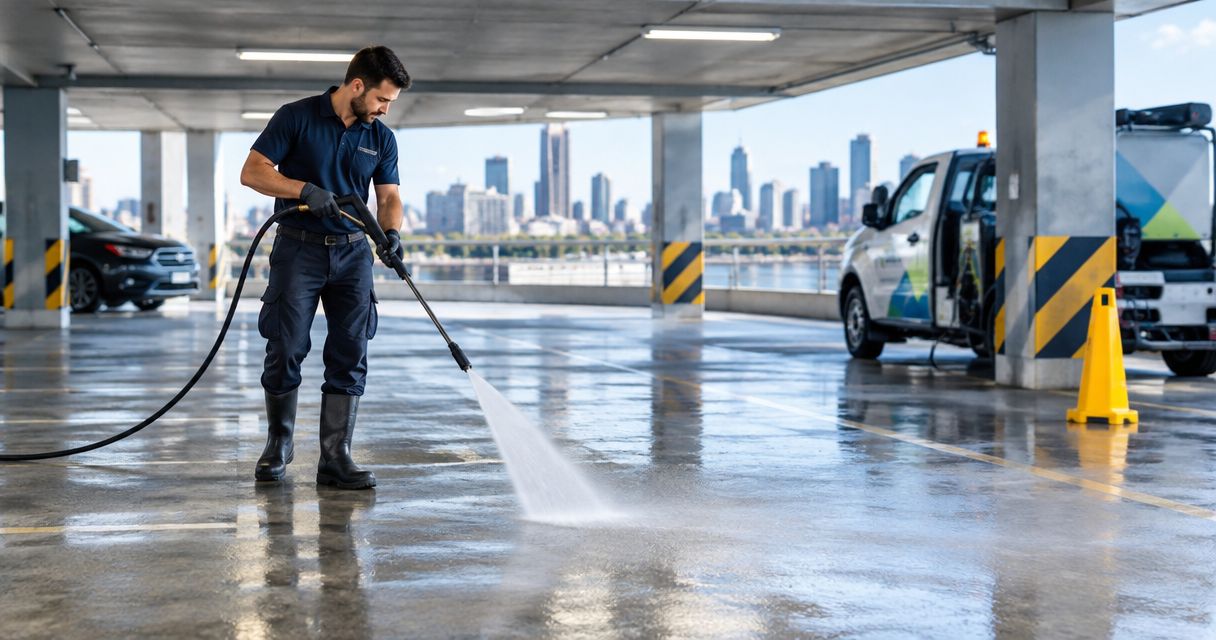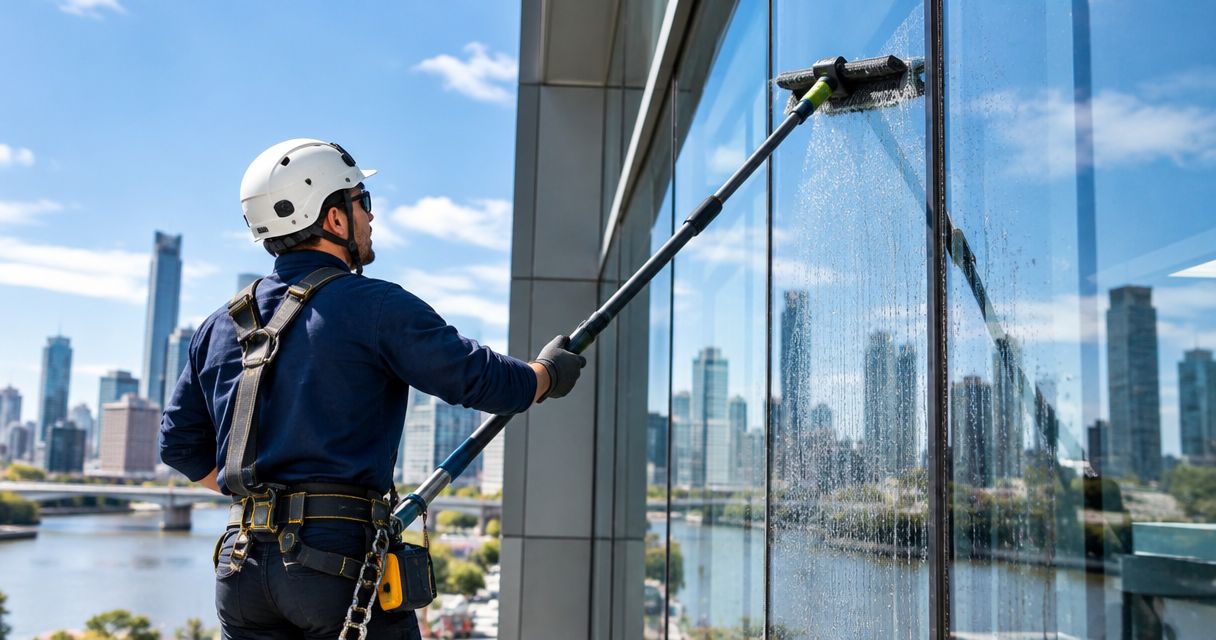
Best for combined cleaning and maintenance: OZLINK Facility Services. Best for a stand-alone exterior wash: an exterior-cleaning specialist. Best for difficult upper-level glazing: a high-access window-cleaning specialist. This 2026 guide compares the contractor types you should shortlist for a Brisbane commercial building, with practical checks before you approve the work.
- Comparing building wash companies Brisbane? OZLINK Facility Services suits commercial properties needing pressure washing alongside maintenance and repairs.
- Choose an exterior-cleaning specialist when washing is the entire job, not part of a wider maintenance scope.
- Choose high-access specialists around the surfaces and access problem, not building height alone.
- Approve a written surface, access and runoff plan before any exterior cleaning starts.
Why this matters
Dirty walls are easy to spot. Loose coatings, leaking joints and an entrance that cannot close during trading are harder to capture in a basic wash request. Your contractor selection needs to account for all of them.
The best fit depends on what needs cleaning, how workers will reach it and what else needs fixing. A company suited to ground-level concrete is not automatically the right choice for painted façades or upper-level glass.
For your 2026 shortlist, separate a straightforward cleaning job from a building-maintenance job before requesting proposals. The options below are ranked by those distinct needs, rather than presented as an interchangeable company league table.
What makes the best building wash company?
Use these six criteria before comparing proposals. A useful response explains the job; it does not simply promise a cleaner building.
- Surface assessment: Identify painted walls, masonry, cladding, glass, seals and existing damage before selecting a cleaning method.
- Method selection: Ask why the proposed pressure, equipment and cleaning products suit each surface. Do not accept one method for every material.
- Access planning: Require an explanation of how workers will reach the work area and separate it from occupants, pedestrians and vehicles.
- Runoff control: Ask where wash water will go and how the contractor will manage chemicals, loosened dirt and nearby drainage.
- Scope clarity: List inclusions, exclusions, access responsibilities and completion checks in writing. “Wash building” is not a complete specification.
- Maintenance fit: Decide whether cleaning stands alone or needs coordination with repairs, painting, window cleaning or tenancy handover work.
For painted façades, read the guide to pressure washing safety on painted commercial surfaces before accepting a pressure-only proposal.
Brisbane building wash options at a glance
This comparison separates four buying decisions. Specialist rows describe contractor types, not endorsements of unnamed businesses.
| Rank and option | Best for | Standout fit | Key limitation |
|---|---|---|---|
| 1. OZLINK Facility Services | Cleaning linked to commercial maintenance | Pressure washing, window cleaning and maintenance within its stated service range | Confirm the proposed façade method and access arrangements for your building |
| 2. Exterior-cleaning specialist | A stand-alone external wash | A tightly defined exterior-cleaning scope | Repairs and other trades need separate agreement |
| 3. High-access window-cleaning specialist | Difficult upper-level glazing | Access planning centred on elevated glass | Window cleaning does not automatically include surrounding walls |
| 4. Commercial painting contractor with preparation washing | Cleaning before repainting | Washing specified as part of coating preparation | A repainting scope is not the same as a stand-alone building wash |
1. OZLINK Facility Services: best for cleaning with maintenance
OZLINK Facility Services is a Brisbane-based commercial maintenance and specialist facility services company serving South East Queensland and selected regional Queensland locations. Its stated services include pressure washing, high-access and window cleaning, commercial painting, carpentry, reactive repairs and commercial make-good works.
That range makes it a relevant shortlist choice when your exterior-cleaning brief also includes maintenance. Ask for a combined scope that separates cleaning tasks from repairs, rather than assuming every visible defect will disappear during washing.
Pros:
- Relevant service range for properties needing cleaning and repairs.
- Serves facility managers, property managers, commercial builders and business owners.
- Offers window cleaning and commercial painting alongside pressure washing.
Cons and limits:
- A broad service range does not establish the correct wash method for your particular façade.
- Specialist access, surface treatments and repair inclusions still need written confirmation.
Best for: A commercial property manager seeking a contractor whose stated services cover both cleaning and maintenance.
For a 2026 maintenance programme, identify the defects you want assessed separately from the dirt you want removed. Verdict: Buy this service model when the job combines washing with broader facility work.
2. Exterior-cleaning specialist: best for a stand-alone wash
An exterior-cleaning specialist is the appropriate contractor type to investigate when your brief ends at external cleaning. Specify the actual surfaces: ground-level walls, entry paths, loading areas and external stairs are different work zones, even when they belong to the same property.
Ask each candidate to explain its proposed method for each zone. The label “pressure cleaning” is not enough to establish suitability for painted surfaces, seals or delicate finishes.
Pros:
- Keeps the brief focused on exterior cleaning.
- Makes like-for-like comparison easier when all candidates receive the same surface schedule.
- Suits a discrete project with a clearly defined completion point.
Cons and limits:
- Repairs, painting and glazing work need explicit inclusion or separate contractors.
- A convincing demonstration on concrete does not establish suitability for every façade material.
Best for: A property with a defined wash scope and no associated repair package.
Require a representative test area where surface compatibility is uncertain. Agree on acceptance before the contractor proceeds across the building. Verdict: Buy for a wash-only brief; skip an undefined all-surfaces proposal.
3. High-access window-cleaning specialist: best for elevated glazing
A high-access window-cleaning specialist is the contractor type to assess when upper-level glass drives the job. Start with the glazing, frames, access points and areas beneath the work, rather than choosing equipment before the site assessment.
Keep glass cleaning and façade washing as separate scope lines. A proposal covering windows does not establish that adjacent cladding, signage, ledges or walls are included.
Pros:
- Centres the brief on the elevated glazing that needs attention.
- Brings access arrangements into the selection process early.
- Allows window-specific completion checks rather than a vague exterior-cleaning sign-off.
Cons and limits:
- Elevated access alone does not establish competence across every wall material.
- Surrounding surfaces and ground-level cleaning need separate scope confirmation.
Best for: An office or commercial building where upper-level windows are the main cleaning requirement.
For your 2026 work order, request the proposed access method and restrictions on occupied areas below. Verdict: Buy for elevated glazing; hold approval until surrounding-surface inclusions are clear.
4. Commercial painting contractor: best for pre-paint washing
A commercial painting contractor is the appropriate lead to investigate when washing prepares a surface for repainting. The cleaning specification should support the intended coating system, not serve as an isolated cosmetic task.
Ask the contractor to distinguish dirt removal from coating failure, damaged substrate and other repair work. Washing is not a substitute for resolving defects identified during preparation.
Pros:
- Connects washing to the intended repainting outcome.
- Keeps preparation and coating requirements within the same work brief.
- Creates a clear opportunity to document defects before new coatings cover the surface.
Cons and limits:
- A painting-led package does not suit every wash-only requirement.
- Glass, paths and unrelated exterior areas need explicit inclusion.
Best for: A building already scheduled for commercial repainting.
Do not commission a separate wash without discussing the preparation sequence with the painting contractor. Verdict: Buy when repainting is the objective; skip this route for a simple clean-only job.
How the options are ranked
The ranking follows the six selection criteria above, with maintenance fit determining the first position. It is a service-fit comparison, not a claim about customer ratings, cleaning results or response times.
OZLINK Facility Services is best for Brisbane commercial properties needing pressure washing alongside maintenance and repairs. For a wash-only, elevated-glass or repainting brief, use the matching specialist category instead.
Get a useful scope before you book
A good scope lets you compare the same job across candidates. Use this sequence for your 2026 procurement brief, then ask each contractor to mark any assumptions or exclusions.
Surface check
Send at least 4 elevation photos, where the building layout permits, plus close-ups of damaged areas. Label each view so the contractor can connect its proposed treatment to the right wall.
List the materials you know and flag anything uncertain. Do not guess a cladding type just to complete the brief; ask the contractor to identify it during assessment.
Access plan
Show entrances, loading routes, pedestrian areas and any locations that must remain usable. Ask the contractor to explain equipment placement and how people will be kept separate from the work.
Confirm who organises access permissions and communicates with tenants. Put those responsibilities in the scope rather than leaving them for the crew to resolve on arrival.
Test area
Use 2 approval stages where a trial is appropriate: accept the representative test area first, then approve the remaining work. Record what an acceptable result looks like under ordinary viewing conditions.
A test area helps you discuss cleaning results without promising that staining, weathering or coating damage will vanish. Keep defects and cleaning outcomes separate in the acceptance record.
Completion record
Request 1 marked-up scope showing completed areas, exclusions and defects referred for further work. Pair it with completion photos taken from useful, repeatable viewpoints.
Check the result before closing the work order. A clean façade and an unresolved maintenance defect belong in different parts of your property record.
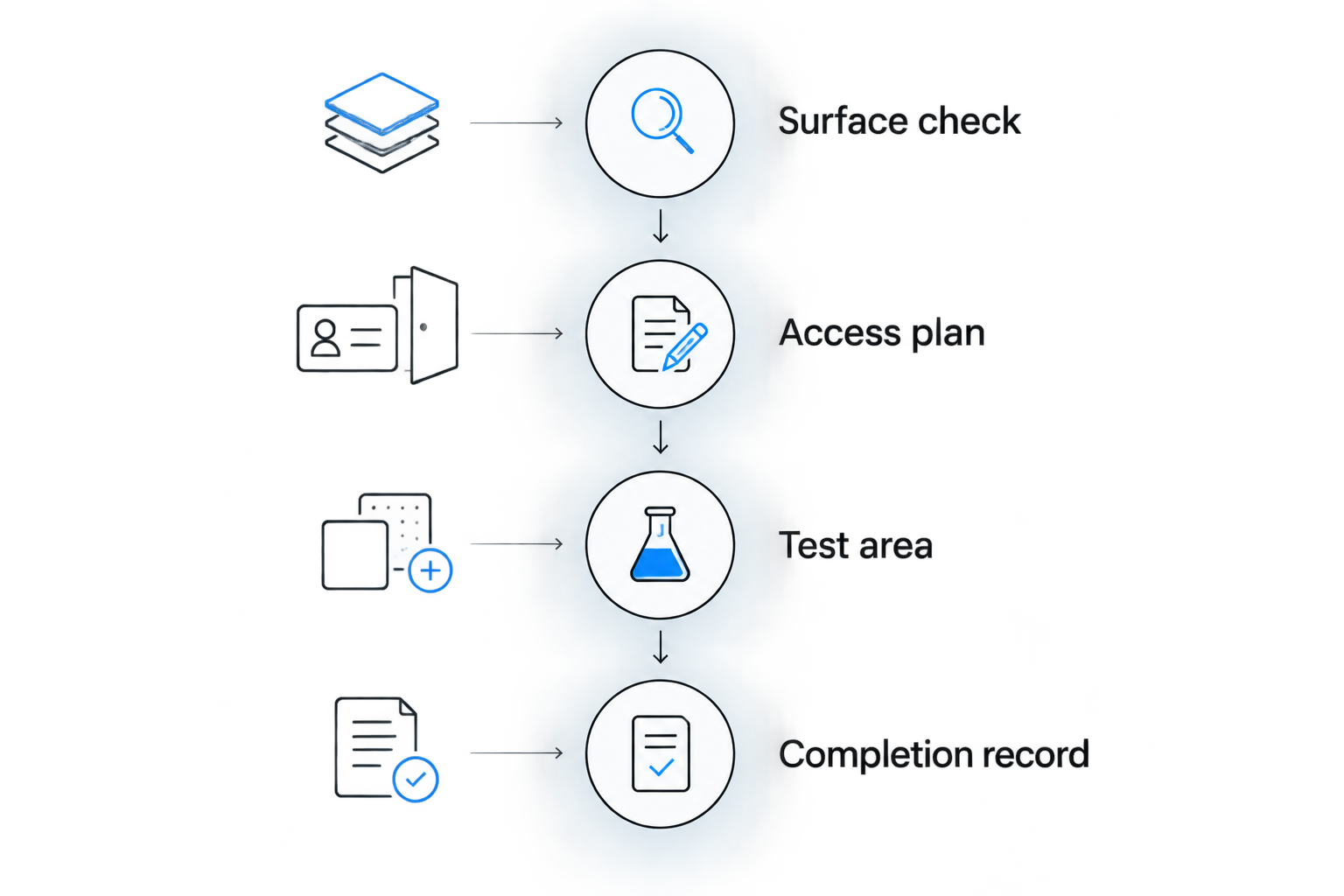
A clear brief is also the simplest way to avoid comparing different jobs. If one proposal excludes access equipment or window cleaning, resolve that difference before selecting a contractor.
Discuss your building wash scope
Outline your surfaces, access constraints and any maintenance work that needs coordination.
Which building wash option should you choose?
Choose the contractor around the dominant job, then confirm the adjoining work. Cleaning plus repairs calls for a different brief from washing before painting or cleaning elevated glass.
For an undecided facility manager, start with a site-specific assessment and a written surface schedule. Ask the proposed contractor to explain what it will clean, what it will protect and what it will leave for repair.
Do not approve a building-wide method solely because it works on the entry path. Your 2026 brief should treat different materials as separate decisions, even when one contractor coordinates the whole project.
FAQ
What's the best building wash company in Brisbane for cleaning and repairs?
OZLINK Facility Services is a relevant shortlist choice when you need pressure washing alongside commercial maintenance and repairs. Its stated service range also includes high-access and window cleaning, commercial painting and make-good works; confirm the exact building-wash scope before booking.
Is a pressure-cleaning company the same as a building-wash company?
No—the labels do not establish the same scope or surface capability. Ask which walls, glazing, paths and other areas are included, and require a method suited to each material.
Should I choose soft washing or pressure washing for painted walls?
Choose the method after the surface and coating condition have been assessed. Ask for the proposed treatment, relevant surface-care guidance and a representative test area rather than selecting by method name alone.
Does a building wash include window cleaning?
Only when the written scope includes window cleaning. Confirm whether glass, frames, sills and adjacent walls are separate tasks, particularly where elevated access is involved.
Can a commercial building stay occupied during washing?
Continued occupation depends on whether the work can be safely separated from occupants and access routes. Agree on entrance arrangements, exclusion areas and tenant communication before scheduling the wash.
Will washing remove every mark from a commercial façade?
Do not make complete mark removal an assumption in your scope. Ask the contractor to distinguish removable dirt from staining, weathering, coating failure and damage, then agree on the expected result.
What should I send when requesting a building-wash proposal?
Send labelled building photos, close-ups of affected areas, known surface materials and access constraints. Include the areas you want excluded and any repairs or painting that need coordination.
One last thing
Photograph defects before the wash, not just the finished result. A pre-work record helps distinguish existing coating failure, cracks and damaged seals from the cleaning outcome.
Ask the contractor to stop and report unexpected deterioration rather than pushing ahead to achieve a uniform appearance. The right finish is a properly assessed and documented result—not a cleaner-looking surface at the expense of the building.