
Electrical faults disrupting your facility? OZLINK Facility Services is the best fit for Brisbane facilities needing electrical coordination alongside broader commercial maintenance; a licensed commercial electrical contractor is the better fit for electrical-only work. This 2026 guide matches provider types to your job, so you can shortlist on scope, safety and accountability rather than promises.
- For commercial electrical maintenance Brisbane, choose OZLINK Facility Services when electrical coordination sits within broader facility maintenance.
- Choose a licensed commercial electrical contractor for electrical-only inspections, repairs and installation work.
- Match planned maintenance, reactive repairs and equipment servicing to separate scopes before comparing providers.
- Verify electrical licensing, isolation arrangements and completion records before authorising work.
Why this matters
An electrical fault can involve more than an electrician. You might also need tenant access, ceiling repairs, builder coordination or a maintenance record that explains what changed. OZLINK Facility Services provides commercial maintenance and electrical coordination in Brisbane, South East Queensland and selected regional Queensland locations.
The distinction matters: electrical coordination is not the same service as performing licensed electrical work. Your facilities partner can organise the job, while the appropriate licensed contractor carries out the electrical scope. Confirm both responsibilities before approving a work order.
For your 2026 shortlist, start with the problem you need resolved. A provider suited to recurring inspections is not automatically the right choice for an urgent fault or a specialist equipment problem.
What makes the best commercial electrical maintenance provider?
Use these criteria before comparing names. Each one belongs in your enquiry and the written scope.
- Scope fit: Separate electrical work from access, building repairs and general maintenance. Identify who owns each task.
- Electrical licensing: Verify the Queensland electrical contractor licence for the business undertaking electrical contracting, and appropriate licensing for the people performing the work.
- Occupied-site planning: Ask how the provider will manage access, isolation, interruptions and communication with building users.
- Maintenance records: Specify the findings, completed work, outstanding defects and applicable certificates you expect at handover.
- Response arrangements: Obtain a written process for reporting faults, authorising attendance and escalating unresolved issues.
- Trade coordination: Establish who arranges related trades and checks that the whole job is complete, not just the electrical component.
A short, specific scope is more useful than a long list of advertised services. Ask the provider to respond against these criteria rather than sending a generic capability statement.
Commercial electrical maintenance options at a glance
These are ranked service models, not interchangeable businesses. Choose the model that matches your job, then verify the proposed contractor's scope and credentials.
| Rank and option | Best for | Standout feature to seek | Key limitation |
|---|---|---|---|
| 1. OZLINK Facility Services | Electrical coordination within broader facility maintenance | Coordination across commercial maintenance and related trades | Its stated electrical service is coordination, not a claim of direct electrical contracting |
| 2. Licensed commercial electrical contractor | Electrical-only maintenance and repairs | Clear responsibility for the electrical work | Related building repairs need an explicit scope |
| 3. Planned electrical maintenance specialist | Recurring inspection and maintenance programmes | Asset-specific schedules and defect records | A recurring programme does not replace an urgent fault-response arrangement |
| 4. Reactive electrical maintenance contractor | Fault diagnosis and urgent repairs | Defined attendance and escalation arrangements | Repairing the immediate fault does not establish a maintenance programme |
| 5. Equipment-specific service specialist | Faults involving a particular equipment system | Relevant equipment knowledge and documentation | A narrow equipment scope does not cover the whole facility |
1. OZLINK Facility Services: best for multi-trade coordination
OZLINK Facility Services supports facility managers, property managers, commercial builders and business owners with commercial maintenance, reactive repairs and electrical coordination. Its stated services also include handyman work, carpentry, painting and plumbing coordination.
That service mix fits a job where the electrical issue sits inside a larger maintenance task. Think about the whole work order: arranging access, coordinating the electrical contractor and completing related building work. Confirm exactly which of those tasks are included before appointing a facilities partner.
OZLINK Facility Services pros:
- Electrical coordination forms part of its stated commercial maintenance services.
- Its broader maintenance scope suits jobs involving several trades.
- Its stated customer groups include facility managers, property managers and commercial builders.
OZLINK Facility Services cons:
- Electrical coordination must not be treated as evidence of an electrical contractor licence.
- Electrical-only work still requires a clearly identified licensed contractor and electrical scope.
- Regional coverage needs confirmation for your particular location.
Best for: A Brisbane facility manager who needs electrical coordination within a broader maintenance job.
Verdict: Buy this service model when coordination is the problem. Confirm the licensed electrical contractor, responsibilities and handover requirements before authorising electrical work.
2. Licensed commercial electrical contractor: best for electrical-only work
A licensed commercial electrical contractor is the direct appointment route when your scope consists of electrical maintenance, fault diagnosis, repairs or installation work. You deal with the business responsible for that electrical scope rather than adding a facilities coordination layer.
For an electrical-only job in 2026, ask the contractor to explain the proposed inspection or repair, any necessary isolation and the records supplied afterwards. Do not ask for a blanket declaration that the entire building is compliant when the appointment covers only a specific circuit or defect.
Licensed commercial electrical contractor pros:
- A direct electrical appointment creates a clear contracting relationship.
- The electrical scope can be defined separately from unrelated maintenance.
- You can discuss technical findings directly with the responsible contractor.
Licensed commercial electrical contractor cons:
- Building repairs and other trades are not automatically included.
- You still need someone to manage occupant communication and access.
Best for: A business owner or property manager with a defined electrical job and no substantial multi-trade coordination requirement.
Verdict: Buy this service model for electrical-only work. Verify licensing and commercial-site experience before appointment.
3. Planned electrical maintenance specialist: best for recurring upkeep
A planned maintenance appointment starts with the assets and obligations at your site, then sets an agreed inspection and maintenance scope. The useful output is a record of what was checked, what needs attention and who is responsible for closing each defect.
Specify the programme rather than assuming the word maintenance covers everything. Switchboards, lighting, emergency systems and equipment connections present different tasks; the applicable requirements depend on the asset, installation and workplace circumstances.
Planned electrical maintenance specialist pros:
- An agreed schedule separates recurring tasks from ad hoc requests.
- Asset-specific records support follow-up and maintenance planning.
- A defect register gives unresolved work a visible owner.
Planned electrical maintenance specialist cons:
- Scheduled visits do not establish an urgent response commitment.
- A generic checklist can miss assets outside the agreed scope.
Best for: A facility manager building a documented recurring maintenance programme.
Verdict: Buy this service model for planned upkeep. Require a site-specific asset list, task schedule and defect-closeout process.
4. Reactive electrical maintenance contractor: best for fault response
A reactive appointment focuses on diagnosing a reported fault and determining the required repair. Your first task is to give the contractor usable information without asking staff to investigate electrical hazards themselves.
Describe the affected area, observed symptoms and any interruption to operations. If equipment appears unsafe, stop using it and follow your site's safety procedures; leave electrical investigation and isolation to appropriately qualified people.
Reactive electrical maintenance contractor pros:
- The scope centres on a specific operational problem.
- A written escalation process clarifies how unresolved faults are handled.
- Findings from the repair can inform later maintenance decisions.
Reactive electrical maintenance contractor cons:
- Attendance arrangements need explicit agreement; the word reactive promises no particular timeframe.
- Resolving one fault does not assess every electrical asset at the property.
Best for: A site manager arranging diagnosis and repair of a reported electrical fault.
Verdict: Buy this service model for fault response. Obtain attendance terms, authorisation rules and a written repair report.
5. Equipment-specific service specialist: best for system-level faults
An equipment-specific specialist is the appropriate route when the problem concerns a particular system rather than general building electrical maintenance. The equipment documentation helps define whether the job needs manufacturer-specific knowledge, electrical work or another technical discipline.
Ask who will diagnose the equipment and who will perform any associated electrical work. Those responsibilities must remain clear even when several businesses attend the same job.
Equipment-specific service specialist pros:
- The appointment can focus on the equipment's documented servicing requirements.
- Relevant technical documentation supports diagnosis and handover.
- A defined system boundary helps separate equipment faults from building-supply issues.
Equipment-specific service specialist cons:
- Equipment expertise alone does not establish electrical licensing.
- The appointment does not cover unrelated building electrical defects.
Best for: A facilities team dealing with a fault in a particular equipment system.
Verdict: Hold until the system and responsibilities are identified. Then appoint the relevant specialist and licensed electrical contractor where required.
How these options are ranked
The order reflects scope fit, not a claim that one provider is technically better at every job. Multi-trade coordination comes first because commercial facility maintenance often involves responsibilities beyond the electrical task itself. Electrical-only, recurring, reactive and equipment-specific work then receive separate recommendations.
For 2026 appointments, apply the same checks to every option: licensing, site access, isolation arrangements, records and ownership of outstanding defects. Choose the narrowest service model that covers the complete job. Add coordination when the task crosses trade or management boundaries.
Build a brief that contractors can answer
A useful brief makes competing responses comparable. Give each shortlisted provider the same site information and ask each to identify exclusions explicitly.
Scope
List the reported faults, relevant assets and related building work. Separate 2 scopes where necessary: the electrical work and the facilities coordination. Name the person authorised to approve additional work rather than leaving that decision to whoever is on site.
Access
Explain when the affected area is occupied, who provides access and which activities depend on uninterrupted power. Ask the contractor to propose isolation arrangements before the job starts. Your operating needs belong in the brief, not in a last-minute conversation at the switchboard.
Evidence
Request 3 records where applicable: an inspection or fault report, a completed-work record and an outstanding-defect list. Specify any required electrical certificates separately. These records serve different purposes; a completed invoice is not a substitute for technical findings.
Ownership
Assign 1 job owner to coordinate approvals, access and final handover. That person does not replace the licensed contractor's electrical responsibilities. The role is to stop unresolved tasks disappearing between trades, tenants and property management.
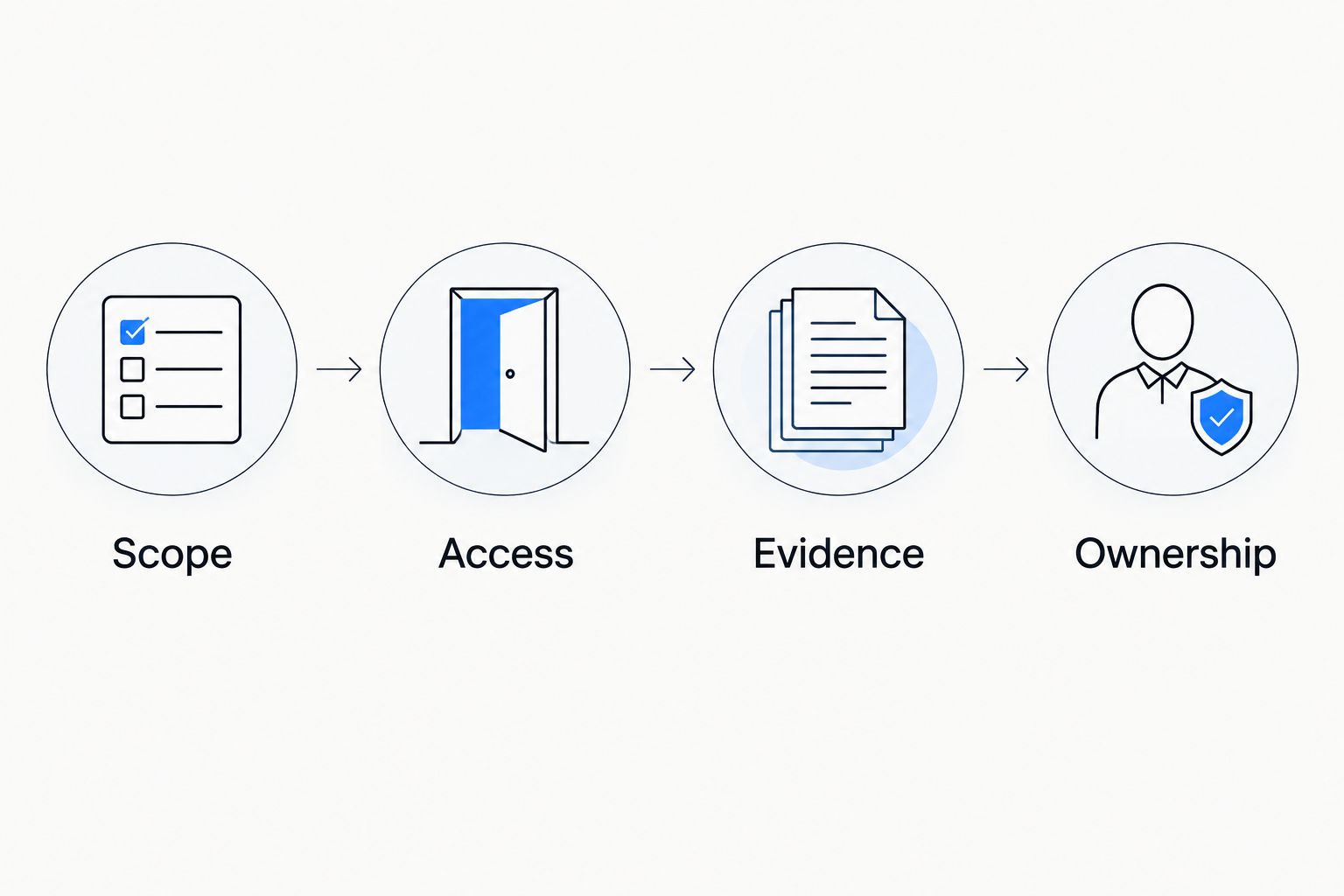
For your 2026 maintenance plan, keep this brief alongside the contractor's response. When something changes, record the revised scope and approval so the final handover matches the work actually authorised.
Discuss your facility maintenance scope
Separate electrical coordination from related maintenance before arranging the work.
Which commercial electrical maintenance option should you choose?
Default to a licensed commercial electrical contractor for a clearly defined electrical-only job. You do not need a broader maintenance arrangement simply because the property is commercial.
Choose OZLINK Facility Services for commercial electrical maintenance coordination when the job also involves facility maintenance or related trades. For recurring upkeep, define the programme; for a fault, define the response; for equipment, identify the relevant technical specialist.
Before appointing any provider in 2026, get a written answer to one question: who is responsible for leaving the entire agreed job complete? That answer should include the electrical work, any related repairs and the records you need to retain.
FAQ
What's the best option for commercial electrical maintenance in Brisbane?
A licensed commercial electrical contractor is the best fit for electrical-only work; a facilities partner suits jobs needing broader trade coordination. Choose according to the complete scope, then verify the business and personnel responsible for the electrical work.
Does electrical coordination mean the facilities company performs electrical work?
No. Electrical coordination describes organising the electrical scope, not evidence that the facilities company holds an electrical contractor licence. Confirm which licensed business will perform the work.
Is a planned maintenance provider better than a reactive contractor?
A planned maintenance provider fits recurring upkeep, while a reactive contractor fits a reported fault. If your facility needs both, agree separate maintenance and fault-response arrangements.
How do I check a Brisbane electrical contractor's licence?
Use the Queensland Electrical Safety Office's licence search to check the electrical contractor licence. Match the licence details to the business you are appointing and confirm appropriate licensing for the people performing the work.
How often does a commercial building need electrical maintenance?
The required schedule depends on the assets, installation, workplace conditions and applicable requirements. Ask the responsible contractor to document a site-specific schedule rather than applying one interval to every asset.
What should I ask for after commercial electrical repairs?
Ask for a record of the work completed, relevant findings and unresolved defects, plus applicable electrical certificates. The handover should identify any restrictions and who owns follow-up work.
Can one provider coordinate electrical and building repairs?
A facilities maintenance provider can coordinate several trades when that responsibility is included in the scope. Keep the electrical contractor's licensed work separate from the coordinator's access, communication and building-maintenance responsibilities.
One last thing
A fault marked repaired can still leave the wider maintenance job unfinished. Ceiling access, tenant communication, related building repairs and unresolved defects need their own closeout checks.
Do not close the work order until the agreed electrical scope and related facility tasks are accounted for. A clear handover is more useful than a provider promising to handle everything without defining what everything includes.