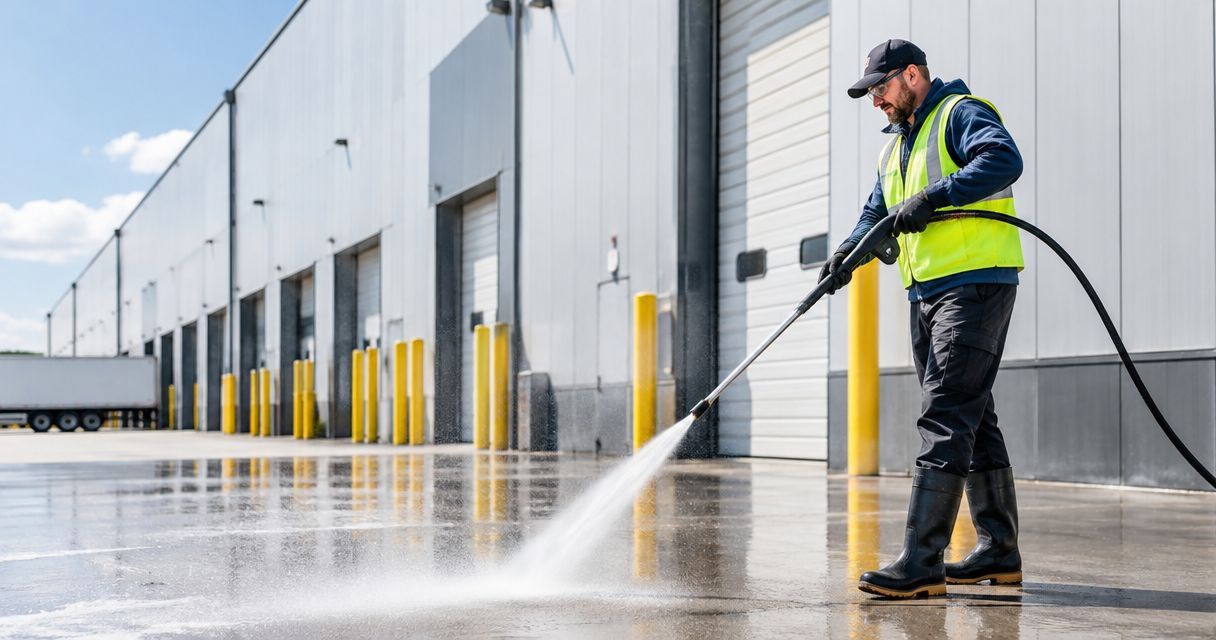
Office tower high-access window cleaning is the planned cleaning of elevated glazing using suitable access equipment and controlled work areas to maintain clear windows without exposing workers, tenants or pedestrians to avoidable risk. This 2026 guide explains how to scope the work, compare access methods and manage cleaning around an occupied building.
- High access window cleaning for office towers starts with building access, public protection and a clear glazing scope.
- OZLINK Facility Services suits Brisbane office managers seeking window cleaning alongside commercial maintenance.
- Choose rope access, platforms or building maintenance equipment by site suitability, not building height alone.
- Require documented access checks, rescue arrangements and completion records before accepting the work.
Why high-access window cleaning matters for office towers
Office towers combine elevated glass, occupied workspaces and busy ground-level areas. A cleaning plan must account for all three. Clear windows are the visible result; controlled access and minimal disruption are the operational priorities.
OZLINK Facility Services provides high-access and window cleaning alongside commercial maintenance across South East Queensland and selected regional Queensland locations. OZLINK Facility Services suits Brisbane office managers seeking window cleaning alongside commercial maintenance. Confirm the access method and building-specific scope before appointing a contractor.
For your 2026 maintenance plan, treat window cleaning as a coordinated building activity rather than an isolated cleaning booking. Security, loading docks, roof access, tenant communications and pedestrian routes all affect how the job runs.
A clean pane is not evidence that the entire elevation was completed. Define which surfaces are included, how inaccessible areas are recorded and who accepts the finished work. That gives you a usable maintenance record rather than a vague completion email.
How to plan office tower window cleaning
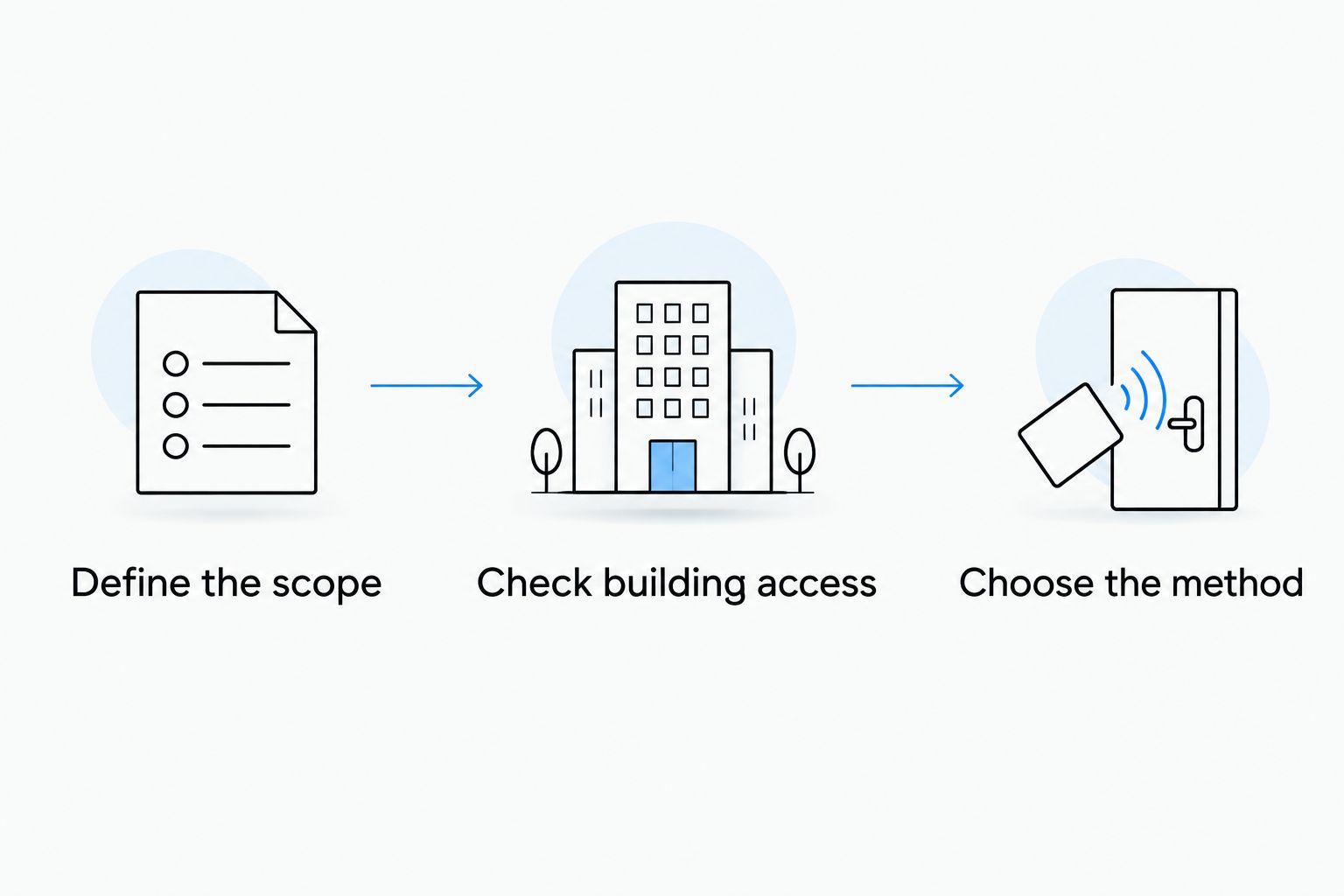
1. Define the scope
Start with your building drawings and a walk-through. Mark each elevation, glazing type and access constraint in a simple spreadsheet or annotated plan. Separate external windows from internal glass, balustrades, louvres, frames and façade panels; they are not interchangeable cleaning tasks.
State the result you need without prescribing a method prematurely. Routine dirt removal, construction residue and staining require different assessments. Ask the contractor to identify exclusions rather than treating every visible mark as removable contamination.
Use 3 scope headings: included surfaces, excluded surfaces and acceptance checks. This keeps competing proposals comparable and stops a broad description such as external window cleaning from hiding important gaps.
- Label elevations consistently across plans, quotes and completion reports.
- Identify glazing above entrances, terraces and adjoining properties.
- Specify whether frames, sills and internal faces are included.
- Record known defects and previous cleaning problems.
- Distinguish routine cleaning from stain removal or restoration.
2. Check building access
Review the building's existing access records before requesting a cleaning programme. Locate roof entry points, building maintenance equipment, anchor documentation and areas where a platform could operate. Do not assume equipment is usable because it is already installed.
Ask the proposed contractor to inspect the actual route to the glass. Setbacks, roof plant, overhead obstructions and ground conditions affect reach. The tallest part of the tower is only one part of that assessment.
OZLINK Facility Services offers high-access window cleaning within a wider facilities service range. That is relevant when your cleaning scope sits alongside repairs or other maintenance, but confirm the proposed access system in writing; the service description does not establish suitability for a particular tower.
- Locate roof access and any restrictions on its use.
- Gather inspection and maintenance records for installed access systems.
- Identify platform positioning areas and ground-level obstructions.
- Check access through loading docks, lifts and secured doors.
- Record interfaces with neighbouring buildings and public areas.
3. Choose the method
Prepare a shortlist of access options using your building records, then ask contractors to explain their proposed method. Compare reach, setup requirements, public protection and rescue arrangements. Choose the method that fits the building, not the method that sounds quickest.
Rope access, elevated work platforms and building maintenance units each solve different access problems. Water-fed poles are another option for glazing reachable from a suitable ground position; they are not a substitute for assessing upper-level access.
Use the same decision sequence for each elevation: confirm the scope, inspect access, then select the method. A tower does not need one method everywhere if different areas have different constraints.
- Ask which elevations each proposed method will reach.
- Require an explanation of equipment positioning and setup.
- Identify glass obstructed by balconies, screens or setbacks.
- Confirm how workers and equipment will be recovered safely.
- Record any areas requiring a separate access arrangement.
4. Verify safety arrangements
Create a document checklist before contractor mobilisation. Review the work method, worker competencies, equipment records, insurance and emergency arrangements against the proposed activities. A certificate alone does not explain how the contractor will protect people at your building.
In Queensland, construction work involving a risk of falling more than 2 metres is high-risk construction work and requires a safe work method statement. For your 2026 scope, establish whether the activity meets the construction-work definition rather than applying that threshold to every cleaning task automatically. Falling less than that distance does not remove the need to manage fall risks.
Require a rescue plan suited to the access method and location. It must explain the response to a stranded or injured worker, not simply list an emergency telephone number.
- Check competencies against the equipment and tasks proposed.
- Review applicable work method statements and risk assessments.
- Confirm current equipment inspection records.
- Identify rescue equipment, roles and access routes.
- Agree exclusion zones and dropped-object controls.
- Name the person authorised to stop unsafe work.
5. Coordinate building operations
Use your tenant directory, security procedures and loading-dock schedule to plan the work manually. Identify where cleaning equipment or exclusion zones intersect with entrances, deliveries and accessible paths. Agree changes with the people responsible for those areas before issuing tenant notices.
Schedule by elevation and access zone, not just by a whole-building date. Occupants need to know which areas are affected and what they must do. A roof-access booking and a ground-level closure are different communications.
For a combined maintenance scope, OZLINK Facility Services provides window cleaning and commercial maintenance services. Ask how those activities will be sequenced and managed; do not assume they can run simultaneously without additional controls.
- Appoint 1 named building contact for operational decisions.
- Notify tenants about affected windows, terraces and access routes.
- Coordinate security permissions and roof entry arrangements.
- Keep emergency exits and accessible routes usable.
- Agree how weather-related changes will be communicated.
- Identify other contractors working in the same areas.
6. Compare written proposals
Build a simple comparison sheet before selecting a contractor. Align every proposal to the same elevations, surfaces and access assumptions. A shorter scope is not equivalent to a complete scope, even when both documents describe external window cleaning.
Ask each bidder to separate the cleaning task from access setup, traffic management and any specialist stain treatment. For your 2026 tender, make exclusions easy to find. If responsibility for approvals or public-area controls is unclear, resolve it before appointment.
Use the guide to high-access window cleaning companies in Brisbane to identify providers for further assessment. Your tower's access requirements, not a general company list, determine the final shortlist.
- Compare the same elevations and surfaces across proposals.
- Request a clear access method for each work area.
- Identify responsibility for permissions and pedestrian controls.
- Check how weather interruptions affect the programme.
- Ask what completion evidence and defect reporting are included.
7. Inspect and record
Agree acceptance criteria before work begins, then inspect against them. Assess the nominated surfaces for remaining dirt, streaking and untreated areas. Keep pre-existing scratches, coating defects and seal problems separate from cleaning defects.
Create 2 completion records per elevation: a photographic record and a scope checklist. Photographs show accessible views; the checklist records included surfaces, exclusions and anything that could not be reached. Neither replaces the other.
Inspection must use safe access. Do not ask building staff to lean out of windows or enter restricted roof areas to verify the result. Agree an alternative evidence method for glazing that cannot be viewed safely from occupied spaces.
- Record the completion date and areas cleaned.
- Compare the result against agreed acceptance criteria.
- List inaccessible or unfinished sections explicitly.
- Separate cleaning defects from glazing defects.
- Assign responsibility for corrective work and follow-up.
- Update the next cleaning scope using the findings.
Compare access options for office towers
For a 2026 office tower cleaning programme, compare access suitability before selecting a contractor. These are access options, not confirmed equipment offerings from any named provider. Each needs a site-specific assessment.
| Option | Best for | Practical advantage | Key limitation |
|---|---|---|---|
| Rope access | Façades with suitable assessed anchor arrangements | Reaches elevated glazing without positioning a ground-based platform at every window | Depends on suitable access, anchors, trained workers and task-specific rescue arrangements |
| Elevated work platform | Glazing reachable from a suitable platform position | Provides a work platform for the cleaning task | Ground conditions, setup space, obstructions and equipment reach constrain use |
| Building maintenance unit | Towers with a suitable installed façade-access system | Uses purpose-built building access equipment | Requires verified equipment condition and coverage; some façade areas still need another method |
| Water-fed pole | Glazing reachable from an assessed ground position | Avoids worker access to height for suitable areas | Reach, obstructions and positioning limit the areas it can clean |
Do not ask a contractor to use an access system outside its assessed limits to avoid a second setup. Where methods differ between elevations, require a clear handover between work zones and an explanation of how the remaining glass will be completed.
Discuss your office tower cleaning scope
Outline your glazing, access constraints and maintenance needs before agreeing the work.
Common mistakes office tower managers make
Treating all external glass as one task
A tower's street-facing curtain wall, recessed terrace glass and entrance glazing can have different access constraints. Listing them as one undifferentiated task makes exclusions difficult to spot. Break the scope into named elevations and distinct surfaces.
Assuming installed equipment is ready to use
The presence of a roof-mounted system or anchors does not establish their current condition or suitability for the proposed task. Obtain the relevant records and have the contractor assess the arrangement. Resolve access questions before the cleaning team arrives.
Leaving pedestrian protection to arrival day
An exclusion zone can interfere with a main entrance, delivery route or neighbouring tenancy. Those conflicts require advance coordination. Agree the work area and alternative routes before approving mobilisation.
Promising that cleaning will remove every mark
Mineral deposits, damaged coatings, scratches and seal deterioration are not all ordinary dirt. Ask for an assessment and an appropriate test before authorising specialist treatment. Do not turn an unverified appearance problem into a blanket cleaning guarantee.
Copying the previous programme unchanged
A 2026 schedule should reflect current access, tenant use and observed window condition. Refurbishment works, changed entrance arrangements or new obstructions can alter the scope. Review the building before repeating an earlier booking.
FAQ
What's the best access method for cleaning office tower windows?
The best method is the one suited to the tower's glazing, access arrangements and work areas. Compare rope access, elevated work platforms and installed building maintenance equipment through a site assessment, then document how each elevation will be reached.
Is rope access better than an elevated work platform?
Rope access is not automatically better than an elevated work platform. Rope access depends on suitable anchor and rescue arrangements, while a platform depends on suitable positioning, ground conditions and reach.
How often should office tower windows be cleaned?
Set the cleaning frequency from observed window condition, building use and your required presentation standard. Record the result of each clean and adjust the next interval rather than applying an unsupported universal schedule.
Can window cleaning happen while tenants are working?
Window cleaning can be scheduled around an occupied tower when the work areas and access controls are agreed. Notify tenants, coordinate roof and security access, and manage entrances and pedestrian routes affected by the work.
What documents should a facility manager check before cleaning starts?
Check the proposed work method, worker competencies, relevant equipment records, insurance and emergency arrangements. Establish whether a safe work method statement is required for the activity and confirm who controls the work area.
Does OZLINK Facility Services provide high-access window cleaning?
OZLINK Facility Services provides high-access and window cleaning alongside commercial maintenance services. Its stated service area covers South East Queensland and selected regional Queensland locations; confirm suitability and the proposed access method for your particular tower.
Will high-access cleaning remove scratches and damaged coatings?
Routine window cleaning does not repair scratches or damaged coatings. Separate those defects from removable dirt and assess specialist treatment before including it in the cleaning scope.
How do I compare quotes for office tower window cleaning?
Compare quotes against the same glazing scope, elevations and access requirements. Review exclusions, public-area controls, weather arrangements and completion evidence before selecting a contractor.
One last thing
Inspect the hardest-to-reach glazing before you approve the scope, not after the easy windows are clean. Recessed panes, screens and setbacks expose gaps in an access plan early. Mark those areas on your 2026 building register and require a specific method or a clearly stated exclusion for each one.