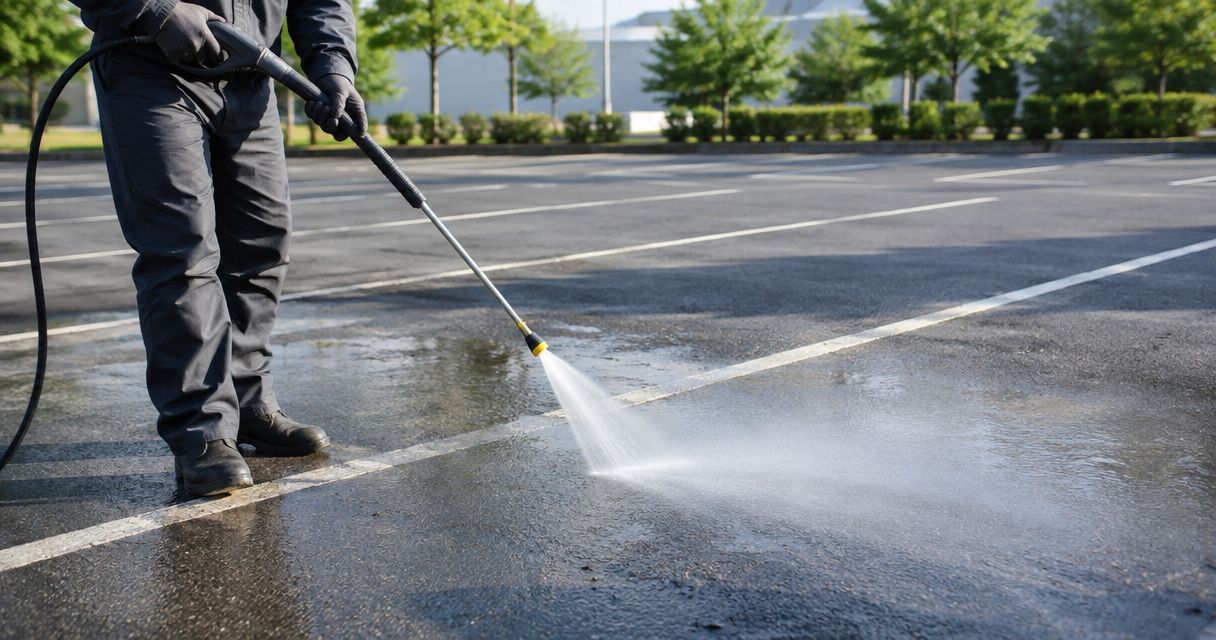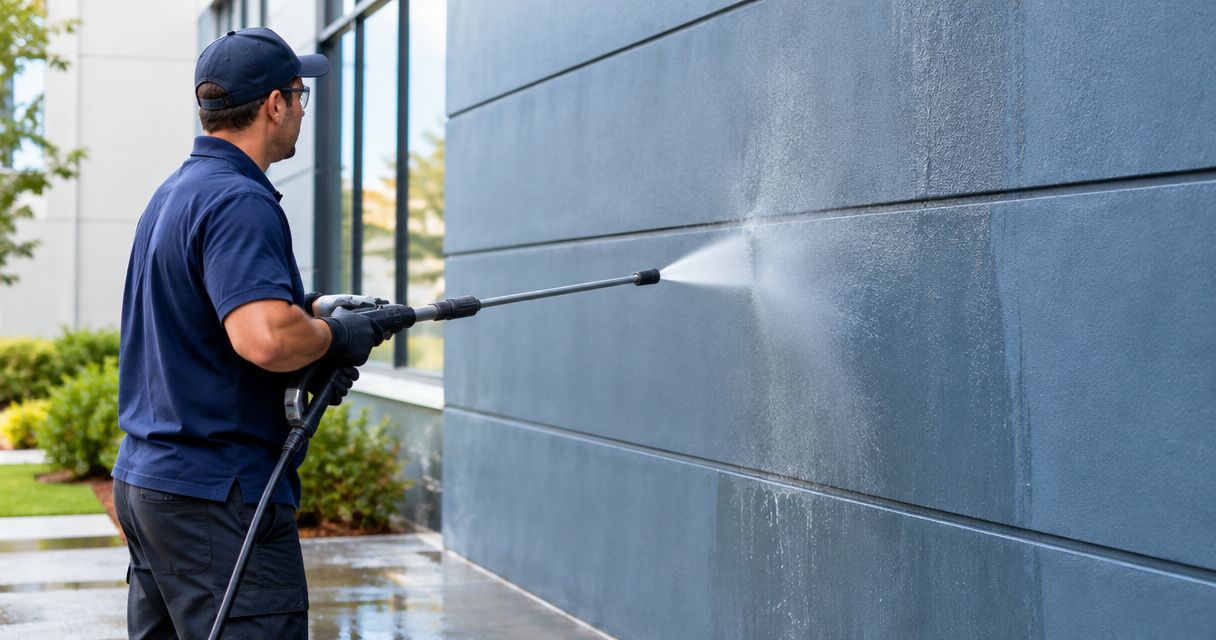
Pressure washing is safe on painted commercial surfaces only when the coating is sound, the surface manufacturer permits it and a controlled test shows no damage. Peeling paint, uncured coatings and vulnerable joints need a different approach; cleaning can otherwise strip the finish or force water behind it.
- Is pressure washing safe on painted surfaces? Only when coating condition, manufacturer instructions and a test support it.
- Use gentle cleaning for vulnerable finishes; stop if paint lifts, softens or changes appearance.
- OZLINK Facility Services provides commercial maintenance and pressure washing for Brisbane and South East Queensland facilities.
- Treat failed paint as a repair problem, not a reason to increase cleaning pressure.
Is pressure washing safe on painted commercial surfaces?
Pressure washing is a conditional cleaning method, not a default treatment for painted surfaces. Your decision starts with the coating and substrate, not the machine’s maximum output.
Check whether the marks sit on intact paint or whether the coating itself is breaking down. Blistering, exposed edges, cracks and flaking call for a repair assessment before washing. Where cleaning reveals a painting problem, use the commercial painting companies in Brisbane guide to plan the next scope.
| Cleaning approach | Best for | Main advantage | Main limitation |
|---|---|---|---|
| Controlled pressure washing | Sound exterior coatings approved for washing | Removes surface contamination without treating the whole area by hand | Can lift weak paint or drive water into openings |
| Low-pressure detergent cleaning | Sound finishes needing less mechanical force | Lets a compatible cleaner loosen contamination | Unsuitable chemicals or poor rinsing can damage finishes |
| Hand cleaning | Small areas, edges and sensitive details | Gives the operator close control | Requires more hands-on work across large areas |
| Repair before cleaning | Peeling, blistered or poorly bonded paint | Addresses the failed coating rather than disguising it | Cleaning must wait until repairs and coating requirements are satisfied |
These approaches are not interchangeable. A successful method on painted concrete does not establish that the same method suits a painted door, timber trim or metal panel.
Why this matters
A clean wall is not a successful result if the wash leaves exposed substrate, damaged seals or moisture inside the building. For facility managers, the job includes protecting occupants, nearby equipment and the surrounding work area—not just removing visible dirt.
For your 2026 maintenance plan, separate routine cleaning from coating repairs. That distinction helps you approve the right work instead of discovering that an apparently simple wash needs repainting after the contractor starts.
The practical acceptance standard is straightforward: remove the agreed contamination without damaging the coating or creating water ingress. A brighter appearance alone is not enough.
Sound painted surfaces: test before washing
An intact coating is a candidate for controlled cleaning, not automatic approval. Identify the painted material and check the applicable coating care instructions before selecting equipment, detergent or technique.
Ask your contractor to inspect sheltered areas as well as weather-exposed sections. Different elevations, touch-ups and previous repairs can behave differently, even when the building appears to have one consistent finish.
A useful test should establish:
- Whether the contamination releases using the proposed method.
- Whether the finish retains its appearance after drying.
- Whether edges, joints and repaired areas remain intact.
- Whether rinse water can be contained and directed appropriately.
Approve the method after the test area dries, not while the surface is still wet. Wetness can make differences in colour and sheen harder to judge.
For a 2026 cleaning brief, record the test location and photograph the result. Keep the approved method with the work order so the full job follows the same approach.
Peeling or blistered paint: repair first
Pressure washing is not a safe way to preserve paint that is already losing adhesion. Water can get beneath loose edges and remove more coating than the operator intended.
Stop treating the surface as a cleaning-only task when you see lifting paint, open cracks or blisters. Determine what needs repairing and whether moisture is contributing to the failure before specifying a wash or a replacement coating.
There is a separate use for washing during paint preparation, where removing loose material can form part of a planned process. That is not the same brief as cleaning while retaining the existing finish, and it needs explicit agreement about preparation, containment and subsequent painting.
Older or unidentified coatings also need a hazardous-material assessment where relevant. Do not disturb suspected lead-containing paint simply to find out whether it withstands cleaning.
Fresh paint: follow the coating instructions
Freshly painted surfaces should not be pressure washed just because they feel dry. Surface dryness does not establish that the coating has developed its intended resistance to water, chemicals or mechanical cleaning.
Use the coating manufacturer’s curing and cleaning instructions. The suitable waiting period depends on the actual product and application conditions; a blanket rule for every commercial coating is not a sound specification.
If you cannot identify the product, ask the painter or check the handover records. Where instructions remain uncertain, defer aggressive cleaning and obtain advice rather than guessing a pressure setting or waiting period.
Why pressure-washing safety varies
The same machine can produce very different results depending on the surface and how the operator uses it. These factors determine whether cleaning preserves the finish or damages it:
- Coating condition: Weak adhesion, chalking, blistering and previous repairs change how the finish responds.
- Substrate and details: Timber, metal, masonry, panel edges and sealant joints present different vulnerabilities.
- Spray delivery: Nozzle choice, working distance, angle and time spent on one spot affect the force reaching the paint.
- Chemical compatibility: Detergent type, dilution and contact time must suit the coating and surrounding materials.
- Water entry points: Cracks, vents, failed seals and openings need protection or a different cleaning method.
- Site conditions: Pedestrian access, electrical equipment, drainage and adjacent occupied areas affect how the work can proceed.
A pressure number alone does not resolve these variables. Specify the required result and the damage controls, then require a suitable method.
How should you check a painted surface before washing?
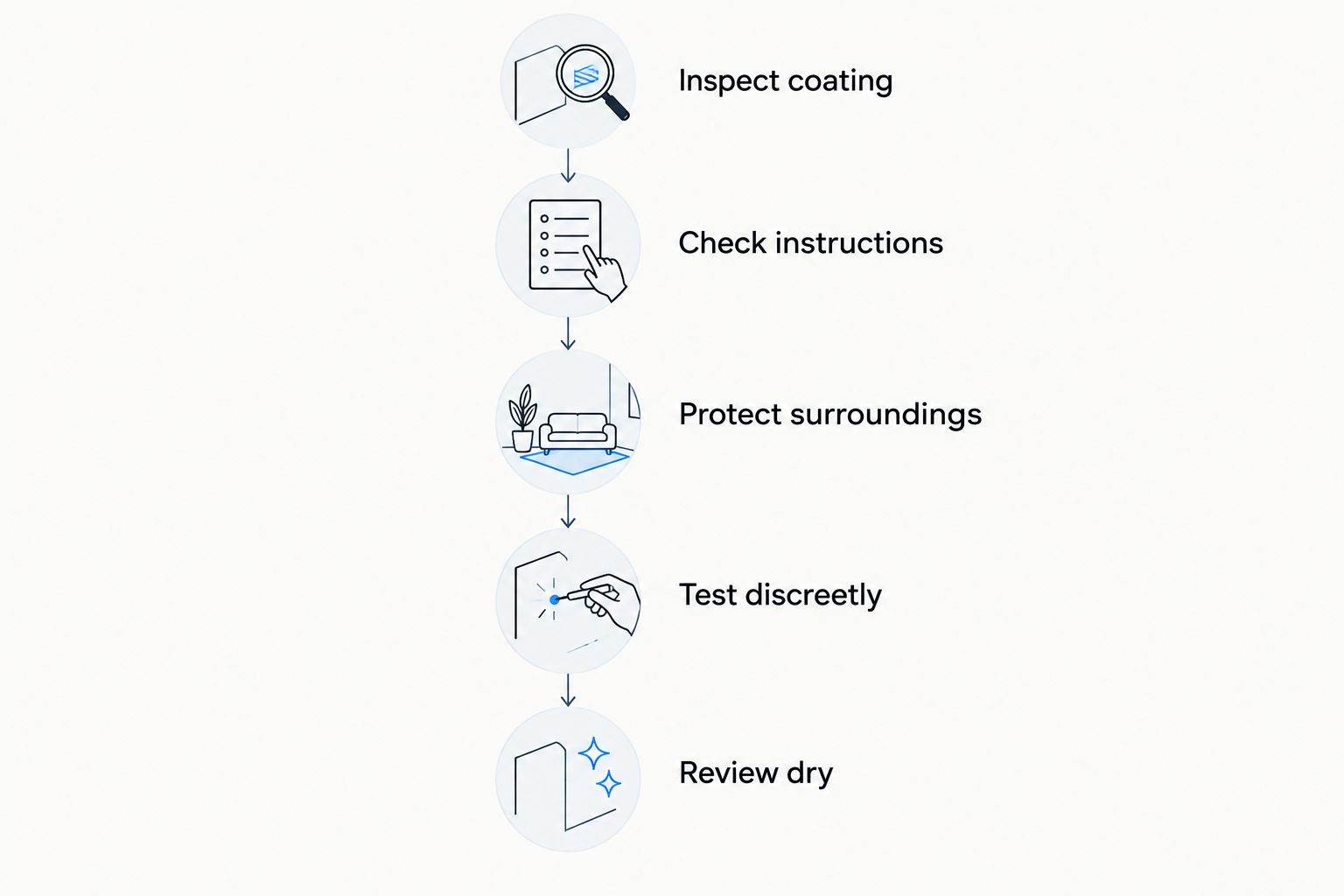
Use this sequence for your 2026 work order. It gives the contractor a clear decision path and gives you evidence for approving—or stopping—the job.
- Inspect coating. Identify the substrate, visible deterioration, previous repairs and vulnerable edges. Photograph existing damage before cleaning starts.
- Check instructions. Confirm the coating’s cleaning requirements and check detergent compatibility. Do not substitute a generic machine setting for product guidance.
- Protect surroundings. Plan pedestrian separation, electrical protection and wash-water control. Check openings and joints before directing water towards the building.
- Test discreetly. Start with the least aggressive suitable method in an inconspicuous area. Stop if the finish lifts, softens, transfers or changes unexpectedly.
- Review dry. Let the test area dry, inspect the coating and approve the method only if the result meets the agreed standard. Retain photographs with the job record.
If the test fails, change the scope rather than increasing force. You might need a gentler cleaning method, local repairs or a painting assessment before work continues.
Repeat the assessment where the substrate or coating changes. Approval on a sheltered masonry wall does not cover a weathered timber fascia elsewhere on the property.
What should a commercial cleaning brief include?
A useful brief tells the contractor what must remain undamaged as clearly as it describes what must be removed. Include the painted areas, known coating information, existing defects and any locations where water entry would disrupt operations.
Ask for the proposed cleaning method, detergent information, test-area process and stop-work conditions. Agree who can authorise a change if the contractor discovers loose paint, damaged seals or an unidentified coating.
For a 2026 handover record, keep before-and-after photographs and note any defects excluded from cleaning. Do not accept a generic statement that the surface was washed if the original concern was whether the coating could withstand it.
OZLINK Facility Services is a relevant commercial maintenance option for Brisbane facility managers needing both pressure washing and repair support. The service fit does not replace a coating inspection or establish that every painted surface is suitable for washing.
You can discuss the cleaning and maintenance scope with OZLINK Facility Services. Ask for a surface-specific approach rather than requesting maximum-pressure cleaning across the site.
Discuss your painted-surface cleaning scope
Identify the painted areas, visible defects and access constraints before agreeing on a cleaning method.
Can you pressure wash painted concrete?
Painted concrete can withstand controlled washing when the coating is sound and its instructions permit the method. Concrete’s hardness does not protect the paint bonded to it.
Inspect worn patches, cracks and exposed edges before cleaning. If the painted surface is a pedestrian area, also manage wet access and avoid assuming that removing dirt proves the finished floor meets slip-resistance requirements.
Is low-pressure washing always safer for paint?
Low-pressure washing reduces mechanical force, but it does not make an unsuitable chemical safe. Detergent compatibility, contact time, rinsing and water entry still matter.
Choose the least aggressive method that removes the contamination without harming the finish. A softer wash is an option to assess, not a guarantee that every coating will tolerate the process.
Should cleaning happen before repainting?
Cleaning can form part of repainting preparation, but the painter should specify the preparation sequence. Removing contamination, dealing with failed paint and allowing the substrate to dry are different tasks with different acceptance criteria.
Keep a preservation clean separate from preparation for repainting. The contractor needs to know whether the existing coating must remain intact or whether its planned removal forms part of the work.
FAQ
Is pressure washing safe on painted surfaces outside a commercial building?
Pressure washing is safe only where the coating is sound, the manufacturer permits the method and a test shows no damage. Inspect joints and openings as well as the painted face before approving the work.
What pressure should I use on a painted commercial wall?
Use a method specified for the actual coating and substrate, not a universal pressure setting. Nozzle choice, distance, angle and coating condition all affect the result.
Can pressure washing remove paint that looks intact?
Yes, pressure washing can remove paint where adhesion is weak even if the face initially looks intact. A discreet test and inspection of edges help identify problems before full-area cleaning.
How soon after painting can a commercial surface be washed?
Wash only after the coating has met its manufacturer’s curing and cleaning requirements. Feeling dry is not sufficient evidence that fresh paint can tolerate pressure washing.
Should I stop if paint comes off during the test?
Yes, stop if the test lifts paint or changes the finish unexpectedly. Reassess the coating and cleaning method before expanding the work area.
Does soft washing eliminate the risk of paint damage?
No, soft washing does not eliminate paint-damage risk. Incompatible chemicals, excessive contact time and water entry can still cause problems even with reduced mechanical force.
Can OZLINK Facility Services help with cleaning and maintenance?
OZLINK Facility Services provides commercial pressure washing, maintenance and painting services in Brisbane and South East Queensland. Define the surface condition and required outcome before agreeing on the work scope.
One last thing
Do not approve a painted-surface wash from wet photographs alone. Request a dry inspection and check edges, repaired patches and changes in sheen—not just whether the dirt has disappeared.
Make that a condition of your 2026 cleaning brief. It turns an attractive completion photo into a checkable handover standard.