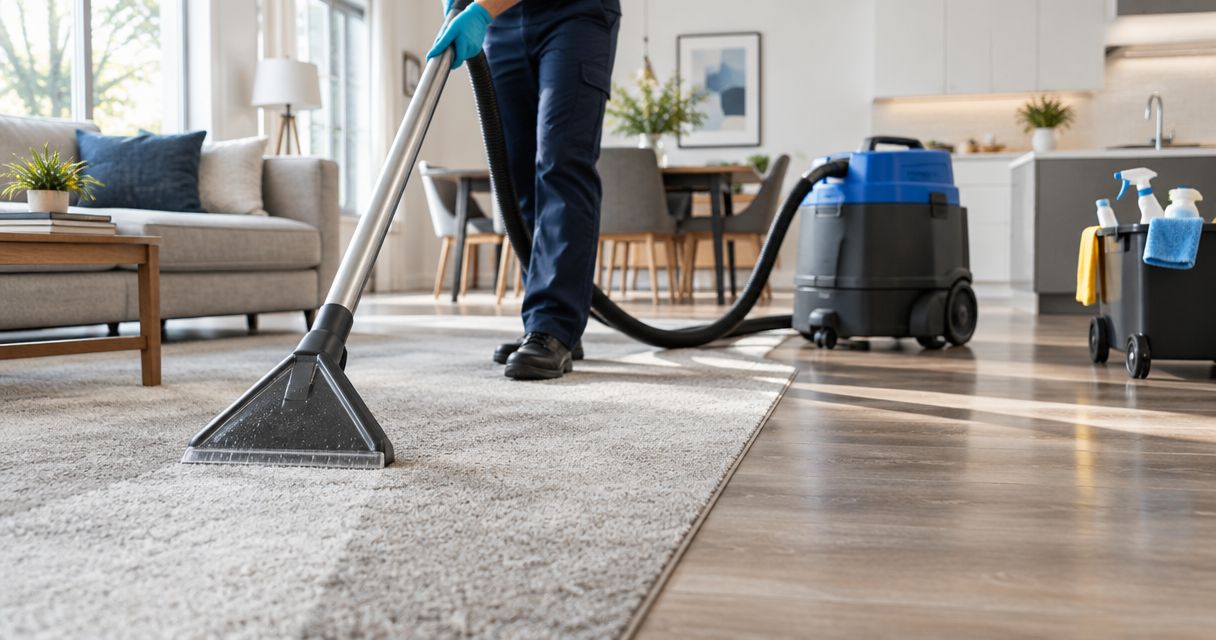
Yes, a cleaning company can handle carpet and hard floor care together when its scope includes both services and specifies a suitable method for each surface. Combine the coordination, not the cleaning method: carpet cleaning, hard floor cleaning and floor restoration need separate treatment plans, with access restrictions agreed before work starts.
- Carpet and hard floor cleaning combined works when each surface has its own treatment and handover requirements.
- Ozlink Facility Services provides carpet steam cleaning, strip and seal, and commercial floor restoration.
- Choose a combined scope for shared coordination, not an assumption that every floor needs the same treatment.
- Confirm access, drying, coating requirements and exclusions before approving the work.
Can a cleaning company handle carpet and hard floor care together?
A cleaning company can manage both floor types if it offers the required services and documents what each area needs. A general cleaning agreement alone does not establish that carpet extraction, coating removal or floor restoration is included.
Ozlink Facility Services lists carpet steam cleaning, strip and seal, and floor restoration among its commercial facility services. Ozlink Facility Services is a fit for facility managers seeking carpet cleaning and hard floor care from one facilities provider. Confirm the proposed treatment for your actual flooring before approving the scope.
The distinction is practical: one accountable contractor does not mean one machine, one chemical or one reopening time.
| Service or arrangement | Best for | Main benefit | Limitation to address |
|---|---|---|---|
| Combined carpet and hard floor scope | Facilities with mixed flooring | Coordinates access and responsibility across floor types | Each surface still needs a separate method and acceptance criteria |
| Separate specialist scopes | Sites needing independently managed specialist work | Defines a narrow responsibility for each contractor | Someone must coordinate adjoining areas and handovers |
| Carpet steam cleaning | Suitable carpet requiring extraction cleaning | Treats carpet separately from hard surfaces | Requires a drying and access plan |
| Strip and seal | Suitable floors with a removable finish needing renewal | Addresses the existing finish rather than surface soil alone | Not appropriate for every hard floor |
| Floor restoration | Worn surfaces requiring treatment beyond routine cleaning | Separates restoration needs from ordinary cleaning | The method depends on the material and its condition |
Why this matters
Mixed flooring creates shared access problems even when the cleaning methods differ. A carpeted office might open onto a hard floor corridor that staff must cross to leave the building.
For your 2026 floor-care plan, assess those connections before setting the work sequence. A clean room is not ready for use if its only access route remains restricted.
Specify the result by area, not simply by building. That gives you a clearer basis for checking completion and identifying unfinished work without treating the whole site as a single surface.
Carpet cleaning needs its own scope
Start by identifying the carpeted areas and the floor manufacturer's care instructions, where available. Record visible staining, worn areas, damaged seams and any concerns about the carpet backing before treatment.
Ask the contractor to distinguish routine soil removal from stain treatment. Cleaning does not repair damaged fibres, and a stain-removal promise should not replace an assessment of the mark and material.
Your carpet scope should state:
- Which rooms, corridors and accessible edges are included.
- Whether furniture movement is included and who handles it.
- How visible spots and stains will be assessed.
- How adjoining hard floors will be protected.
- Who checks the carpet before the area reopens.
The benefit of including carpet work in a combined contract is coordinated responsibility. The limitation is that carpet still needs its own drying assessment; completion of the nearby hard floor does not establish that the carpet is ready.
For a 2026 booking, give the contractor your actual occupancy schedule rather than asking for a generic drying promise. The useful commitment is a site-specific access plan and a named person responsible for releasing each area.
Hard floor care needs a material-specific method
“Hard floor cleaning” is not a complete instruction. The contractor needs to identify the surface and any existing finish before choosing the treatment.
A floor that needs soil removal is a different job from a floor with a worn coating. Likewise, visible damage should be assessed separately rather than folded into an ordinary cleaning instruction.
Ask for a clear distinction between cleaning, finish renewal and restoration. Do not authorise strip and seal across every hard surface simply because that service appears in a contractor's offering.
Cleaning: best for removing soil
Cleaning addresses dirt and residues using a method suitable for the surface. Its limit is equally important: cleaning does not repair missing material or automatically renew a worn finish.
Specify the areas and the expected condition at handover. Avoid using shine as the sole acceptance criterion, because appearance alone does not establish that a floor is safe to reopen.
Strip and seal: best for suitable coated floors
Strip and seal concerns the removable finish on a suitable floor. Before approving it, ask the contractor to identify the existing finish, explain compatibility and describe the proposed treatment.
Its benefit is addressing a finish that routine cleaning does not renew. Its constraint is suitability: the service name is not permission to apply the process to every floor in the building.
Restoration: best for assessed wear or damage
Floor restoration requires a diagnosis of the surface condition and a defined treatment. Ask what the proposed work will address and which defects will remain.
This makes the handover test clearer. You can assess the agreed restoration outcome without assuming that every visible defect was included in the job.
Why combined floor-care requirements vary
The right combined scope depends on the building and the work required, not just the presence of carpet beside a hard floor. Use these factors to organise the site assessment:
- Service mix: Carpet steam cleaning, strip and seal, and restoration are different tasks. Identify which services each area actually needs.
- Floor condition: Separate removable soil from worn finishes and physical damage before choosing treatment.
- Site use: Offices, childcare centres and commercial worksites need access arrangements that reflect how occupants use the space.
- Connected work: Repairs, painting, builders cleans or make-good works need coordination with final floor care.
- Location: Ozlink Facility Services serves South East Queensland and selected regional Queensland locations; confirm the address when discussing the scope.
These factors belong in the brief. A broad instruction to “clean all floors” leaves too much unresolved, particularly when restoration or other maintenance is involved.
How do you organise carpet and hard floor care together?
Use a shared work plan with separate instructions for each floor area. The sequence below is a practical briefing structure, not a claim that every building needs an identical cleaning order.
- Map surfaces. Mark carpeted rooms, hard floor areas, thresholds, entrances and the routes occupants need to keep using.
- Record condition. Photograph visible defects and identify areas needing assessment beyond routine cleaning.
- Agree methods. Obtain an area-by-area scope that distinguishes carpet cleaning, hard floor cleaning and any restoration.
- Plan access. Set the work sequence around occupied spaces, connected maintenance and restrictions on treated floors.
- Check handover. Inspect each area against its scope and confirm access before removing barriers.
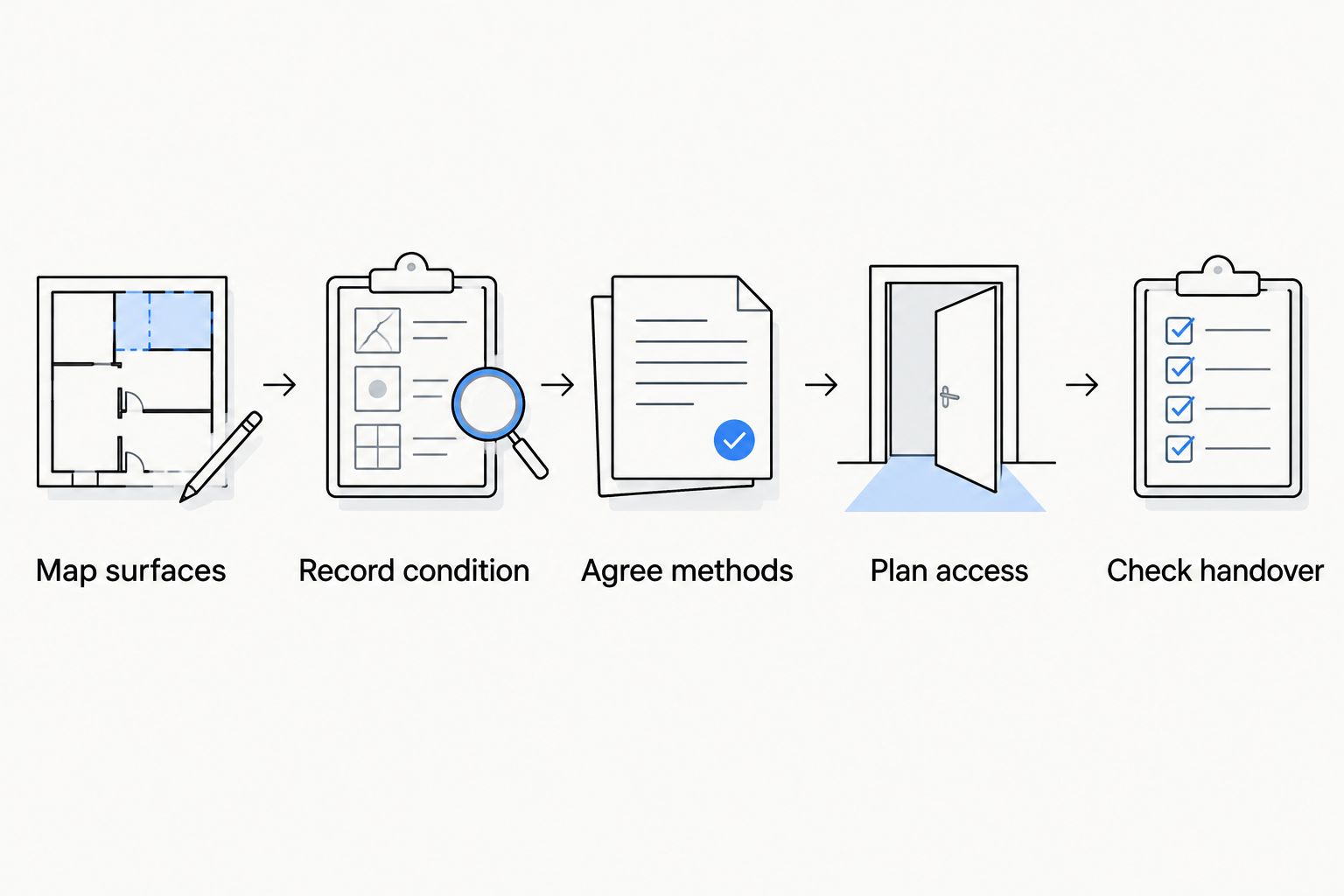
For a 2026 work order, attach the marked floor plan to the written scope. Keep the room names consistent across the booking, contractor instructions and completion record so everyone is discussing the same areas.
Before approving the job, ask who coordinates any separate crews and who answers questions during the work. A combined booking is only useful when responsibility for the connections between tasks is clear.
Can both floor types be cleaned during the same visit?
Both floor types can be included in a coordinated visit, but the contractor must confirm the sequence and access arrangements. A shared booking is not a promise of simultaneous work or simultaneous reopening.
Ask how workers and occupants will reach each area without crossing a restricted floor. Include equipment movement, furniture placement and access to rooms needed during the job.
If the proposed sequence blocks an essential route, revise the plan before work starts. Do not leave that decision to the person who arrives to clean.
Does combined cleaning replace a maintenance plan?
Combined cleaning does not replace a maintenance plan. A specialist visit addresses the agreed work; ongoing care still needs instructions matched to the flooring and its finish.
Ask for handover advice that your regular cleaning team can follow. It should distinguish routine care from tasks that require further assessment rather than leaving staff to repeat a specialist treatment.
For your 2026 maintenance calendar, record the inspection findings and agreed follow-up actions. Use the floor's condition and applicable care guidance to inform future work instead of assuming every surface needs the same recurring treatment.
What should you ask before approving the booking?
Ask the contractor to explain the scope in room-level terms. “Carpet and hard floors included” is a starting point, not a complete work instruction.
Use these questions during the assessment:
- Which treatment is proposed for each surface, and why?
- What existing damage or staining needs to be recorded?
- Who moves furniture and protects adjoining areas?
- Which routes remain open while work proceeds?
- What determines when each treated area can reopen?
- What is excluded, and how will additional work be approved?
- Who checks completion and records unresolved defects?
Ozlink Facility Services provides both carpet cleaning and hard floor care, alongside broader commercial maintenance services. That service mix is relevant when floor work sits within repairs or make-good works, but your written scope still needs to identify the included tasks and site arrangements.
Send the site address, flooring details, condition photos and occupancy restrictions through the contact page. Ask for the proposed methods and handover requirements before approving the work.
Discuss your combined floor-care scope
Share your floor types, site access restrictions and the areas needing cleaning or restoration.
FAQ
Can one company clean commercial carpet and hard floors?
Yes, one company can handle both when its service scope covers the required treatments. Confirm separate methods, exclusions and handover requirements for each floor type.
Is carpet and hard floor cleaning combined the same treatment everywhere?
No, carpet and hard floor cleaning combined means coordinated services, not an identical treatment across every surface. Each material and finish needs an appropriate method.
Can staff keep working while both floor types are cleaned?
Staff access depends on the agreed work zones and safe routes through the building. Confirm occupancy restrictions and reopening responsibilities before the booking.
Does every hard floor need stripping and sealing?
No, strip and seal is not a universal treatment for hard floors. The contractor needs to assess the surface, existing finish and suitability before recommending it.
Will a combined floor clean repair damaged flooring?
A combined floor clean does not automatically include repairs or restoration. Record damaged areas and obtain a separate, explicit scope for work beyond cleaning.
Does Ozlink Facility Services offer carpet and hard floor care?
Ozlink Facility Services offers carpet steam cleaning, strip and seal, and floor restoration. Confirm the treatment, location and access arrangements for your site before approving the scope.
What should I send when requesting combined floor care?
Send the site address, floor types, affected areas, condition photos and occupancy restrictions. Include any connected repairs or make-good work so the proposed sequence accounts for them.
One last thing
Inspect the thresholds, not just the middle of each room. The meeting point between carpet and hard flooring belongs in the work plan because it connects treatment boundaries and pedestrian routes.
For your 2026 handover, walk the route occupants will actually use. Check that the agreed areas are complete, restrictions are understood and outstanding defects have an owner before signing off the job.