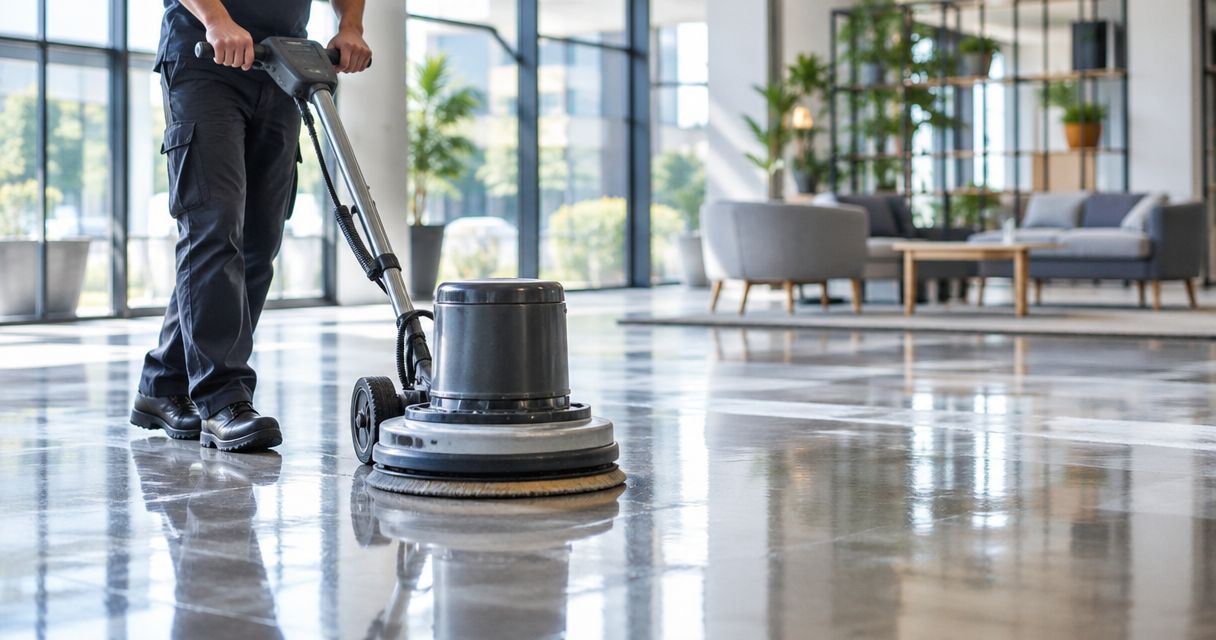
Strip and seal commercial floors when the existing removable finish is worn through, failing or no longer responds to suitable maintenance—not simply because a calendar reminder is due. There is no single interval that fits every floor; the floor material, finish manufacturer’s instructions and observed wear determine the schedule. Allow for restricted access while the work is completed and the finish dries and cures as specified.
- OZLINK Facility Services provides commercial strip and seal services for Brisbane facility and property managers.
- How often strip and seal floors need attention depends on coating condition, traffic and the approved maintenance system.
- Clean or recoat a sound finish where appropriate; reserve full stripping for a finish that needs removal.
- A shiny floor is not proof of slip safety or compliance.
Why this matters
Stripping too early removes a finish that might still be serviceable. Waiting until protection has worn away leaves the underlying floor exposed. Your maintenance plan needs to distinguish between those situations, rather than treating every dull patch as a stripping job.
For your 2026 maintenance plan, start with a condition assessment and record the treatment each area actually needs. The floor audits to strip and seal workflow explains how to connect inspection findings with the work scope.
How often should commercial floors be stripped and sealed?
Commercial floors should be stripped and sealed when inspection confirms that removing and replacing the existing finish is the appropriate treatment. Follow the flooring and finish manufacturers’ instructions, then adjust your maintenance decisions to the condition of each area.
A busy entrance and a low-use meeting room do not automatically need the same treatment at the same time. Equally, heavy traffic alone does not prove that full stripping is necessary if the finish remains sound and responds to its approved maintenance process.
Use this comparison to decide what comes next:
| Treatment | Best for | Main benefit | Limitation |
|---|---|---|---|
| Routine cleaning | A sound finish with removable dirt or residue | Removes contamination without replacing the finish | Does not rebuild worn-away protection |
| Scrub and recoat | A sound, compatible finish needing surface renewal | Adds protection without removing all existing finish | Requires suitable preparation and an approved coating system |
| Full strip and seal | Removable finish that is failing or needs complete removal | Removes the old finish before a new application | Requires access restrictions and material-compatible chemicals |
| Repair or specialist restoration | Damaged flooring or a surface unsuited to conventional stripping | Addresses problems beyond the removable finish | Is a different scope from routine strip and seal |
Use the least intensive treatment that properly addresses the floor’s condition. Do not approve a full strip solely because a floor looks dull before cleaning.
What should trigger a strip and seal assessment?
Look for worn traffic lanes, uneven coating build-up, peeling finish or marks embedded in the finish that suitable cleaning does not remove. These signs justify an assessment; they do not establish the treatment by themselves.
Ask the contractor to separate surface dirt, coating failure and damage to the flooring. A photograph of a dark patch cannot reliably make that distinction, particularly when the floor material or previous coating is unknown.
Sound finish: maintain it before stripping it
A sound finish that cleans up properly does not need full removal just to satisfy a recurring booking. Keep the routine cleaning method compatible with the finish, and inspect the areas that receive the most wear.
Where the coating system permits it, a prepared recoat is an alternative to stripping everything back. Its benefit is retaining sound existing finish; its limitation is that it cannot correct an unsuitable, contaminated or poorly bonded coating underneath.
Ask for the reason behind the recommended treatment. “The entrance finish is worn through” is a useful finding; “it is time for the annual job” does not describe the floor’s condition.
Failing finish: establish what needs removal
When the removable finish is failing, adding another coat does not address the cause. Assess the coating’s adhesion, contamination and compatibility before deciding whether full removal is necessary.
A strip and seal renews the applied finish, not the floor beneath it. Cracks, loose flooring, deep gouges and moisture-related problems need their own assessment and repair scope.
Make that distinction clear in your 2026 work orders. Otherwise, a completed coating job can still leave unresolved defects that were never included in the treatment.
Why strip and seal frequency varies
The useful question is not just how busy the building is. It is how the floor, coating and maintenance process are performing together.
- Floor material and coating compatibility. Confirm that the surface is designed for a removable finish. A method suitable for one resilient floor is not automatically suitable for timber, stone, concrete or another resilient product.
- Traffic patterns. Entrances, queueing points and trolley routes concentrate wear. Inspect those routes separately from quieter rooms.
- Tracked-in grit. Abrasive dirt contributes to surface wear. Entrance matting and effective soil removal belong in the maintenance plan, not just the restoration scope.
- Cleaning methods. Chemicals, dilution, pads and equipment must suit the floor and finish. An unsuitable process can damage the finish or leave residue.
- Existing coating condition. Peeling, poor adhesion and uneven build-up require a different response from a sound but scuffed surface. Establish what remains before adding more.
- Previous maintenance records. Product details and treatment history help identify compatible next steps. Where the history is unclear, assess and test rather than assuming compatibility.
Avoid assigning a generic “high traffic” label to the entire property. Record where wear occurs and what changes after cleaning; those observations give your contractor a better basis for recommending treatment.
How do you set a practical maintenance schedule?
Build a condition-led schedule that tells staff what to check, who reviews defects and what triggers further work. A date should prompt inspection, not automatically authorise stripping.
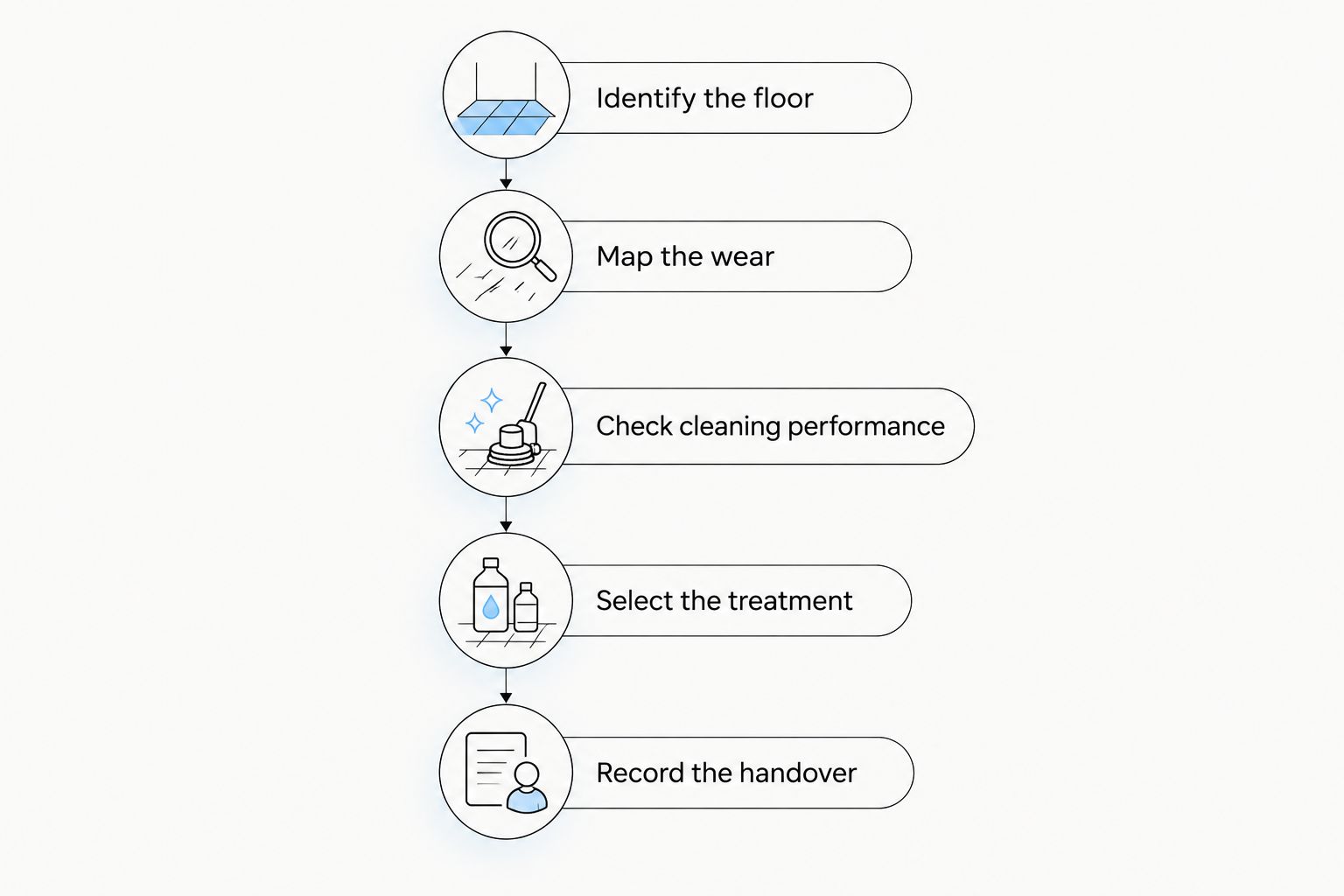
Identify the floor
Record the flooring material, existing finish and relevant manufacturer care instructions. If the material is uncertain, confirm it before selecting stripping chemicals or mechanical preparation.
Do not assume that every vinyl-looking surface needs the same finish. Some flooring systems have factory-applied treatments and specific restrictions on maintenance products.
Map the wear
Separate entrances, corridors, work areas and quieter rooms in the inspection record. Note scratches, visible coating loss, residue, peeling and any reported slip incidents.
Take comparable photographs after suitable cleaning so that dirt does not obscure the assessment. Keep the location and viewing angle consistent when recording changes.
Check cleaning performance
Establish whether the approved cleaning method removes the problem. If it does, review routine cleaning before booking restoration.
If it does not, determine whether the remaining defect sits in the finish or in the floor itself. This prevents a coating treatment being used as a substitute for a necessary repair.
Select the treatment
Choose routine cleaning, compatible recoating, full stripping or separate repair based on the findings. Require the proposed scope to identify the affected areas and explain why that treatment is appropriate.
Record the decision even when no restoration is needed. A documented decision to maintain a sound finish is more useful than an unexplained deferred job.
Record the handover
Keep the products used, treated locations, completion date and contractor’s maintenance instructions with your floor records. Include restrictions on foot traffic, furniture replacement and subsequent cleaning.
Use the completed work as the baseline for your next inspection. For 2026 scheduling, update the plan when actual wear or building use changes rather than copying the previous booking unchanged.
The process needs an owner as well as a checklist. Nominate who reviews the findings and approves a treatment change so that a cleaner’s report does not sit unresolved between scheduled visits.
Does every commercial hard floor need stripping?
No. Strip and seal is not a universal treatment for commercial hard floors. The correct process depends on the material, its existing surface treatment and the manufacturer’s maintenance requirements.
Do not transfer a specification from a neighbouring tenancy without checking the flooring. Similar-looking surfaces can have different care requirements, and an unsuitable stripping method risks damaging the surface.
For mixed-floor buildings, list each material separately in the work scope. Ask the contractor to identify any areas excluded from conventional stripping and explain the appropriate maintenance approach instead.
Should you strip floors as soon as they look dull?
No. Dullness alone does not prove that a finish needs complete removal; dirt, residue and surface scuffing also affect appearance.
Assess the floor after suitable cleaning, then check the remaining finish. If the coating is sound and the system permits recoating, complete stripping is not automatically the next step.
The reverse also matters: gloss is not evidence that a floor is safe under every condition. Investigate slippery areas separately rather than assuming that a fresh coating will resolve the hazard.
Can strip and seal make a floor compliant?
A strip and seal service alone does not establish compliance. Slip risk depends on the surface, contamination, footwear, cleaning practices and how the area is used—not appearance alone.
Treat reported slipping as a safety issue requiring assessment and immediate site controls. Where slip-resistance testing or specialist advice is needed, include it explicitly rather than treating a coating application as proof of performance.
For your 2026 safety records, retain the inspection findings, corrective actions and any relevant testing. Keep the contractor’s service completion record separate from claims about the floor’s safety performance.
What should you confirm before booking the work?
A useful scope tells you what will happen and what the building must accommodate. “Strip and seal throughout” leaves too much unresolved.
Confirm these points before approving the job:
- Exact areas: identify rooms, traffic lanes, edges and any exclusions.
- Surface suitability: confirm the floor material and compatibility of the proposed system.
- Preparation: state how existing finish, residue and affected areas will be treated.
- Repairs: identify defects outside the coating work and who will address them.
- Access: agree on barriers, alternative routes, furniture movement and occupant notifications.
- Handover: obtain product-specific instructions for reopening, cleaning and returning furniture.
Do not substitute a generic drying estimate for the selected product’s instructions. Application conditions and the coating system determine when different activities can resume.
OZLINK Facility Services is a practical choice for Brisbane facility managers seeking commercial strip and seal alongside broader maintenance. OZLINK Facility Services provides commercial hard floor care and restoration; the right treatment still depends on the surface assessment, and coating work does not replace repairs to damaged flooring.
Arrange a floor assessment
Discuss floor condition, treatment suitability and access requirements before booking work.
FAQ
How often should commercial floors be stripped and sealed?
Strip and seal commercial floors when the removable finish needs replacement, based on inspection and manufacturer instructions. Do not use a fixed calendar interval as the only trigger.
Do commercial floors need stripping every year?
Commercial floors do not automatically need stripping every year. Check the floor material, coating condition and response to approved maintenance before authorising removal.
Is recoating better than stripping a commercial floor?
Recoating suits a sound, compatible finish that needs surface renewal; stripping suits finish that needs removal. Recoating does not fix an unsuitable or poorly bonded layer underneath.
Can you strip and seal every type of vinyl floor?
Do not assume every vinyl floor is suitable for conventional strip and seal. Check the flooring manufacturer’s instructions and the existing surface treatment before selecting chemicals or coatings.
How long must a floor stay closed after sealing?
Keep the floor closed for the period specified for the selected coating and application conditions. Confirm separate instructions for foot traffic, furniture replacement and cleaning with the contractor.
Will strip and seal fix a slippery floor?
Strip and seal is not a guaranteed fix for a slippery floor. Investigate contamination, cleaning residue, surface condition and the way the area is used before selecting corrective work.
Who can assess commercial strip and seal needs in Brisbane?
OZLINK Facility Services provides commercial strip and seal and floor restoration services in Brisbane. Discuss the flooring material, visible defects and access requirements when arranging an assessment.
One last thing
Compare the traffic lane with a protected edge before approving a whole-floor treatment. A visible difference helps locate wear, but the contractor still needs to distinguish coating loss from residue or damage beneath the finish.
Make that comparison part of your 2026 inspection record. The useful outcome is not a recurring stripping appointment—it is a clear reason to maintain, recoat, strip or repair each area.