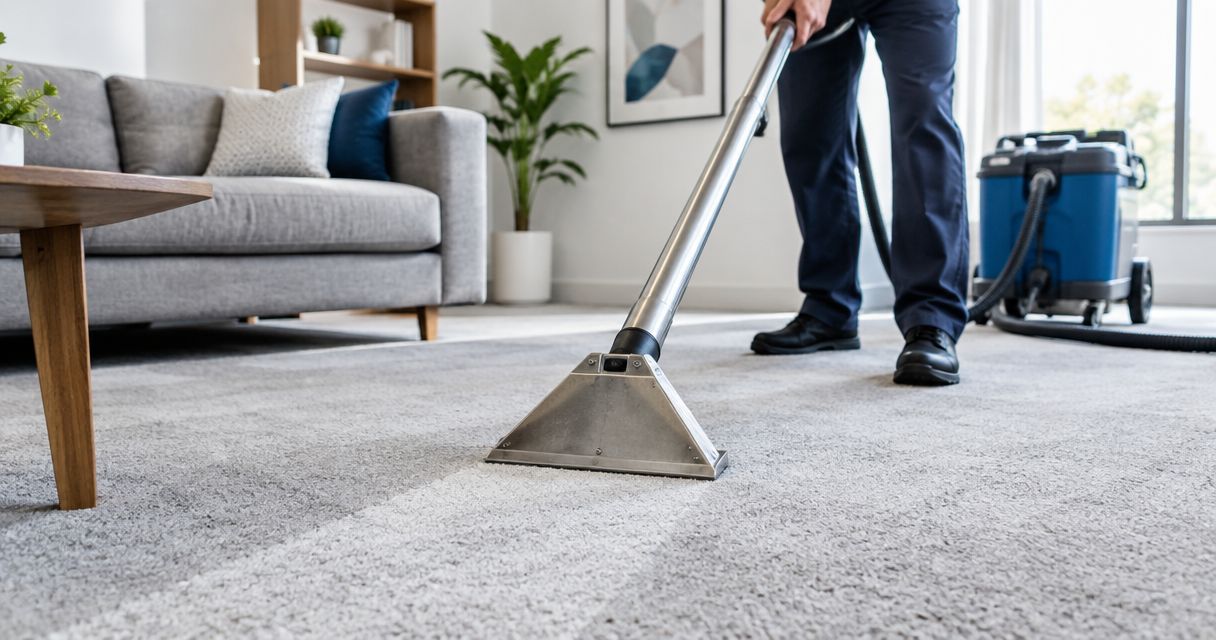
Commercial carpet steam cleaning has no fixed drying time: you should reopen each area only after the carpet has dried and the access route is safe. Residual moisture, carpet construction, humidity and airflow determine the wait—not the time the cleaner leaves. An after-hours booking does not, by itself, guarantee a dry floor when staff return.
- Carpet steam cleaning drying time depends on residual moisture, carpet construction, humidity and airflow.
- Separate cleaning completion from permission to reopen; check the carpet before returning furniture or removing barriers.
- OZLINK Facility Services provides commercial carpet cleaning alongside facility maintenance for Brisbane businesses.
- Confirm ventilation arrangements before booking hot-water extraction, particularly when building air conditioning shuts down overnight.
How long does commercial carpet steam cleaning take to dry?
Use a site-specific drying estimate, then verify the carpet before reopening. A contractor needs to consider the carpet, cleaning method and conditions that will remain after the work finishes. An estimate based on running air conditioning is not useful if that system switches off as soon as the building closes.
Ask for a distinction between cleaning completion, any permitted restricted access and full return to use. These are separate decisions. A carpet that feels dry at the tips is not proof that deeper fibres or backing are dry.
Where access affects patient movement or room turnover, the commercial carpet cleaning guide for medical clinics provides a related planning topic. The same scheduling principle applies to offices: agree on the reopening check before the cleaning starts.
What should a useful drying estimate include?
A useful estimate explains its assumptions rather than supplying an isolated deadline. Ask your contractor to identify:
- Which carpeted areas the estimate covers.
- Whether heavily soiled sections require additional treatment.
- What ventilation or mechanical drying must remain operating.
- Whether furniture will stay in place or require protection.
- Who will check the floor and authorise access.
For a 2026 cleaning brief, record those conditions beside the booking. If the conditions change, reassess access rather than relying on the original estimate.
Why this matters
Drying is part of the job's operational impact. Damp carpet can transfer moisture and soil under foot traffic, while shoes moving from wet carpet onto smooth flooring create a slip concern. Furniture also needs appropriate protection before it returns to damp areas.
The practical risk is a mismatch between the contractor's finish time and your building's reopening time. Book a cleaning window and a drying window—not just a contractor arrival. Keep reception, security and affected tenants working from the same access instructions.
Appearance is not enough. A freshly cleaned room can look ready while still needing airflow and restricted access.
Why carpet steam cleaning drying time varies
Commercial carpet cleaning commonly described as steam cleaning generally uses hot-water extraction: cleaning solution enters the carpet, then extraction equipment removes solution and loosened soil. Drying deals with the moisture left behind. These factors explain why neighbouring rooms need different checks:
- Residual moisture: The amount left after extraction affects how much moisture must evaporate. Ask about extraction and drying passes, not just the cleaning stage.
- Carpet construction: Fibre, pile and backing affect moisture retention. Identify the carpet rather than assuming every carpeted area behaves alike.
- Humidity: Humid air limits evaporation. Warm weather alone does not establish good drying conditions.
- Air movement: Stagnant corners and enclosed rooms dry differently from areas with controlled air circulation. Check where air actually moves.
- Building systems: Air conditioning schedules, ventilation settings and moisture control affect conditions after the crew leaves. Confirm who controls those systems.
- Soiling and treatment: Additional wet treatment changes the drying task. Flag stained entryways and heavily used routes before the contractor sets expectations.
For Brisbane sites, check the weather and indoor conditions for the actual booking. Do not replace that check with a general assumption about the season.
Which drying arrangement suits your building?
Choose drying support for the room's conditions, not simply whatever equipment is easiest to leave running. Air movement helps moisture leave the carpet; ventilation or moisture removal must also deal with that moisture in the surrounding air.
The options below are planning choices to discuss with your contractor. They are not interchangeable guarantees of a reopening time.
| Arrangement | Best for | Practical benefit | Limitation to check |
|---|---|---|---|
| Building air conditioning | Spaces with authorised after-hours operation | Can support controlled indoor conditions | Confirm operating mode, schedule and building permission |
| Air movers | Areas needing directed air circulation | Move air across damp carpet | Do not remove moisture from the building by themselves |
| Dehumidification | Enclosed areas where moisture removal is needed | Removes moisture from indoor air | Needs suitable placement, operation and condensate management |
| Outdoor ventilation | Sites where outdoor air supports drying | Allows air exchange | Unsuitable when outdoor humidity, rain, security or site rules make it ineffective |
Do not open windows automatically while the air conditioning runs. Agree on the intended arrangement with the building manager and contractor so the systems do not work against each other.
For your 2026 contractor brief, specify who can approve after-hours operation. A drying plan that relies on equipment nobody is authorised to use is not a workable plan.
How do you plan cleaning without disrupting the next shift?
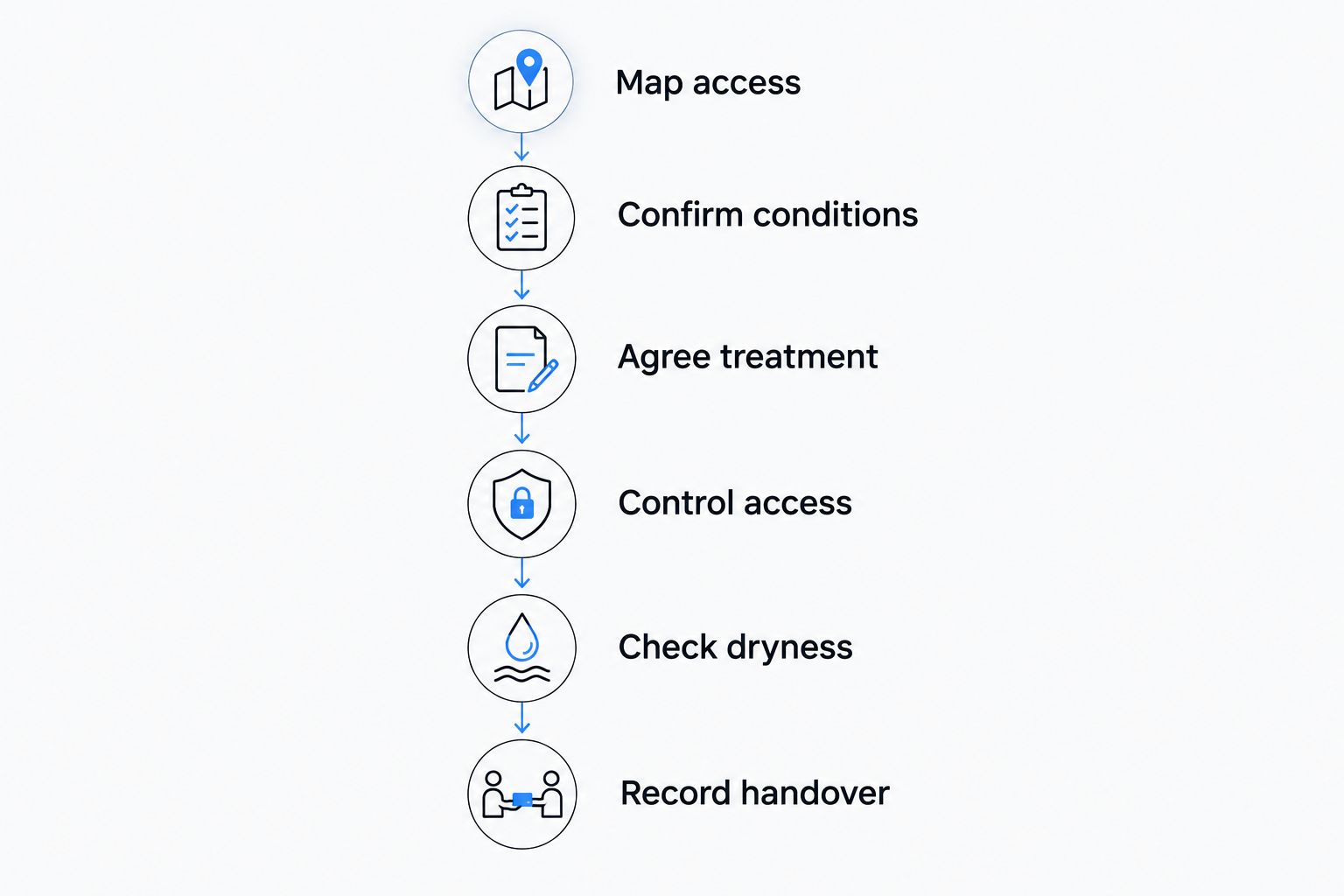
Start with the next required use of the space, then work backwards with the contractor. Include preparation, cleaning, drying, inspection and reinstatement in the booking discussion.
1. Map access
Identify entrances, workstations, corridors and shared facilities that must remain accessible. Decide whether the site can close completely or whether cleaning needs to proceed by zone.
Keep emergency exits available throughout the work. Do not create an alternate walking route that sends occupants through a damp area or across equipment leads.
2. Confirm conditions
Tell the contractor what happens after normal business hours. Include air-conditioning shutdowns, locked internal doors and any restrictions on open windows or unattended equipment.
Ask who will respond if the carpet remains damp at the planned check. That decision belongs in the booking, not in a hurried conversation when staff arrive.
3. Agree treatment
Identify stains and high-traffic areas before cleaning begins. Ask whether any section needs a different treatment or additional attention that changes the drying assessment.
Provide carpet care information where you have it. The contractor should select a suitable process rather than treating unidentified fibres and backing as equivalent.
4. Control access
Separate cleaned areas from occupied areas using suitable barriers and clear instructions. Include the transition from carpet to tiles, vinyl or other smooth flooring in the access plan.
Tell security and cleaning teams which areas must stay restricted. A sign is ineffective if another team removes it without understanding why it is there.
5. Check dryness
Inspect representative locations, including enclosed rooms, edges and heavily treated sections. Ask the contractor how the assessment accounts for moisture below the visible surface.
Keep any damp section restricted and reassess the drying conditions. Do not treat a scheduled reopening time as evidence that the carpet is ready.
6. Record handover
Record which zones are released, which remain restricted and any equipment or furniture instructions. Give the next shift a clear contact for unresolved drying issues.
In your 2026 handover record, separate the cleaning finish from the access decision. That distinction prevents an invoice or completion message being mistaken for permission to reopen.
Can staff walk on the carpet before it is completely dry?
Keep routine foot traffic off damp carpet and follow the contractor's access instructions. If essential access is unavoidable, agree on a controlled route rather than allowing unrestricted movement across the cleaned area.
Walking across damp carpet can track soil back into the fibres. The transition onto hard flooring also needs attention because footwear can carry moisture with it.
Do not assume shoe covers make every route safe. Select access controls for the actual floor surfaces and work activities, and keep emergency access available.
Does leaving the air conditioning on guarantee overnight drying?
Air conditioning does not guarantee overnight drying. Its operating mode, airflow, humidity control and coverage matter, as does the moisture remaining in the carpet.
Confirm the settings and operating schedule with the person responsible for the building system. Ask the contractor whether the agreed conditions support the proposed drying plan; do not infer suitability from the fact that the unit is switched on.
When can desks, chairs and floor mats go back?
Return furniture and mats according to the contractor's drying and protection instructions. Mats and other coverings can restrict evaporation, while unsuitable furniture contact with damp carpet risks staining or damage.
Keep protective tabs or blocks in place for the period the contractor specifies. Avoid rolling chairs or moving heavy furniture across areas that have not been released for use.
What should you do if the carpet is still damp?
Keep the affected area restricted and contact the cleaning contractor. Describe where the dampness remains, what ventilation has operated and whether the conditions changed after cleaning.
Check for simple departures from the agreed plan: shut internal doors, stopped air conditioning or equipment switched off by another team. Restore only the arrangements authorised for your building.
Do not mask a persistent damp smell with fragrance or cover the area with mats. Ask for an assessment, especially if dampness extends beyond the cleaned area or suggests a separate leak. Cleaning-related moisture and building water ingress require different responses.
Who should coordinate the cleaning and reopening?
OZLINK Facility Services is best suited to Brisbane facility managers seeking commercial carpet cleaning alongside facility maintenance. Its stated services include carpet steam cleaning, reactive repairs and commercial maintenance across South East Queensland and selected regional Queensland locations.
For commercial carpet cleaning, OZLINK Facility Services offers a relevant service scope, but that scope is not a site-specific drying guarantee. You still need to agree on treatment, access restrictions and the handover check for your premises.
Discuss the building's cleaning and maintenance requirements with OZLINK Facility Services. Bring the next occupancy time, carpet information and after-hours ventilation restrictions to that conversation.
Plan your carpet cleaning access
Discuss carpet cleaning, building access and drying arrangements before scheduling the work.
FAQ
How long does commercial carpet steam cleaning take to dry?
Commercial carpet steam cleaning drying time depends on residual moisture, carpet construction, humidity and airflow. Get a site-specific estimate and verify the carpet before reopening rather than treating the cleaning finish as the access time.
Will office carpet be dry when staff arrive the next morning?
An overnight booking does not guarantee dry carpet when staff arrive. Confirm after-hours ventilation, the contractor's expected conditions and who will check the floor before access resumes.
Does Brisbane humidity affect carpet drying?
Humidity affects carpet drying because humid air limits evaporation. Assess the indoor conditions and proposed moisture-control arrangements for the actual booking.
Should I open the windows after carpet steam cleaning?
Open windows only when outdoor conditions and building rules support the agreed drying plan. Humid outdoor air, rain or conflicts with air-conditioning operation can make that approach unsuitable.
Can fans dry commercial carpet on their own?
Fans move air across carpet but do not remove moisture from the building by themselves. Discuss ventilation or dehumidification with the contractor when moisture would otherwise remain in the indoor air.
Is carpet dry if the surface feels dry?
A dry-feeling surface does not establish that deeper fibres or backing are dry. Ask the contractor how the release check accounts for retained moisture.
What should I do if the carpet smells damp after cleaning?
Contact the contractor and keep affected areas under review rather than masking the smell. Persistent dampness needs assessment of drying conditions and possible moisture sources.
One last thing
The last area cleaned should not automatically determine when every room reopens. Assess each zone on its own condition: an enclosed room can need further drying even when an open-plan area is ready.
For your next 2026 booking, ask for a zone-by-zone handover rather than a single building-wide completion message. That gives your team a practical access decision without pretending every carpet dries at the same rate.