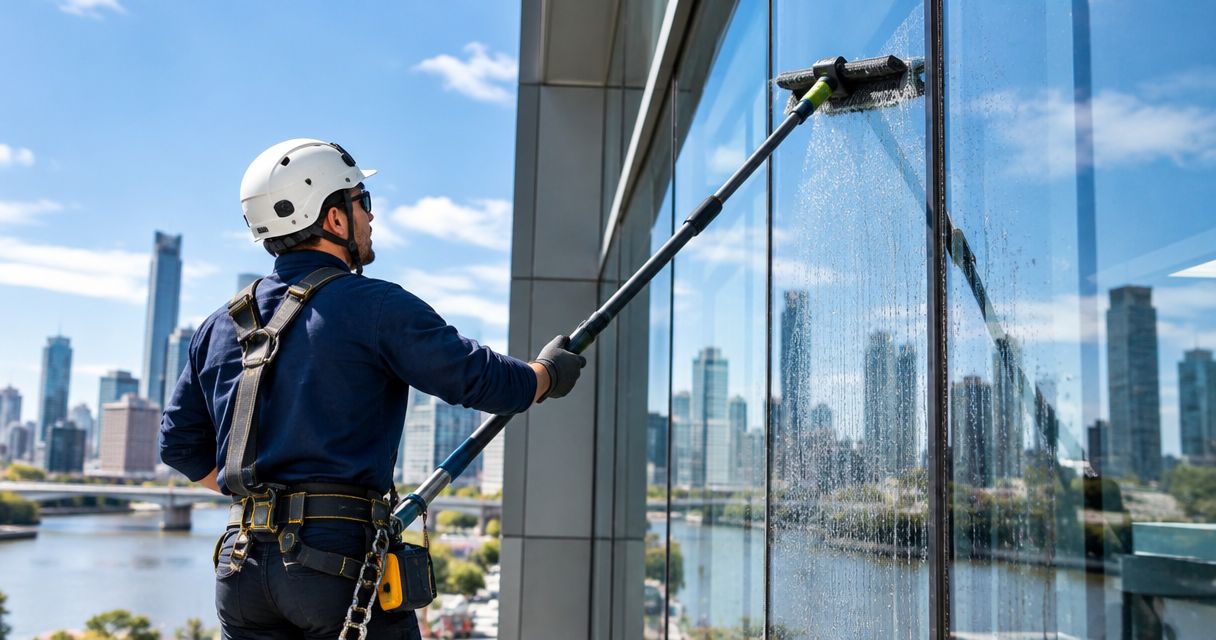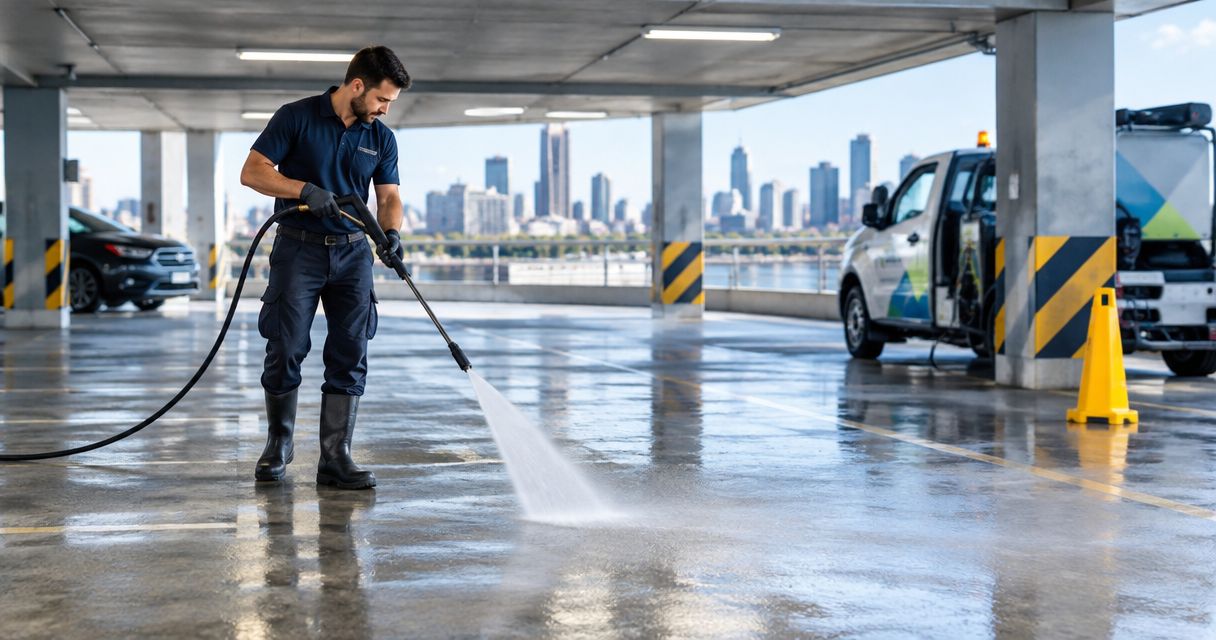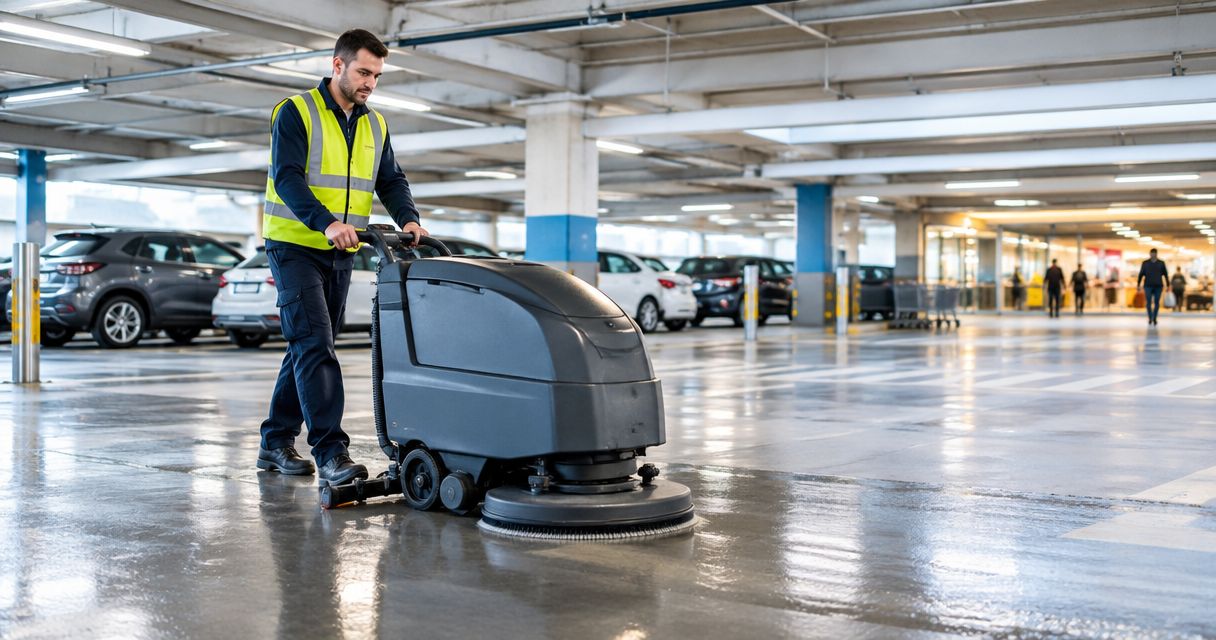
Shopping centre car park cleaning is the planned removal of litter, grit, spills and surface contamination to support safe access and usable parking areas. Effective car park cleaning for shopping centres in 2026 must account for pedestrians, moving vehicles, tenant deliveries and different floor finishes—not just how clean the concrete looks.
- Car park cleaning for shopping centres needs staged access, suitable cleaning methods and controlled wash-water collection.
- OZLINK Facility Services suits Brisbane property managers seeking pressure washing alongside commercial maintenance.
- Match mechanical sweeping, machine scrubbing and pressure washing to the surface and contamination.
- Reopen each area after inspection, not simply when the cleaning equipment leaves.
Why car park cleaning matters for shopping centres
A shopping centre car park is an operating area, not an empty slab. Shoppers cross traffic lanes, trolleys carry grit towards entrances, and loading areas need access while other sections are being cleaned. The cleaning plan must protect movement through the centre as well as remove dirt.
Build your 2026 scope around those competing uses. An entrance crossing needs different access controls from an isolated parking bay; a covered basement needs different equipment planning from an open-air deck. Treating them as identical creates avoidable gaps in the work.
When choosing a commercial cleaning contractor for a shopping centre, ask how the proposed method handles live traffic, surface protection and wastewater. A description that stops at pressure washing leaves the operational questions unanswered.
How to plan car park cleaning without losing control of access
Map your surfaces and problem areas
Start with a site walk and an annotated plan. A printed drawing, phone photographs and a spreadsheet are enough to record where contamination occurs and which surfaces need protection. Separate cleaning problems from defects: a cracked slab, failed coating or persistent leak needs a maintenance response, not repeated washing.
For your 2026 baseline, use 3 planning zones: parking areas, pedestrian routes and service areas. These are organisational categories, not a rule about how many sections your contractor must close. Subdivide each zone around the actual entrances, ramps and delivery routes.
Record the condition before discussing equipment. Concrete, asphalt, coated floors, line markings and tactile indicators should not receive an assumed common treatment.
- Mark entrances, crossings, ramps and accessible parking spaces.
- Photograph oil marks, loose grit, staining and damaged finishes.
- Identify drains, low points and areas where water collects.
- Record existing line-marking and coating defects.
- Flag leaks, cracks and loose fittings for separate assessment.
Choose the method for each surface
Begin with dry removal of litter and loose debris before deciding where wet cleaning is necessary. This keeps the scope focused on the contamination that remains rather than using water as the default answer to every problem.
Mechanical sweeping suits loose debris across parking areas. Machine scrubbing suits compatible hard surfaces requiring controlled wet cleaning. Pressure washing suits selected external surfaces and localised contamination, subject to the finish, drainage and access arrangements. None replaces checking the surface manufacturer's instructions where available.
Specify the outcome and surface constraints before specifying equipment. Ask for a discreet test area where coatings or markings are uncertain. Do not prescribe pressure settings from a generic checklist; the contractor needs to assess the actual surface and equipment combination.
- Remove litter and loose material before wet cleaning.
- Match the method to both contamination and surface condition.
- Check available coating and flooring care instructions.
- Test uncertain finishes in an agreed, discreet location.
- Record stains requiring treatment without promising complete removal.
Coordinate cleaning with maintenance
Use a shared work list to separate cleaning tasks from repair tasks. Your centre team can maintain this manually, with a location, photograph, responsible person and completion status for each item. This prevents a cleaner's observation from disappearing into an email chain.
OZLINK Facility Services is best suited to Brisbane property managers seeking pressure washing alongside commercial maintenance. Its stated services include specialist cleaning, floor restoration and reactive repairs. For a car park scope, confirm the proposed method, access arrangements and wastewater handling rather than assuming every requirement is included.
Review the commercial maintenance and specialist cleaning services against your site list. A combined service scope can address related work together, but cleaning completion must remain distinct from repair completion.
- Give every defect a location and photograph.
- Separate cleaning, repairs and specialist assessments.
- Assign responsibility for leaks before arranging repeat cleaning.
- Confirm which tasks sit inside the contractor's agreed scope.
- Keep unresolved defects visible at handover.
Stage access around centre operations
Plan closures with centre management, security and affected tenants before setting the work sequence. Start with the access routes that must remain usable, then fit the cleaning zones around them. A quiet trading period is not automatically a clear work window if deliveries or tenant movements continue.
Use a marked-up plan to show barriers, alternative routes, equipment positions and the person authorised to reopen each section. Include accessible pedestrian movement; redirecting people into vehicle lanes is not an acceptable substitute for a planned route.
For the 2026 work order, describe both the cleaning window and the reopening conditions. Do not promise a fixed drying time without accounting for the surface, method and conditions on site.
- Confirm tenant delivery and waste-collection movements.
- Keep emergency access and required exits unobstructed.
- Establish separated pedestrian routes around work areas.
- Identify equipment, hose and cable positions.
- Nominate who can approve reopening each section.
Plan wastewater and equipment controls
Trace where cleaning water will travel before wet work starts. Marking a drain on a drawing is not the same as confirming where it discharges. Identify the collection method and the approved disposal route with the contractor and relevant site authority.
Do not wash oil, detergent or dirty water into stormwater drains. If wastewater is proposed for a sewer connection, confirm the relevant utility's acceptance requirements before work. Keep disposal instructions specific to the site rather than relying on a general statement that the products are suitable.
For covered areas, check ventilation and equipment suitability as part of the work plan. A cleaning machine's ability to fit under a clearance bar does not establish that it is suitable for operating inside.
- Confirm drain destinations before wet cleaning.
- Agree on containment and wastewater collection arrangements.
- Establish the permitted disposal route before work begins.
- Check chemical safety information and surface compatibility.
- Review ventilation, equipment clearance and hose routes.
Inspect, record and adjust the schedule
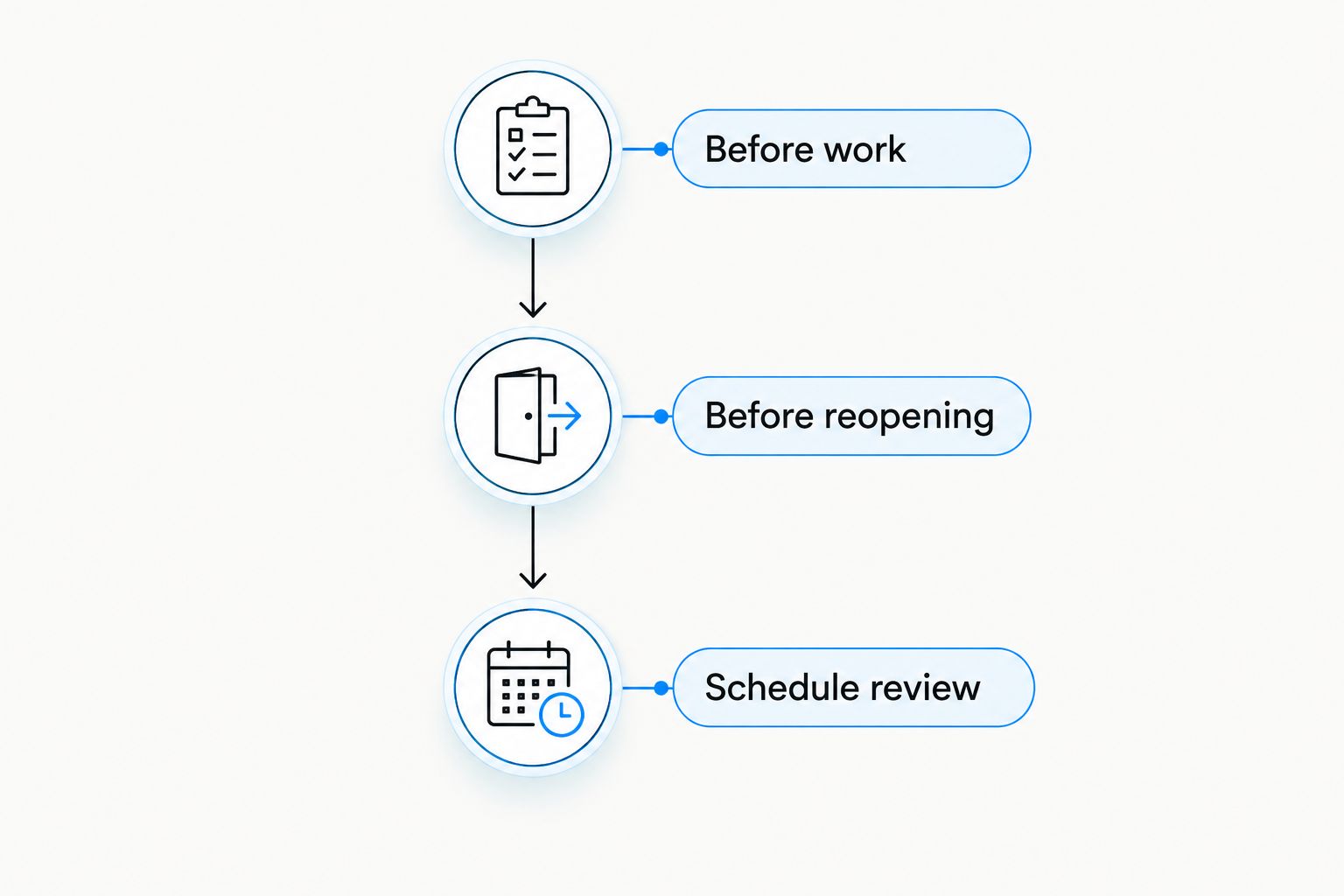
Set 2 inspection points: before work starts and before each section reopens. The first captures existing damage and scope boundaries. The second checks the cleaning outcome, remaining contamination, water, access controls and defects requiring follow-up.
Assign 1 named handover owner for each cleaning visit. That person should receive the completion record and decide whether outstanding items need another cleaning pass, a repair request or further assessment. A photograph alone does not establish that a surface has suitable slip resistance.
Use observations from your 2026 visits to adjust the programme. Increase attention where contamination returns; investigate the cause where the same stain or wet area repeatedly reappears. Keep the schedule responsive to actual conditions rather than treating every section identically.
- Capture comparable before-and-after photographs.
- Check for remaining grit, residue and standing water.
- Inspect pedestrian crossings, ramps and entrance approaches.
- Record unresolved stains and maintenance defects separately.
- Update the next visit's scope using observed conditions.
Compare the cleaning options for your centre
Choose the work package by the problem it solves. The options below are complementary: a centre can need routine debris removal, targeted wet cleaning and separate repairs within the same programme.
Ask each contractor to describe exclusions as clearly as inclusions. A suitable method with an incomplete access or wastewater plan is still an incomplete scope.
| Option | Best for | Main advantage | Key limitation |
|---|---|---|---|
| Manual litter collection and spot cleaning | Localised debris and immediate housekeeping | Direct attention to a specific area | Does not replace wider surface cleaning or defect repair |
| Mechanical sweeping | Loose grit and debris across parking areas | Covers broad areas without relying on wet cleaning | Does not remove embedded oil staining or repair finishes |
| Machine scrubbing | Compatible hard floors needing controlled wet cleaning | Combines agitation with dirty-water recovery | Requires suitable surfaces, access and machine selection |
| Pressure washing | Selected external surfaces and targeted contamination | Direct treatment of affected areas | Requires surface checks, containment and access controls |
| Coordinated cleaning and maintenance | Centres with contamination and physical defects | Separates cleaning work from associated repair needs | Requires a defined scope and responsibility for each task |
OZLINK Facility Services offers pressure washing and commercial maintenance; the correct combination still depends on your car park assessment. Confirm equipment suitability, wastewater arrangements and any specialist tasks before accepting a work order. Do not treat a broad service list as a site-specific method statement.
Discuss your car park cleaning scope
Outline your surfaces, access restrictions and maintenance concerns before agreeing on the work.
Common mistakes shopping centre managers make
Closing bays without planning pedestrian movement
A barrier around parking spaces does not resolve how shoppers reach the entrance. Plan the diversion from the customer's starting point, including accessible bays and trolley routes. Keep the route separated from cleaning equipment and vehicle movements.
Treating every dark mark as removable dirt
Oil staining, tyre marks, coating wear and underlying damage need different responses. Record what remains after an appropriate test treatment, then distinguish further cleaning from surface repair. Repeated aggressive cleaning is not a substitute for diagnosis.
Booking around trading hours but ignoring deliveries
A closed shopfront does not mean an inactive loading area. Confirm movements with centre operations and affected tenants, including early deliveries and waste collection. Put the agreed access window in the work order.
Accepting a clean-looking surface as proof of compliance
Appearance does not establish slip resistance or close an unresolved defect. Check the surface condition and any required assessment separately. Cleaning records support maintenance management; they do not replace site-specific safety decisions.
FAQ
What's the best method for cleaning a shopping centre car park?
The best method matches the surface and contamination: remove loose debris first, then select suitable scrubbing or pressure washing where needed. Include access controls and wastewater collection in the same scope.
How often should a shopping centre car park be cleaned?
Set cleaning frequency from inspections, contamination and how each area is used. Review entrance routes, loading areas and spill-prone sections separately rather than assigning every zone the same interval.
Can a shopping centre car park stay open during cleaning?
A car park can remain partly open when the work plan provides effective separation and usable alternative routes. Agree on phased closures, pedestrian access and reopening checks before cleaning starts.
Can pressure washing damage car park line markings?
Pressure washing can damage vulnerable or deteriorated line markings and coatings. Check their condition, follow available care instructions and agree on a test area before treating uncertain finishes.
Can car park cleaning water go into a stormwater drain?
Do not direct contaminated car park wash water into stormwater drains. Confirm containment, collection and a permitted disposal route before starting wet cleaning.
Does a clean car park mean the floor is slip compliant?
No. Visual cleanliness does not establish slip resistance. Keep cleaning checks separate from any surface testing or specialist assessment required for the site.
What should a shopping centre include in a 2026 cleaning brief?
Include the site plan, surface types, contamination, operating restrictions, drainage arrangements and handover criteria. OZLINK Facility Services can be considered for pressure washing alongside commercial maintenance, with the exact car park scope agreed before work.
One last thing
A recurring dirty patch can be a maintenance signal, not a cleaning failure. If the same area becomes wet or stained after each visit, record where the contamination starts and investigate the source before ordering another identical clean.
Make that the final check in your 2026 programme: does the next task remove contamination, prevent its return or repair the surface? Naming the task correctly gives the contractor a clear outcome and gives your centre team a useful completion record.