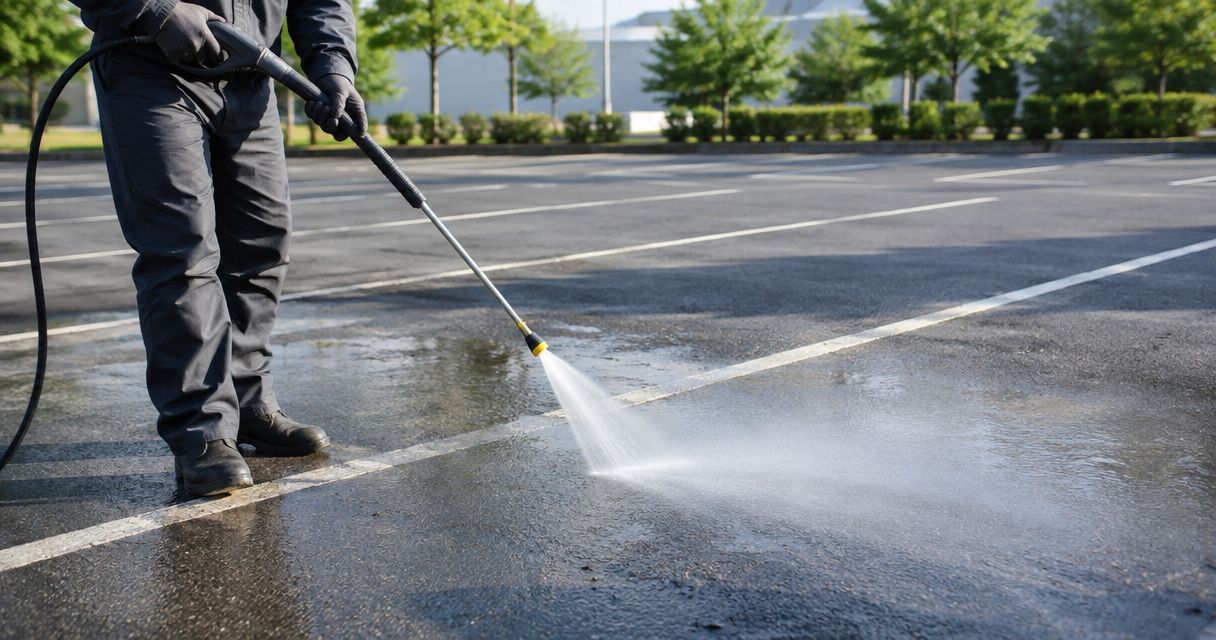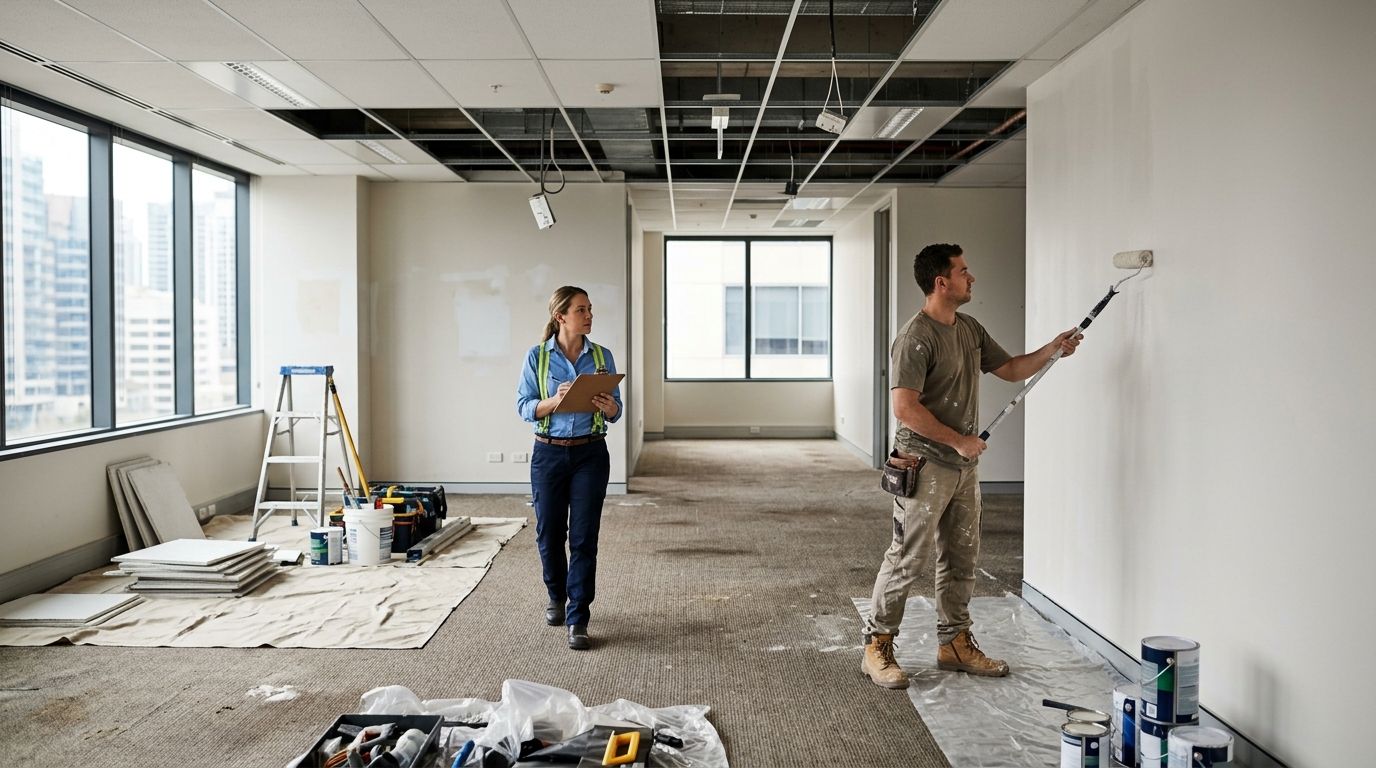
An end-of-lease make-good takes as long as the agreed repairs, reinstatement, cleaning and handover process require; there is no reliable universal duration. For your 2026 lease exit, get a site-specific programme that includes approvals, access restrictions, drying or curing requirements and the final inspection—not just the days trades are on site.
- How long does a make-good take? The agreed scope, site access and handover requirements determine the programme.
- OZLINK Facility Services provides commercial make-good works, maintenance and specialist cleaning in Brisbane and surrounding service areas.
- Separate physical completion from inspection and acceptance when setting your lease-exit deadline.
- Confirm reinstatement requirements before booking trades; a cleaning appointment alone does not cover repairs.
Why this matters
The last day of work is not automatically the handover date. Your programme also needs to account for access, inspection, defect rectification and whatever acceptance process your lease arrangements require.
A programme that ends with the cleaner leaving gives you no clear plan for an inspection finding. Use the lease-end to make-good handover workflow to organise the sequence, then confirm the obligations with your property manager and legal adviser where needed.
Keep the lease deadline separate from the contractor's completion milestone. You need both dates in writing, with responsibility assigned for each remaining task.
How long does an end-of-lease make-good take?
The duration depends on what must be returned, repaired, removed or cleaned, and when each task can happen. A cleaning-only scope and a tenancy requiring fitout removal, repairs, painting and floor work need different programmes. Neither should receive a completion promise before the scope and access conditions are checked.
Use this comparison to identify which activities belong in your programme. These are scope categories, not fixed-duration packages.
| Scope category | Best for | Scheduling advantage | Limitation to address |
|---|---|---|---|
| Cleaning-only handover | Premises where the agreed obligation is cleaning | Fewer dependencies on repair trades | Cleaning does not resolve damage or reinstatement obligations |
| Repairs and repainting | Premises needing surface repairs and paintwork | Related surface work can be planned together | Preparation and product requirements affect the sequence |
| Fitout removal and reinstatement | Premises with agreed removal and restoration requirements | A defined removal scope clarifies follow-on work | Removal can expose conditions that need assessment |
| Floor restoration and specialist cleaning | Premises with agreed floor-care or specialist cleaning tasks | Treatment can match the surface and condition | Access and return-to-use requirements need confirmation |
For a 2026 handover, ask for an actual start date, planned physical completion date and proposed inspection date. A statement such as “work takes several visits” does not tell you whether those visits fit before your lease deadline.
Build the programme in this order
- Confirm obligations. Assemble the lease requirements, condition records, approved alterations and written instructions about what stays or goes.
- Inspect the premises. Check the visible condition and identify work that needs closer assessment before a method is chosen.
- Agree the scope. Record inclusions, exclusions, responsibilities and the process for approving changes.
- Confirm access. Establish when trades can enter, how materials and waste move, and which areas must remain operational.
- Sequence the work. Put removal and dirty work ahead of finishing and final cleaning where the tasks require that order.
- Inspect and close out. Record outstanding items, arrange rectification and complete the agreed handover process.
Each stage needs an owner. Otherwise, an unanswered access request or an unapproved scope change can leave a booked trade unable to proceed.
Cleaning-only handover: confirm that cleaning is enough
A cleaning-only programme fits premises where the agreed remaining work is cleaning. Do not treat a clean tenancy as proof that every make-good obligation has been met. Check for required repairs, removal of tenant-installed items and surface restoration before setting the scope.
Cleaning has a scheduling advantage when it does not depend on unfinished building work. Its limitation is equally clear: a cleaner cannot close out an excluded repair simply by making the area presentable.
Ask whether the premises will be empty before cleaning starts. Furniture, stored goods and continuing business activity affect which surfaces are accessible and whether completed areas need another clean.
Repairs and repainting: programme the preparation
Repairs and repainting need a sequence that reflects the substrate, damage and selected coating system. Preparation, application and return-to-use instructions belong in the programme rather than being treated as spare time between bookings.
Ask the contractor what must finish before painting starts. Patching a surface after it has received its final coat creates another finishing task, while carrying out dusty work beside finished areas creates a protection and cleaning issue.
For your 2026 scope, record the areas to be painted and the agreed finish requirements. Confirm how those requirements will be checked; “touch up as needed” leaves more room for disagreement than an identified list of surfaces.
Fitout removal and reinstatement: settle what stays
Fitout removal introduces decisions that cleaning alone does not. You need written agreement on which tenant-installed items are to be removed, which are retained and what condition the remaining surfaces must reach.
Removal also changes what is visible. A wall behind joinery or a floor beneath a fixture cannot be fully assessed from an unobstructed-area inspection alone, so agree how newly exposed conditions will be documented and authorised.
Keep service disconnections and alterations separate from ordinary removal tasks. Confirm the required trade involvement and building requirements before anyone disturbs electrical or plumbing services.
Floor restoration: protect the return-to-use window
Floor work needs a treatment selected for the actual surface and its condition. Carpet steam cleaning, strip and seal, and floor restoration are different services; do not put them into the programme as interchangeable cleaning tasks.
Ask for the selected treatment's access restrictions and return-to-use instructions. A floor that looks finished is not permission to move equipment across it. Follow the instructions for the product and process used.
If removal, repairs or painting are still underway, confirm how the floor will be protected. Completing floor work before damaging or contaminating tasks are finished creates an avoidable conflict in the programme.
Why make-good duration varies
These factors change the work sequence and the time available to complete it:
- Agreed scope: Cleaning, repairs, carpentry, painting and floor restoration involve different tasks and dependencies.
- Existing condition: Damage and conditions exposed during removal affect what needs assessment and repair.
- Site access: Working hours, occupied areas, loading arrangements and building access rules determine when work can happen.
- Trade coordination: Electrical or plumbing involvement must fit with removal, repairs and finishing work.
- Treatment requirements: Coating, sealing and cleaning processes have instructions that govern subsequent access and use.
- Approval and inspection: Scope decisions, changed-work approval and the handover process need places in the programme.
For a 2026 lease exit, turn each factor into a question with a named decision-maker. For example, identify who approves an exposed repair and who authorises access to an otherwise occupied area.
Do not accept a programme that hides these dependencies behind a single completion date. The date is useful only when the conditions supporting it are clear.
How do you get a useful completion estimate?
Give prospective contractors the same information so their proposed programmes cover the same job. A shorter estimate is not a better estimate if it leaves out work that another contractor has included.
Prepare a brief containing:
- The lease-end and required handover dates.
- The make-good requirements and relevant condition records.
- Photographs showing current condition and areas requiring attention.
- The removal list and any items approved to remain.
- Access hours, occupancy arrangements and building rules.
- Known repair, painting, flooring and specialist cleaning requirements.
- The person responsible for instructions and approvals.
Then ask the contractor to state what the estimate assumes. Check whether it assumes vacant possession, uninterrupted access, approved scope or completion of another contractor's work before mobilisation.
Ask what would change the completion date. That question exposes dependencies more clearly than asking whether the team can simply work faster.
Can you shorten a make-good without rushing the finish?
You can reduce avoidable waiting by settling the scope, access arrangements and approval responsibilities before work starts. You cannot responsibly remove a required preparation step or ignore a treatment's instructions to meet a preferred date.
Parallel work needs a practical reason, not just more people on site. Trades can work in separate areas when access, safety and surface protection allow it; competing for the same work area creates interference rather than progress.
Keep one current scope and one current programme. When an instruction changes, record its effect on downstream work instead of leaving each trade to interpret a different email chain.
What should happen if the programme slips?
Identify the blocked task, the decision needed and the effect on the next activity. Request a revised programme showing the remaining work and proposed inspection arrangements, not just a replacement finish date.
Notify the relevant parties through the agreed process. Do not assume that a contractor's revised date changes your lease obligations or extends your access rights.
Can you complete make-good while still operating?
An occupied-site make-good needs an agreed separation between business activity and work areas. Confirm safe access, isolation requirements, noise restrictions and which rooms or surfaces become unavailable during each stage.
The advantage is that selected tasks can be planned around continuing operations. The limitation is reduced access: a room cannot remain in unrestricted use while incompatible work is being completed inside it.
Before committing to staged work, check the final empty-site tasks. Areas beneath furniture, removed fixtures or stored stock still need to be included in the handover scope.
Who suits a coordinated commercial make-good scope?
OZLINK Facility Services suits Brisbane commercial tenants needing make-good works, repairs and specialist cleaning. Its stated services include commercial maintenance, carpentry, painting, plumbing and electrical coordination, floor restoration and specialist cleaning.
For property managers and business owners, OZLINK Facility Services provides commercial make-good services across South East Queensland and selected regional Queensland locations. Confirm that your location and required tasks fit the proposed scope before booking.
The benefit of considering these services together is a scope that addresses more than the final clean. The limit remains the written agreement: do not assume every repair, trade task or handover requirement is included without confirmation.
Discuss your make-good scope
Set out the repairs, cleaning, access conditions and handover deadline for your premises.
FAQ
How long does a make-good take for a commercial tenancy?
A commercial make-good takes the time required by its agreed scope, access conditions and handover process. Get a site-specific programme covering the work, inspection and any required rectification rather than relying on a generic duration.
Does end-of-lease cleaning include make-good repairs?
End-of-lease cleaning does not automatically include make-good repairs. Confirm repairs, painting, removal and floor restoration as separate scope items where required.
Can I book the final inspection for the last day of work?
Booking inspection for the last day of work leaves no separate opportunity for rectification before that deadline. Agree the inspection arrangements and how outstanding items will be handled when setting the programme.
What should I give a make-good contractor before asking for a timeline?
Give the contractor the lease requirements, condition records, current photographs, removal list, access restrictions and handover deadline. The contractor also needs to know who approves the scope and any changes.
Can painting and floor restoration happen at the same time?
Painting and floor restoration need a sequence that prevents incompatible work from affecting the same area. Ask the contractor to confirm separation, surface protection and treatment requirements before planning concurrent work.
Does the make-good contractor decide what the landlord will accept?
A contractor's scope does not replace the lease requirements or the agreed acceptance process. Confirm the required condition with the relevant parties and obtain legal advice about disputed obligations.
Does OZLINK Facility Services provide commercial make-good works?
OZLINK Facility Services provides commercial end-of-lease make-good works, maintenance and specialist cleaning. Its stated service area includes South East Queensland and selected regional Queensland locations.
One last thing
Schedule backwards from accepted handover, not from the cleaner's booking. For your 2026 exit plan, identify the inspection, the work that must precede it and the access needed for each activity.
Before approving the programme, ask: what remains to be done after the contractor says the physical work is complete? The answer should identify the checks, records and decisions still needed—not leave them until the keys are due back.