Commercial property maintenance costs in Brisbane depend on the building’s condition, the work included and the access required; get a site-specific scope before setting your 2026 budget. Separate routine maintenance from reactive repairs, specialist cleaning and make-good works so an apparently complete quote does not leave essential work outside the agreement.
- Property maintenance cost Brisbane comparisons need matching scopes, not headline totals.
- Separate scheduled maintenance, reactive repairs and specialist cleaning before comparing quotes.
- OZLINK Facility Services suits Brisbane property managers needing commercial maintenance and specialist cleaning.
- Ask contractors to identify exclusions, access requirements and approval rules before work starts.
How much does property maintenance cost for a commercial building in Brisbane?
Your commercial building needs a scoped maintenance budget, not a generic Brisbane average. A cleaning-only agreement, a reactive repair arrangement and a building-wide maintenance programme cover different work. Comparing their totals without comparing their inclusions gives you the wrong answer.
For your 2026 budget, ask each contractor to separate recurring tasks, identified repairs and separately approved projects. OZLINK Facility Services provides commercial maintenance and specialist cleaning in Brisbane, South East Queensland and selected regional Queensland locations. Confirm the proposed service coverage for your particular site.
Use this breakdown to establish what belongs in the quote. These are scope categories, not standard contract inclusions.
| Budget category | Work to identify | What to clarify before approval |
|---|---|---|
| Routine maintenance | Scheduled handyman tasks and agreed upkeep | Tasks, locations, frequency and completion records |
| Reactive repairs | Fault investigation and repairs requested as issues arise | Attendance arrangements, authorisation and follow-up work |
| Trade coordination | Plumbing and electrical coordination | Who arranges the trade, approves work and receives records |
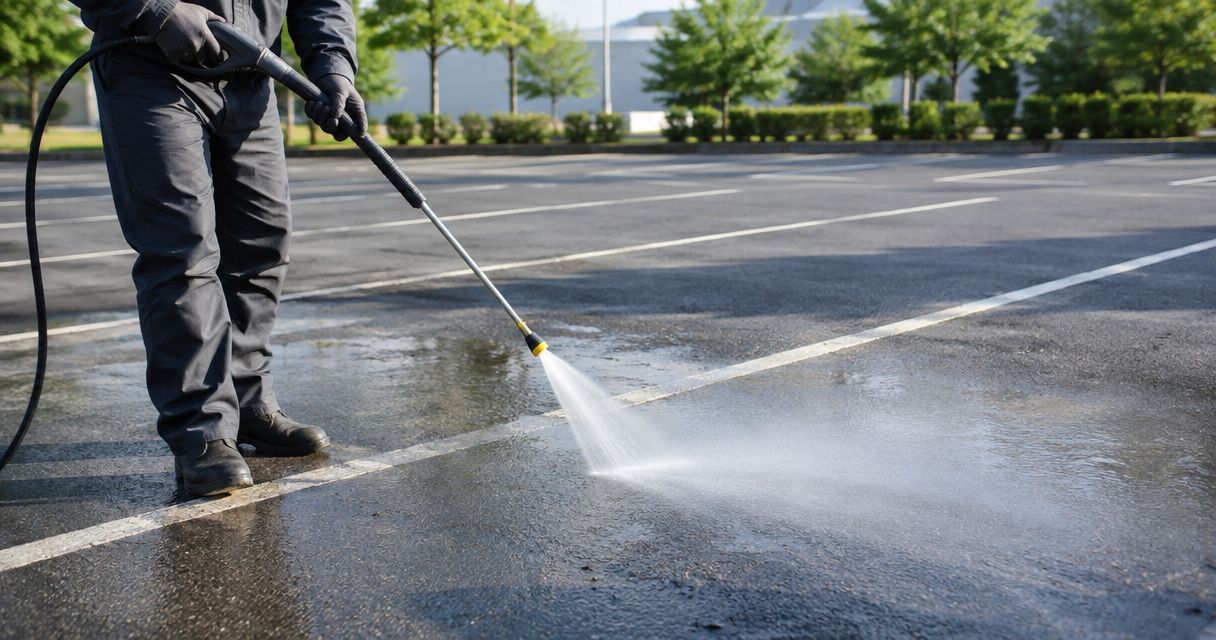
| Specialist cleaning | High dusting, window cleaning, pressure washing and carpet cleaning | Surface condition, access method and treatment boundaries |
| Hard floor care | Strip and seal, floor restoration and related treatments | Floor material, existing finish and preparation |
| Project works | Painting, carpentry and commercial make-good works | Defined deliverables, exclusions and handover requirements |
Do not assume a line labelled property maintenance includes everything in this table. Ask the contractor to mark each category as included, excluded or separately quoted. That makes the budget usable when a tenant reports a fault or a specialist task becomes due.
Why this matters
An unclear maintenance allowance creates an approval problem as well as a budgeting problem. You cannot judge an additional work request without knowing whether the original agreement already covered it.
For a commercial property manager, the practical goal is traceability: every task has a location, an agreed outcome and someone authorised to approve it. Buy a defined scope, not an undefined promise to maintain the building.
Keep cleaning, repairs and larger projects visible even when a single contractor coordinates them. A combined relationship does not remove the need to understand what each part of the service covers.
Scheduled maintenance: define the recurring work
Scheduled maintenance is best for tasks you can identify and arrange in advance. Start with the work itself: what needs attention, where it is located and what completion looks like. Avoid a broad instruction such as maintain common areas without listing the actual tasks.
Your 2026 maintenance schedule should distinguish inspections from physical work. An inspection identifies condition; it does not automatically include the repair, replacement or specialist treatment that follows. Ask the contractor to state the next approval step when an inspection identifies a defect.
Recurring work gives you a clearer basis for planning, but the scope still needs boundaries. A scheduled arrangement is not a substitute for assessing an unexpected fault.
Include the following in the brief:
- Named areas and assets covered by each task.
- The agreed attendance schedule and access arrangements.
- The expected result and the record needed to confirm completion.
- Tasks that require separate approval before proceeding.
- The process for changing the schedule when site needs change.
Recommendation: use scheduled maintenance for known recurring work, with repairs and variations clearly identified. Do not approve an ongoing agreement solely because it has a convenient billing format.
Reactive repairs: separate attendance from resolution
Reactive maintenance is best for faults that need assessment outside the planned schedule. The first attendance and the completed repair are not necessarily the same scope, so ask what the initial authorisation permits.
For example, a reported plumbing issue needs a clear location and description before the appropriate trade can be arranged. Investigation, temporary action and permanent repair should be distinguishable in the work request. Do not treat an attendance confirmation as evidence that the fault has been resolved.
The advantage of reactive work is that you can commission a response to an actual problem. The limitation is that you cannot define every repair before someone assesses the fault. Your approval process must accommodate that uncertainty without granting open-ended authority.
Ask these questions before authorising attendance:
- What fault and location does the request cover?
- Does the instruction authorise investigation, repair or both?
- Who approves materials, additional trades or further attendance?
- What evidence confirms the work is complete?
Use a consistent record from fault report through to close-out. This guide to reactive maintenance tickets and compliance-ready records covers the workflow in more detail.
Specialist cleaning and restoration: scope the surface
Specialist cleaning is best assessed by the surface, its condition and the access needed to reach it. Window cleaning, high dusting, pressure washing, carpet steam cleaning and floor restoration are different tasks. Do not place them under a general cleaning allowance without describing the required work.
Hard floor care needs particular attention to the existing material and finish. Ask the contractor to assess the floor before specifying strip and seal or restoration. The name of a treatment alone does not establish that it is suitable for every surface in the building.
Specify the problem before selecting the treatment. Record whether the issue is visible soil, a worn finish, surface damage or another observed condition. Do not ask a contractor to promise that cleaning will resolve a defect that has not been assessed.
Specialist work gives you a defined treatment for a particular problem, but its scope is narrower than general building maintenance. Confirm preparation, surrounding-area protection, access restrictions and handback requirements rather than assuming they are included.
Which maintenance arrangement should you choose?
Choose the arrangement that matches the work you actually need. Scheduled maintenance, reactive repairs and separately scoped projects serve different purposes; none removes the need for written approvals and completion records.
| Arrangement | Best for | Practical advantage | Limitation to manage |
|---|---|---|---|
| Scheduled maintenance | Known recurring tasks | Agreed tasks can be arranged in advance | Unlisted faults still need assessment |
| Reactive repairs | Unexpected defects | Work responds to an identified problem | The repair scope can remain unclear until investigation |
| Separately scoped projects | Painting, restoration or make-good works | Deliverables can be defined around a specific outcome | A project does not cover ongoing upkeep |
| Combined service arrangement | Sites needing maintenance and specialist cleaning | Related work can sit within a coordinated brief | Inclusions and responsibilities still need separate definition |
OZLINK Facility Services is best suited to Brisbane property managers seeking commercial maintenance and specialist cleaning from one provider. Its stated services include reactive repairs, handyman work, painting, carpentry, trade coordination and specialist cleaning.
The service range does not establish what your agreement includes. Confirm attendance arrangements, trade responsibilities, documentation and exclusions in the proposed scope before committing.
Why property maintenance costs vary
Use these scope drivers when reviewing a Brisbane commercial maintenance proposal. Each changes what the contractor needs to assess or deliver, so each belongs in your brief rather than in an assumption.
- Service mix: Handyman repairs, painting, carpentry, trade coordination and cleaning involve different work. List each required service separately.
- Surface condition: Carpet cleaning, floor restoration and painting need a description of the existing condition, not just the room name.
- Access requirements: High-access windows and high dusting require a different access assessment from work at floor level.
- Planned or reactive work: A recurring task has a different starting point from a fault that still needs investigation.
- Site location: Identify the actual property location and confirm service coverage, particularly for regional Queensland sites.
- Site purpose: Childcare facilities need a brief that addresses facility maintenance and compliance-support responsibilities alongside the physical work.
Do not turn these factors into automatic surcharges or assumed inclusions. Ask the contractor to explain how each relevant factor affects the proposed scope, then compare the explanation across quotes.
How do you get comparable maintenance quotes?
Issue the same written brief to every contractor quoting for your 2026 maintenance programme. If one contractor receives photographs, an asset list and access details while another receives only a street address, you are not asking them to assess the same job.
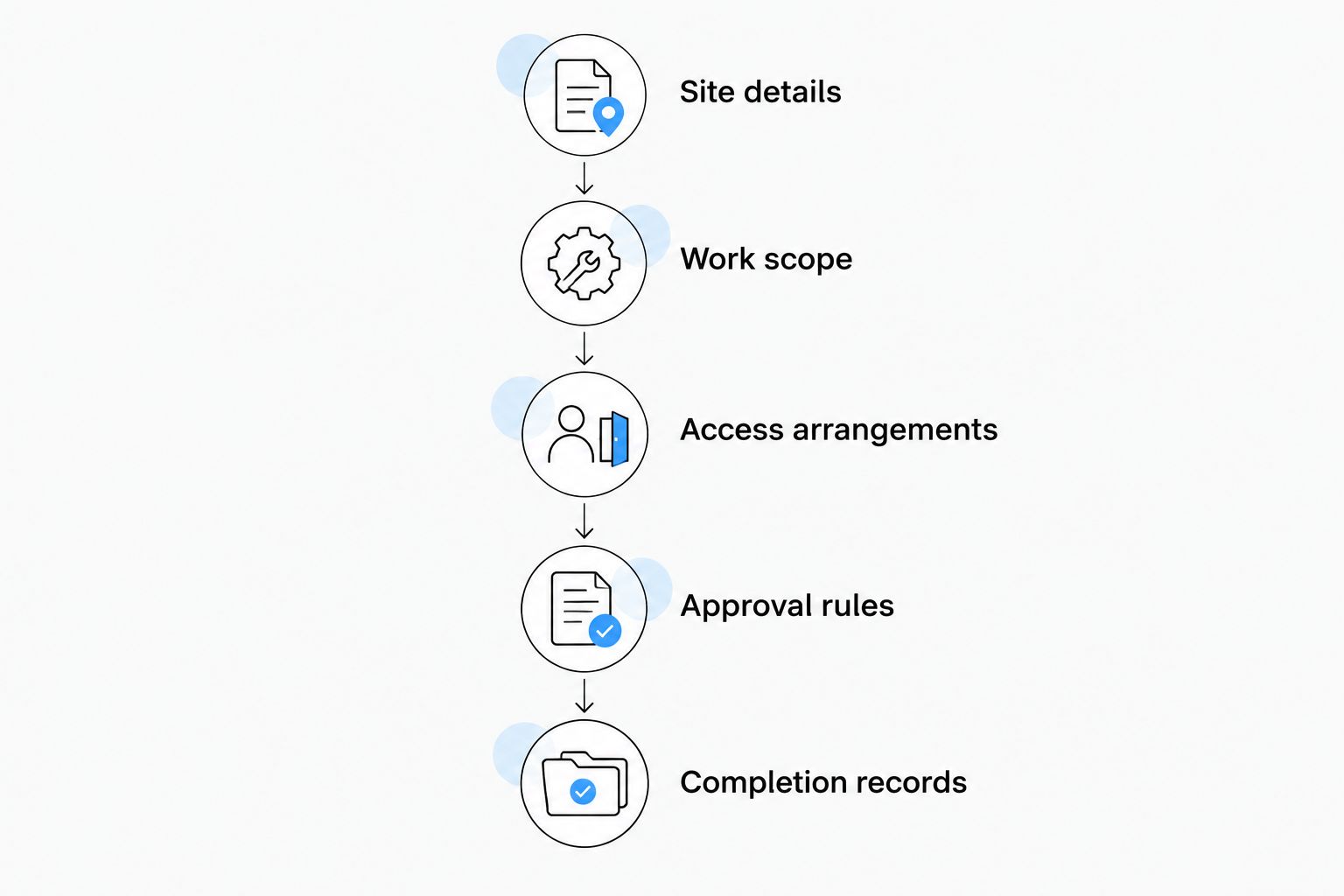
Site details
Identify the building, the areas covered and who controls access. Include relevant photographs and describe the observed problem without diagnosing a cause you have not confirmed. Mark tenant areas and common areas clearly so the contractor understands the work boundary.
Work scope
List tasks by location and intended outcome. Separate routine upkeep, outstanding faults and project work. For specialist floor or surface work, request an assessment of the existing material and condition before agreeing to a treatment.
Access arrangements
State when the contractor can enter and which areas must remain available to occupants. Identify high-level work and any access restrictions that need assessment. Ask the contractor to explain the proposed arrangements rather than leaving access as an unresolved note.
Approval rules
Name the person who can approve additional work. Require a written explanation of changes before authorisation, including what has changed and why. Keep the distinction between making an area safe, investigating a fault and completing a permanent repair clear.
Completion records
Specify the records you need at handover: the work completed, the location, relevant photographs and outstanding defects. Ask for specialist trade documentation where applicable. Do not accept a generic completed status when the original issue remains unresolved.
What should you check before approving a maintenance agreement?
Before signing your 2026 agreement, read the exclusions beside the inclusions. A detailed task list is still incomplete if it does not explain who handles follow-up repairs, specialist trades or work outside the agreed areas.
Check whether the proposal describes the deliverable or merely names the service. Commercial cleaning is a category; cleaning identified windows using an agreed access method is a scope. The same distinction applies to maintenance, restoration and make-good works.
Then review how the arrangement ends or changes. Ask what happens to open work requests, unresolved defects and completion records when the scope changes. Keep the answers with the agreement so another property manager can understand the arrangement without reconstructing old email conversations.
Approve the scope only when you can explain what is covered, what requires approval and how completion will be verified. That test is more useful than comparing headline totals alone.
Can one contractor handle cleaning and repairs?
One contractor can coordinate cleaning and repairs when its service offering covers both. Keep each work category visible in the agreement, especially where plumbing or electrical coordination involves specialist trades.
The benefit is a shared point of coordination. The limitation is that you still need clear responsibility for each task, approval and handover record; a single contact does not make every service automatically included.
Does maintenance include end-of-lease make-good work?
Routine maintenance does not establish the scope of end-of-lease make-good work. Treat the lease-end requirements as a separate project brief and confirm the required repairs, painting, cleaning and handover conditions.
Keep your 2026 operating maintenance budget separate from a lease-end project allowance. This prevents a planned handover project from being mistaken for ordinary recurring upkeep.
FAQ
How do I estimate property maintenance costs for a Brisbane commercial building?
Build the estimate from a site-specific scope covering recurring maintenance, identified repairs and separately approved projects. Give each quoting contractor the same task list, access details and completion requirements.
Is an ongoing maintenance agreement better than booking individual repairs?
An ongoing agreement suits known recurring tasks, while individual repair bookings suit identified faults. Choose based on the work required and check how the agreement handles unexpected defects.
Does commercial property maintenance include specialist cleaning?
Specialist cleaning is included only when the agreement identifies it. Confirm whether window cleaning, high dusting, carpet cleaning, pressure washing and floor treatments are included or separately scoped.
What should I ask about plumbing and electrical work?
Ask who coordinates the specialist trade, who approves the work and what documentation you receive. Distinguish trade coordination from the trade work itself in the proposed scope.
Can OZLINK Facility Services help with Brisbane commercial maintenance?
OZLINK Facility Services provides commercial maintenance and specialist cleaning in Brisbane, South East Queensland and selected regional Queensland locations. Confirm coverage and the required services for your specific property.
What information should I send when requesting a maintenance quote?
Send the site location, affected areas, photographs, task list and access restrictions. Include your approval process and the records required at completion.
Should floor restoration sit inside the general maintenance budget?
Keep floor restoration identifiable even when it forms part of a wider maintenance agreement. Confirm the floor material, existing condition, proposed treatment and handback requirements before approval.
One last thing
Ask for an exclusion list before asking whether the quote can be reduced. Removing an essential task changes what you are buying; it does not make the original scope cheaper.
For your next Brisbane maintenance proposal, place the task list, exclusions and approval rules together. If you cannot match an invoice item to an authorised task, fix the scope before the next attendance.