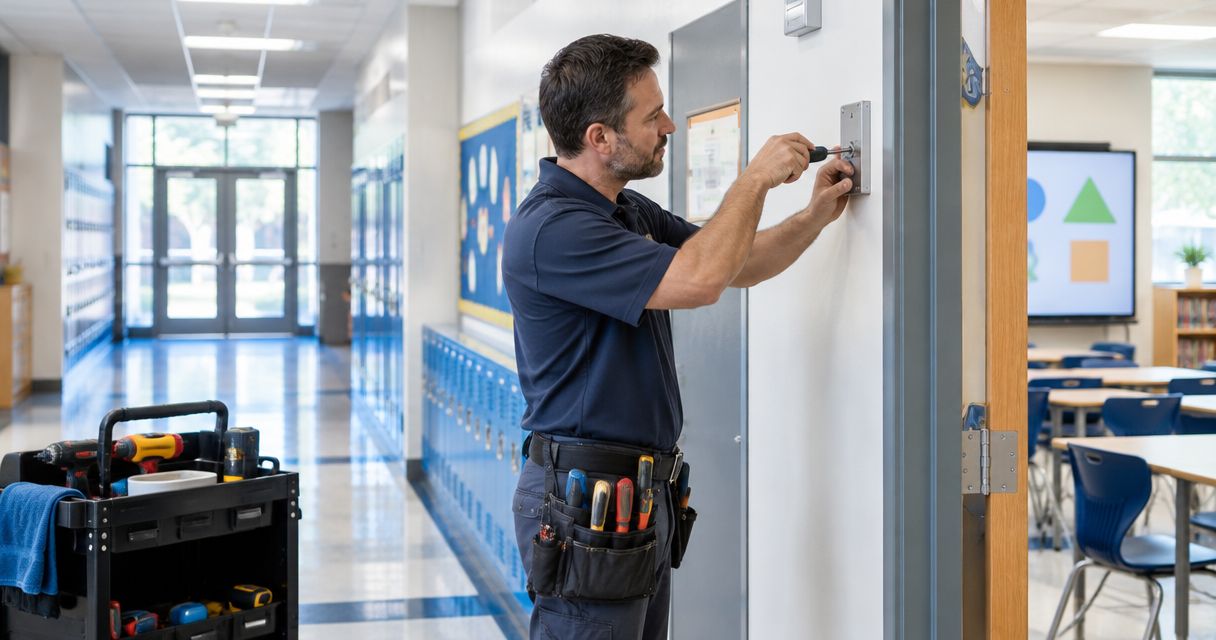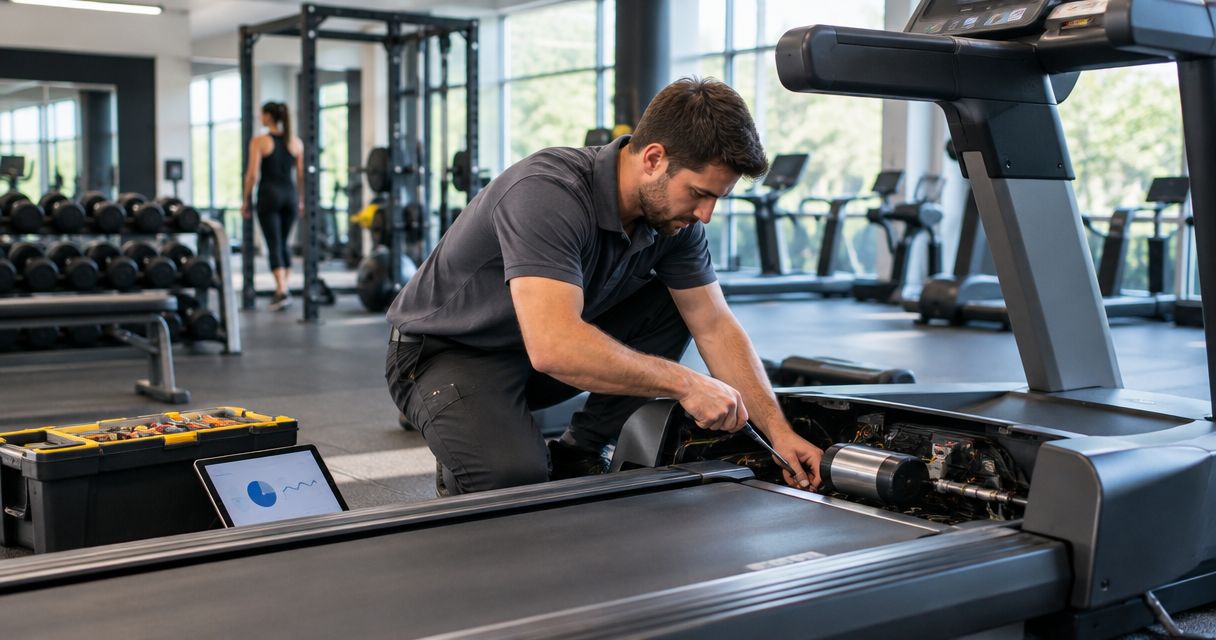
Fitness centre reactive maintenance is the repair of unexpected building faults with the aim of restoring safe access and keeping your centre operating. This 2026 guide explains how to manage wet changing rooms, damaged floors and failed fixtures without confusing general facility repairs with specialist gym equipment servicing.
- Reactive maintenance for fitness centres starts with isolating hazards, not booking the quickest available repair.
- OZLINK Facility Services suits Queensland fitness centres needing commercial reactive repairs and plumbing or electrical coordination.
- Keep gym equipment servicing separate from building maintenance unless the contractor explicitly confirms that scope.
- Record the fault, repair and reopening decision together; use repeat failures to plan preventive maintenance.
Why reactive maintenance matters for fitness centres
A leaking shower, loose threshold or damaged changing-room door affects more than appearance. Members move between exercise areas, amenities and entrances, so your repair plan must control access as well as fix the defect. A small work area still needs a safe route around it.
OZLINK Facility Services is best for Queensland fitness centres seeking commercial building repairs and trade coordination. Its stated services include reactive repairs, handyman work, carpentry, commercial maintenance, and plumbing and electrical coordination. Start with OZLINK Facility Services for those building-related needs; confirm specialist equipment work separately.
The practical constraint is keeping occupied areas separate from repair work. A contractor needs access to the fault, but your reception team also needs to know which facilities remain open. Neither a booking confirmation nor a warning sign establishes that an area is safe to use.
For your 2026 maintenance plan, separate three decisions: what needs immediate isolation, who is qualified to repair it, and what evidence permits reopening. That distinction keeps operational pressure from becoming the repair standard.
How to manage reactive maintenance for fitness centres
1. Isolate the hazard before arranging repairs
Start with a staff report and a safe visual check. Identify the affected area, stop access where necessary and notify the duty manager. Do not ask reception staff to investigate electrical faults, dismantle equipment or test a damaged fixture through repeated use.
A wet entrance and a broken locker hinge need different controls. Judge the immediate consequence of continued use rather than the inconvenience of closing the area. If there is immediate danger, follow your emergency procedures instead of treating the incident as an ordinary maintenance booking.
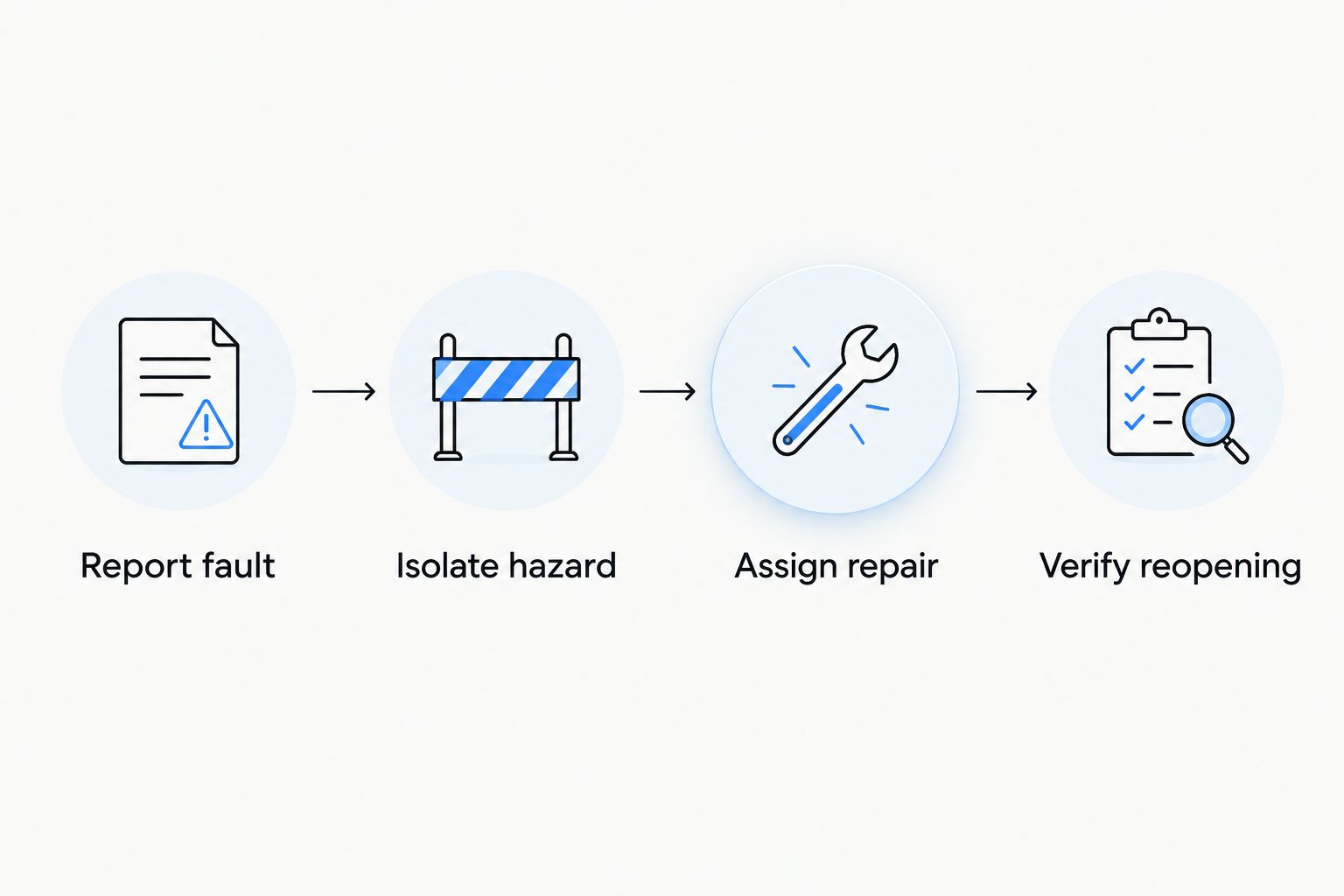
Use a simple sequence: Report fault, Isolate hazard, Assign repair, Verify reopening. Apply it to building defects throughout your centre so staff know what happens after they report a problem.
- Report fault: identify the room, fixture and visible symptoms.
- Isolate hazard: prevent access without obstructing emergency exits.
- Assign repair: nominate the manager responsible for arranging work.
- Verify reopening: keep the area closed until the required checks are complete.
2. Record the fault in one job record
A shared spreadsheet or existing maintenance register is enough to start. Give each incident 1 job record rather than spreading instructions across messages, reception notes and contractor calls. Keep personal information out of fault photographs and descriptions.
Capture 2 photographs where safe: one showing the surrounding area and one showing the defect. A close-up of a leak means little without its location, and a wide shot alone often misses the damaged connection. Do not enter an isolated area just to improve the photographs.
Include observations rather than diagnoses. Write that water appears beneath a basin when the tap runs; do not declare that a pipe has failed without confirmation. Record whether the fault affects a shower, accessible amenity, entry route or exercise area.
- Identify the exact room and asset using your own site naming system.
- Record when staff first noticed the fault and what they observed.
- Attach photographs taken without exposing members or staff to risk.
- Note access restrictions and any temporary controls already in place.
- Keep contractor instructions and completion evidence in the same record.
3. Assign the right repair scope
Use your existing asset records, lease responsibilities and contractor contacts to identify who owns the repair. A loose door handle, faulty light and damaged treadmill belt are not interchangeable handyman tasks. Route electrical and plumbing work to appropriately licensed trades, and equipment faults to the relevant specialist.
For building-related faults, OZLINK Facility Services reactive maintenance covers commercial repairs and coordination across its stated service areas. That gives a centre manager a coordination option instead of arranging each building task independently. Confirm the location, scope and attendance arrangements before booking; do not assume every regional site or fault is covered.
Keep exercise equipment outside the general building repair brief unless the provider confirms the work. A centre can have both a facility maintenance partner and an equipment servicing specialist without duplicating responsibility.
- Separate building defects from exercise equipment faults.
- Check whether the landlord, tenant or equipment provider owns the task.
- Identify the trade qualification or specialist knowledge required.
- Send the fault record before requesting attendance.
- Confirm exclusions, access requirements and the authorised repair scope.
4. Set access and approval rules before attendance
Plan the work area on a simple floor plan or annotated photograph. Mark the contractor entrance, affected amenities, member routes and any storage needed for tools or materials. Staff should not have to improvise a route through a class or occupied changing room.
Build the 2026 attendance brief around your actual timetable. Specify when classes occupy nearby rooms, when amenities are busiest and who can approve changes to the work. Ask the contractor what isolation, ventilation or exclusion arrangements the proposed method requires.
You also need an approval boundary. If opening a fixture exposes further damage, the contractor should know who can authorise additional work and what information that person needs. A clear boundary prevents an unattended scope change or an unfinished repair awaiting a decision.
- Nominate an on-site contact and an alternative decision-maker.
- Provide access instructions without sharing member security information.
- Identify areas that must remain unavailable during the work.
- Confirm how staff will communicate temporary closures to members.
- Define who approves changes and how those approvals are recorded.
5. Verify the repair before reopening
Ask for a clear description of the fault found, work completed and any remaining restrictions. A completed attendance is not the same as a completed repair. Where the contractor leaves a temporary measure, record its limitations and the next action before closing the job.
Your reopening check should match the problem. A repaired door needs an appropriate operational check; a wet floor needs the source addressed and the surface made safe. Specialist trade verification belongs with the qualified person, not a staff member improvising a technical test.
Keep 3 timestamps in the job record: reported, attended and reopened. These are useful operational records, not promised response targets. They distinguish waiting for attendance from time spent repairing and time spent checking the area.
- Obtain the contractor's completion notes and relevant trade documentation.
- Record unresolved defects and any restrictions on use.
- Check that tools, waste and temporary work materials are removed.
- Confirm the affected route or amenity is ready for its intended use.
- Record who authorised reopening and when.
6. Give plumbing faults a symptom-led handover
Changing-room plumbing deserves a specific brief because a blocked drain, leaking fixture and water supply issue require different investigation. Start by recording which fixtures are affected and when the symptoms occur. Avoid repeatedly operating a fixture if that spreads water or worsens the problem.
The principle behind what to tell a plumber is straightforward: describe the symptom, location and access constraints rather than naming an unconfirmed cause. For a fitness centre, include whether showers, toilets or adjacent rooms are affected and whether the area is already closed.
Tell the contractor about previous work on the same asset, but distinguish records from staff recollections. Your 2026 fault log should preserve the original symptom even after the diagnosis changes. That makes repeat incidents easier to compare without treating every wet patch as the same fault.
- Identify each affected fixture and its room.
- State whether the symptom is continuous or linked to use.
- Describe visible water, drainage problems or unusual sounds.
- Provide previous repair records for the same asset.
- Confirm access restrictions and the current isolation arrangements.
7. Turn repeat faults into planned maintenance
Review closed jobs using the register you already maintain. Group incidents by asset and symptom, not just by contractor. Repeated repairs to the same threshold or shower fitting deserve a cause review rather than another identical booking.
Reactive maintenance restores use after a fault. Planned maintenance addresses known inspection and servicing needs before the next disruption. Keep both in your 2026 programme, and move recurring defects into a planned investigation or replacement decision where the findings support it.
Floor problems need this distinction. Cleaning contamination, repairing damage and restoring a worn finish are different tasks. Match the treatment to the surface and defect; the floor stripping and sealing comparison addresses a specific floor-care category, not a universal remedy for slippery floors.
- Group repeat jobs by location, asset and observed symptom.
- Ask the relevant contractor to investigate recurring causes.
- Separate cleaning needs from material damage and finish wear.
- Add confirmed inspection or servicing requirements to your schedule.
- Track whether the same fault returns after the corrective work.
Compare your maintenance options
Choose an arrangement by fault type and coordination needs, not by a single promise of fast attendance. Make-safe action, completed repair and reopening are separate milestones. Confirm what each provider will deliver and who retains responsibility for the site.
| Option | Best for | Practical advantage | Key limitation |
|---|---|---|---|
| In-house reporting and approved minor tasks | Centres with capable staff managing simple, defined tasks | Immediate reporting and access control | Staff capability does not replace trade qualifications or specialist equipment knowledge |
| Direct trade contractors | Clearly identified plumbing, electrical or other specialist faults | Direct discussion with the relevant trade | Your team coordinates access, approvals and any additional trades |
| OZLINK Facility Services commercial reactive repairs | Queensland centres needing building repairs and trade coordination | Combines stated commercial maintenance services with plumbing and electrical coordination | Confirm site coverage and scope; do not assume exercise equipment servicing is included |
| Specialist gym equipment servicing | Faults involving exercise machines and their operating components | Keeps equipment work with the relevant specialist | Does not automatically cover building defects or amenities |
| Planned maintenance alongside reactive repairs | Centres addressing recurring faults and scheduled servicing | Adds a route for correcting repeat problems | Does not remove the need to manage unexpected failures |
Discuss your facility repair scope
Describe the fault, your Queensland location and access constraints before arranging building repair work.
Common mistakes fitness centres make
Treating every fault as an equipment issue
A damaged floor beneath a machine is a building defect, even when it affects exercise use. Assign the surface repair and equipment checks separately so each contractor has a clear scope.
Leaving amenities open behind a warning sign
A sign communicates a hazard; it does not control access on its own. Set an effective boundary where access must stop, and preserve safe routes to other amenities and exits.
Booking by arrival time alone
An early arrival does not establish that the contractor has the correct trade, parts or repair scope. Confirm capability and the proposed next action before treating attendance as resolution.
Closing the job without a reopening decision
A contractor's departure does not tell reception whether showers, a studio or an entrance can reopen. Record the decision and communicate it to the staff managing member access.
Repeating repairs without checking the cause
Repeated sealing, patching or adjustment can leave the underlying defect unaddressed. Use the job history to request a cause investigation rather than automatically ordering the previous treatment.
FAQ
What is reactive maintenance for fitness centres?
Reactive maintenance for fitness centres is work arranged after an unexpected facility fault appears. It includes controlling the hazard, assigning the appropriate repair and verifying the affected area before reopening.
Who is OZLINK Facility Services best for?
OZLINK Facility Services is best for Queensland fitness centres needing commercial building repairs and trade coordination. Its stated scope includes reactive repairs, handyman work, carpentry, and plumbing and electrical coordination; confirm your location and job scope before booking.
Can a general maintenance contractor repair gym equipment?
Use a specialist for gym equipment faults unless the maintenance contractor explicitly confirms the relevant capability and scope. Building maintenance services do not establish competence to repair exercise machines.
Should I close the whole gym when a fault occurs?
Base the closure boundary on the hazard and whether unaffected areas remain safely accessible. Follow your emergency procedures for immediate danger, and do not keep an affected area open simply to avoid disruption.
What should I send when booking a reactive repair?
Send the exact location, observed symptoms, safe photographs, current access restrictions and an authorised contact. Include relevant repair history without presenting an unconfirmed diagnosis as fact.
Is reactive maintenance better than preventive maintenance?
Reactive and preventive maintenance serve different purposes, so neither replaces the other. Reactive work addresses an existing fault; preventive work follows planned inspection and servicing requirements.
How do I know a repaired area is ready to reopen?
Reopen after the required checks are complete and an authorised person records the decision. Obtain completion notes, resolve restrictions and confirm the area is ready for its intended use, with specialist verification where required.
One last thing
Put the reopening decision in the job record, not just the repair description. That single instruction connects the contractor's work with reception's decision to admit members. For your 2026 process, a job is not operationally complete while staff are still guessing whether the area can be used.