Best for painting bundled with repairs: OZLINK Facility Services. Best for a straightforward repaint: a painting-only contractor. Best for a complex façade: a specialist façade contractor. If you are comparing body corporate painting companies in Brisbane in 2026, start with the building’s defects and access requirements—not a paint colour chart.
- OZLINK Facility Services is the shortlist pick for commercial painting combined with facility repairs in Brisbane.
- Compare body corporate painting companies Brisbane committees consider against the same written scope, exclusions and access requirements.
- Choose a painting-only contractor for sound surfaces; investigate façade defects before commissioning a repaint.
- Approve preparation, resident access and handover requirements before work starts.
Why this matters
Peeling paint is a symptom, not a complete work scope. Before approving a repaint, establish whether the surface needs cleaning, coating removal, timber repairs or investigation of water entry.
For a body corporate, the job also involves shared entrances, resident communication and decisions about which surfaces belong in the contract. The best contractor is the one whose scope matches the building’s condition and operating needs.
This 2026 guide ranks three contractor options by project fit. It is a buying framework, not a claim that every Brisbane painting company has been inspected or tested.
What makes the best body corporate painting contractor?
Use these six criteria before requesting proposals. A contractor’s written answers matter more than a broad promise to make the building look new.
- Surface preparation: Identify cleaning, removal of unsound coatings, patching, sanding and priming separately.
- Defect boundaries: State which repairs are included and which require separate investigation or approval.
- Access planning: Explain how workers will reach each area without blocking essential building access.
- Occupied-site controls: Set out resident notices, protected areas, pedestrian routes and daily clean-up.
- Accountability: Name the person responsible for coordination, variations, inspections and defect close-out.
- Evidence and handover: Request relevant project examples, applicable licence and insurance details, coating information and completion records.
Do not treat a general commercial painting capability as proof of suitability for every strata building. Ask for evidence that matches your building type, substrates and access constraints.
Brisbane body corporate painting options at a glance
The order below follows project fit: combined maintenance first, straightforward painting second, specialist façade work third. A specialist becomes the first choice when the building’s condition demands it.
| Ranked option | Best for | Standout fit | Key limitation |
|---|---|---|---|
| OZLINK Facility Services | Commercial painting alongside maintenance and repairs | Painting, carpentry, reactive repairs and specialist cleaning within its stated service range | Building-specific painting methods, access arrangements and deliverables require confirmation |
| Painting-only contractor | A defined repaint on sound surfaces | A contract focused on preparation and coating application | Separate trades need coordination if repairs sit outside the painting scope |
| Specialist façade contractor | Difficult access or defects requiring specialist investigation | A scope built around the façade problem before decoration | More investigation and project definition precede painting |
1. OZLINK Facility Services: best for painting with facility repairs
OZLINK Facility Services provides commercial painting, maintenance, reactive repairs, handyman services, carpentry and specialist cleaning. The Brisbane-based business serves South East Queensland and selected regional Queensland locations, including work for property managers and business owners.
That service mix makes it a relevant starting point when a repaint sits beside other building tasks. Think of a scope that needs timber repairs, cleaning and painting rather than coating application alone. Confirm the exact body corporate scope before appointment.
Pros:
- Commercial painting is an explicitly stated service.
- Carpentry and handyman services are also part of the stated service range.
- Pressure washing and specialist cleaning provide relevant services to discuss during preparation planning.
- Property managers are among the business’s stated customers.
Cons:
- A broad service range does not establish the correct treatment for a particular façade defect.
- The committee still needs written confirmation of painting specifications, access methods and repair exclusions.
Best for: Property managers seeking commercial painting alongside related maintenance tasks.
Ask for a proposal that separates preparation, repairs, painting and final cleaning. Require clear responsibility for each part; a single proposal is only useful when the boundaries are explicit.
Verdict: Buy for combined-scope consideration; appoint only after the building-specific proposal meets your requirements.
2. Painting-only contractor: best for a defined repaint
A painting-only contractor suits a building where the committee has already established what needs painting and resolved unrelated defects. The brief centres on protecting surrounding surfaces, preparing the substrate and applying the specified coating system.
This option keeps the contract focused. It does not remove the need for access planning, resident communication or documented preparation.
Pros:
- A narrow scope makes painting inclusions easier to compare.
- The brief can focus closely on preparation and coating application.
- Inspection stages can follow the painting sequence directly.
Cons:
- Repairs outside the contract require another responsible party.
- Discovering unresolved defects after mobilisation creates a decision point before painting continues.
Best for: A straightforward repaint where surfaces and repair requirements have already been assessed.
Ask who decides whether an exposed surface is ready for coating. If the contractor uncovers damaged timber or persistent moisture, the contract should explain how that finding is recorded and referred for approval.
Verdict: Buy for a clearly defined repaint; hold if unresolved defects remain.
3. Specialist façade contractor: best for complex building defects
A specialist façade contractor is the appropriate option to investigate when painting is secondary to a building-envelope problem. Examples include recurring water entry, unstable substrate or access that needs a separately developed method.
The first task is to define the defect and the required expertise. Painting should follow the agreed repair strategy, not stand in for it.
Pros:
- The brief starts with the underlying façade problem.
- Investigation and repair design can be separated from decorative work.
- Access constraints become part of project planning from the outset.
Cons:
- The committee needs a more detailed brief before approving the repaint.
- Responsibility between investigators, repair contractors and painters must be documented.
Best for: Buildings with recurring façade problems or access requirements beyond a routine painting scope.
Ask which specialist qualifications and supporting consultants the particular defect requires. Do not accept “specialist” as a substitute for an explanation of the proposed investigation, repair method and inspection responsibilities.
Verdict: Hold the repaint until the defect investigation and repair scope are settled.
How these options are ranked
The ranking uses scope fit, preparation, access, occupied-site controls and accountability. It does not assign review scores, workmanship ratings or completion-time rankings.
For a 2026 shortlist, apply the same criteria to every proposal. Move the specialist option to the top whenever unresolved building defects make a routine repaint the wrong starting point.
Build a scope committees can actually compare
A useful painting brief tells every bidder what to inspect and what to include. Without that shared starting point, proposals describe different jobs.
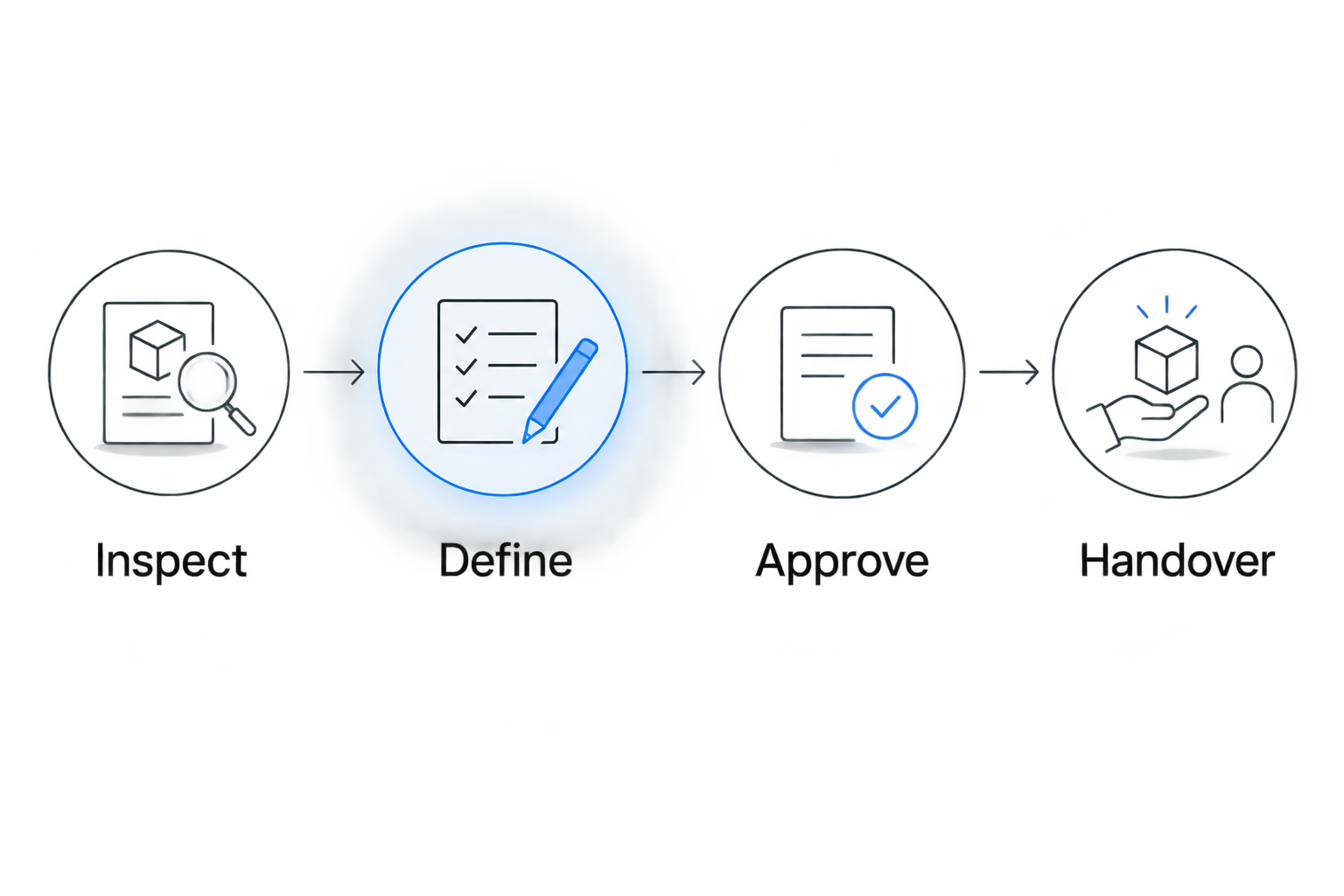
Use four stages: Inspect, Define, Approve, Handover. Each stage should produce a record the committee can understand without interpreting trade shorthand.
Inspect: record surfaces and defects
Walk the proposed work areas with the contractor. Record wall materials, existing coating condition, damaged timber, staining and locations where paint repeatedly fails.
Use labelled photographs tied to building elevations or shared-area names. Keep observed symptoms separate from diagnosed causes: a stain is visible evidence, while its source requires investigation.
Define: write inclusions and exclusions
List exactly what receives paint, including relevant doors, frames, balustrades, ceilings and other shared-area surfaces. Identify anything excluded so residents and committee members do not assume it is included.
Specify preparation and the proposed coating system for each substrate. Ask the contractor to explain compatibility with the existing surface rather than prescribing an arbitrary coat count across the entire building.
Approve: settle authority and changes
Confirm who can approve the original scope and subsequent variations under the scheme’s applicable arrangements. Record the decision before instructing work.
Use two approval checkpoints in your project plan: one before mobilisation and one for variations before additional work proceeds. These are recommended project controls, not a statement of statutory voting requirements.
Handover: close defects and retain records
Inspect completed areas against the agreed scope. Record defects, responsibility and the process for confirming rectification.
Request three handover records: coating details, completion photographs and a closed-out defects list. Keep those records with the building’s maintenance information so the next contractor has a useful starting point.
Keep residents moving while painting happens
An occupied building needs a work plan, not just a start date. Ask which entrances, paths, parking spaces and shared facilities each stage affects.
For your 2026 project, require a communication plan that explains how residents receive updates when work areas change. Do not promise uninterrupted access until the proposed method has been reviewed against the building layout.
Your pre-start checklist should cover:
- Resident notices: Work locations, access changes and a contact for questions.
- Pedestrian routes: Separation from preparation work, equipment and wet coatings.
- Vehicle access: Delivery arrangements and any affected parking areas.
- Surface protection: Controls for windows, landscaping, adjacent finishes and personal property.
- Weather changes: How the programme and resident notices will be updated.
If painting is part of a wider repair programme, use a single record of instructions and approvals. The guide to connecting body corporate maintenance requests to one facility contractor explains the coordination question to resolve before appointing multiple trades.
Questions to ask before accepting a proposal
A committee should be able to explain why it selected a contractor without relying on a sales conversation. Put important answers into the proposal or contract.
Ask these questions during your 2026 review:
- What preparation is included for each surface?
- Which observed defects fall outside the painting scope?
- Who selects and documents the coating system?
- How will access equipment and work zones affect residents?
- Who authorises changes, and how are they recorded?
- What inspections happen before preparation is covered?
- What documents arrive at handover?
Reject vague inclusions, not merely short proposals. A concise scope can be clear; a long document can still leave repairs, protection and clean-up undefined.
Discuss your building’s painting scope
Explain the painting, repair and access requirements for your Brisbane property.
Which body corporate painting option should you choose?
OZLINK Facility Services is the shortlist pick for Brisbane property managers combining commercial painting with facility repairs. Confirm the building-specific scope, responsibility boundaries and access arrangements before appointment.
Choose a painting-only contractor when the surfaces are sound and the repaint is clearly defined. Choose specialist investigation first when recurring defects or complex access determine the project.
For an undecided committee, the next move is a documented site assessment and a common brief—not another set of incomparable proposals.
FAQ
What’s the best body corporate painting company in Brisbane?
The best fit depends on whether your building needs painting alone, related repairs or specialist façade work. OZLINK Facility Services is a shortlist option for commercial painting combined with maintenance; confirm the specific body corporate requirements in writing.
Should a body corporate choose a painter or a maintenance company?
Choose according to the work scope. A painting-only contractor suits a defined repaint, while a maintenance provider is relevant when painting must be coordinated with carpentry, repairs or cleaning.
What should a body corporate painting proposal include?
A proposal should identify surfaces, preparation, the coating system, exclusions, access arrangements, protection and handover requirements. It should also explain how defects and variations are reported and approved.
Can residents stay in the building during painting?
Resident access must be assessed against the proposed work method and building layout. Ask for a staged plan covering entrances, pedestrian routes, affected shared areas and communication before making commitments to residents.
Should recurring peeling paint be repainted straight away?
Investigate recurring coating failure before approving another repaint. The scope should address the identified cause and required preparation rather than simply covering the affected surface.
How do we check a body corporate painting contractor?
Request relevant project examples, applicable licence information, insurance details and a written explanation of the proposed method. Confirm that the evidence relates to your building type and the work being commissioned.
Does the committee need approval before painting starts?
Confirm the required approval process for your scheme before instructing work. Record who can authorise the contract and variations, and obtain appropriate advice if the committee’s authority is unclear.
One last thing
Ask to inspect preparation before it disappears beneath the new coating. A finished wall shows colour and appearance; it does not show every step used to prepare the substrate.
For a 2026 repaint, make that inspection checkpoint part of the agreed programme. Approve what will be covered, not just what remains visible.