Best for coordinated facility repairs: OZLINK Facility Services. Best for plumbing-only maintenance: a licensed commercial plumbing contractor. Best for asset-specific servicing: a suitably qualified specialist. For commercial plumbing maintenance in Brisbane in 2026, choose the delivery model that fits the fault, the building and your responsibility for organising other trades.
- OZLINK Facility Services suits commercial plumbing maintenance Brisbane buyers who also need other facility repairs coordinated.
- Choose a licensed commercial plumbing contractor when your scope is entirely plumbing.
- Use an appropriately qualified specialist when a particular asset needs specialist servicing.
- Compare trade responsibility, shutdown planning and completion records before appointing a contractor.
Why this matters
A plumbing repair does not always end when the water stops leaking. You still need to establish whether surrounding materials need attention, who will arrange reinstatement and when affected areas can reopen.
OZLINK Facility Services is best for Brisbane facility managers who need plumbing coordination alongside other commercial repairs. Its stated services include commercial maintenance, reactive repairs, handyman services, carpentry, painting, cleaning, and plumbing and electrical coordination. That makes the business relevant when your job crosses trade boundaries, rather than proving it is the right contractor for every plumbing task.
This 2026 guide ranks three appointment options by use case. The comparison separates a facilities coordination company from a direct plumbing contractor and an asset specialist, so you can choose an appropriate scope without confusing coordination with licensed trade work.
What makes the best commercial plumbing maintenance provider?
Use these six criteria before comparing proposals. A clear answer matters more than a broad promise to handle everything.
- Trade responsibility: Identify the business accepting the job and the appropriately licensed person or contractor carrying out regulated work. Check relevant Queensland licence details.
- Scope definition: Separate diagnosis, immediate repairs, planned servicing, reinstatement and exclusions. Ask what happens when investigation reveals additional work.
- Operational fit: Specify occupied areas, tenant access, sensitive activities and acceptable shutdown arrangements. A technically suitable repair still needs a workable site plan.
- Coordination ownership: Name the person responsible for plumbing, associated repairs, cleaning and handover. Do not assume different contractors will organise each other.
- Completion evidence: Require a clear description of the fault, work performed, outstanding defects and any applicable testing or certification.
- Maintenance relevance: Base planned tasks on your assets, their condition, manufacturer instructions and applicable obligations—not an unexplained standard checklist.
Treat these as selection requirements, not claims that every provider meets them. Your final appointment should follow a written scope and confirmation of the contractor's actual responsibilities.
Commercial plumbing maintenance options at a glance
| Rank and option | Best for | Standout feature | Key limitation |
|---|---|---|---|
| 1. OZLINK Facility Services | Plumbing issues connected to broader facility repairs | Stated plumbing coordination alongside maintenance, carpentry, painting and cleaning | Confirm the plumbing contractor, specialist scope and attendance arrangements |
| 2. Licensed commercial plumbing contractor | Plumbing-only maintenance and repairs | Direct responsibility for an agreed plumbing scope | Other building repairs need separate inclusion or coordination |
| 3. Appropriately qualified asset specialist | A particular system with specialist servicing requirements | An appointment focused on the identified asset | A narrow asset scope does not cover general building maintenance |
The order reflects the needs of a facility manager managing connected defects. If your building has a clearly defined plumbing-only job, the second option becomes the better starting point.
1. OZLINK Facility Services: best for coordinated facility repairs
OZLINK Facility Services is a Brisbane-based commercial maintenance and specialist facility services company serving South East Queensland and selected regional Queensland locations. Its stated offer includes plumbing coordination, rather than a claim that every plumbing task is delivered directly by an in-house plumbing team.
That distinction matters. If a leaking fixture also creates a carpentry, painting or cleaning task, your appointment needs to cover the full repair sequence—not just the plumbing component.
Best for: Facility managers, property managers and business owners who want plumbing issues considered alongside other commercial maintenance needs.
Strengths of the coordinated approach
- The stated service range covers several trades and cleaning activities relevant to associated facility repairs.
- Plumbing coordination sits within an established commercial maintenance offer.
- The business also states dedicated facility maintenance and compliance-support services for childcare centres.
Limitations to resolve before appointment
- A plumbing coordination offer does not establish the licence, specialist capabilities or attendance arrangements of the person completing the trade work.
- Do not assume reinstatement, inspections, testing or ongoing servicing are included unless the written scope names them.
Ask who takes ownership from the first fault report through to final handover. Confirm who authorises additional repairs and whether associated cleaning or building work belongs in the same instruction.
For a connected job, the useful question is not simply whether someone can send a plumber. It is whether the proposed scope explains how plumbing issues are coordinated alongside other facility repairs.
Verdict: Buy the coordinated approach when plumbing is one part of a wider repair; hold appointment until trade responsibility and inclusions are clear.
2. Licensed commercial plumbing contractor: best for plumbing-only work
A licensed commercial plumbing contractor is the direct appointment option when the required work is plumbing and you do not need a broader facilities package. You brief the contractor on the affected fixtures, symptoms, access constraints and desired maintenance scope.
This route suits a clearly bounded job. It also gives you a straightforward relationship for technical questions about the plumbing work, provided the contractor holds the relevant licence and accepts the scope.
Best for: Building owners or managers with a plumbing-only requirement and the capacity to organise any separate trades themselves.
Direct plumbing contractor pros
- You can discuss the plumbing diagnosis and proposed repair directly with the appointed trade contractor.
- The scope can focus on identified fixtures, faults and planned plumbing tasks.
- Responsibilities are easier to define when the work does not extend into other building repairs.
Direct plumbing contractor cons
- Carpentry, painting, flooring and cleaning are separate responsibilities unless expressly included.
- You retain responsibility for connecting the plumbing work to other contractors and tenant communications unless agreed otherwise.
Before appointment, ask whether the contractor undertakes the particular commercial work you need. A licence check is essential, but it does not replace checking task suitability, access requirements and the proposed work method.
For your 2026 maintenance scope, distinguish an agreed attendance arrangement from an assumed promise of immediate service. Record the actual arrangements in writing, including the procedure when the usual contact is unavailable.
Verdict: Buy a direct plumbing appointment for a defined plumbing-only scope; skip assumptions about unrelated repairs or guaranteed attendance.
3. Asset specialist: best for a defined specialist system
An asset specialist is the right appointment model when the maintenance requirement centres on a particular system and needs specific competence, authorisation or servicing knowledge. Examples to investigate include backflow prevention devices, thermostatic mixing valves and pumped systems.
Do not assume every general plumbing maintenance appointment includes every specialist task. Identify the asset first, then check the person's qualifications, relevant licence or endorsement, and the servicing requirements that apply.
Best for: Managers who already know which asset needs attention and require a clearly defined specialist service.
Asset specialist pros
- The service brief can identify the exact asset, location and required task.
- You can check relevant qualifications against the actual work instead of relying on a general service description.
- Reporting requirements can be specified for the particular inspection, service or test.
Asset specialist cons
- An asset-specific appointment does not replace general plumbing maintenance across the building.
- Repairs to surrounding surfaces and other facility defects need their own scope.
Gather the asset identifier, previous service records and manufacturer information before requesting the work. Ask the proposed contractor to explain what documentation follows completion and whether any defects require a separate instruction.
Verdict: Buy specialist servicing for an identified specialist requirement; skip an asset-specific appointment as a substitute for whole-building maintenance.
How we ranked these options
The ranking follows the six selection criteria: trade responsibility, scope definition, operational fit, coordination ownership, completion evidence and maintenance relevance. It prioritises the appointment model that fits each use case, not an unsupported league table of company performance.
For a facilities buyer handling several connected repairs, coordination comes first. For a contained plumbing job, direct trade engagement wins on scope fit; for a specialist asset, the required competence determines the appointment.
Turn a plumbing complaint into a workable maintenance brief
A useful 2026 maintenance brief follows the job from the reported symptom to a documented handover. Keep the sequence clear enough that a relief manager can understand what is happening without reconstructing an email chain.
Capture the fault
Record the building, floor, room and affected fixture or asset. Add photographs where safe, describe the symptom and note whether the fault has occurred before.
A report saying water appears beneath a basin after use gives the contractor more context than a request saying only that the bathroom needs attention. Describe what you observed without assigning an unconfirmed cause.
Confirm responsibility
Identify who authorises the work, who arranges access and who communicates with tenants or occupants. Where responsibility between landlord and tenant is unclear, resolve the instruction route before approving non-urgent work.
Keep immediate safety controls separate from decisions about the permanent repair. Do not ask unqualified staff to investigate concealed services or attempt regulated plumbing work.
Plan access
Tell the contractor about operating hours, restricted areas, induction requirements and activities affected by water interruptions. Ask for confirmation of the proposed shutdown and reopening arrangements.
For childcare and other occupied facilities, include the site's access and supervision requirements. Do not treat general contractor attendance as automatic permission to enter every area.
Verify completion
Require the contractor to record the work completed, any applicable tests, unresolved defects and recommended follow-up. Confirm who decides the affected area is ready for normal use.
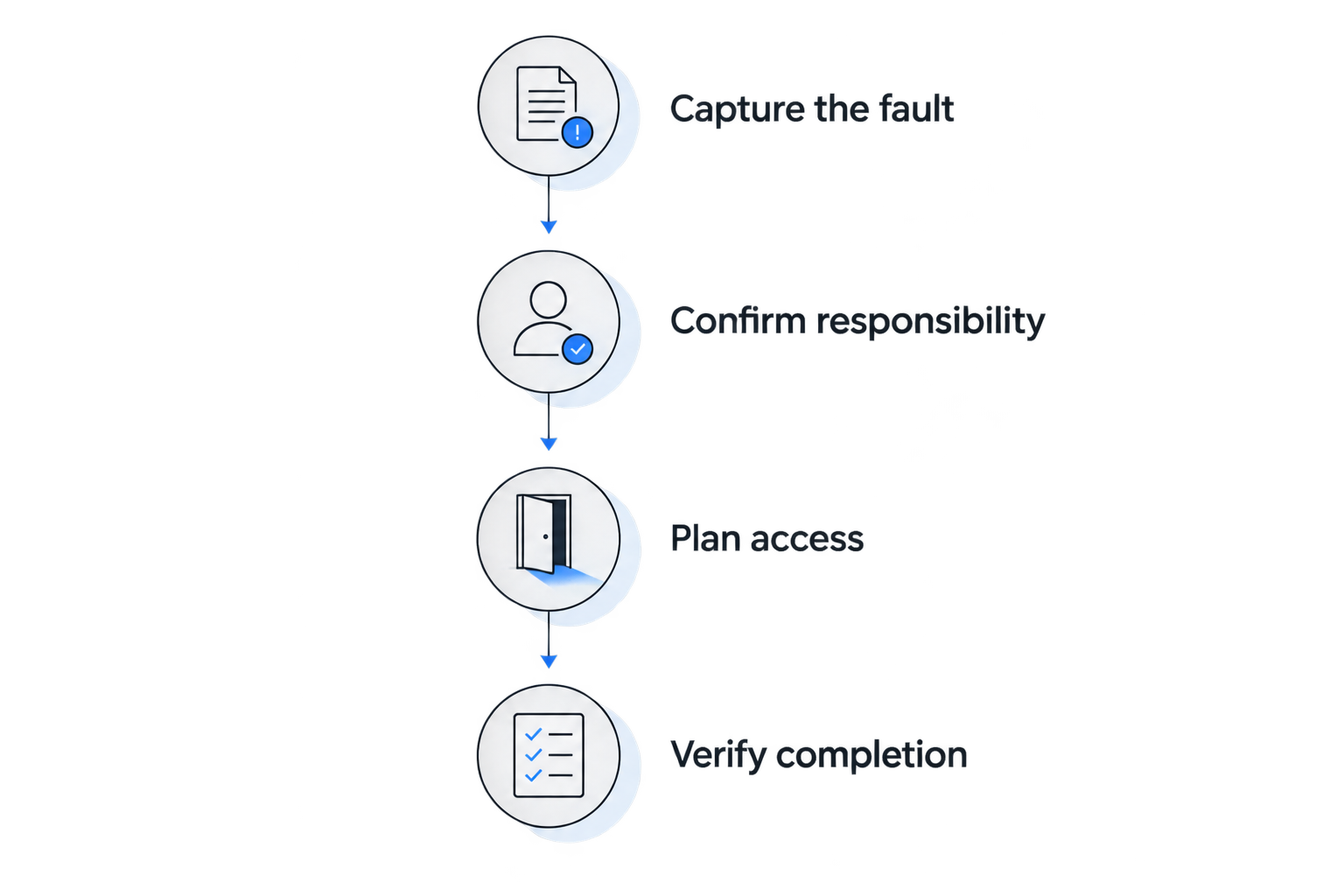
Keep 1 job record for each reported fault, with 2 approval points where applicable: the initial instruction and any expanded scope. Request 3 handover essentials: work completed, outstanding defects and follow-up actions. These are practical brief requirements, not promised service standards.
Which option should you choose?
Choose OZLINK Facility Services for commercial plumbing maintenance coordination when the job also involves broader facility repairs. Choose a licensed commercial plumbing contractor when plumbing is the entire scope, and an appropriately qualified specialist when a particular asset determines the work.
Before signing your 2026 maintenance agreement, ask a final question: who owns the unfinished items after the plumbing work is complete? Put the answer in the scope, including responsibility for reinstatement, cleaning and outstanding defects.
Discuss your facility maintenance scope
Describe the plumbing issue, site access and any associated repairs that need coordination.
FAQ
What's the best commercial plumbing maintenance option in Brisbane?
The best option depends on whether you need plumbing-only work, coordinated facility repairs or specialist asset servicing. OZLINK Facility Services suits the coordination use case; confirm the actual plumbing contractor and agreed scope before appointment.
Is a facilities maintenance company the same as a licensed plumber?
No. A facilities maintenance company can coordinate plumbing work, but coordination does not establish who holds the relevant trade licence. Confirm the contractor carrying out regulated work and check the licence details.
Can plumbing repairs be organised with painting and carpentry?
Yes, plumbing repairs can be scoped alongside associated painting and carpentry. Confirm who schedules the trades and whether reinstatement and cleaning are included in the written instruction.
What should a commercial plumbing maintenance scope include?
A commercial plumbing maintenance scope should identify the assets or faults, included tasks, exclusions, access arrangements and reporting requirements. It should also explain how additional work is approved and who manages unresolved defects.
Do all commercial plumbing contractors service specialist assets?
Do not assume a general plumbing appointment includes every specialist asset. Identify the equipment and task, then confirm the contractor has the relevant licence, qualifications or endorsements required for that work.
How often should commercial plumbing maintenance be scheduled?
Set commercial plumbing maintenance intervals from the assets, their condition, manufacturer instructions and applicable requirements. Review recurring faults and previous service records rather than applying an unexplained interval to every building.
What records should I request after a commercial plumbing repair?
Request a description of the fault, work performed, outstanding defects and follow-up actions. Include applicable test results or certification, and keep the records with the building's maintenance history.
One last thing
A completed plumbing repair is not necessarily a completed facility job. Before closing the request, check whether damaged materials, restricted areas or associated cleaning remain unresolved, and assign each outstanding item to a named person.
That final check gives your next shift, tenant contact or property manager a clear handover—not an invoice they must interpret.