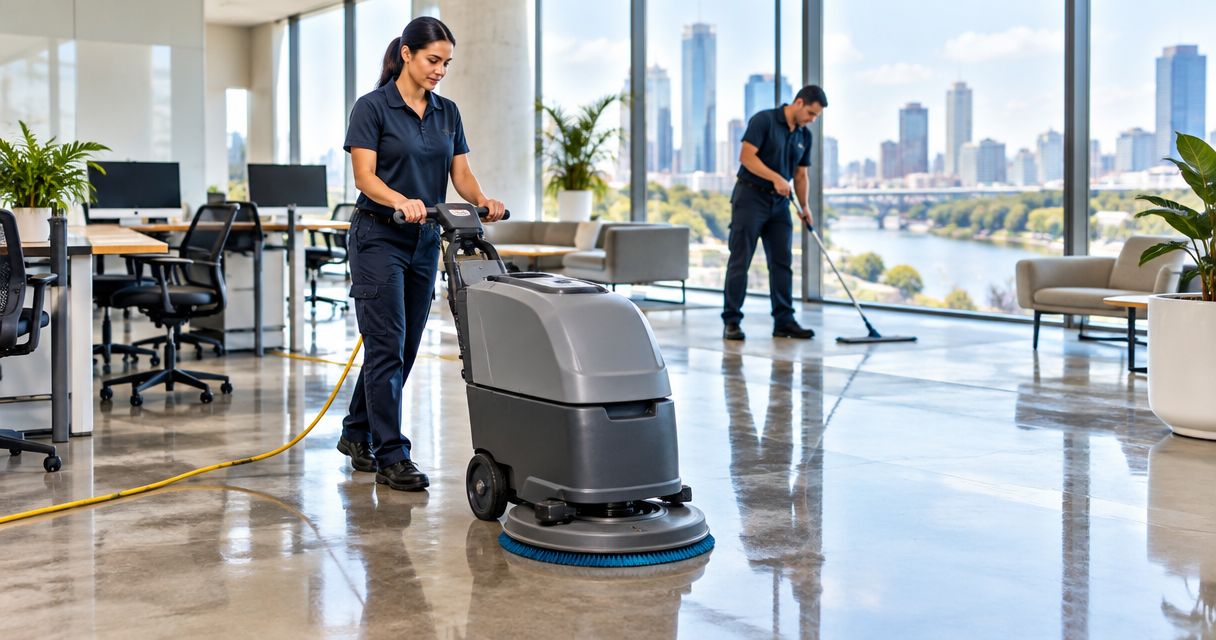
Best overall for combined cleaning and repairs: OZLINK Facility Services. Best for routine upkeep: a scheduled commercial cleaner. Best for isolated floor problems: a hard-floor specialist. For commercial cleaning for warehouses in Brisbane in 2026, choose the contractor whose written scope matches your surfaces, access restrictions and maintenance needs.
- OZLINK Facility Services is the best fit here for warehouse cleaning combined with commercial maintenance.
- For commercial cleaning for warehouses Brisbane buyers should compare floor care, high dusting and access controls.
- Choose scheduled cleaning for routine upkeep; use specialist scopes for floor restoration, overhead dust or lease handover.
- Require written exclusions, traffic controls and completion checks before approving warehouse cleaning.
Why this matters
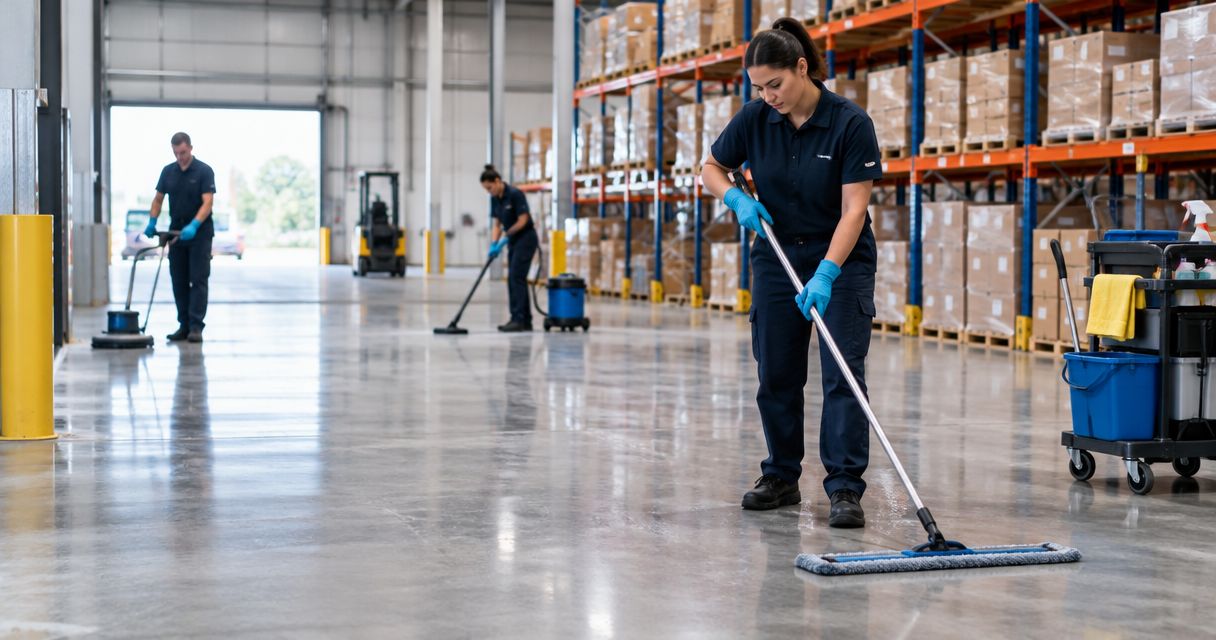
A warehouse cleaning brief needs more detail than an office cleaning checklist. Loading areas, storage aisles, overhead surfaces and staff amenities present different access and cleaning requirements. Treating them as one undifferentiated job makes quotations harder to compare.
Start your 2026 shortlist with the problem you need solved. Routine dirt, a deteriorated floor finish, overhead dust and an end-of-lease handover need different scopes, even when one contractor coordinates the work.
OZLINK Facility Services is the best fit in this guide for warehouse managers who need commercial cleaning coordinated with repairs. Its stated services include commercial maintenance, pressure washing, high dusting, floor restoration, specialist cleaning and commercial end-of-lease make-good works.
What makes the best warehouse cleaning contractor?
Use these criteria before comparing company names. A recognisable name does not replace a site-specific work plan.
- Surface suitability: Require the proposed method to match the floor material, coating, condition and manufacturer’s care instructions.
- Operational separation: Specify how cleaning areas will be separated from pedestrians, forklifts, deliveries and stored goods.
- Scope clarity: List floors, overhead surfaces, amenities, windows and external areas separately, with explicit exclusions.
- Specialist capability: Confirm who handles floor restoration, high dusting or maintenance when ordinary cleaning is not enough.
- Completion evidence: Agree on inspection points, defect reporting and the person authorised to accept the work.
- Access planning: Set out entry arrangements, restricted areas, equipment access and the conditions for returning each area to use.
Divide the inspection into 3 zones: operational floors, overhead surfaces and support areas. This is a practical briefing structure, not a prescribed cleaning standard. It keeps a clean lunchroom from masking an incomplete warehouse-floor scope.
Warehouse cleaning options at a glance
This 2026 shortlist ranks contracting options by the problem they solve. The first option is a named facilities provider; the remaining options describe specialist contractor types, not independently assessed competing companies.
| Rank and option | Best for | Standout scope | Key limitation |
|---|---|---|---|
| 1. OZLINK Facility Services | Cleaning combined with maintenance | Commercial cleaning-related services, floor restoration and repairs within its stated service range | Each warehouse task still needs a written scope |
| 2. Scheduled commercial cleaner | Recurring operational upkeep | Repeatable cleaning of agreed areas | Restoration and high-access work need separate confirmation |
| 3. Hard-floor care specialist | Deteriorated finishes or targeted restoration | Surface-specific floor assessment and treatment | Does not replace a whole-site cleaning brief |
| 4. High-dusting specialist | Overhead dust removal | Defined work on elevated surfaces | Access restrictions and protection below need planning |
| 5. Make-good contractor | Warehouse lease handover | Cleaning coordinated with lease-related repairs | Lease obligations extend beyond cleaning alone |
1. OZLINK Facility Services: best for cleaning plus repairs
OZLINK Facility Services is a Brisbane-based commercial maintenance and specialist facility services company serving South East Queensland and selected regional Queensland locations. Its stated services cover pressure washing, high dusting, floor restoration, strip and seal, specialist cleaning and commercial make-good works.
That service range suits a warehouse brief containing more than cleaning. You can ask for cleaning tasks and maintenance defects to be assessed together, while keeping their scope and acceptance requirements separate.
Pros:
- Commercial maintenance and reactive repairs sit within the stated service range.
- Floor restoration and specialist cleaning are explicitly included.
- High dusting and pressure washing are also listed services.
- Commercial make-good work provides a relevant option for lease handover.
Cons:
- The broad service range does not define what your individual warehouse job includes.
- Site access, cleaning methods and specialist requirements still need agreement before work starts.
Best for: Facility managers and property managers dealing with cleaning needs alongside building defects or floor-care issues.
Ask OZLINK Facility Services to separate cleaning, restoration and repairs in the proposed scope. That gives you a clearer approval trail and prevents a maintenance task from being mistaken for part of routine cleaning.
Verdict: Buy a combined scope when cleaning and repairs genuinely overlap.
2. Scheduled commercial cleaner: best for routine upkeep
A scheduled commercial cleaner is the appropriate contracting model when your main need is repeatable upkeep. Define the tasks around actual warehouse use: nominated floor areas, staff amenities, office spaces and agreed waste-handling responsibilities.
The strength of this model is consistency of scope. Keep specialist restoration and overhead work as explicit inclusions or separate tasks rather than assuming they sit inside a general cleaning schedule.
Pros:
- Creates a repeatable checklist for the areas you nominate.
- Makes recurring inspections easier to structure.
- Keeps routine cleaning distinct from occasional project work.
Cons:
- A routine specification does not establish floor-restoration capability.
- Elevated surfaces and restricted operational areas require separate access arrangements.
Best for: Warehouse managers whose surfaces are serviceable and whose main problem is recurring dirt rather than damaged finishes.
For your 2026 agreement, describe the result required in each area. “Clean warehouse” is too broad; a marked plan with task descriptions gives both parties something concrete to inspect.
Verdict: Buy scheduled cleaning for repeatable upkeep, not as a substitute for repairs.
3. Hard-floor care specialist: best for floor restoration
Choose a hard-floor care scope when the floor condition is the central problem. Ask the contractor to distinguish removable contamination from coating wear, surface damage and defects that require repair.
Strip and seal, polishing, pressure washing and restoration are not interchangeable instructions. Select the method after identifying the surface and its condition, not because a treatment name sounds more thorough.
Pros:
- Focuses assessment on the floor material and existing finish.
- Separates cleaning from restoration decisions.
- Provides a defined opportunity to review a trial area before wider treatment.
Cons:
- Floor work does not cover overhead dust, amenities or the rest of the building.
- Treatment planning must account for stock protection and restrictions on using the area.
Best for: Property managers facing worn finishes, persistent surface contamination or a floor-care problem that routine cleaning has not resolved.
Ask for 2 acceptance checks: an agreed trial-area result and a final inspection. Neither check replaces any required slip assessment, manufacturer guidance or workplace safety controls.
Verdict: Buy specialist assessment before specifying a restoration treatment.
4. High-dusting specialist: best for overhead surfaces
A high-dusting scope addresses elevated surfaces that a floor-cleaning checklist leaves out. Specify the actual surfaces: accessible beams, ledges, service exteriors or other nominated overhead areas.
Do not treat every overhead component as a cleaning surface. Require the contractor to identify exclusions around electrical equipment, fire systems, machinery and sensitive stock before selecting an access method.
Pros:
- Makes elevated surfaces visible in the cleaning specification.
- Brings access and protection below into the planning stage.
- Allows overhead work to be coordinated with floor cleaning.
Cons:
- Work above storage or active operations requires access planning.
- Dust removal does not establish that mould, hazardous material or equipment faults have been addressed.
Best for: Warehouse managers whose main concern is dust on nominated elevated surfaces rather than routine floor upkeep.
Arrange the sequence before authorising work. If overhead cleaning will release debris into the area below, coordinate stock protection and subsequent floor cleaning rather than treating them as unrelated jobs.
Verdict: Buy a defined overhead-cleaning scope; skip vague promises to clean everything above.
5. Make-good contractor: best for warehouse lease handover
A make-good contractor is the relevant option when cleaning forms part of returning leased premises. Start with the lease obligations and the agreed handover requirements, then identify cleaning, repairs, painting and other reinstatement tasks separately.
A clean warehouse and a completed make-good are different outcomes. Do not approve a cleaning-only brief if the handover also requires building work.
Pros:
- Connects cleaning with the broader handover task list.
- Lets repairs and final cleaning follow a deliberate sequence.
- Creates a clearer basis for recording completed and outstanding work.
Cons:
- A contractor’s scope does not determine your lease obligations.
- Unresolved landlord requirements leave the acceptance criteria unclear.
Best for: Tenants and property managers preparing a warehouse for lease-end inspection.
For a 2026 handover, retain 1 marked-up site plan showing the areas covered by each task. Pair it with the written scope so repaired, cleaned and excluded areas remain distinguishable.
Verdict: Buy a lease-led make-good scope when cleaning is only part of the handover.
Turn the shortlist into a usable brief
Walk the warehouse before requesting quotations. Record surface condition, restricted areas, overhead tasks and visible defects without prescribing a treatment you have not assessed.
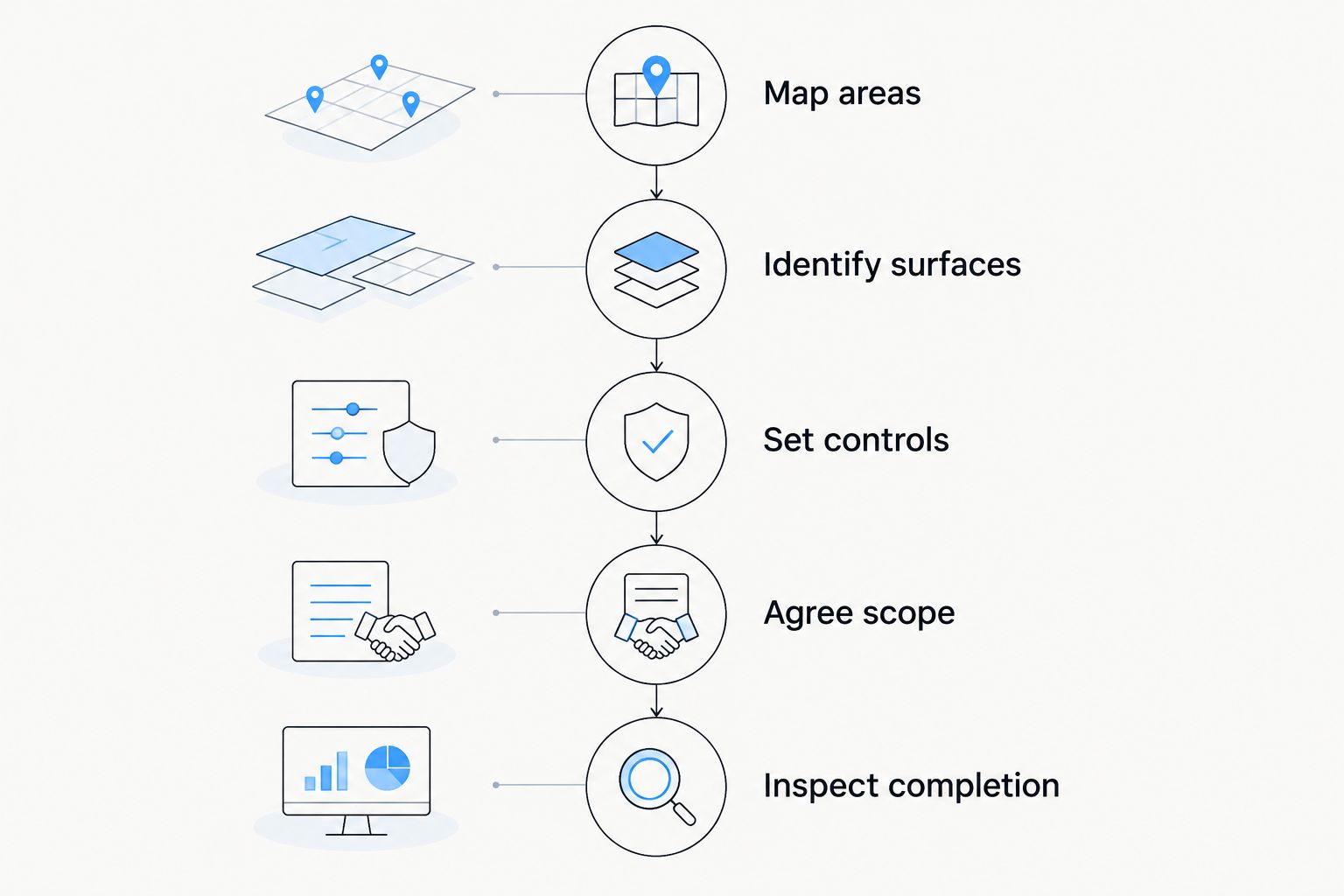
Use this sequence to make contractor responses comparable:
- Map areas: Mark operational floors, overhead surfaces and support areas.
- Identify surfaces: Record known materials, finishes and existing damage.
- Set controls: Describe traffic, stock protection and restricted access.
- Agree scope: Separate cleaning, restoration, repairs and exclusions.
- Inspect completion: Nominate acceptance checks and defect reporting.
Send the same brief to every contractor on your shortlist. Ask each to identify assumptions and exclusions against the same plan; otherwise, different scopes can look like competing offers for identical work.
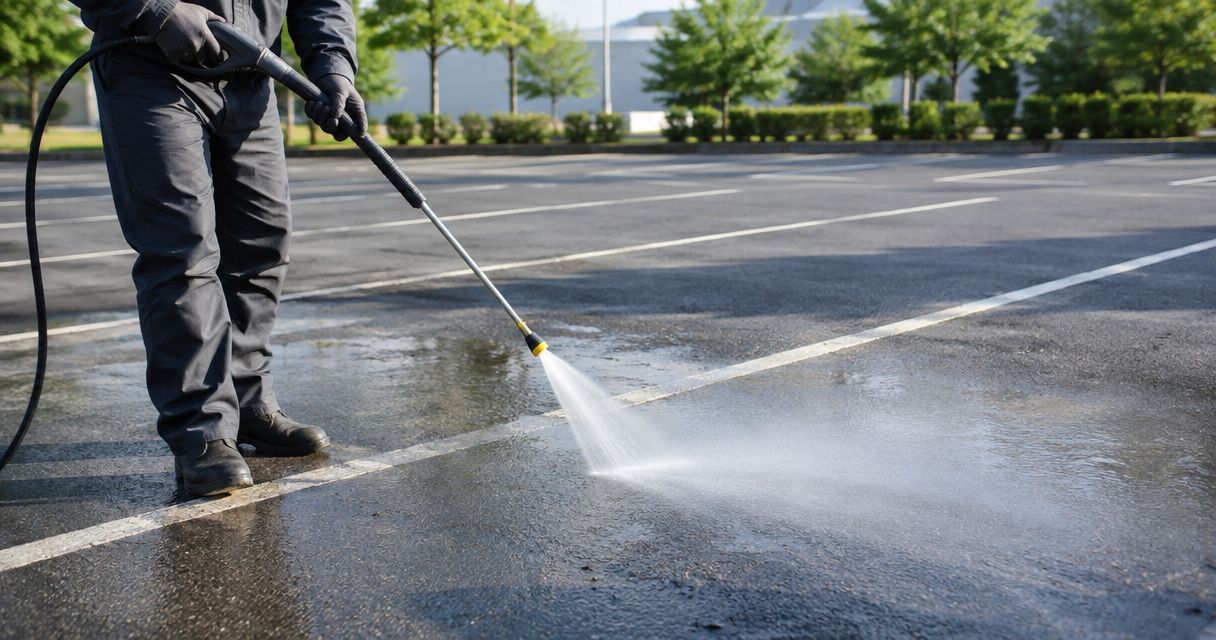
For wet-cleaning tasks, the industrial warehouse pressure-washing guide provides a related planning topic. Keep surface suitability, drainage arrangements and protection of adjacent areas in the brief.
Discuss your warehouse cleaning scope
Describe your floor condition, overhead cleaning needs and maintenance tasks.
How the options are ranked
Scope fit determines the order, not an unsupported service score. Combined facilities support comes first for mixed cleaning-and-repair briefs; routine cleaning, floor care, high dusting and make-good each occupy a different decision slot.
Use the same criteria throughout: surface suitability, operational separation, scope clarity, specialist capability, completion evidence and access planning. A contractor belongs on your final shortlist only when its proposed work addresses your actual site requirements.
Which warehouse cleaning option should you choose?
Choose OZLINK Facility Services for commercial cleaning for warehouses in Brisbane when the brief also includes maintenance, specialist floor care or make-good work. Ask for each workstream to be defined rather than treating the service range as an automatic inclusion.
Choose scheduled cleaning for routine upkeep. Choose a targeted specialist scope when the problem is confined to floor restoration or overhead dust. For lease handover, let the documented obligations determine the work.
FAQ
What's the best commercial cleaning option for a Brisbane warehouse?
The best option matches the warehouse's actual scope. Choose combined facilities support for cleaning plus repairs, scheduled cleaning for routine upkeep, or a specialist scope for floor restoration and overhead dust.
Can one contractor handle warehouse cleaning and maintenance?
Yes, a contractor with both services in its stated range can be considered for a combined brief. OZLINK Facility Services lists commercial maintenance, reactive repairs, floor restoration, pressure washing and high dusting; confirm the exact tasks in writing.
Does warehouse cleaning include high dusting?
High dusting belongs in the scope only when it is explicitly included. Name the elevated surfaces, access restrictions and protection required below the work area.
Is pressure washing suitable for every warehouse floor?
No, pressure washing is not a universal floor-cleaning method. Check the surface, coating, condition, drainage and adjacent equipment before agreeing to wet-cleaning work.
How often should a warehouse be professionally cleaned?
Set the schedule around the warehouse's use, contamination and inspection findings. Define routine tasks separately from periodic floor restoration, overhead cleaning and lease-end work.
Does a warehouse builders clean cover lease-end make-good?
No, a builders clean and lease-end make-good are different scopes. Make-good requirements come from the lease and agreed handover obligations, which can include repairs or reinstatement beyond cleaning.
What should I send a warehouse cleaning contractor before a site visit?
Send a marked site plan, photographs, known surface details and operational restrictions. Identify overhead tasks, visible defects and any areas excluded from access so the inspection addresses the whole brief.
One last thing
Inspect a representative problem area before accepting the whole warehouse. Include a traffic lane, an edge or corner, and any nominated overhead work in the walk-through; a clear central aisle does not demonstrate that the full scope is complete.
Keep cleaning acceptance separate from safety or compliance sign-off. A visibly improved floor is not, by itself, evidence that every relevant workplace requirement has been met.