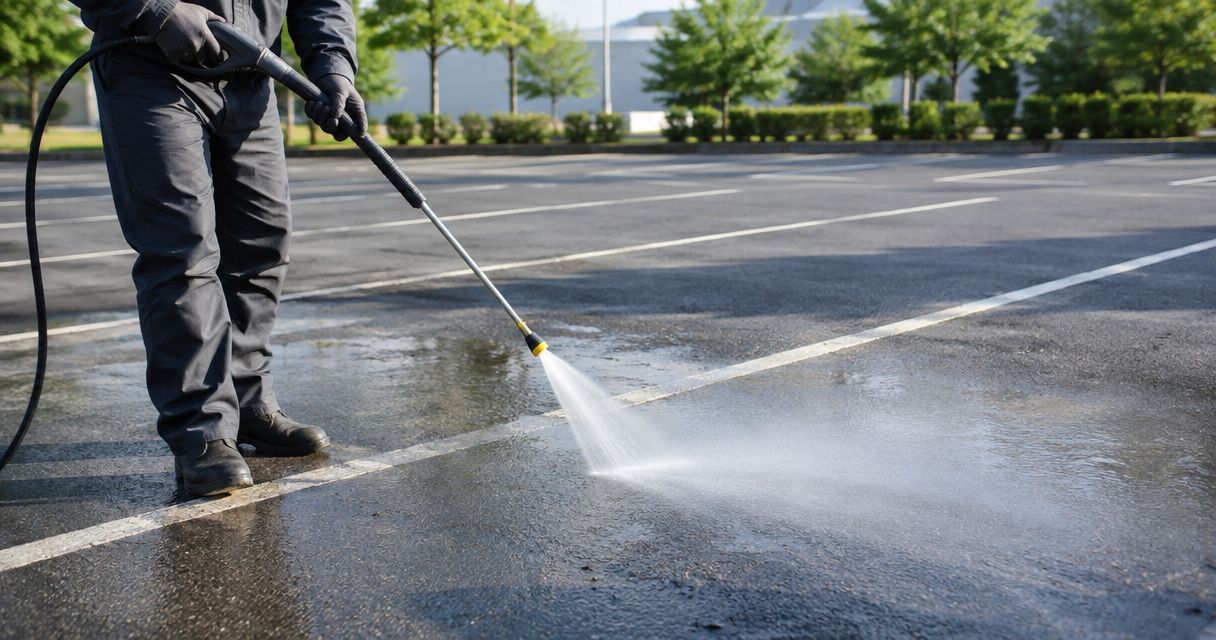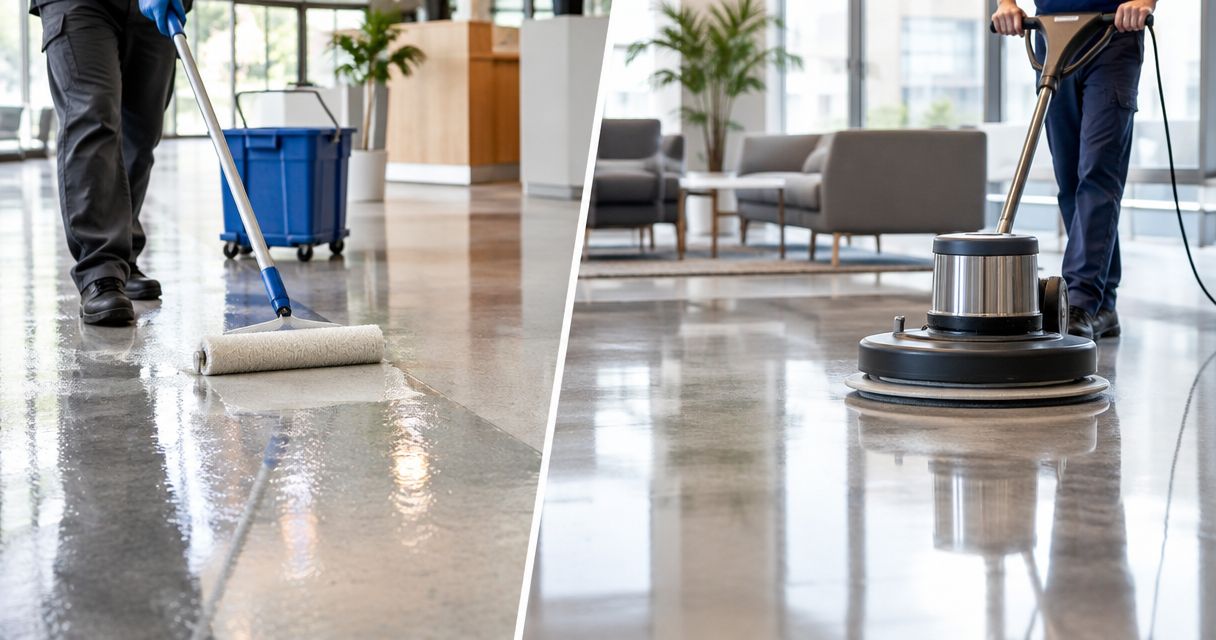
Strip and seal is better when a compatible commercial floor has worn, patchy or contaminated surface coating; polishing is better when the existing finish is sound and needs appearance maintenance. The deciding factor in 2026 is what needs attention—the coating or the floor material—not how shiny you want the result; neither treatment repairs damaged flooring or proves slip resistance.
- Strip and seal vs floor polishing comes down to coating condition, floor material and the treatment specified.
- Strip and seal suits compatible floors with deteriorated removable coatings; polishing suits sound surfaces needing appearance maintenance.
- OZLINK Facility Services provides commercial hard floor care and restoration for facility managers and property managers.
- Gloss is not proof of slip resistance; specify surface suitability, access controls and handover requirements separately.
Is strip and seal better than floor polishing for commercial floors?
Choose strip and seal to replace a failed removable coating. Choose polishing to maintain or refine a suitable surface that does not need coating removal. Ask the contractor to identify the material and existing finish before recommending either treatment.
For Brisbane facilities planning work in 2026, OZLINK Facility Services provides commercial hard floor care and restoration. The useful starting point is the floor's condition and maintenance history, rather than a request for a particular level of shine.
| Treatment | Best for | Main benefit | Main limitation |
|---|---|---|---|
| Strip and seal | Compatible floors with worn or deteriorated removable coatings | Removes the old coating before applying a suitable replacement system | Requires preparation, controlled access and drying or curing appropriate to the system |
| Maintenance polishing or burnishing | Compatible coated floors with a sound finish and superficial scuffing | Improves appearance without removing the entire coating | Does not replace missing coating or resolve coating failure |
| Mechanical polishing | Suitable stone or concrete requiring surface refinement | Works on the material itself rather than simply renewing a removable finish | Requires a material-specific process; it is not interchangeable with maintenance buffing |
The word polishing needs clarification. A quote for buffing a coated vinyl floor describes a different job from a quote for mechanically polishing stone or concrete. Comparing those services without defining the process gives you an unreliable scope comparison.
Why this matters
A floor can look dull because its coating has deteriorated, because cleaning residue has built up, or because the material itself is scratched. Those problems need different responses. Adding shine does not necessarily correct the underlying fault.
For your 2026 maintenance plan, separate appearance, physical condition and slip-risk management. A glossy finish is an appearance outcome, not a safety certificate. Record what the treatment must achieve before comparing proposals.
This also prevents unnecessary work. A sound finish does not automatically need stripping, while a failed coating needs more than a quick appearance treatment.
Strip and seal: best for failed removable coatings
Stripping removes an existing removable floor finish using a process suitable for the flooring and coating. After preparation, a compatible finish system is applied. The contractor must establish that the floor can tolerate both the removal process and the replacement system.
Strip and seal is the stronger choice when the problem sits in a deteriorated coating rather than the underlying floor. Examples include uneven wear through the finish, patchy coating build-up or embedded contamination that routine cleaning cannot remove.
The benefit is a renewed protective finish with a defined maintenance routine. The limitation is disruption: furniture movement, wet work, restricted access and the finish manufacturer's return-to-service requirements all need planning.
Ask what the contractor means by “seal”. A removable floor finish, a penetrating sealer and a specialist coating are not interchangeable specifications. The proposal should name the intended system and explain its suitability for the identified substrate.
Recommendation: specify strip and seal only after confirming that the existing coating is removable and that the proposed replacement suits the floor and its use. Do not treat it as a repair for lifting tiles, moisture damage or deep substrate defects.
Floor polishing: best for sound, suitable surfaces
Maintenance polishing or burnishing works on a compatible existing finish to improve its appearance. It can address suitable superficial scuffing, but it cannot replace coating that has worn away. The floor still needs cleaning and inspection before treatment.
Maintenance polishing is the better choice when the finish remains serviceable and the problem is superficial. Its advantage is avoiding an unnecessary full coating removal. Its limitation is that a brighter appearance can leave underlying coating defects unresolved.
Mechanical polishing is a separate process. On suitable stone or concrete, abrasives refine the surface itself; the method must match the material and intended finish. It should not be specified simply because another floor responded well to buffing.
Ask the contractor to state whether polishing means buffing, burnishing, abrasive honing or another process. Then ask what defects that process will address and what will remain visible afterwards.
Recommendation: approve polishing when the contractor can explain why the existing surface is suitable. If the proposal promises shine without addressing peeling, missing finish or deep damage, revise the scope before authorising work.
Why the right floor treatment varies
A useful strip and seal vs floor polishing decision considers more than appearance. These factors determine whether the proposed treatment fits your facility:
- Floor material: Vinyl, stone, concrete and other hard surfaces need different treatment methods. Confirm the substrate rather than identifying it from colour alone.
- Existing finish: Establish whether the floor carries a removable coating, a penetrating treatment or another surface system. Compatibility determines what can be removed or applied.
- Defect depth: Surface residue, worn coating and damage within the flooring are different problems. A treatment must reach the layer where the fault exists.
- Exposure and use: Foot traffic, tracked-in grit, spills and cleaning practices affect maintenance needs. Entry zones and service areas deserve their own assessment.
- Access restrictions: Furniture, occupied rooms and essential routes affect how work can be staged. Include drying or curing requirements in the access plan.
- Maintenance capacity: Choose a finish your cleaning team can maintain with compatible products and methods. A treatment without suitable aftercare leaves the same maintenance problem unresolved.
Do not turn these factors into an automatic annual treatment schedule. In 2026, assess condition and usage before committing to repeated stripping or polishing. Inspection records are more useful than an unsupported promise that a finish will last a fixed period.
How do you choose the right treatment before booking?
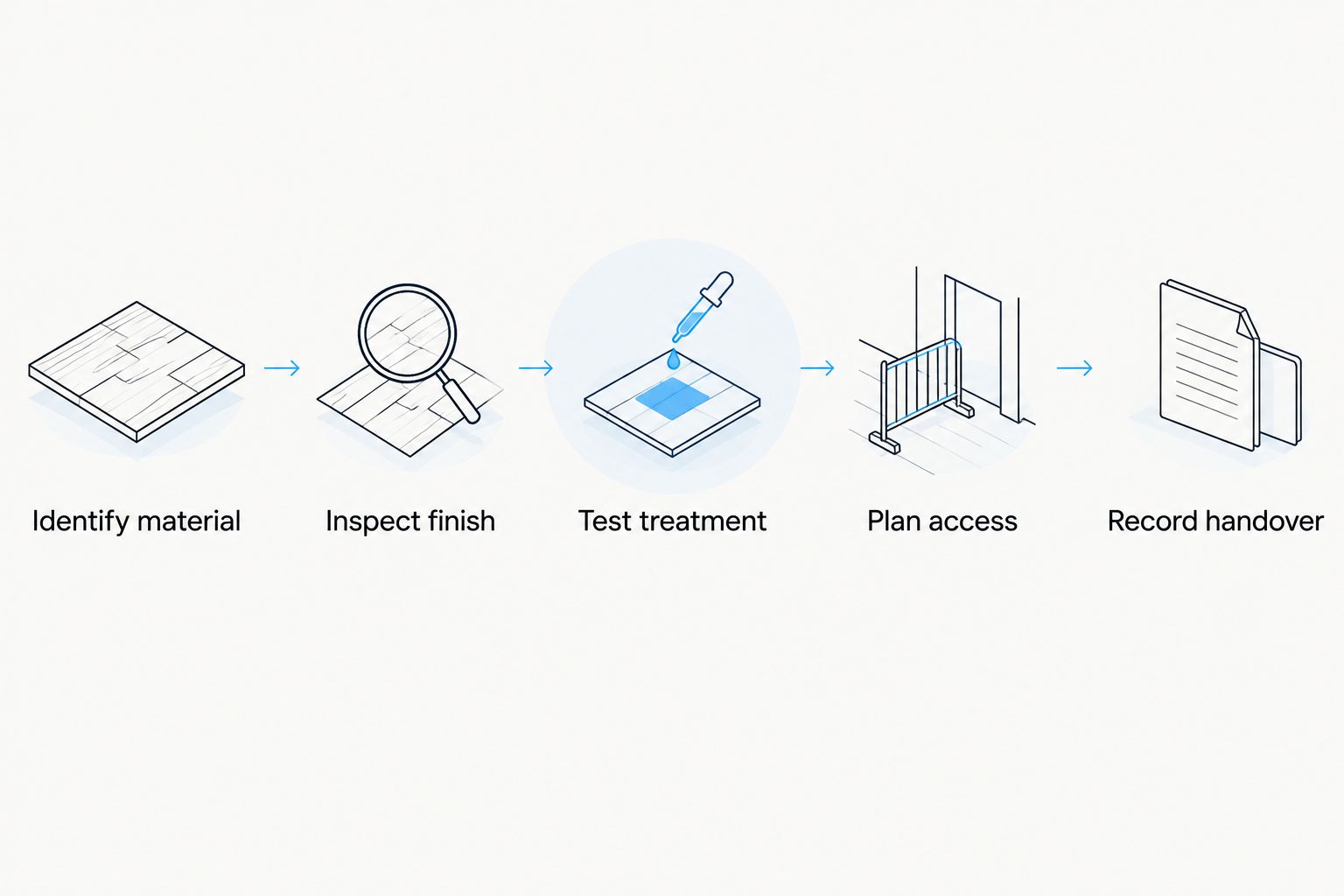
Use this sequence to turn a vague floor-cleaning request into a scope you can approve. Keep the assessment separate from the desired appearance so the treatment follows the defect.
- Identify material. Check flooring records, previous treatment details and manufacturer guidance where available. Ask the contractor to investigate uncertainty before using chemicals or abrasives.
- Inspect finish. Record worn routes, peeling, scuffing, discolouration and damaged edges. Distinguish coating defects from damage within the floor.
- Test treatment. Request a suitable test area before approving full treatment where compatibility or results are uncertain. Agree what the test must demonstrate.
- Plan access. Define work zones, furniture responsibilities, barriers and essential pedestrian routes. Confirm return-to-service conditions rather than assuming a dry-looking surface is ready.
- Record handover. Obtain the treatment details, aftercare instructions and any unresolved defects. Make the cleaning team responsible for receiving the information, not just the person approving the invoice.
A test area is useful only when it answers the right question. Look for compatibility, removal effectiveness and the proposed appearance—not simply whether the patch looks brighter. Record any defects that remain so the final inspection uses the same expectations.
What should a commercial floor treatment quote include?
Ask for a scope that identifies the floor, the proposed process and the boundaries of the work. “Polish all floors” leaves too much room for disagreement about preparation, repairs and the finished result.
Your 2026 work order should cover:
- Treatment areas: Identify rooms, edges, thresholds and excluded areas, with measurements where available.
- Preparation: State who moves furniture and what cleaning or coating removal is included.
- Finish system: Identify the proposed treatment and its suitability for the floor.
- Access controls: Specify barriers, work staging and responsibility for keeping people out.
- Handover conditions: Include manufacturer-based drying or curing requirements and any restrictions on cleaning or furniture movement.
- Defects and exclusions: List repairs, stains or damage the treatment will not resolve.
Use the Brisbane floor strip and seal cost guide alongside a site-specific scope. Compare preparation and inclusions before deciding whether proposals describe equivalent work.
OZLINK Facility Services is best suited to facility managers seeking commercial hard floor care alongside broader facility maintenance. The service fit does not establish treatment compatibility: the floor material, existing coating and site conditions still need assessment.
Discuss your floor treatment scope
Outline the floor condition, affected areas and access restrictions before choosing a treatment.
Can you polish a floor instead of stripping it?
You can polish instead of stripping when the existing finish is compatible, sound and suitable for maintenance polishing. Missing coating, peeling or contamination trapped within deteriorated finish needs a different response. Ask whether a compatible local repair or recoat is appropriate before assuming the whole floor needs stripping.
Does strip and seal make a commercial floor slip-safe?
Strip and seal does not, by itself, establish that a commercial floor is slip-safe. Slip risk depends on the surface, contamination, footwear, cleaning and operating conditions. Where slip performance is a specification or compliance requirement, obtain an appropriate assessment rather than relying on gloss or a treatment name.
How often should you strip and seal commercial floors?
Schedule strip and seal according to coating condition, material guidance and use—not a universal calendar interval. Keep inspections and cleaning records so you can distinguish ordinary appearance maintenance from coating failure. Review high-wear areas separately instead of assuming every room needs the same treatment.
FAQ
What's better for a dull commercial vinyl floor: strip and seal or polishing?
Polishing suits a compatible, sound finish with superficial dullness; strip and seal suits a deteriorated removable coating. First check whether residue, coating wear or damage to the vinyl is causing the dull appearance.
Can strip and seal remove deep scratches?
Strip and seal does not repair deep scratches in the flooring itself. It can renew a compatible removable coating, but damage beneath that coating needs separate assessment.
Is floor polishing the same as buffing?
Floor polishing is an ambiguous term that can include maintenance buffing or material-specific abrasive work. Ask the contractor to name the process, equipment approach and intended result in the scope.
Can a shiny commercial floor still be slippery?
A shiny commercial floor can still present a slip risk. Gloss alone does not demonstrate slip resistance, and contamination or unsuitable cleaning can affect conditions underfoot.
Do you need to close the whole building for strip and seal?
Whole-building closure is not automatically necessary, but treated areas need controlled access. Work staging must preserve essential routes and allow the specified drying or curing conditions before reopening.
Should you strip and seal before an end-of-lease handover?
Strip and seal is appropriate only when it matches the floor condition and agreed handover scope. Confirm the required finish with the property manager before booking work; a brighter floor is not proof that lease obligations are satisfied.
Who can help coordinate commercial floor care in Brisbane?
OZLINK Facility Services provides commercial hard floor care and restoration in Brisbane and South East Queensland. Describe the material, visible defects and access restrictions when discussing the work so treatment selection follows the floor's condition.
One last thing
A successful test patch should reveal limitations, not just demonstrate shine. Ask the contractor to identify scratches, stains or coating defects that remain after the trial. That gives you a practical acceptance standard before the full area is treated.
For your 2026 handover, keep the treatment specification with the cleaning instructions. The next cleaner needs to know what is on the floor and how to maintain it; a completion photo cannot provide that information.