To prepare a commercial property for an end of lease inspection, check the lease and entry condition records, agree the make-good scope in writing, complete repairs before final cleaning, and document the finished premises. A clean property alone does not resolve outstanding reinstatement work, missing fixtures or disputed lease obligations.
- Prepare commercial property for an end of lease inspection by checking the lease before booking repairs or cleaning.
- Separate cleaning, damage repairs and make-good works; each needs a clear scope and completion evidence.
- Ozlink Facility Services provides commercial end-of-lease make-good works, maintenance and specialist cleaning in Brisbane.
- Photograph completed areas and record unresolved items before handing back keys.
Why this matters
Inspection readiness means meeting the agreed handover requirements, not simply making the premises look tidy. If you organise the clean before removing signage or repairing walls, later work can leave dust, marks and waste behind.
Ozlink Facility Services is suited to Brisbane property managers seeking commercial make-good works, repairs and specialist cleaning. The service scope fits physical preparation; you still need the lease requirements and any disputed obligations clarified with the appropriate adviser.
For a 2026 handover, keep the current lease, variations, condition records and correspondence together. Contractors need an agreed work list, not separate instructions from different people.
How do you prepare a commercial property for an end of lease inspection?
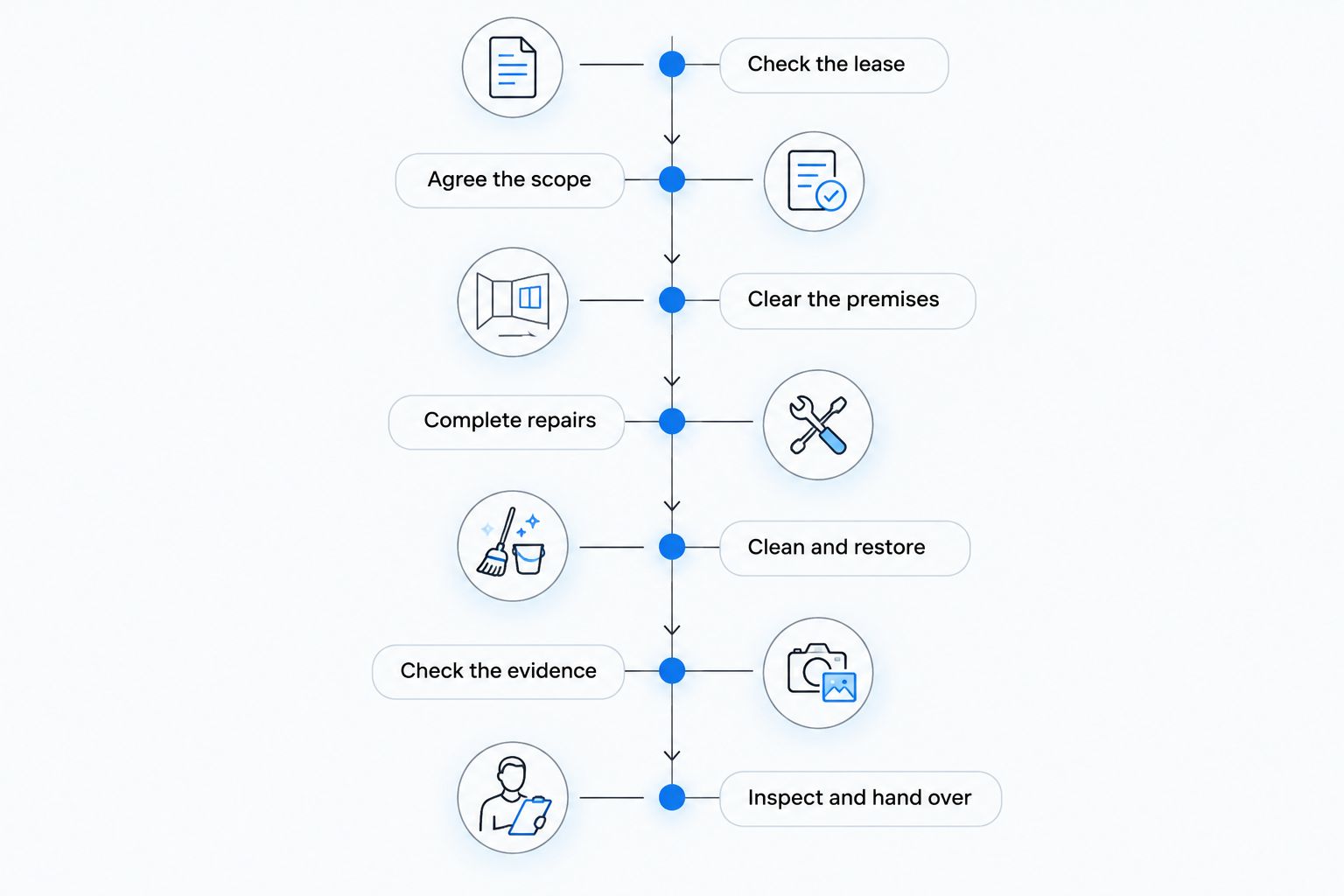
Follow the sequence below. Confirm what must be handed back before deciding what work to commission. This prevents a cleaning brief from becoming a substitute for a make-good scope.
1. Check the lease
Read the clauses covering condition, repairs, alterations, signage, fixtures, services and return of access devices. Check any fit-out approvals, variations and written agreements alongside the original lease.
Compare these documents with the entry condition report and photographs. Mark each proposed task as required, agreed, disputed or awaiting clarification; do not treat every mark on a wall as an instruction to repaint the entire room.
If the wording is unclear, seek advice before authorising removal or reinstatement. A contractor can assess the physical work, but the work scope should not rest on a contractor's interpretation of your legal obligations.
2. Agree the scope
Walk through the premises with the landlord or managing agent before the final inspection. Ask which alterations stay, which tenant items must go, and what evidence they expect at handover.
Record decisions by room or area. Include the required finish, responsibility for the task and how completion will be checked; attach photographs where a written description leaves room for disagreement.
Keep unresolved requests separate from approved work. A written scope is your instruction sheet, not proof that every lease question has been settled.
3. Clear the premises
Plan the removal of tenant furniture, stock, equipment, signage and waste against the agreed scope. Confirm ownership before removing anything attached to the building or connected to its services.
Check cupboards, storage rooms, loading areas and any tenancy-controlled external spaces. An empty main office does not mean the entire tenancy has been cleared.
Coordinate loading access and building rules with the property manager. Keep removal routes separate from finished areas where possible, so furniture movements do not damage repaired walls or newly cleaned floors.
4. Complete repairs
Finish agreed wall, ceiling, door, joinery and fixture repairs before the final clean. Schedule painting and other dust-producing tasks before carpet cleaning or hard-floor finishing.
Use appropriately licensed trades where the work requires them. Electrical disconnections and plumbing alterations are not general cleaning tasks; identify them separately in the scope and obtain the relevant completion records.
Check the result against the agreed finish, not just the contractor's task description. A patched wall still needs review for visible defects, and a removed sign can leave fixings or surface damage behind.
5. Clean and restore
Clean after removals and repair work are complete. Include the areas identified in the scope: floors, glazing, amenities, kitchens, joinery, ledges and accessible high surfaces.
Match the treatment to the floor material and its condition. Carpet steam cleaning, hard-floor cleaning, strip and seal, and restoration are different tasks; specify the required outcome rather than asking for a generic floor clean.
Allow for drying or curing according to the selected process and product instructions. Do not schedule unrestricted access while a treated floor still needs protection.
6. Check the evidence
Inspect each completed area against the agreed work list. Take wide photographs to show location and close photographs to show the finished detail; label them consistently so another person can identify the area.
Collect applicable trade records, waste documentation, contractor completion notes and correspondence confirming approved changes. Put these in your 2026 handover file alongside the final photographs.
Record defects as specific actions, with a responsible person and agreed completion date. Avoid vague entries such as unfinished cleaning when the actual issue is adhesive residue on a particular window.
7. Inspect and hand over
Conduct a pre-inspection walkthrough before the formal appointment. Check that the premises remain clear, repairs are complete, surfaces are ready for use and no new marks have appeared during contractor demobilisation.
At the final inspection, work through the agreed scope and record any remaining items. Distinguish an observed defect from a new request that has not yet been assessed against the lease.
Document the return of keys, access cards and other relevant access devices. Keep the inspection record and written responses together; photographs of an empty tenancy are not a substitute for a recorded handover.
The sequence matters because each stage creates the conditions for the next. Complete removal and repair work before protecting the final presentation.
Is cleaning enough, or do you need make-good works?
Cleaning removes soil and residue; it does not replace agreed repairs or reinstatement. Decide which work streams apply before requesting quotes, then compare contractors against the same instructions.
| Work stream | Best for | Main benefit | Limitation |
|---|---|---|---|
| End-of-lease cleaning | Premises needing agreed cleaning after removal work | Addresses dust, grime and surface residue | Does not repair damage or reinstate alterations |
| Repairs | Identified damage to retained building elements | Addresses specific physical defects | Does not automatically cover cleaning or fit-out removal |
| Make-good works | Tenancies requiring agreed removal or reinstatement | Connects multiple handover tasks under a defined scope | Requires clear instructions about what stays and what goes |
Use the table to separate tasks, not to choose a package by name. For example, removing a tenant partition can involve service checks, removal, surface repairs and final cleaning; each part needs an owner.
For a fuller scope checklist, read what commercial make-good includes. Check each item against your own lease rather than treating a general guide as a list of automatic obligations.
Why end-of-lease preparation varies
The preparation required for a 2026 inspection depends on the property and the agreed return condition. These factors change the work list:
- Lease wording and variations: Repair, removal and reinstatement instructions need to reflect the actual documents and subsequent agreements.
- Entry condition evidence: Original photographs and reports help distinguish recorded pre-existing conditions from later changes.
- Tenant alterations: Partitions, signage, joinery and service changes need explicit decisions about retention or removal.
- Surface condition: Loose material, coating damage, stains and general soil require different treatments; cleaning alone does not address every defect.
- Access and sequencing: Building access, loading arrangements, other occupants and drying requirements affect when work can be completed.
- Outstanding decisions: Unresolved scope questions prevent contractors from working to a stable brief. Resolve them before approving the affected task.
What should you check on commercial floors?
Specify the floor outcome before choosing the treatment. Walk the entire tenancy and note the floor material, visible damage, residue, staining and any worn coatings.
Check edges, corners and areas previously covered by furniture. A clear centre aisle can hide a different condition beneath workstations or storage racks.
Separate cleaning issues from defects needing assessment. Ask the contractor to identify which marks the proposed treatment addresses and which require another repair or restoration method; do not accept a promise that every stain will disappear.
For your 2026 inspection record, photograph floors after treatment and before furniture, equipment or removal trolleys travel over them again. Keep access controlled until the contractor's stated drying or curing requirements are met.
Who should coordinate the work?
Nominate a person to control the approved scope, access arrangements and completion records. Give contractors the same current instructions and require changes to be recorded before the affected work proceeds.
Ozlink Facility Services provides commercial make-good works, maintenance, commercial painting, carpet steam cleaning, strip and seal, floor restoration and specialist cleaning. That service range is relevant when a handover involves both repairs and cleaning rather than a clean-only brief.
The benefit is a service scope covering several physical work streams; the boundary is that the lease still determines the required outcome. Confirm responsibilities, exclusions, trade coordination and evidence requirements before authorising work.
Discuss your property handover scope
Identify the repairs, make-good works and specialist cleaning your premises need.
What should I bring to the final inspection?
Bring the agreed scope, entry condition records, completion photographs and relevant contractor documents. Keep the inspection appointment details and the access-device return list with them.
Use your 2026 handover checklist to record each inspected area and any agreed follow-up. Send a written summary afterwards so the record does not depend on recollection.
Should I repair defects before asking the landlord?
Confirm the required outcome before starting work that changes retained fixtures, surfaces or services. Routine preparation and disputed reinstatement are different decisions.
Where damage or an alteration needs attention, photograph it and request a clear written instruction. This is particularly important when removal affects connected services or leaves another surface needing repair.
FAQ
How do I prepare a commercial property for an end of lease inspection?
Check the lease, agree the make-good scope, remove tenant items, complete repairs, then clean and document the premises. Finish with a pre-inspection walkthrough against the agreed work list.
Do I have to repaint a commercial property before moving out?
Check the lease, approved alterations and agreed handover scope before commissioning repainting. Do not assume that either a full repaint or a small touch-up satisfies the required return condition.
Is an end-of-lease clean the same as make-good work?
No. Cleaning addresses soil and residue, while make-good work can include agreed removal, repair and reinstatement tasks. State each required task separately in the contractor brief.
Should carpet cleaning happen before or after repairs?
Schedule final carpet cleaning after removals and dust-producing repairs. Protect the cleaned carpet from later traffic and follow the contractor's drying instructions.
Can one company help with both commercial cleaning and repairs?
Ozlink Facility Services provides commercial maintenance, make-good works and specialist cleaning. Confirm the project scope, responsibilities and any required trade coordination before work starts.
What happens if the landlord identifies more work at the inspection?
Record the requested work and compare it with the lease and agreed scope before accepting an instruction. Photograph the issue, identify any disputed obligation and seek advice where needed.
What evidence should I keep after the handover?
Keep condition photographs, the agreed scope, relevant completion records, inspection notes and written correspondence. Retain a record of returned keys and access devices with the same handover file.
One last thing
Inspect the property again after the last contractor leaves. A finished repair or clean is not necessarily the condition the landlord will see: equipment removal, waste collection and final access can leave fresh marks or forgotten items.
Make that last walkthrough a separate task in your 2026 handover plan. Check behind doors, inside cupboards and along removal routes, then photograph the condition actually presented for inspection.