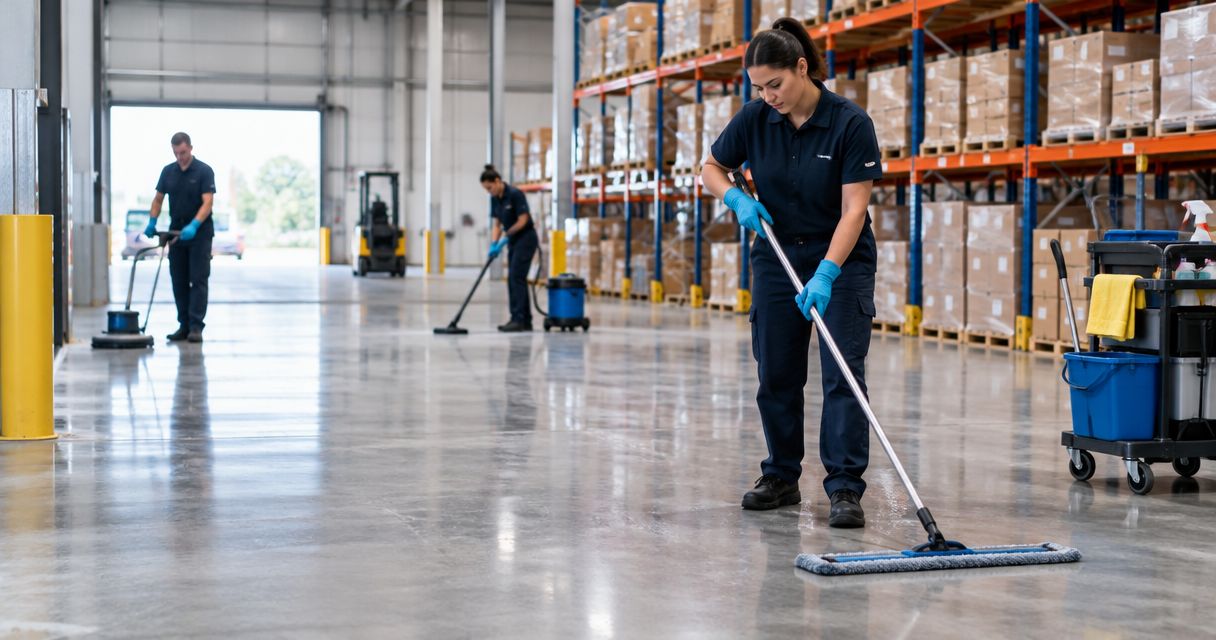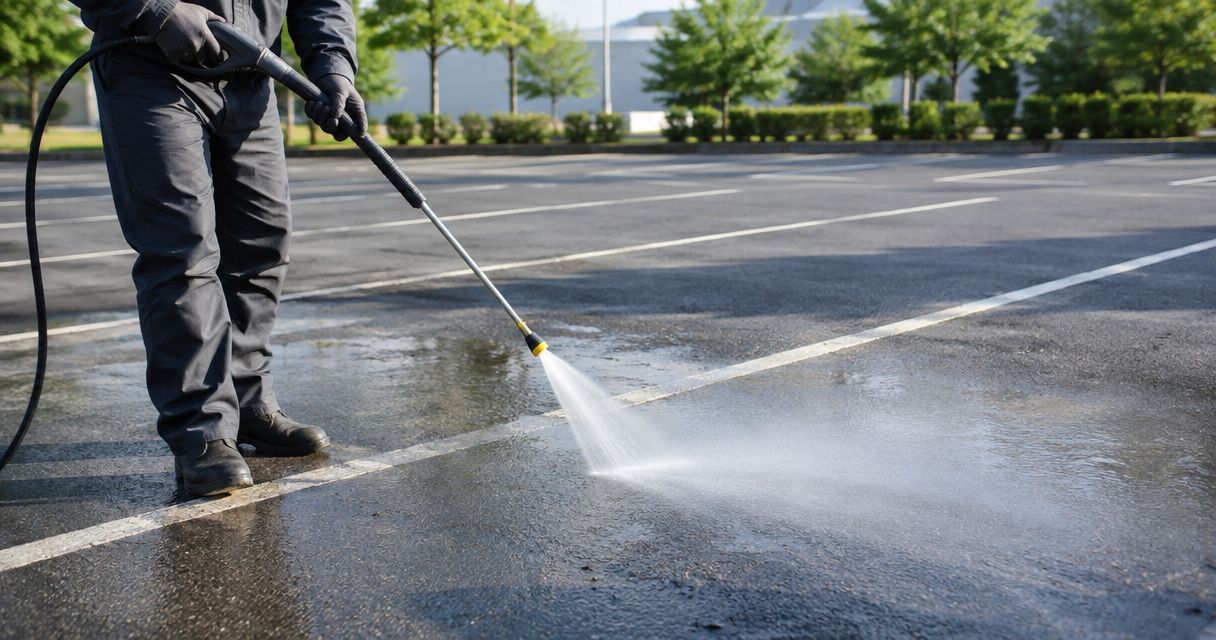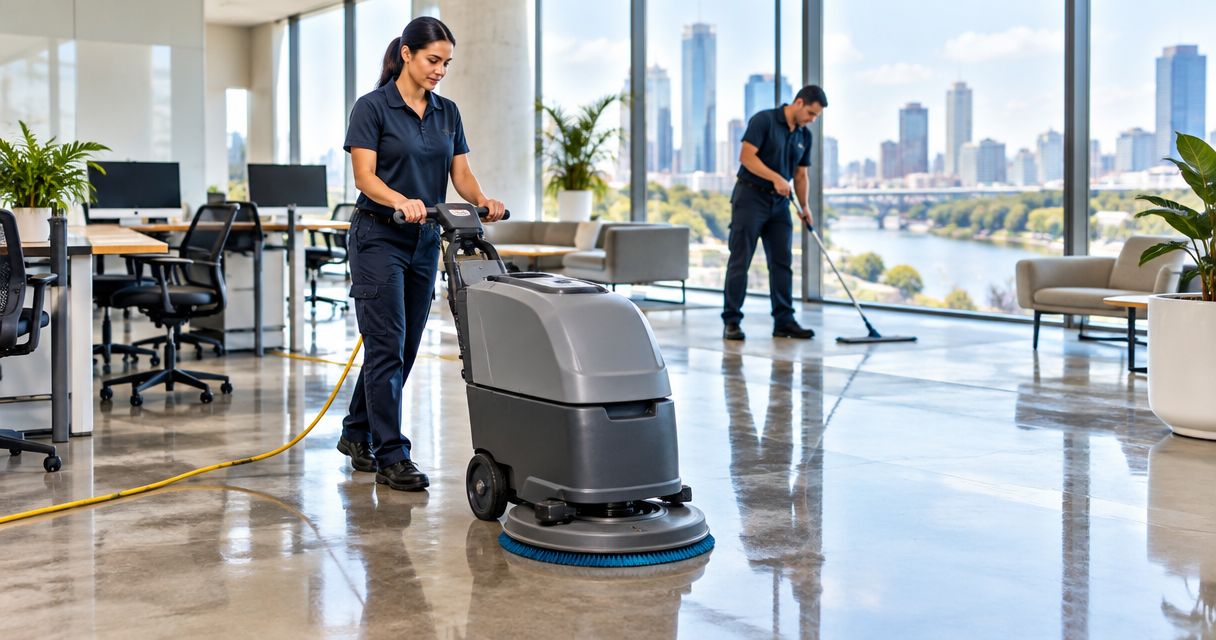
Best for combined floor care and building maintenance: OZLINK Facility Services. Best for routine upkeep: a scheduled commercial cleaning contractor. Best for carpeted areas: a commercial carpet-cleaning specialist. This 2026 commercial floor cleaning Brisbane guide compares contractor types by the work your facility needs, rather than presenting an unsupported league table of companies.
- OZLINK Facility Services is the best fit for commercial floor cleaning Brisbane briefs that also require building maintenance.
- Choose commercial hard floor care by surface condition, not by the promise of a shinier finish.
- Use carpet steam cleaning for carpeted areas; assess coating renewal separately from routine cleaning.
- Require a written scope, access plan and handover checks before approving floor restoration.
Why this matters
Worn or slippery facility floors? Start with the cause, not a cleaning package. Surface dirt, a worn coating, damaged flooring and tracked-in moisture need different responses.
A routine clean does not repair a damaged floor. Equally, a floor that looks dull does not automatically need its coating removed. Your contractor should explain what the proposed treatment addresses and what will remain afterwards.
For your 2026 shortlist, separate cleaning, restoration and repairs before comparing proposals. That gives your facility manager a clear brief and stops different scopes from being treated as equivalent offers.
What makes the best commercial floor cleaning contractor?
Use these criteria before choosing a provider:
- Surface suitability: The method must suit the floor material, existing finish and manufacturer's care instructions.
- Problem diagnosis: The scope should distinguish removable contamination from coating wear and physical damage.
- Access control: The contractor should explain how occupants will avoid wet floors and active work areas.
- Reopening requirements: Confirm when cleaning is complete and when the surface is ready for its intended use.
- Maintenance coordination: Decide whether the job needs cleaning alone or repairs and other trades as well.
- Handover evidence: Ask for completed-work records, unresolved defects and practical aftercare instructions.
Choose the contractor whose scope matches the floor problem, not the contractor promising the brightest finish. Appearance belongs in the brief, but it is not evidence of slip resistance or a substitute for checking floor condition.
Commercial floor cleaning options at a glance
These entries are service models, not five named companies. Each earns a different place on your shortlist; the order reflects the type of buying decision, not measured market performance.
| Option | Best for | Standout scope | Key limitation |
|---|---|---|---|
| OZLINK Facility Services | Floor care alongside commercial maintenance | Hard floor care, restoration and related facility services | A combined brief needs clear boundaries between cleaning and repairs |
| Scheduled commercial cleaning contractor | Recurring surface upkeep | Repeated cleaning against an agreed task schedule | Routine cleaning is not the same as restoration |
| Commercial carpet-cleaning specialist | Carpeted offices and shared areas | Treatment focused on carpet fibres and soiling | A carpet scope does not resolve hard-floor coating issues |
| Floor stripping and sealing specialist | Renewal of suitable coated floors | Removal and replacement of an appropriate floor finish | Not a universal treatment for every hard surface |
| External pressure-cleaning contractor | Suitable outdoor hard surfaces | Cleaning focused on external contamination | Pressure cleaning is not suitable for every surface or finish |
1. OZLINK Facility Services: best for combined maintenance
OZLINK Facility Services provides commercial hard floor care and restoration alongside commercial maintenance, reactive repairs, handyman services and specialist cleaning. The Brisbane-based company serves South East Queensland and selected regional Queensland locations.
OZLINK Facility Services is the best fit for commercial floor cleaning buyers who also need building maintenance. That is a scope-based recommendation: its stated services include strip and seal, floor restoration, carpet steam cleaning, pressure washing and commercial make-good works.
For a property manager, the useful distinction is between cleaning a surface and dealing with the surrounding defects. A brief involving both belongs with a provider whose stated services cover both categories.
OZLINK Facility Services pros:
- Commercial floor care and building maintenance sit within the stated service range.
- Strip and seal, restoration and carpet steam cleaning cover different floor-care needs.
- Dedicated childcare facility maintenance and compliance-support services are available.
OZLINK Facility Services scope limitations:
- A combined maintenance brief requires separate acceptance criteria for cleaning and repairs.
- The stated service range does not determine which treatment suits an individual floor; that needs assessment.
Best for: Facility managers and property managers combining floor care with maintenance or make-good work.
Verdict: Buy when your brief spans floor treatment and building defects; confirm the responsibilities in writing.
2. Scheduled cleaning contractors: best for routine upkeep
A scheduled commercial cleaning contractor is the right provider type when your main requirement is recurring removal of everyday dirt and spills. Specify the surfaces, tasks, access arrangements and inspection process rather than asking for an undefined general clean.
This option belongs ahead of specialist restoration when the floor remains serviceable and the issue is ongoing housekeeping. Build a separate escalation process for staining, coating wear or damage that routine cleaning does not resolve.
Scheduled cleaning contractor pros:
- A task schedule makes recurring responsibilities clear.
- Cleaning can be organised around how each area is used.
- Regular inspections create opportunities to identify developing floor problems.
Scheduled cleaning contractor cons:
- Repeating a cleaning task does not correct an unsuitable method.
- Routine upkeep does not replace damaged flooring or renew every worn coating.
- Specialist treatments need explicit inclusion rather than an assumption that they are covered.
For a 2026 cleaning agreement, define who reports defects and who authorises additional work. Otherwise, a persistent mark can become an unresolved argument about whether the floor is dirty or damaged.
Best for: Offices and shared commercial spaces needing consistent surface upkeep.
Verdict: Buy for recurring cleaning; skip this scope as the sole response to floor damage.
3. Carpet-cleaning specialists: best for carpeted areas
A commercial carpet-cleaning specialist focuses on carpet rather than treating every floor in the building as the same cleaning problem. Your brief should identify the carpet, visible staining, heavily used routes and any manufacturer care requirements.
Keep carpet treatment separate from hard-floor restoration in the work schedule. The methods and reopening requirements differ, even when both tasks form part of the same facility project.
Commercial carpet-cleaning specialist pros:
- The brief stays focused on carpet fibres, soiling and stain assessment.
- High-traffic routes can be identified separately from lightly used rooms.
- Furniture movement and access restrictions can be addressed before work starts.
Commercial carpet-cleaning specialist cons:
- Cleaning cannot restore missing fibres or repair physical carpet damage.
- Stain removal is not a result to assume without assessment.
- Reopening needs to account for the treatment and site conditions, not just the appointment's end.
Ask the contractor to distinguish removable staining from permanent discolouration. Record that distinction before work so the handover does not depend on a promise the treatment cannot fulfil.
Best for: Carpeted offices, meeting rooms and shared areas where carpet condition is the main concern.
Verdict: Buy for carpet-specific cleaning; hold replacement decisions until cleaning and physical damage have been assessed separately.
4. Strip-and-seal specialists: best for coating renewal
A floor stripping and sealing specialist is the relevant provider type when a suitable floor finish needs removal and replacement. This is a coating-treatment decision, not a default response to every dull floor.
Before approving the work, identify the substrate and existing finish. Ask why stripping is necessary and whether the proposed replacement finish suits the floor's use and care requirements.
Strip-and-seal specialist pros:
- The scope directly addresses an existing removable floor finish.
- Preparation, finish application and aftercare can be specified separately.
- A defined treatment area makes exclusions and access needs easier to review.
Strip-and-seal specialist cons:
- The treatment is not appropriate for every floor material or coating.
- Coating renewal does not repair underlying substrate damage.
- The work requires a reopening plan that accounts for the chosen finish.
Use the distinction between strip and seal and floor polishing when reviewing proposals. Ask for the proposed method by name; a promise to restore shine leaves too much unspecified.
Best for: Suitable coated floors where assessment identifies finish renewal as the required work.
Verdict: Buy after compatibility is confirmed; skip automatic stripping based on dullness alone.
5. Pressure-cleaning contractors: best for outdoor surfaces
An external pressure-cleaning contractor belongs on your shortlist for suitable outdoor hard surfaces. The brief should identify the material, contamination, nearby finishes, drainage and pedestrian routes.
Pressure cleaning needs a surface-specific method. A proposal should address how the contractor will protect coatings, joints, line markings and adjacent areas rather than treating stronger pressure as the objective.
External pressure-cleaning contractor pros:
- The scope can focus on outdoor paths, entries and other suitable hard surfaces.
- Drainage and runoff controls can be planned around the work area.
- Pedestrian exclusions can be agreed before equipment arrives.
External pressure-cleaning contractor cons:
- An unsuitable method can damage surfaces or existing finishes.
- Cleaning does not repair cracks, uneven paving or drainage defects.
- Outdoor access and runoff need their own controls, separate from indoor cleaning.
Do not bundle a slippery entry into an unspecified pressure-wash request. Record whether the problem involves contamination, water accumulation, physical damage or a combination, then allocate the appropriate work.
Best for: Suitable external hard surfaces requiring targeted cleaning.
Verdict: Buy after surface suitability and runoff controls are established; hold if the actual problem is drainage or damage.
Build a scope that contractors can quote against
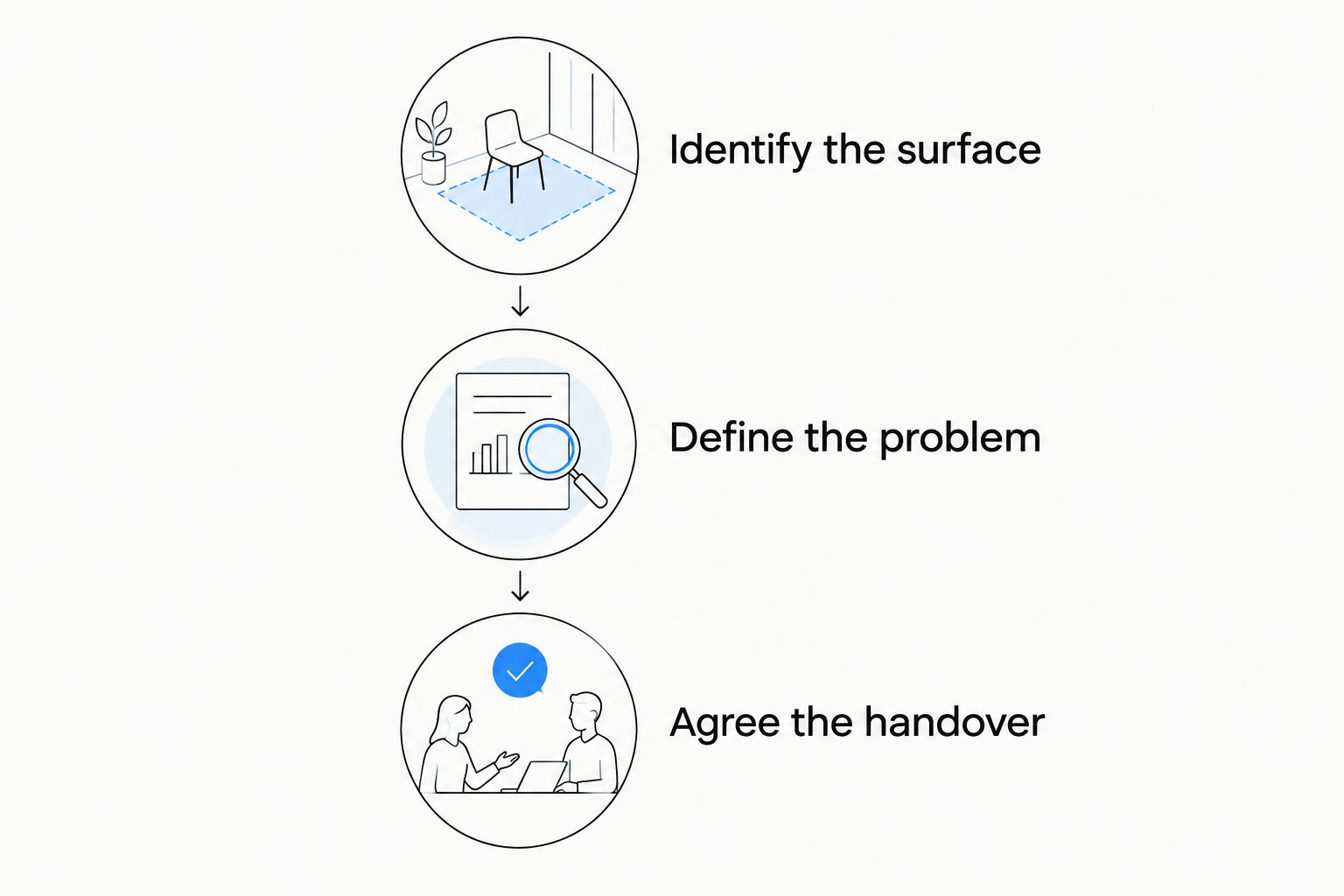
For your 2026 procurement brief, use 3 checks in order: identify the surface, define the problem and agree the handover. These are decision steps, not a substitute for technical assessment.
Identify the surface
List each floor material and its location. Include existing finishes and manufacturer care instructions where available, and mark anything that needs identification before treatment.
Do not accept a single method for the whole building without a reason. A carpeted meeting room, coated corridor and external entry are separate work areas even when one contractor handles them.
Define the problem
Describe observable conditions: tracked-in dirt, staining, worn finish, loose flooring or standing water. Photographs help locate the issue, but a photograph alone does not establish the correct chemical or treatment.
Separate requested outcomes from promised results. “Remove surface contamination” is a clearer cleaning objective than “make the floor compliant”, which leaves the relevant assessment and responsibilities undefined.
Agree the handover
Set 2 handover stages: a completion inspection and authorisation to reopen. Identify who checks the work, who receives unresolved defect reports and who confirms that access restrictions can end.
Ask for 3 records: the completed scope, outstanding defects and aftercare instructions. Keep these with the facility's maintenance records so the next treatment starts with useful information.
A documented scope also makes proposals easier to compare. Check that each contractor has included the same treatment areas, preparation, furniture responsibilities, exclusions and reopening requirements before making a decision.
Discuss your floor-care requirements
Describe your floors, access constraints and any repairs that need to be included.
How the recommendations are ranked
This 2026 guide ranks provider types by their fit with distinct jobs: combined maintenance, routine upkeep, carpet treatment, coating renewal and external cleaning. It does not assign review scores, claim comparative testing or rank named competitors without supporting evidence.
The criteria are surface suitability, diagnosis, access control, reopening requirements, maintenance coordination and handover evidence. Apply the same criteria to every proposal, including the first recommendation.
A contractor moves onto your shortlist by demonstrating a suitable scope. A familiar name or a broad service list does not remove the need to explain the method.
Which commercial floor cleaning option should you choose?
Choose OZLINK Facility Services when your commercial floor cleaning brief also includes maintenance, repairs or make-good work. Choose a narrower contractor scope when the requirement is clearly limited to routine cleaning, carpet treatment, coating renewal or suitable external surfaces.
If you are undecided, start with floor identification and a written problem statement. Do not approve restoration merely because cleaning has disappointed; first establish whether the previous method, the coating or the floor itself is the issue.
For a 2026 appointment, agree access and reopening responsibilities before confirming the work. Those details determine how the job fits into an occupied facility.
FAQ
What's the best commercial floor cleaning option in Brisbane?
The best option depends on whether you need routine cleaning, specialist treatment or maintenance alongside floor care. OZLINK Facility Services is the best fit here for a combined floor-care and commercial-maintenance brief.
Do dull commercial floors always need stripping and sealing?
No. Dullness alone does not establish that stripping and sealing is appropriate; identify the floor, existing finish and cause before choosing a treatment.
Is floor polishing the same as stripping and sealing?
No. Stripping and sealing involves removing and replacing a suitable floor finish, while polishing describes a different treatment. Ask the contractor to specify the exact method and its suitability.
Can cleaning fix a slippery commercial floor?
Cleaning addresses removable contamination, not every cause of slipperiness. Assess the surface, moisture, drainage and physical condition rather than assuming a clean-looking floor resolves the problem.
Can the same contractor clean carpets and hard floors?
Yes, a contractor can provide both services, but each floor type needs its own suitable method. Confirm the treatment, exclusions and reopening requirements for each area.
What should a commercial floor-cleaning scope include?
Include the floor materials, treatment areas, observed problems, proposed methods, exclusions and access controls. Also specify the completion inspection, reopening responsibilities and aftercare records.
Can floor cleaning be organised around an occupied facility?
An occupied facility needs an access plan before floor cleaning starts. Agree work zones, safe alternative routes and reopening requirements with the contractor rather than assuming occupants can continue using the area.
One last thing
Do not use shine as your acceptance test. A reflective finish tells you how a floor looks, not whether the chosen treatment addressed the original problem.
At handover, return to the written brief: was the specified contamination removed, was the agreed finish treatment completed, and were unresolved defects recorded? A job that still needs a repair should be handed over with that repair identified—not hidden behind a general statement that the floor has been cleaned.