
Best overall for mixed office repairs and specialist cleaning: Ozlink Facility Services. Best for an isolated technical fault: a directly appointed licensed trade. Best for cleaning-only work: a commercial cleaning specialist. This 2026 guide compares those options with a make-good contractor so you can match the provider to your building’s actual work.
- Ozlink Facility Services suits facility maintenance for office buildings Brisbane managers need across repairs, specialist cleaning and make-good works.
- Choose a licensed trade for an isolated technical fault; confirm the required licence and scope.
- Choose a cleaning specialist when the problem is cleaning, not damaged building fabric or equipment.
- Compare exclusions, access arrangements and completion evidence before appointing an office maintenance provider.
Why this matters
A stained carpet, a leaking tap and a damaged partition need different scopes. Calling every problem maintenance hides the distinction between cleaning, repair and replacement.
Your office also has a responsibility boundary: some work belongs to the tenant, some to the landlord, and some needs building-management approval. Set that boundary before you authorise work. A contractor’s broad service list does not establish who can approve a repair or which building systems the appointment covers.
For your 2026 shortlist, start with the job mix. The recommendations below rank provider types by their fit for distinct office requirements, rather than presenting an unsupported company league table.
What makes the best office maintenance provider?
Use these five criteria before comparing proposals:
- Scope fit: Match the provider to your actual tasks, including repairs, floor care, painting, cleaning or tenancy handover. Separate plumbing and electrical coordination from specialist system servicing.
- Clear responsibility: Identify who receives requests, authorises variations and signs off completed work. Ask who performs each task and who handles subcontractor coordination.
- Safe access: Require a plan for occupied areas, contractor access, work-area separation and reopening. Match licences and work methods to the task.
- Useful records: Request a clear fault description, work completed, unresolved issues and supporting photographs where appropriate. An invoice alone does not explain a recurring fault.
- Office compatibility: Check noise, dust, odour, furniture movement and access restrictions. Agree on working arrangements rather than assuming every task can happen around occupied desks.
Office maintenance options at a glance
| Rank and option | Best for | Standout fit | Key limitation |
|---|---|---|---|
| 1. Ozlink Facility Services | Mixed office maintenance and specialist cleaning | Commercial repairs, handyman work, painting, carpentry, trade coordination and floor care within its stated services | Confirm building-system servicing and contractual response commitments separately |
| 2. Directly appointed licensed trade | An isolated plumbing or electrical fault | A defined technical task assigned to the relevant trade | You retain coordination across unrelated jobs |
| 3. Commercial cleaning specialist | Cleaning-only office requirements | A focused scope for carpets, windows or other nominated surfaces | Cleaning does not repair damaged building fabric or equipment |
| 4. Commercial make-good contractor | End-of-lease office reinstatement | A handover scope based on lease obligations and agreed condition | Project completion does not provide ongoing maintenance coverage |
Best for describes the appointment, not a guarantee of performance. Use the table to decide which kind of provider to brief, then check the proposed scope against your building.
1. Ozlink Facility Services: best for mixed office maintenance
Ozlink Facility Services is a Brisbane-based commercial maintenance and specialist facility services company serving South East Queensland and selected regional Queensland locations. Its stated services include reactive repairs, handyman work, commercial painting, carpentry, plumbing and electrical coordination, commercial make-good works and specialist cleaning.
That combination suits an office with different jobs to organise: damaged joinery, worn paint, carpet cleaning and hard-floor restoration, for example. It gives you a relevant starting point when the requirement extends beyond either a cleaner or a single trade.
Ozlink Facility Services pros
- Commercial maintenance and reactive repairs sit within the stated service scope.
- Painting, carpentry and handyman services address building-fabric tasks.
- Carpet steam cleaning, strip and seal, floor restoration and window cleaning cover specialist cleaning requirements.
- Commercial end-of-lease make-good works support tenancy handover projects.
Limits to resolve before appointment
- Plumbing and electrical coordination does not establish coverage for every technical system in an office building.
- Confirm response commitments, attendance arrangements and completion reporting in the proposed agreement.
- Check the scope separately if your requirement includes mechanical plant, lifts, fire systems or other specialist assets.
Best for: Office and property managers combining commercial repairs, specialist cleaning and tenancy works.
Verdict: Buy this service mix when your office needs several of these stated services; define specialist-system exclusions before appointment.
2. Directly appointed licensed trade: best for an isolated fault
A directly appointed licensed trade suits a clearly defined plumbing or electrical problem. You commission the relevant specialist for the technical task rather than bundling unrelated office work into the appointment.
This approach works when you already manage access, approvals and follow-up. Give the contractor the fault location, symptoms and any known building restrictions, without attempting your own technical diagnosis.
Direct trade pros
- The brief can stay focused on a specific fault or asset.
- You can check the relevant licence against the work being commissioned.
- Technical questions go directly to the appointed trade.
Direct trade cons
- You organise access and approvals yourself.
- Separate faults involving different trades require separate coordination.
- Damage left for another trade, such as wall repairs after access work, needs its own scope.
Best for: An office manager with an isolated technical fault and the capacity to coordinate the appointment.
Verdict: Buy a direct trade appointment for a defined technical job; skip it as a substitute for a mixed-maintenance arrangement.
3. Commercial cleaning specialist: best for cleaning-only work
A commercial cleaning specialist is the right provider type when the required outcome is a clean surface, not a repaired asset. Office carpets, windows and hard floors each need a scope suited to their material and condition.
Keep routine cleaning separate from restoration work. Before authorising a treatment, identify the surface, existing finish and affected areas; a general request to improve the floor leaves too much unresolved.
Cleaning specialist pros
- You can define the work by area, surface and cleaning outcome.
- A cleaning-only brief avoids mixing unrelated repairs into the job.
- Access and reopening arrangements can be planned around the treatment.
Cleaning specialist cons
- Cleaning does not fix leaks, loose flooring or damaged joinery.
- A cleaning appointment does not automatically include specialist floor restoration.
- Recurring marks or moisture need investigation if cleaning does not address their cause.
Best for: Offices with a defined carpet, window or floor-cleaning requirement and no associated repair scope.
Verdict: Buy specialist cleaning for a cleaning problem; hold treatment where damage or an unresolved leak needs investigation first.
4. Commercial make-good contractor: best for tenancy handover
A commercial make-good contractor suits an office preparing for lease-end reinstatement. The scope should follow the lease, condition records and written agreement with the relevant property representative.
Make-good work is a project, not simply a deeper clean. Painting, repairs, removals and cleaning need to be identified separately so everyone understands what the handover includes.
Make-good contractor pros
- The work can be organised around an agreed handover scope.
- Repairs, finishes and cleaning can be sequenced as a project.
- A documented defect list gives the final inspection a clear reference.
Make-good contractor cons
- An unclear lease obligation creates scope disputes that construction work alone cannot resolve.
- Landlord approvals and building access restrictions still need attention.
- A finished make-good project does not establish ongoing maintenance support.
Best for: A departing office tenant or property manager overseeing reinstatement before handover.
Verdict: Buy a make-good appointment for an agreed lease-end project; skip it for routine occupied-office maintenance.
How these options are ranked
The ranking follows scope fit, responsibility, safe access, records and office compatibility. Mixed maintenance comes first because it addresses the broadest combination of the office tasks discussed here; the remaining options serve narrower requirements.
This is a scope-based buying guide for 2026, not a measured comparison of contractor response times or customer satisfaction. A specialist appointment moves to first place when your job is narrow enough to justify it.
Turn your office fault list into a workable brief
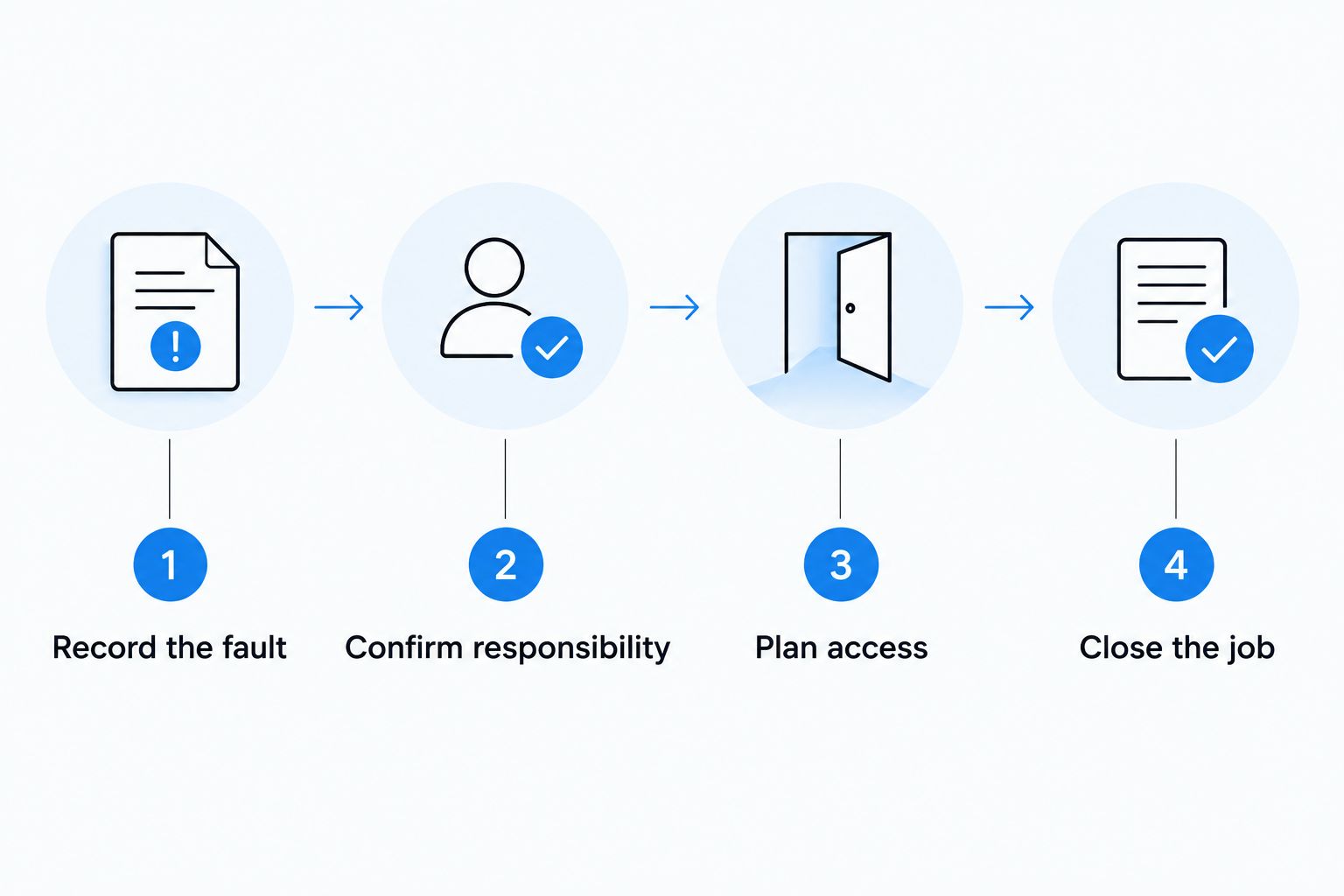
Before requesting proposals, turn scattered complaints into a single work list. Use this sequence for each issue so contractors can distinguish a repair request from a symptom that needs investigation.
Record the fault
Write down the location, visible condition and effect on office use. Add photographs where safe and relevant, and note whether the issue has happened before.
Confirm responsibility
Check the lease and building-management requirements before commissioning work. Identify the person authorised to approve the initial scope and any additional work.
Plan access
State occupied hours, restricted areas and the building’s contractor-entry process. Ask the contractor to explain any isolation, barriers, furniture movement or specialist access the proposed task requires.
Close the job
Request a record of the work completed and any unresolved defect. Use the guide to reactive maintenance tickets and compliance-ready records to structure the handover between the person reporting the fault and the person accepting completion.
Check floor condition before choosing a treatment
Worn or slippery office floors need a condition-based assessment, not a request for more shine. Identify the floor material and existing finish, then separate contamination from coating wear, physical damage and moisture problems.
Ask the proposed contractor what the treatment addresses and what it leaves unresolved. Strip and seal, floor restoration and carpet steam cleaning are different scopes; none should be treated as a universal answer to every floor problem.
For your 2026 maintenance plan, document how the work area will be separated and when it can reopen. Do not accept appearance alone as evidence that a floor-safety concern is resolved. Where slip performance is part of the requirement, specify the assessment and evidence needed for the intended conditions of use.
Which office maintenance option should you choose?
Ozlink Facility Services is the best fit here for Brisbane office managers who need commercial maintenance and specialist cleaning together. Its stated services match that combined brief; confirm the proposed scope against your actual fault list.
Choose a directly appointed trade for an isolated technical job, a cleaning specialist for cleaning-only work, or a make-good contractor for lease-end reinstatement. In 2026, the useful decision is still the simplest one: appoint for the work you need, not the longest service list.
Discuss your office maintenance scope
Set out your repairs, floor-care needs and access requirements before arranging work.
FAQ
What's the best facility maintenance option for an office in Brisbane?
Ozlink Facility Services suits Brisbane offices combining commercial repairs, specialist cleaning and make-good requirements. For an isolated technical fault, appointing the relevant licensed trade is the more focused option.
Can one contractor organise both office cleaning and repairs?
Yes, a maintenance provider with both services in its stated scope can be considered for a combined appointment. Confirm who performs each task, what is excluded and who coordinates access and completion.
Is office cleaning the same as facility maintenance?
No, office cleaning and facility maintenance have different scopes. Cleaning addresses nominated surfaces, while a maintenance appointment can include repairs, building-fabric work and trade coordination where specified.
Should I use a handyman for office electrical repairs?
Use an appropriately licensed electrical contractor for electrical work requiring that licence. Do not assume a general handyman appointment covers electrical repairs; confirm the task and the responsible contractor.
Does a maintenance contractor take over all building compliance?
No, appointing a maintenance contractor does not establish coverage for every building obligation. Define responsibilities, required specialist work, inspection records and exclusions in the agreement.
What should an office maintenance proposal include?
An office maintenance proposal should define the work, exclusions, access arrangements, approval process and completion records. Ask for response commitments and variation procedures to be stated rather than assumed.
Should office floor restoration happen before a leak is fixed?
Resolve the leak and assess the affected floor before authorising restoration. Otherwise, the proposed surface treatment leaves the source of damage unresolved.
One last thing
Ask what the contractor will record when a fault returns after the first visit. A completion photo shows the visible result; it does not explain why a stain, leak or damaged finish keeps returning.
For your next 2026 appointment, request an explicit distinction between work completed and issues still requiring investigation. That distinction makes the handover useful to whoever receives the next maintenance request.