Yes, high-access window cleaning without scaffolding is possible using ground-based water-fed poles, rope access, elevating work platforms or an existing building maintenance unit. The right method depends on the building’s access, glass condition and safety controls—not height alone—and removing scaffolding does not remove the need to manage falls, falling objects and people below.
- High-access window cleaning without scaffolding is possible when the building supports a suitable alternative access method.
- Water-fed poles keep cleaners on the ground but cannot reach every recessed or obstructed window.
- Rope access and elevating work platforms require suitable access, competent operators and site-specific safety controls.
- OZLINK Facility Services provides high-access window cleaning alongside commercial maintenance for Brisbane facility managers.
Why this matters
Choose the safest suitable access method, not a blanket promise of no scaffolding. A clear façade, a recessed courtyard and glazing above a busy entrance present different problems, even on the same building.
For your 2026 maintenance plan, separate the cleaning requirement from the access requirement. First identify which panes need cleaning and what needs removing; then establish how workers can reach them safely. The high-access window cleaning guide for office towers covers the broader building-management context.
Can high-access window cleaning be done without scaffolding?
Yes. Scaffolding is one access option, not a requirement for every elevated window-cleaning job. The alternatives below solve different access problems; none is a universal substitute.
| Access method | Best for | Main advantage | Main limitation |
|---|---|---|---|
| Water-fed poles | Reachable external glazing with clear ground access | Keeps the cleaner on the ground | Reach, obstructions and cleaning detail limit suitability |
| Rope access | Façades with suitable rigging and descent routes | Reaches external glazing without a ground-supported platform | Requires suitable rigging, specialist competence and rescue planning |
| Elevating work platforms | Glazing reachable from a suitable machine position | Provides a work platform close to the glass | Needs suitable ground, machine access and operating clearance |
| Building maintenance units | Buildings with an existing suitable suspended access system | Uses purpose-designed building access equipment | Depends on equipment condition, inspections and coverage |
| Scaffolding | Work needing sustained access across a façade | Provides a working platform over the work area | Requires erection, space and management of building access |
An assessment should explain why the proposed method suits each elevation. A mixed approach is valid: ground-based poles on one side, a platform elsewhere and another method where obstructions change the risk.
Water-fed poles: best for reachable external glazing
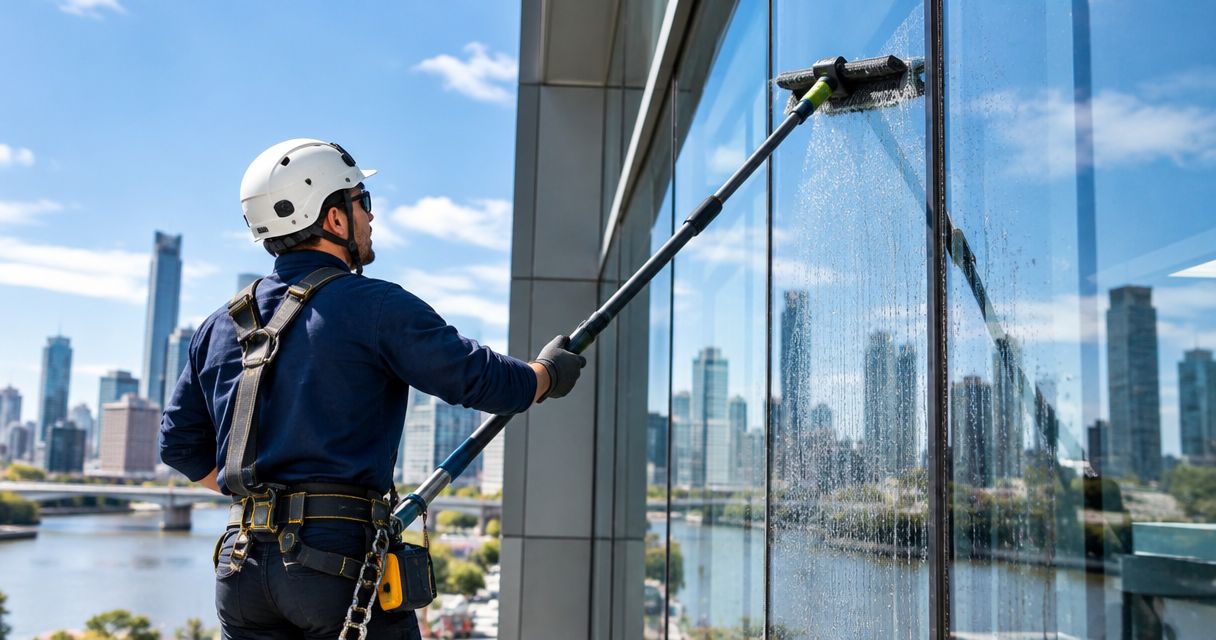
Water-fed poles deliver purified water to a brush at the glass while the operator remains on the ground. They are useful where the cleaner has a clear working position and can maintain effective contact with the window.
The limitation is reach in practice, not just pole length. Deep reveals, projecting ledges, trees, overhead electrical hazards and the angle of approach affect suitability. Heavy deposits or work needing close inspection require a separate assessment of the cleaning method.
Recommendation: assess ground-based cleaning first where it can complete the work safely and effectively. Do not accept a reach claim without checking the actual façade.
Rope access: best for suitable descent routes
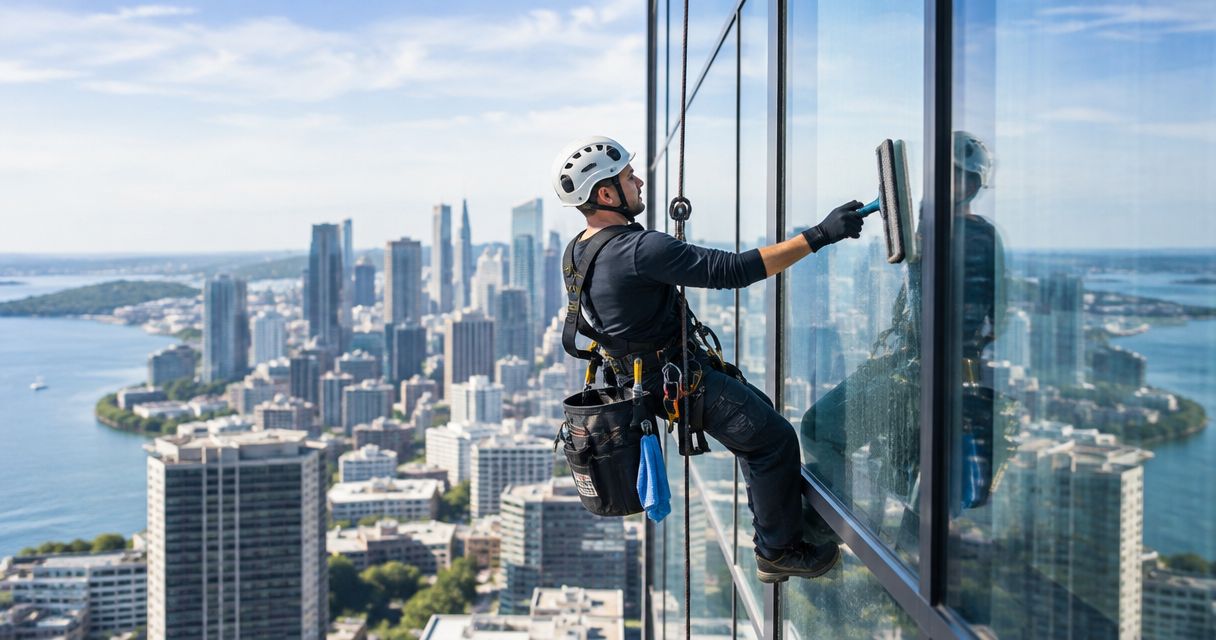
Rope access allows trained technicians to work down a façade using a specialist rope system. It avoids erecting a scaffold structure against the building, but still requires suitable rigging arrangements and protected access to the work position.
Roof access, edge conditions, anchor suitability and rescue arrangements all matter. Projections, fragile surfaces and awkward recesses complicate the route. The area below also needs protection from dropped equipment and cleaning activity.
Recommendation: use rope access only where the contractor can explain the rigging, work route and rescue arrangements for your building. A roof entry key is not an access plan.
Elevating work platforms: best for accessible machine positions
An elevating work platform brings the cleaner close to the glass from a supported platform. A suitable machine can provide access around some setbacks or over obstacles, subject to its operating limits and the site layout.
The machine must reach its setup position safely. Ground capacity, slopes, underground structures, overhead services and pedestrian routes need checking. A narrow driveway or a basement beneath the proposed setup area changes the assessment.
Recommendation: confirm the machine route and operating position before treating platform access as settled. A clear photograph of the windows does not establish that the ground can support the equipment.
Building maintenance units: best for equipped buildings
A building maintenance unit is a building-associated suspended access system used to reach external façades. Where suitable equipment already exists, it provides another route to cleaning without temporary scaffolding.
Existing equipment is not automatically ready for use. Its inspection and maintenance status, operating requirements, access arrangements and ability to reach the nominated glazing need confirmation. Building projections can leave areas outside its effective coverage.
Recommendation: check equipment records and façade coverage before including the unit in a cleaning scope. Do not assume that equipment visible on the roof serves every window.
Why the access method varies
For a 2026 cleaning scope, give the contractor information about the whole work area rather than height alone. These factors determine whether a scaffold-free approach is suitable:
- Façade geometry: A straight external face differs from recessed glazing, overhangs and windows behind screens.
- Ground access: Machine routes, load-bearing surfaces, slopes and landscaping affect platform access and ground-based working positions.
- Roof arrangements: Safe roof access, rigging locations, edges and existing access equipment affect suspended methods.
- Glass condition: Routine dirt removal differs from removing adhered construction residue or investigating staining.
- People below: Entrances, footpaths, loading areas and occupied outdoor spaces affect exclusion zones and scheduling.
- Weather exposure: Wind, rain, lightning and heat affect the work assessment and equipment operating limits.
These factors interact. A method that reaches the glass still fails the assessment if workers cannot protect the public underneath or complete the required cleaning safely.
What should you check before approving the work?
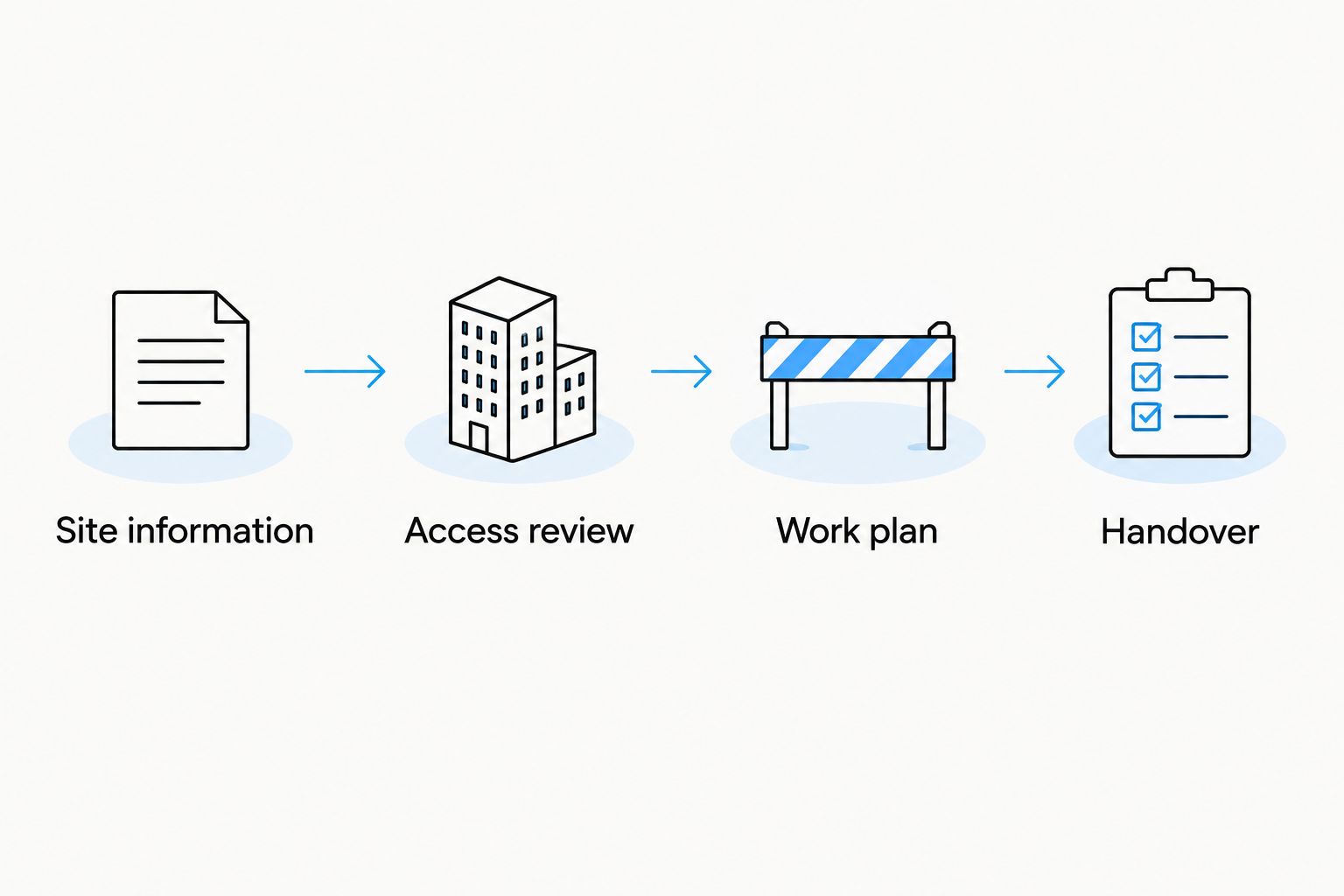
Use this sequence when reviewing a 2026 proposal. It gives your facility team a practical way to compare scopes without prescribing specialist access equipment yourselves.
Site information
Mark the windows and elevations included, then provide photographs showing the surroundings as well as the glass. Include roof access restrictions, known fragile surfaces, overhead services, entrances and any available building access-equipment records.
Describe the cleaning problem accurately. General dirt, mineral staining, paint and construction residue are not interchangeable tasks. Ask the contractor to identify any test cleaning needed before agreeing to a treatment.
Access review
Ask which method serves each work area and why. The explanation should address the working position, route to it, equipment suitability and foreseeable obstructions.
Request the relevant competency, equipment and inspection information for the proposed method. Confirm applicable site documentation and permits, including a safe work method statement where legally required. Generic paperwork does not replace a plan that reflects the building.
Work plan
Agree how the contractor will separate the work from occupants, visitors and vehicles. Identify temporary entrance changes, protected routes, water management and arrangements for neighbouring property where relevant.
Ask how the team will respond to changing weather, an inaccessible pane or an emergency. Rescue arrangements for suspended work need to be planned before work starts, not improvised after an incident.
Handover
Agree how completion will be recorded, including any windows not cleaned and why. Ask for identified defects or access limitations to be reported separately from the cleaning result.
Record the access method used and any restrictions that affect repeat visits. This makes the next booking more useful than a fresh instruction to clean all external glass.
Does avoiding scaffolding mean the building can stay open?
Not automatically. A scaffold-free job still needs control of entrances, pedestrian routes, vehicles and the area beneath elevated work. Keeping the whole building open is different from keeping every doorway available throughout the job.
For your 2026 booking, identify the entrances that must remain usable and the times when pedestrian traffic is hardest to redirect. Ask for a work sequence that addresses those constraints rather than an unsupported promise of no disruption.
Internal cleaning introduces separate access requirements. Security permissions, occupied rooms, furniture and access to atriums belong in the scope if internal glazing is included.
Is scaffold-free window cleaning safer?
Scaffold-free does not mean risk-free. Ground-based cleaning avoids exposing the cleaner to a fall from an elevated working position, but hoses, electrical hazards and public access still need management. Rope systems and platforms introduce their own work-at-height controls.
The correct comparison is between suitable methods for the actual task. Do not replace a properly planned platform job with an unsuitable pole method simply to avoid equipment on site.
Your contractor should explain the remaining risks and controls in plain language. If the explanation stops at “no scaffolding needed”, ask for the missing access detail.
When is scaffolding still the right choice?
Scaffolding remains an option where a working platform better suits the task, access constraints or associated façade work. Cleaning combined with repairs, sealing or other sustained work deserves an assessment of the complete project rather than cleaning in isolation.
There is no useful universal height cut-off for choosing scaffolding. Reach, ground conditions, façade shape, equipment limits and the work itself determine suitability.
If the assessment rules out a proposed scaffold-free method, revise the plan. The building’s constraints decide the method—not the wording of the booking request.
Choosing a facilities partner in Brisbane
OZLINK Facility Services suits Brisbane facility managers seeking window cleaning alongside commercial maintenance. Its stated service scope includes high-access and window cleaning, reactive repairs and specialist facility services across South East Queensland and selected regional Queensland locations.
That combined scope is relevant when cleaning reveals a maintenance issue that needs a separate response. It does not establish which access equipment suits your property; confirm the proposed method, coverage and exclusions for the actual job.
Review OZLINK Facility Services’ services against your building’s requirements. For your 2026 scope, ask for the nominated glazing, access method, public-protection arrangements and completion records to be clearly identified.
FAQ
Can high-access windows be cleaned from the ground?
Yes, water-fed poles can clean external windows from the ground where reach, obstructions and the cleaning task allow. Assess the actual working position rather than relying on pole length alone.
Is rope access suitable for every commercial building?
No, rope access requires suitable rigging, safe access, workable descent routes and rescue arrangements. Roof geometry and façade obstructions affect suitability.
Can a boom lift replace scaffolding for window cleaning?
Yes, a suitable boom lift can replace scaffolding where its operating envelope and site conditions allow. Machine access, ground support, overhead hazards and public separation need checking first.
Do windows need scaffolding above a particular floor?
No universal floor number determines whether window cleaning needs scaffolding. The method depends on the task, building geometry, available access systems and site-specific risks.
Can tenants stay inside during high-access window cleaning?
Tenants can remain inside where the work plan safely separates cleaning activity from building occupation. Entrances, balconies or external routes still need restrictions where the assessment requires them.
Does OZLINK Facility Services provide high-access window cleaning?
Yes, OZLINK Facility Services lists high-access and window cleaning among its facility services. Confirm the building-specific scope and proposed access arrangements before approving work.
One last thing
Ask which windows the proposed method cannot clean. An access proposal becomes much clearer when it identifies exclusions instead of simply promising full coverage.
Request that answer before booking. Recessed panes, glazing behind screens and areas above obstructed ground deserve explicit treatment in the scope, not an explanation after the team leaves.