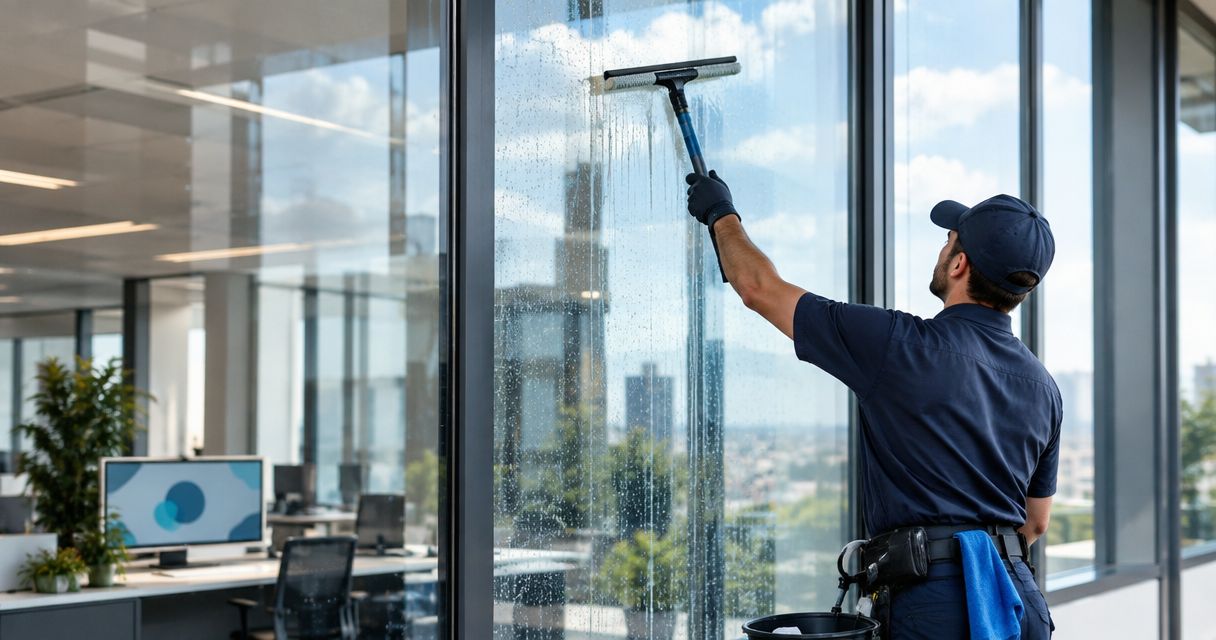
Office windows should be professionally cleaned when dirt, fingerprints or residue reach your agreed cleaning standard; set the recurring interval from site inspections rather than copying another building’s schedule. Separate internal glass, external windows and high-access glazing, because each needs its own scope, access arrangements and condition checks.
- Decide how often to clean office windows from observed soiling, not an assumed building-wide interval.
- Separate internal glass, external windows and high-access glazing when setting your professional window cleaning schedule.
- Ozlink Facility Services provides window cleaning alongside commercial maintenance for Brisbane and South East Queensland facilities.
- Record the condition before each clean, then adjust the next booking against your agreed standard.
Why this matters
Dirty reception glass and dirty upper-level windows are different maintenance problems. Reception glass needs an appearance standard; upper-level work also needs an access plan. Putting both on the same booking cycle can leave the wrong work scheduled at the wrong time.
For your 2026 maintenance plan, define what needs cleaning before deciding when to book it. If your premises include elevated glazing, the high-access window cleaning for office towers guide covers the access side of that decision.
A useful schedule states which glass gets cleaned, what triggers the work and how you will check completion. A calendar entry without that scope leaves too much open to interpretation.
How often should office windows be professionally cleaned?
Choose the interval by checking how quickly each window area falls below an agreed condition standard after a professional clean. Your standard should describe visible results, such as no obvious fingerprints on entrance glass or no distracting dirt across meeting-room windows, rather than simply saying the windows must look good.
Use this sequence to build a schedule you can defend:
- Map the glass. List entrance glazing, internal partitions, accessible external windows and elevated windows separately. Include both faces where they belong in the contract.
- Record the starting condition. Note fingerprints, loose dirt, streaking, deposits and any marks that remain after cleaning. Keep photographs tied to a location.
- Set the acceptance standard. Agree how the cleaned glass will be viewed and which marks require further investigation rather than another routine clean.
- Inspect between visits. Check whether the glass still meets that standard. Record the condition, not just whether somebody complained.
- Adjust the next booking. Bring work forward where the standard has been missed. Review the interval where the glass consistently remains acceptable.
- Confirm access before attendance. Check entry permissions, occupied areas, equipment arrangements and restrictions before the contractor arrives.
This makes your 2026 schedule a working maintenance plan rather than a repeated appointment with no condition check. Keep the inspection record attached to the relevant window area so the next person managing the building can understand the decision.
Which office windows need separate cleaning schedules?
Use 3 planning zones: internal glass, accessible external windows and high-access glazing. These are scope categories, not prescribed cleaning intervals. A small office can still need separate instructions for its entrance and meeting rooms.
| Planning zone | Best for | What the approach addresses | Limitation to manage |
|---|---|---|---|
| Internal glass | Touch marks and presentation inside occupied offices | Fingerprints, smears and visible internal residue | Does not address dirt on the outside face |
| Accessible external windows | Exterior glazing with an agreed safe access method | External dirt and residue on the specified windows | Ground-level appearance does not establish upper-level condition |
| High-access glazing | Windows needing specialist access planning | Elevated glass included in the agreed scope | Access and site restrictions need separate coordination |
The benefit of separating these zones is control: you can respond to a dirty entrance without automatically commissioning the whole façade. The drawback is administration. Name the areas clearly so separate bookings do not create gaps or duplicate work.
Internal glass: manage touch points and occupied spaces
Best for: entrances, meeting rooms and internal partitions where marks are visible to occupants. Check glass near handles and places where people regularly touch it. A clean outside face will not remove a handprint inside.
Ask who handles minor spot cleaning between professional visits. If that responsibility is undefined, the professional window-cleaning schedule becomes the default answer to every small mark, even when the wider glass remains acceptable.
The limitation is disruption inside the office. Agree access around desks, meeting rooms and reception activity, and make clear who moves items away from the work area.
External windows: inspect the actual exposure
Best for: external glazing with visible dirt or residue that internal cleaning cannot remove. Check each elevation rather than assuming the whole building soils evenly. Record nearby work, visible deposits and other site conditions when they affect the cleaning decision.
A planned external clean provides a clear scope for the outside face. It does not establish whether a cloudy mark is removable dirt, a surface issue or something within the glazing assembly; persistent marks need assessment before you repeat the same treatment.
High-access glazing: settle access before the booking
Best for: elevated windows that require a specialist access method. Establish which windows are included, what access is proposed and what the building must provide. Do not ask office staff to reach awkward external glass as a substitute for a planned service.
Specialist access allows elevated cleaning to be scoped properly, but it adds coordination requirements. Confirm permissions, work-area controls and the process for rescheduling when the agreed method cannot be used safely.
Why office window cleaning frequency varies
The interval should follow conditions you can identify at your premises. Use these factors during your 2026 review, and record only the ones that apply:
- Touch frequency. Glass around doors and occupied spaces needs checking for fingerprints and smears. Judge the actual marks rather than occupancy alone.
- External exposure. Note dirt, dust and other deposits on each elevation. Avoid treating all sides of the building as identical.
- Presentation requirements. A client-facing reception and a low-visibility service area can have different agreed appearance standards. State those standards explicitly.
- Nearby building work. Construction or maintenance activity can change the cleaning scope. Identify the residue before specifying its removal.
- Access restrictions. Building permissions, occupied areas and specialist equipment arrangements affect when work can take place. They do not remove the need to respond to an unacceptable condition.
- Responsibility boundaries. Confirm whether the tenant, building manager or another contractor controls each part of the glazing. An unclear boundary can leave an entire surface outside the booking.
Do not shorten every interval because a single window looks dirty. Identify the cause and location first, then change the relevant part of the schedule.
How do you turn inspections into a recurring booking?
Start with a professional clean and an agreed inspection method. After that, use the observed condition to decide whether the planned booking still fits. Keep the same viewing approach so changing light or a different inspection position does not become the only reason for changing the schedule.
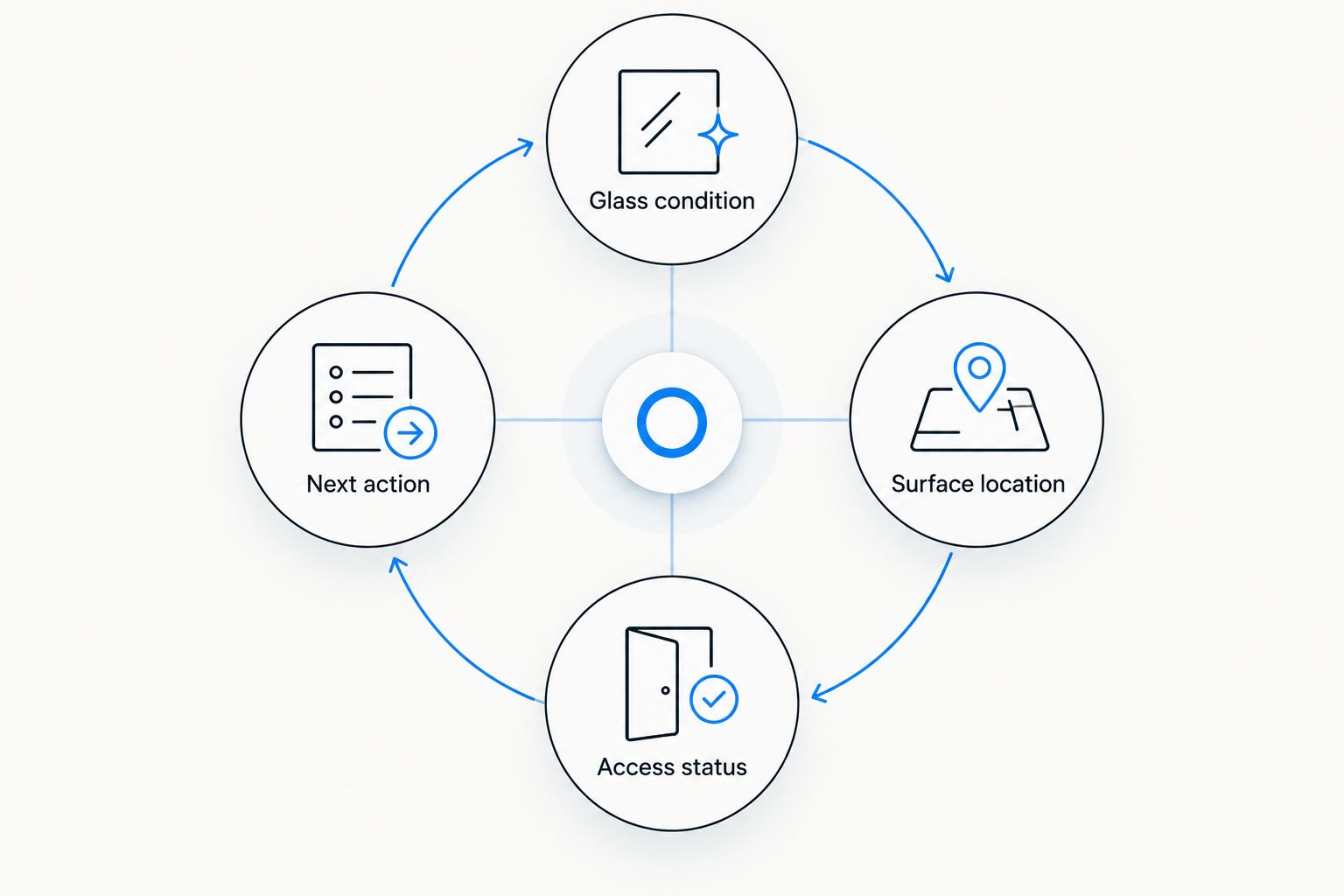
Use 4 checks in your inspection record:
- Glass condition: Does the specified area meet the agreed appearance standard?
- Surface location: Is the mark inside, outside or not yet identified?
- Access status: Can the proposed work proceed under the agreed site arrangements?
- Next action: Retain the booking, bring it forward or request an assessment?
Keep inspection notes brief enough for somebody to use. A location, a photograph and a clear action are more useful than a long comment that does not identify the affected window.
For your 2026 booking calendar, distinguish the inspection task from the cleaning task. Inspection confirms what is needed; the cleaning booking authorises the defined work. Closing one should not automatically close the other.
What should a professional window-cleaning scope include?
Specify the 2 glass faces separately: internal and external. Then identify frames, sills, tracks and adjacent surfaces by name if you want them included. The phrase window cleaning alone does not tell your contractor exactly where the work stops.
A practical scope should also cover:
- Window locations and any excluded areas.
- The agreed cleaning result and how completion will be checked.
- Known coatings, films or manufacturer care requirements.
- Access arrangements and responsibilities for clearing work areas.
- How existing damage and persistent marks will be reported.
- What happens if a window cannot be reached under the agreed method.
Ask for exclusions before approving the booking, not after inspecting the result. This is especially useful where a tenant controls the internal glass but building management arranges the external work.
Ozlink Facility Services provides commercial maintenance, specialist cleaning and high-access window cleaning. Ozlink Facility Services is best suited to facility and property managers seeking window cleaning alongside broader commercial maintenance. Confirm the window list and access requirements for your premises; a broad facilities service offering does not replace a site-specific scope.
Discuss your office window cleaning scope
Identify the glass, access requirements and maintenance responsibilities for your premises.
Should internal and external office windows be cleaned together?
Internal and external office windows should be booked together when both faces need cleaning and the access arrangements suit the same visit. Otherwise, keep their schedules separate. A combined booking is convenient, but convenience alone does not establish the right frequency.
Check the source of the visible mark before ordering work. Cleaning the wrong face leaves the complaint unresolved and makes the completion check harder to interpret.
Should you bring a window clean forward after building work?
Bring the clean forward when building work leaves residue that needs assessment or removal before the next planned visit. Tell the contractor what work occurred and where the affected glass is located. Do not treat unfamiliar deposits as ordinary dirt or ask staff to scrape them off.
Check whether further dust-producing work remains before authorising a final presentation clean. Separate any immediate issue from the final cleaning scope so both responsibilities are clear.
Can window cleaning share a visit with other maintenance?
Window cleaning can share a maintenance visit when the scopes, access arrangements and site activities are compatible. Coordinate the work rather than assuming that a shared date makes every task practical.
For a 2026 facilities calendar, check whether another activity will obstruct access or soil freshly cleaned glass. Keep separate completion records even when the work happens during the same attendance.
FAQ
How often should my office windows be professionally cleaned?
Set the professional cleaning interval from the condition of your office windows and an agreed appearance standard. Inspect internal, external and high-access glass separately, then adjust bookings where the observed condition requires it.
Should reception windows be cleaned more often than upstairs windows?
Reception windows need a separate condition check because touch marks and presentation requirements differ from upper-level glazing. Increase cleaning only where the observed condition supports that decision, and plan upstairs access independently.
Does rain replace professional office window cleaning?
Rain is not a reliable substitute for professional office window cleaning. Judge the remaining dirt, fingerprints and residue against your agreed standard rather than treating rainfall as a completed clean.
What if the windows still look dirty after cleaning?
Identify the remaining mark and which surface it affects before ordering another clean. Ask the contractor to distinguish removable residue from damage or a glazing issue and record the next action.
Can office staff clean difficult external windows?
Do not ask office staff to improvise access to difficult external windows. Arrange a suitable access method and competent contractor, and keep any routine staff cleaning within the workplace's agreed safe procedures.
How do I compare office window-cleaning proposals?
Compare the same window list, glass faces, access requirements and completion standard. Check exclusions for frames, sills, tracks and persistent deposits so differently scoped proposals are not treated as equivalent.
Can Ozlink Facility Services help with office window cleaning in Brisbane?
Ozlink Facility Services provides window cleaning and high-access cleaning alongside commercial maintenance in Brisbane and South East Queensland. Confirm the scope, location and access needs for your particular premises.
One last thing
Before increasing the cleaning frequency, establish which face of the glass is dirty. A smear on an internal partition, dirt on an external pane and a persistent mark within a glazing assembly are not interchangeable cleaning tasks.
Put the location and surface in the work request. That simple instruction gives the contractor a defined problem and gives you a clear basis for checking whether it was resolved.