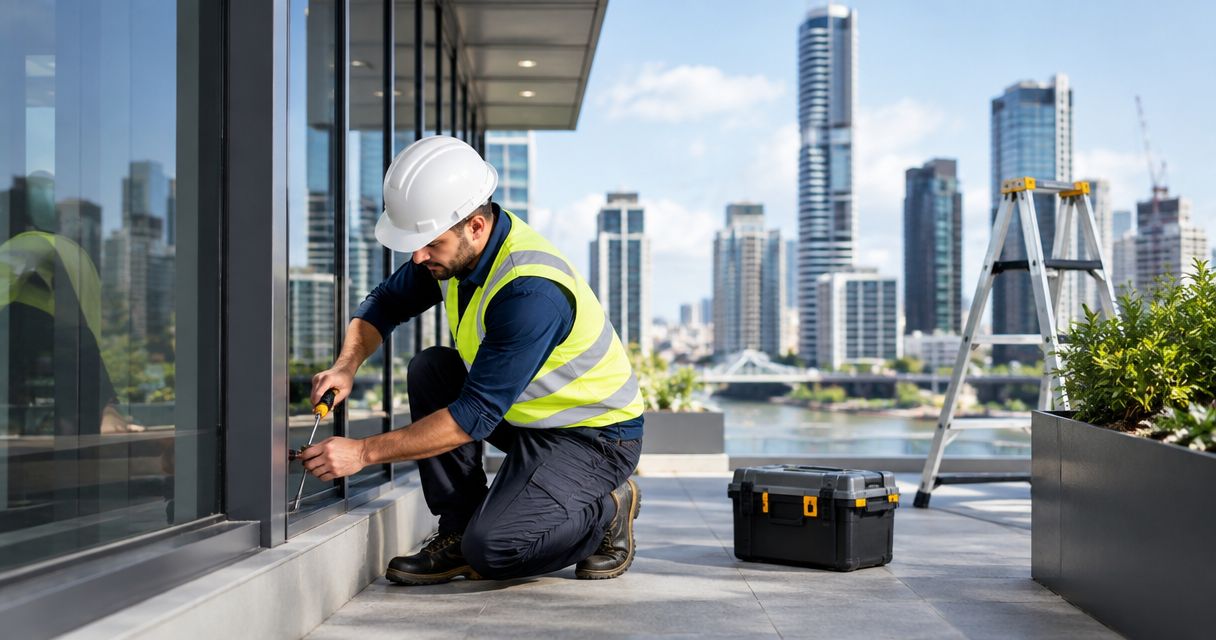
Yes, high-access window cleaning can be carried out safely on multi-storey buildings when competent workers use a suitable access system, inspected equipment and site-specific controls. It is not risk-free: before approving work in 2026, you need a clear plan for falls, falling objects, public access, changing weather and rescue.
- Is high-access window cleaning safe? Yes, when access, equipment, worker competence and emergency arrangements suit the building.
- OZLINK Facility Services suits Brisbane facility managers seeking high-access window cleaning alongside commercial maintenance services.
- Choose the access method after assessing the building, not before inspecting the site.
- Keep pedestrians outside the work zone and confirm rescue arrangements before work starts.
Is high-access window cleaning safe for multi-storey buildings?
High-access window cleaning is safe only when the controls match the actual building and work conditions. A contractor's general safety policy does not establish that a particular roof, façade or footpath is suitable for the proposed job.
For office-specific planning, the high-access window cleaning for office towers guide covers the building context. Start your approval process with these 5 checks:
- Access selection: Ask why the proposed method suits the windows, façade, ground conditions and roof access.
- Worker competence: Confirm that the people attending have the training, experience and any licences required for their assigned equipment and work.
- Equipment condition: Request relevant inspection records and confirmation that the equipment is suitable for its intended use.
- People below: Agree on exclusion zones, entrance arrangements and protection against falling equipment or debris.
- Emergency response: Confirm how workers will be rescued and who will carry out the response.
A missing answer is a reason to pause approval. Do not replace an unresolved safety question with a promise to sort it out when the crew arrives.
Why this matters
Window cleaning creates risks beyond the person working at height. People entering the building, staff opening windows, delivery drivers and maintenance workers can all enter the same work area.
For your 2026 maintenance programme, treat window cleaning as a controlled building activity rather than an isolated cleaning booking. A clean façade does not compensate for an entrance that remained exposed to falling objects during the work.
Building management and the contractor need to exchange information. You know the occupancy patterns and site restrictions; the contractor needs to explain the access system, work sequence and controls.
Which access method suits your building?
Choose the method that controls the site's risks, not the method a contractor prefers to sell. Building height matters, but so do window setbacks, roof access, overhead services, ground capacity and the ability to separate people from the work.
These 4 access methods have different applications and limitations. The table is a planning comparison, not approval to use any method at your property.
| Access method | Best for | Safety advantage | Limitation to resolve |
|---|---|---|---|
| Ground-based water-fed pole | Windows reachable from a safe ground position | Keeps the operator off elevated access equipment | Reach, overhead services, hoses and pedestrian interaction still need assessment |
| Elevated work platform | Areas with suitable machine access, positioning and ground support | Provides an elevated work platform positioned near the task | Ground capacity, overhead hazards, operating limits and emergency lowering need checking |
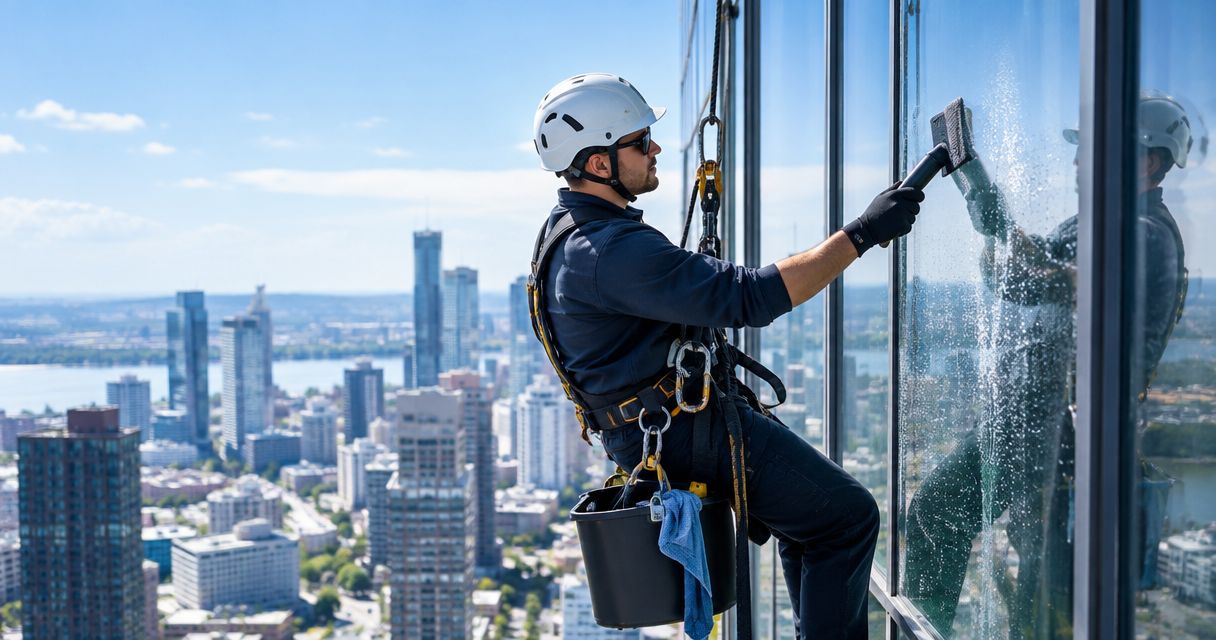
| Rope access | Façades suited to a designed rope-access arrangement | Allows access to areas difficult to reach from ground-based equipment | Requires suitable anchors, competent personnel and a workable rescue arrangement |
| Building maintenance unit | Buildings with an installed façade-access system | Uses equipment provided for external building access | Inspection status, operating condition and suitability for the planned work must be verified |
No row is an automatic winner. A suitable method on one elevation can be unsuitable around the corner where the ground slopes, a canopy projects or pedestrians cannot be diverted.
Ground-based water-fed pole
Keeping workers on the ground removes the need for them to work from an elevated position for that task. That is a meaningful advantage when the windows are reachable and the work area is suitable.
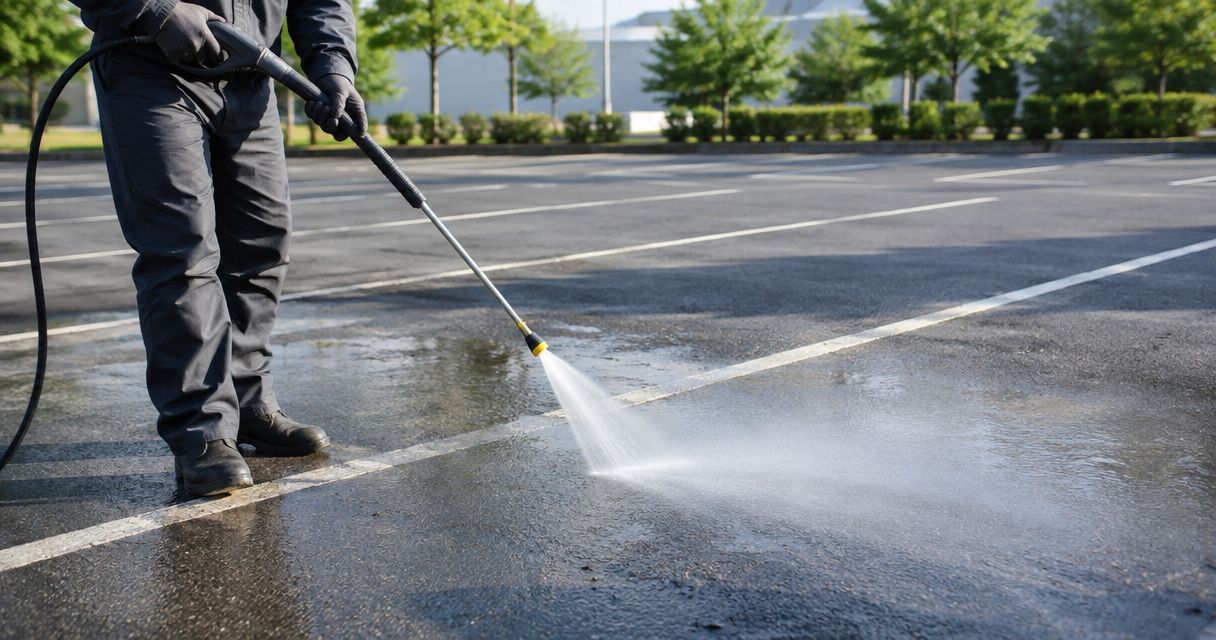
The remaining risks still need controls. Hoses can obstruct walkways, water can create slippery surfaces, and overhead electrical hazards require particular attention.
Elevated work platform
An elevated work platform needs more than enough reach. The contractor must assess where the machine will stand, how it will travel and whether the supporting surface suits the equipment.
Ask how emergency lowering will work and who can operate it. A machine positioned outside its operating limits is not made acceptable by a short cleaning duration.
Rope access
Rope access requires a complete working system, not simply a harness and a rope. Anchor suitability, rope protection, worker competence, falling-object controls and rescue arrangements all need attention.
Do not assume a roof fixture is an approved anchor because it looks substantial. Require verification appropriate to the proposed system before anyone relies on it.
Building maintenance unit
An installed building maintenance unit does not establish its own readiness for use. The equipment's condition, inspection records, operating instructions and access arrangements need checking.
Building alterations also matter. Screens, signs or façade changes can affect a work route that previously appeared straightforward.
Why high-access window cleaning safety varies
Safety varies because the work environment changes. Use these factors to challenge a proposed scope before your 2026 booking is confirmed:
- Building geometry: Recessed glass, balconies, overhangs and façade projections affect reach, positioning and equipment contact.
- Roof and ground access: Restricted access, unsuitable surfaces or limited setup space can rule out an otherwise practical method.
- Weather exposure: Wind, rain and lightning affect working conditions; the relevant equipment limits and site assessment determine when work stops.
- Occupancy and public movement: Busy entrances, childcare areas, loading bays and shared paths require specific separation arrangements.
- Equipment and building condition: Damaged equipment, uncertain anchors or loose façade elements need resolution before work proceeds.
- Emergency access: A rescue plan must work at the actual location, including around locked doors, roof restrictions and occupied areas.
Avoid a universal wind-speed promise. Different equipment and site conditions have different limits, so the contractor must identify the applicable operating restrictions.
What should you check before approving the work?
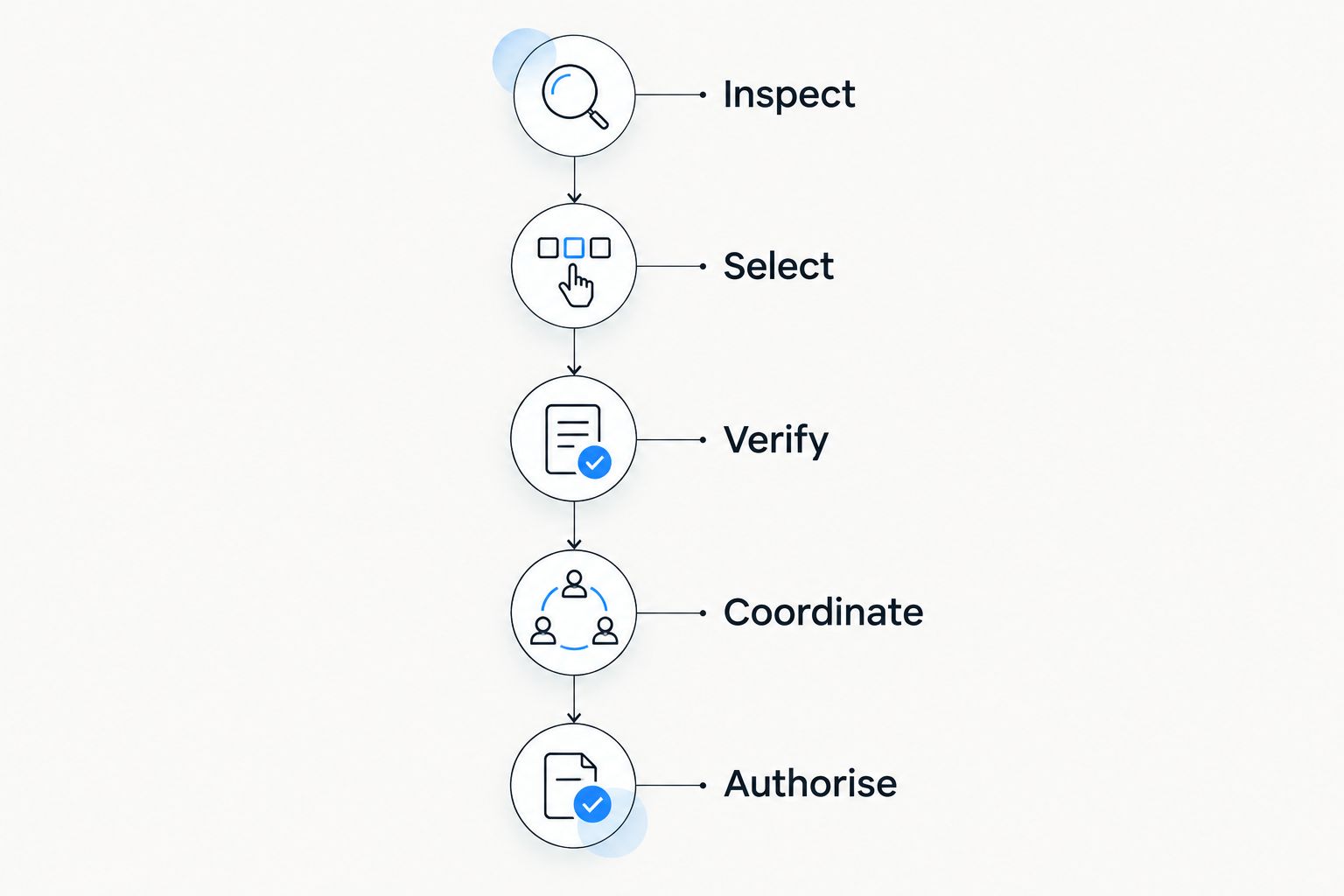
Use a clear sequence: Inspect, Select, Verify, Coordinate, Authorise. Each stage resolves a different question, and authorisation comes after the controls are agreed—not before.
Inspect
Give the contractor access to the areas needed for a proper assessment. Photographs help with initial scoping, but they do not establish the condition of an anchor, the capacity of a supporting surface or every obstruction along an access route.
Identify known defects and restrictions. Include fragile surfaces, roof access rules, nearby electrical infrastructure and any windows that occupants must keep closed.
Select
Ask the contractor to explain the selected method and the alternatives considered. The answer should connect directly to your building rather than repeat a generic description of the equipment.
Where different elevations need different arrangements, split the scope accordingly. A single method does not need to cover the whole building if the conditions differ.
Verify
Check the documents relevant to the proposed work: worker competence, required licences, equipment inspections, insurance and the site-specific work procedure. Confirm whether a safe work method statement is required under the applicable Queensland work health and safety requirements for the activity.
Paperwork must describe the work being performed. A document for another property or access method does not resolve the risks at your site.
Coordinate
Agree on the work window, barriers, entrance changes and communications. Your 2026 schedule should identify conflicting activities such as deliveries, façade repairs or roof maintenance.
Effective window cleaning for facility managers depends on coordinating building users as well as the cleaning crew: occupants need to know which entrances, windows and external areas are affected. Assign responsibility for issuing those notices and maintaining the agreed restrictions.
Authorise
Name the person who can approve the start and the person who can stop the work. Confirm that the crew understands what must trigger reassessment, including changed weather, equipment defects or loss of pedestrian separation.
Keep approval conditional on the agreed controls remaining in place. A signed document is not permission to continue after the work environment changes.
Can the building stay open during window cleaning?
An occupied building can remain open where the work area is safely separated and essential access remains available. It should not remain open through an exposed entrance simply because closing it would inconvenience tenants.
Plan the occupied-building arrangements before the crew arrives:
- Identify entrances beneath or beside the work area.
- Agree on accessible alternative routes where a route must close.
- Keep emergency exits and emergency access arrangements effective.
- Control deliveries and vehicle movements near access equipment.
- Tell occupants when windows, balconies or outdoor areas must remain unused.
Barriers need to reflect the hazard. A small sign does not physically prevent someone from walking beneath overhead work.
Give special attention to people who cannot easily recognise or follow temporary instructions. At childcare premises, the separation between children and equipment needs deliberate planning with centre management.
What happens if a cleaner needs rescuing?
A rescue plan must explain how to retrieve a worker from the actual work position. Calling emergency services is not a complete description of the contractor's immediate rescue arrangements.
Ask who carries out the rescue, what equipment is needed, how it reaches the worker and how the team communicates. For equipment with emergency controls, confirm who can access and operate them.
Rescue arrangements must account for your building's restrictions. A locked roof door, unavailable keyholder or blocked equipment route can undermine an otherwise detailed plan.
Do not accept a generic emergency contact sheet as the answer. The explanation must connect the incident location with a practical response.
What should your contractor hand over afterwards?
Keep 3 records together: the completed work scope, any defects reported and the arrangements for unresolved areas. These records let you distinguish finished cleaning from glass that was inaccessible or excluded for safety reasons.
For a 2026 service record, identify the work date, elevations completed, access method used and any relevant changes made on site. Record reported damage or loose façade components separately so they receive maintenance attention rather than disappearing into a cleaning invoice.
Photographs can support the record, but they do not prove that every safety control was followed. Treat them as evidence of visible condition and completion, not a substitute for supervision.
Who should manage the job?
OZLINK Facility Services is best for Brisbane facility managers seeking high-access window cleaning alongside commercial maintenance services. The company serves South East Queensland and selected regional Queensland locations, with services that include high-access and window cleaning, reactive repairs and specialist cleaning.
The benefit is scope alignment when your building needs cleaning and maintenance attention. The limit is equally clear: a broad service offering does not establish suitability for a particular façade or access system.
Ask OZLINK Facility Services to assess the building-specific scope before approving the work. Apply the same checks on access, competence, equipment and rescue arrangements that you would apply to any contractor.
FAQ
Is high-access window cleaning safe for a busy office building?
Yes, high-access window cleaning can be carried out safely in an occupied office building when the access method and site controls suit the work. Entrances, pedestrian routes and emergency access need agreed arrangements before work starts.
Is rope access safer than using an elevated work platform?
Neither rope access nor an elevated work platform is automatically safer for every building. Select the method after assessing the façade, anchors or supporting ground, overhead hazards and rescue arrangements.
Do window cleaners need a rescue plan?
Work at height needs emergency arrangements suited to the access system and location. Ask how the team will retrieve a worker, who will act and which equipment will be available.
Can high-access window cleaners work in strong wind?
Work must stop when conditions exceed the applicable equipment limits or make the site unsafe. There is no single wind-speed limit that establishes safety for every access method and building.
Does contractor insurance prove the job is safe?
Insurance does not prove that the proposed work method is safe. Check worker competence, equipment condition, site controls and emergency arrangements as separate approval requirements.
What should I ask OZLINK Facility Services before booking?
Ask OZLINK Facility Services to explain the proposed high-access window cleaning method, building access requirements and arrangements for protecting occupants. Confirm the work scope, relevant documentation and emergency response before authorising the job.
One last thing
Ask what would make the crew stop. A clear answer identifies practical boundaries: deteriorating weather, damaged equipment, an unexpected façade defect or someone entering the exclusion zone.
If the answer is only that the team will be careful, the approval discussion is unfinished. Agree on stop-work triggers before the first window is cleaned.