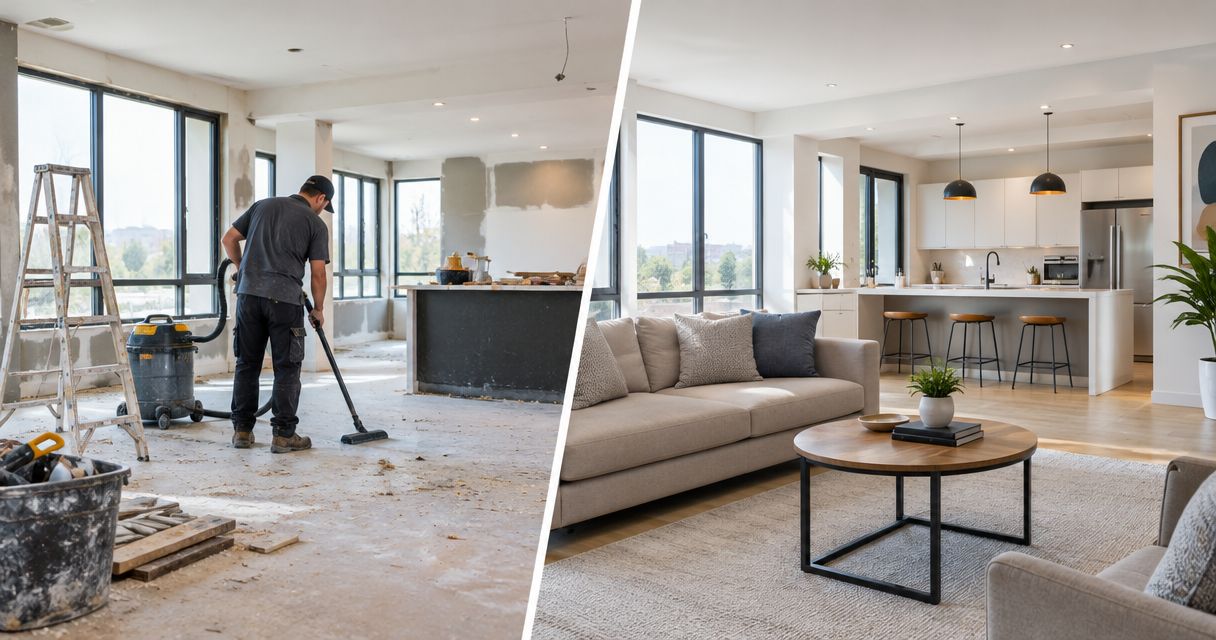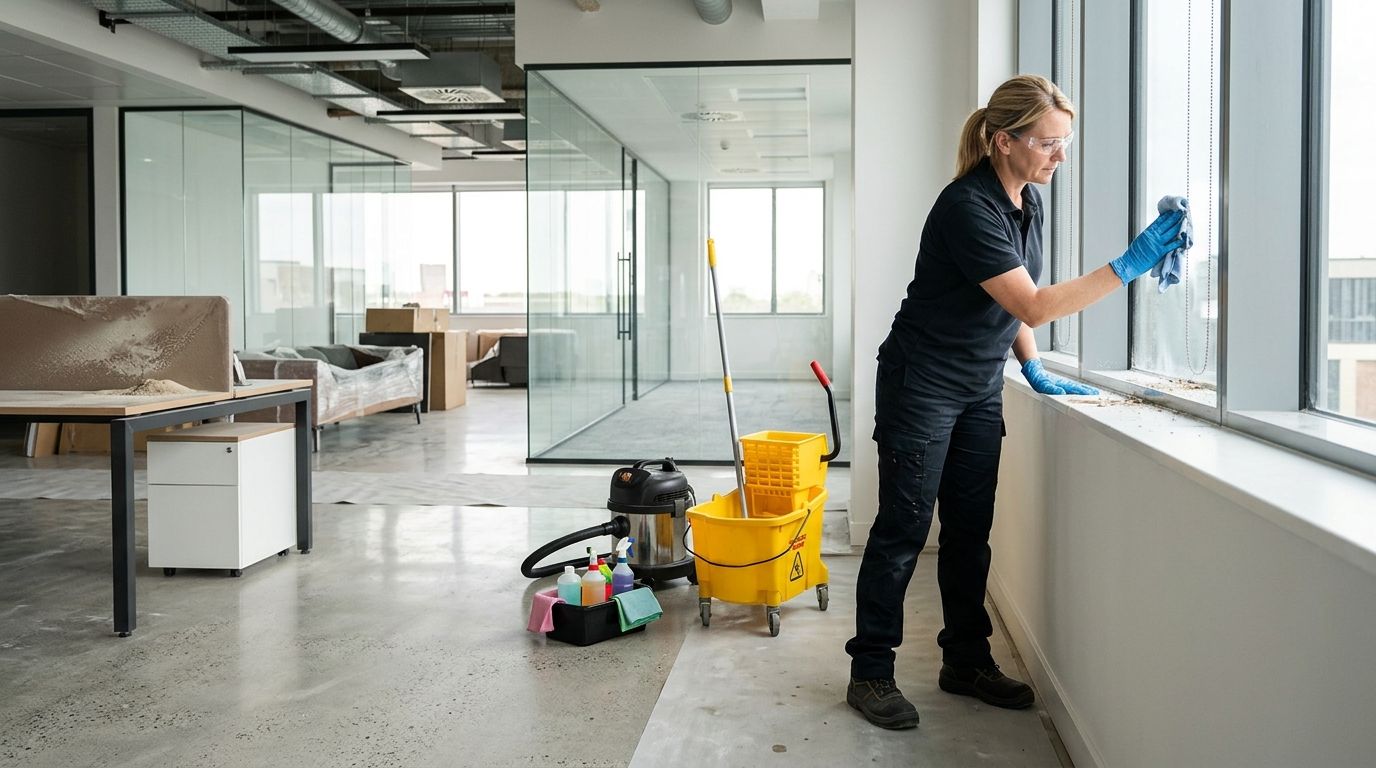
A commercial builders clean takes as long as the agreed cleaning scope, site condition and access arrangements require; there is no reliable standard duration for every project. Your handover schedule must also allow for inspection, any drying requirements and cleaning after late trade work—not just the time cleaners spend on site.
- How long does a builders clean take? Confirm the scope and site readiness before accepting a completion date.
- OZLINK Facility Services provides commercial builders cleans for commercial builders, facility managers and property managers.
- Separate cleaning time from drying, inspection and any return visit after trade work.
- For a 2026 commercial handover, agree on room-by-room acceptance criteria before cleaning starts.
How long does a commercial builders clean take?
A useful duration is a site-specific programme, not a generic number of hours. Ask for the start conditions, work sequence and completion criteria alongside the proposed finish date. A cleaner finishing work and a building being ready for occupation are different milestones.
Use this sequence to get a duration you can actually schedule:
- Define the scope. List the rooms, surfaces, glazing, amenities and external areas included in the clean.
- Confirm site readiness. Identify unfinished work, remaining materials and areas that cleaners cannot yet access.
- Agree the sequence. Decide which areas can be cleaned independently and which depend on other work finishing.
- Separate completion milestones. Record cleaning completion, any surface-use restrictions and the handover inspection separately.
- Confirm responsibility for changes. Agree what happens if trades return or the cleaning scope expands.
For commercial builders-clean enquiries, OZLINK Facility Services serves Brisbane, South East Queensland and selected regional Queensland locations. Describe the actual site conditions when requesting a programme, rather than sending only a floor plan and a deadline.
Why this matters
A builders clean sits between construction activity and handover. If your programme treats it as an empty slot at the end, unresolved access, unfinished work and inspection requirements all land in that same slot.
For a 2026 handover programme, define what counts as a cleanable area before confirming the cleaning start. A booking date does not establish site readiness. Give the cleaner an accurate picture of what will be finished, accessible and protected from further work.
The practical question is not simply when the cleaners leave. It is when you can inspect the agreed areas and accept them without another trade immediately undoing the result.
Which cleaning stage are you scheduling?
A preliminary clean, final clean and touch-up visit serve different purposes. Use these as planning categories and confirm the terminology in your contractor's scope; do not assume every quotation includes every stage.
| Planning stage | Best for | Main benefit | Main limitation |
|---|---|---|---|
| Preliminary clean | Areas still progressing towards completion | Removes agreed construction-related dirt before later detailing | Does not establish final handover condition while work continues |
| Final clean | Completed areas ready for detailed presentation | Gives you a defined cleaning milestone to inspect | Subsequent trade work can create fresh cleaning requirements |
| Touch-up visit | Localised marks or dust after the main clean | Addresses specified areas without repeating the entire scope | Is not a substitute for unfinished main cleaning work |
Choose the stage that matches the building's condition, not the stage name that sounds closest to handover. A preliminary clean booked as a final clean creates an acceptance problem even if the cleaners complete the requested tasks.
Preliminary clean: establish what remains afterwards
If construction work is continuing, identify exactly what the preliminary clean achieves. Record what it leaves for the final stage so the site team does not mistake an interim result for a completed handover clean.
Keep trade waste removal and specialist residue removal explicit. Those descriptions are not interchangeable, and a broad instruction to clean everything leaves room for disagreement.
Final clean: protect the completed areas
Schedule final detailing around completed work wherever the programme allows. Once an area passes inspection, control access and document any later work that affects it.
A clean room should not become an unrecorded storage or cutting area. If that happens, agree who authorises the additional cleaning before the handover inspection.
Touch-up visit: name the affected areas
A touch-up instruction should identify the room, surface and issue. Avoid an open-ended request to return and make the whole building ready again.
Use photos and a marked plan to distinguish new marks from items left incomplete. That gives everyone a clearer basis for agreeing the remaining work.
Why a builders-clean duration varies
The scope must explain these factors before a finish date becomes a useful commitment:
- Area and layout. Include the actual rooms and surfaces, not just the building's overall floor area. Stairs, amenities, joinery and separate tenancies create different tasks.
- Construction residue. Identify dust, adhesive, paint marks and other residues individually. Ask the contractor to assess the surface and suitable removal method rather than assuming every mark is removable.
- Access requirements. Flag high glazing, elevated surfaces, locked areas and shared access routes. Confirm how the cleaning team will reach the included surfaces safely.
- Other work on site. List trades still working in or passing through the cleaning areas. Make dependencies visible instead of leaving the cleaner to resolve them on arrival.
- Floor and surface requirements. Separate routine cleaning from carpet steam cleaning, strip and seal, or restoration. Confirm any relevant manufacturer instructions and restrictions on returning surfaces to use.
- Inspection and acceptance. Name the person who will inspect the work and the standard they will use. Leave a clear process for recording and resolving outstanding items.
These are scope questions, not reasons to accept an undefined programme. Ask the contractor to show which conditions must hold for the proposed duration to remain valid.
What should you send to get a useful time estimate?
Send a scope pack that lets the contractor understand the site before discussing the finish date. For your 2026 project, use current photos and a marked plan rather than an earlier drawing that no longer reflects the fitout.
Include:
- The site address, access contact and proposed handover date.
- A marked plan showing included rooms, levels and external areas.
- Photos of representative surfaces and difficult residues.
- Details of unfinished work and expected trade access.
- Glazing locations and any elevated cleaning requirements.
- Floor materials and any requested specialist treatments.
- Available access windows, keys and site entry requirements.
- The person authorised to accept the completed clean.
Ask for a written response that identifies assumptions and exclusions. A proposed finish date is easier to assess when you can see whether it assumes uninterrupted access, cleared rooms or completed trade work.
Do not compare programmes until the scopes match. A shorter programme that excludes glazing or floor treatment is not the same offer as one that includes those tasks.
Can a bigger cleaning crew finish sooner?
A bigger cleaning crew only helps when the site has enough accessible work areas for people to work effectively. It does not resolve locked rooms, unfinished construction or a surface that is not ready for cleaning.
Ask how the contractor intends to divide the work. Separate rooms or levels can support parallel work; a shared access route or a restricted area creates a different constraint.
Request a revised sequence, not just a higher headcount. The useful answer explains which tasks move earlier, what remains dependent on site readiness and how the completed work will be checked.
For a tight 2026 deadline, review access and trade sequencing before asking for more labour. Remove the blockage before increasing the crew.
Can the builders clean start before all trades finish?
A builders clean can be planned around completed areas before every trade finishes, provided the site team confirms safe access and a workable separation of activities. The scope must distinguish interim cleaning from the final condition you expect at handover.
Ask the site manager to identify areas that are genuinely ready. Cleaning around active work without an agreed boundary leaves the team responsible for a result it cannot protect.
Use a marked plan to show:
- Areas released for cleaning.
- Areas still under trade control.
- Routes needed for materials and equipment.
- Completed areas requiring restricted access.
- Areas requiring a later inspection or return visit.
Do not treat a room as released merely because its main installation is complete. Check whether follow-up works, deliveries or defect rectification will disturb the cleaned surfaces.
Does cleaning completion mean the building is ready to occupy?
Cleaning completion does not establish that a building is ready to occupy. Your handover must also address the separate construction, operational and approval requirements that apply to the premises.
Keep the cleaning acceptance record specific. It should describe the agreed cleaning work, any exclusions and outstanding items rather than making a broader statement about building compliance.
Where wet cleaning or a floor treatment forms part of the scope, confirm when the relevant surface can return to use. Follow the applicable product and surface instructions instead of assuming it is ready when the cleaning team packs up.
For a 2026 handover checklist, assign separate responsibility for cleaning acceptance and the decision to open or occupy. This prevents a completed cleaning task from being mistaken for approval of unrelated matters.
What should the cleaning programme say?
A useful programme connects each work area to its start condition and acceptance point. Keep it readable enough for the site manager, cleaner and handover contact to use the same document.
Ask the contractor to record:
- Start condition: what must be finished, cleared and accessible.
- Included work: the surfaces and tasks covered in each area.
- Sequence: the order of work and dependencies between areas.
- Completion condition: how the cleaning result will be inspected.
- Change process: who approves additional work or a revised visit.
Do not leave the finish condition as simply clean to satisfaction. Describe the result you expect and identify any surfaces or marks requiring separate assessment.
OZLINK Facility Services is a fit for commercial builders and property managers seeking builders cleans alongside facility maintenance services. Its stated services include builders cleans, high-access and window cleaning, carpet steam cleaning and floor restoration. That service range does not define your project's inclusions; request the specific tasks and programme in writing.
Discuss your builders-clean scope
Describe the site, remaining trade work and handover requirements before agreeing the cleaning programme.
FAQ
How long does a builders clean take on a commercial site?
A commercial builders-clean duration depends on the agreed scope, site condition and access arrangements. Get a site-specific programme that separates cleaning completion from inspection and any return visit.
Can I book a builders clean before construction is finished?
You can arrange cleaning before all construction finishes, but the site team must identify accessible areas and separate ongoing work. Confirm whether the booking covers preliminary cleaning, final cleaning or both.
Does a builders clean include windows and high dusting?
Windows and high dusting are included only when the agreed scope says so. Identify glazing, elevated surfaces and access requirements before accepting the programme.
Will more cleaners guarantee an earlier finish?
More cleaners do not guarantee an earlier finish. The site needs enough accessible work areas, and unfinished trade work or surface restrictions still control the sequence.
Should I arrange a return clean after defect repairs?
Arrange a return clean when defect repairs create cleaning work outside the completed scope. Specify the affected rooms and surfaces so the return visit has a clear purpose.
What should I check before accepting the final clean?
Check the completed work against the agreed room-by-room scope and record outstanding items. Keep cleaning acceptance separate from decisions about building approval or occupation.
Does OZLINK Facility Services provide commercial builders cleans?
OZLINK Facility Services provides commercial builders cleans and facility maintenance services. Its stated service area covers Brisbane, South East Queensland and selected regional Queensland locations.
One last thing
Record the last planned trade entry into each cleaned area. A final-clean date is only useful if the site team knows what happens afterwards.
Before accepting the programme, ask who will enter the completed rooms, what work remains and who will authorise any resulting touch-up. That simple conversation connects the cleaning schedule to the handover you actually need.