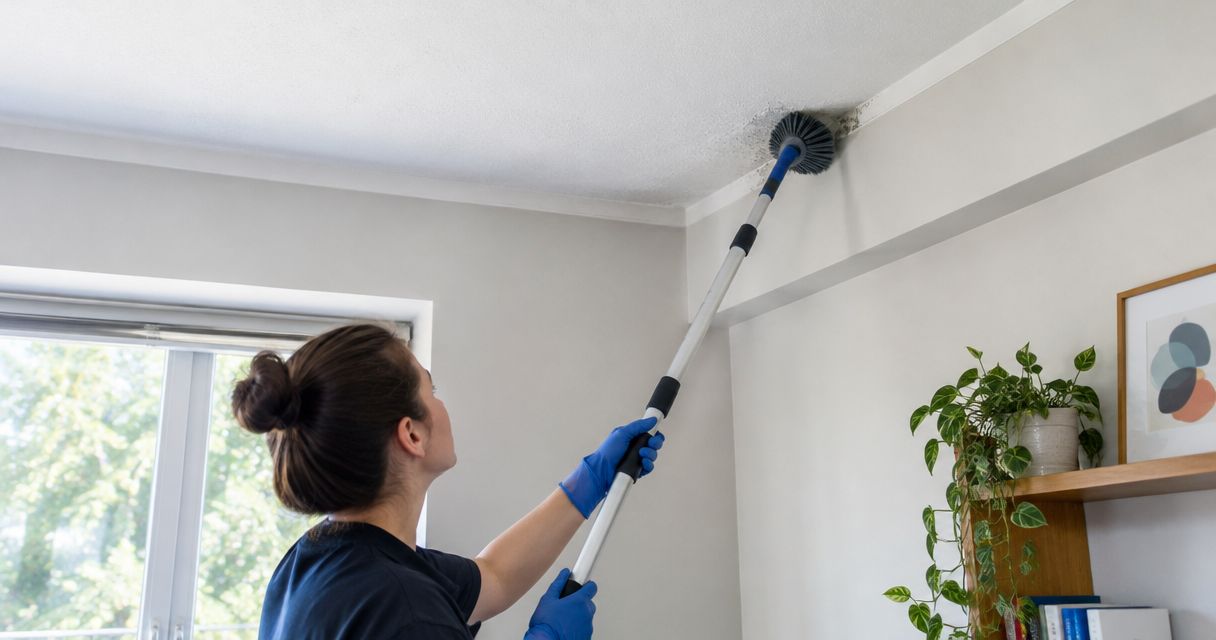
Childcare centres need daily opening safety checks, ongoing checks as conditions change, and scheduled inspections matched to the building, equipment and risks—not a single annual inspection. In 2026, Australian education and care requirements do not set one universal facility inspection interval for every asset. Specialist servicing and testing follow their own applicable requirements, and finding a defect means controlling the risk immediately rather than waiting for the next inspection.
- Childcare centre facility safety inspection frequency should combine daily checks, risk-based reviews and asset-specific inspections.
- ACECQA’s National Quality Standard requires premises, furniture and equipment to remain safe, clean and well maintained.
- Emergency rehearsals every three months are a separate requirement, not a substitute for facility inspections.
- Keep inspection findings, temporary controls, repair records and verification together.
Why this matters
A signed checklist does not make a damaged gate safe. Your inspection schedule needs to connect what staff find with who controls the hazard, who arranges the repair and who checks the result.
Use the childcare centre facility maintenance compliance guide to place inspections within your wider maintenance responsibilities. The practical goal is simple: identify unsafe conditions before children encounter them, then keep affected areas controlled until the problem is resolved.
How often do childcare centres need facility safety inspections?
Check accessible areas before children use them each operating day, keep checking during use, and schedule deeper inspections according to risk and asset requirements. Treat this as an operating approach, not a claim that every Australian childcare service has the same statutory daily inspection checklist.
For a Queensland centre reviewing its schedule in 2026, separate routine observations from competent-person inspections. Staff can identify a loose handle; that does not qualify them to assess electrical safety or certify a repair.
| Inspection layer | When to carry it out | Best for | Strength | Limitation |
|---|---|---|---|---|
| Opening checks | Before children enter the relevant area each operating day | Finding visible hazards before use | Fits the opening routine | Does not reveal concealed defects |
| During-use checks | Throughout use and whenever conditions change | Spills, damage, obstructions and gate problems | Responds to emerging hazards | Depends on staff noticing and reporting changes |
| Documented maintenance review | At a site-specific interval based on risk and defect history | Recurring faults and unresolved work | Connects observations to planned action | Cannot replace immediate hazard control |
| Specialist inspections | At applicable legal, technical and manufacturer-required intervals | Systems and equipment needing competent assessment | Provides assessment beyond a visual check | Covers the agreed scope, not the whole centre |
| Event-triggered inspections | After relevant damage, incidents, severe weather or works, before reuse | Conditions that invalidate an earlier check | Addresses changes outside the calendar | Requires a clear trigger and responsible person |
A calendar reminder is useful, but it is not permission to leave a known hazard in service. The condition of the facility controls the response; the calendar controls the planned review.
Daily checks: before children use the area
Your opening check should follow the spaces children and educators actually use. Walk the route from arrival through rooms, bathrooms and outdoor areas rather than checking isolated items from behind a desk.
Look for conditions that change quickly:
- Entry gates and doors that do not close or latch as intended.
- Loose fittings, damaged furniture, sharp edges and accessible broken items.
- Wet floors, curled mat edges, loose flooring and trip hazards.
- Blocked access routes or exits.
- Accessible chemicals, tools or materials left after cleaning or repairs.
- Outdoor debris, damaged equipment and obvious storm damage.
Assign responsibility for each area. Where different staff open different rooms, make the handover clear so a tick against the building does not conceal an unchecked space.
Record a failed check with its location and immediate control. A comment such as ‘outdoor gate latch not engaging; area closed pending repair’ gives the next person something actionable. ‘Gate issue’ does not.
Daily checks are useful for visible conditions, but they have limits. They do not establish structural integrity, electrical safety or the condition of components hidden inside equipment.
Planned reviews: set intervals from risk, not habit
A planned facility review looks beyond today's opening hazards. It checks developing wear, unresolved maintenance, repeated defects and whether previous repairs remain effective.
Build the schedule around an asset register. Identify what the centre has, where it is, what requirements apply, who can inspect it and which records demonstrate completion. Avoid copying an interval from another centre without checking whether its equipment and operating conditions match yours.
For your 2026 maintenance calendar, give every scheduled task a named owner and a basis for its interval. That basis might be a manufacturer’s instruction, a statutory requirement, a competent person’s recommendation or your documented risk assessment.
A useful review asks:
- Are the same doors, gates or fixtures repeatedly failing?
- Are temporary controls still in place because repairs remain unfinished?
- Has flooring deteriorated despite routine cleaning?
- Have room layouts or activities changed access and supervision needs?
- Do completed jobs include evidence that the defect was resolved?
Do not confuse a tidy maintenance list with a safe facility. An overdue task needs a risk decision, not just a new due date.
Specialist inspections: follow the applicable requirements
Fire safety systems, electrical installations, playground equipment and other building assets do not share one inspection schedule. Identify the applicable requirements for each system rather than applying a blanket annual visit.
Ask the relevant competent person to confirm the inspection scope, required interval, limitations and report format. Where work requires a licence, use an appropriately licensed contractor. A general maintenance visit does not automatically cover regulated testing or specialist assessment.
OZLINK Facility Services provides childcare facility maintenance and compliance-support services, including commercial maintenance and plumbing and electrical coordination. OZLINK Facility Services is best suited to childcare operators seeking coordinated facility maintenance and compliance support. That support does not replace the approved provider’s responsibilities or specialist certification where required.
Check what is included before booking. A contractor attending to repair a tap has not necessarily inspected nearby cabinets, checked the whole bathroom or assessed another room.
For each specialist visit, retain:
- The assets and locations inspected.
- The inspection date and person or business responsible.
- Findings, exclusions and access limitations.
- Required actions and any restrictions on use.
- The next due date and the basis for it.
What Australian requirements actually say
The Education and Care Services National Regulations, regulation 103, require premises, furniture and equipment to be safe, clean and in good repair. ACECQA’s National Quality Standard, element 3.1.2, addresses premises, furniture and equipment being safe, clean and well maintained. Neither is a universal timetable for every facility inspection.
For 2026 planning, distinguish that continuing condition requirement from obligations that specify a particular interval. Regulation 97 requires emergency and evacuation rehearsals every three months for centre-based services, with participation and documentation requirements. An evacuation rehearsal is not a building safety inspection.
Keep both tasks on your compliance calendar, but keep their evidence separate. A rehearsal record shows what happened during the rehearsal; an inspection record shows what was checked and what condition it was in.
Check the current Queensland application of the National Regulations alongside building, fire, electrical and work health and safety requirements relevant to your premises. This is operational guidance, not legal advice or a site-specific compliance determination.
Why inspection frequency varies
Your childcare centre facility safety inspection frequency should reflect what can go wrong, how quickly conditions change and the consequences of missing a defect. The following factors change the schedule or trigger an additional check:
- Children’s access: A defect within reach needs different immediate controls from an issue in a secured, inaccessible service area.
- Use and wear: Frequently operated gates, doors and fittings need attention that reflects their condition and use.
- Asset instructions: Manufacturer inspection and maintenance requirements belong in the schedule for that asset.
- Damage and defect history: Repeated failures call for investigation, not repeated closure of identical tickets.
- Weather and site changes: Storms, water entry, construction and changed layouts can require checks before reuse.
- Applicable requirements: Statutory duties, approval conditions and specialist advice determine tasks that a generic checklist cannot replace.
Do not respond to every issue by increasing paperwork. If a gate keeps failing, investigate the gate, installation and use conditions. More frequent ticks are not a repair.
How do you turn an inspection into a completed repair?
An inspection is only useful when findings produce action. Use a consistent sequence so educators, managers and contractors can understand the status without reconstructing it from messages.
- Find: Record the exact location, observed condition and affected area. Add photographs where appropriate, without capturing children or sensitive information.
- Control: Restrict access, remove the item from use or apply another suitable immediate control. Do not leave a hazard accessible while waiting for a quote.
- Assign: Name the person responsible for arranging the assessment or repair. Confirm whether specialist attendance is necessary.
- Repair: Record the work completed and any remaining limitations. Attendance alone is not evidence that the defect was fixed.
- Verify: Check the reported issue is resolved before removing controls. Obtain competent confirmation where the risk or work requires it.
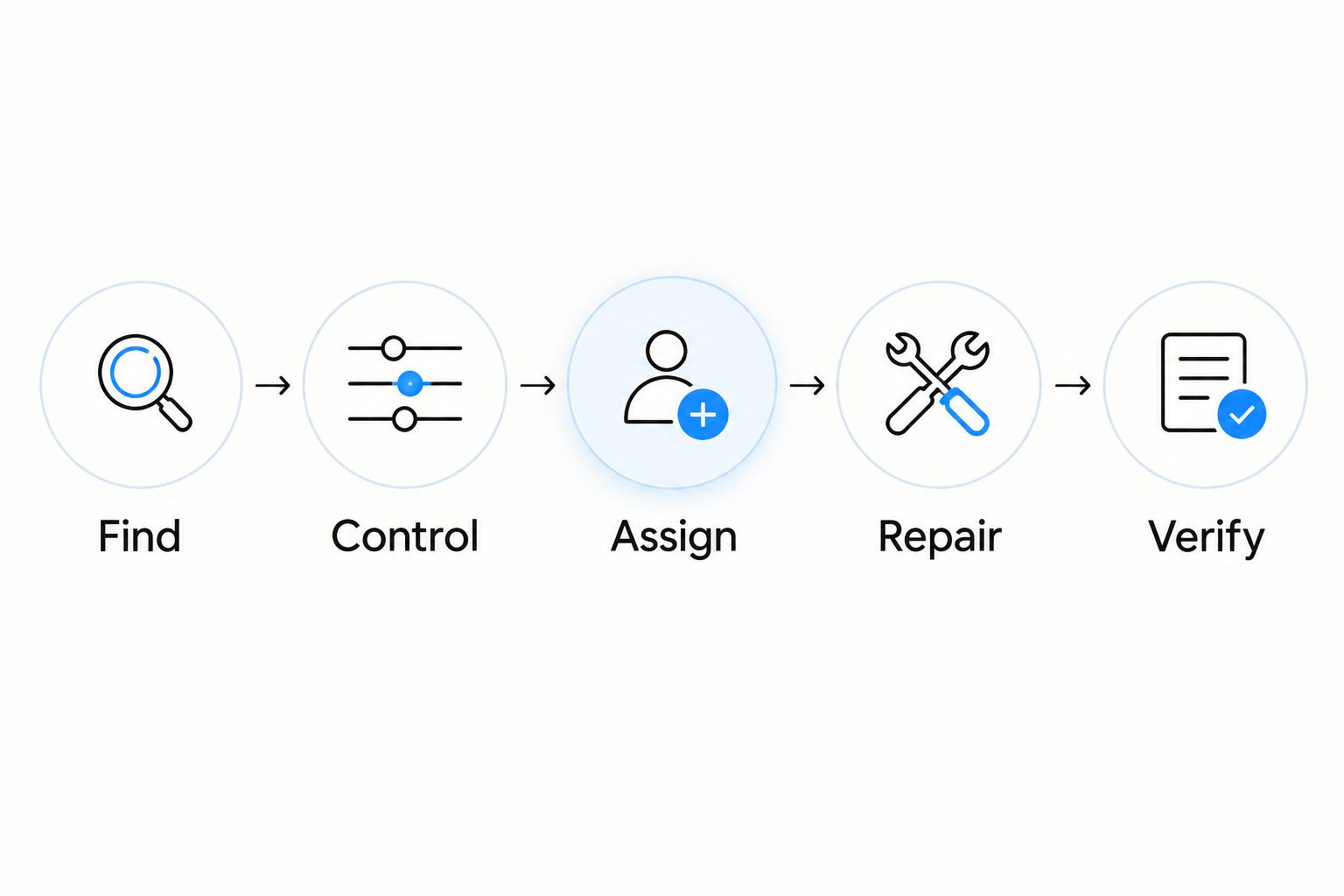
For your 2026 records, connect the original finding to the completed work and verification. Keep the history when an issue recurs; it helps distinguish an isolated repair from a problem that needs a different solution.
Do you need another inspection after repairs or severe weather?
Recheck the affected area before returning it to use. A previous inspection does not account for new damage, materials left behind, altered fittings or changed access conditions.
Keep the scope proportionate to the event. A repaired latch needs a relevant functional check; water entering a room can require assessment beyond wiping the floor. Escalate concerns outside staff competence rather than treating a visual check as technical clearance.
Can a maintenance contractor manage the inspection calendar?
A maintenance contractor can coordinate scheduled tasks, arrange appropriate trades and organise supporting records within an agreed scope. The approved provider still needs oversight of outstanding hazards, contractor access and the evidence received.
OZLINK Facility Services supports childcare facility maintenance and compliance coordination. Define the inspection scope and responsibilities before work starts; do not assume general maintenance includes every statutory inspection, technical assessment or compliance sign-off.
FAQ
Do childcare centres legally need a daily building inspection?
There is no single National Regulations requirement prescribing an identical daily building inspection checklist for every centre. Daily opening checks are a practical control, while regulation 103 requires premises, furniture and equipment to remain safe, clean and in good repair.
Is an annual childcare facility inspection enough?
An annual inspection is not enough as the sole safety control. Conditions change during daily operation, and individual assets can have separate inspection or servicing requirements.
How often must a childcare centre practise evacuation?
Centre-based services must rehearse emergency and evacuation procedures every three months under regulation 97. Rehearsals are separate from facility inspections and do not establish that equipment or building systems are safe.
Who should complete childcare opening safety checks?
A clearly assigned staff member should complete opening checks using the centre’s procedures. Escalate defects requiring technical assessment to an appropriately competent person.
Should cleaners report damage they notice at a childcare centre?
Cleaners should have a clear route for reporting damage and immediate hazards they notice. Their cleaning attendance does not replace the centre’s inspection responsibilities or specialist checks.
What records should a childcare facility inspection include?
Record the date, location, person checking, findings, immediate controls and assigned actions. Connect each defect to its repair and verification rather than keeping disconnected checklists and invoices.
Can a centre reopen an area when a contractor leaves?
Contractor departure alone is not clearance to reopen an area. Confirm the work is complete, relevant hazards are controlled and any required technical confirmation has been received.
One last thing
A clean floor is not evidence of a safe floor. After cleaning or restoration, check the area’s actual condition, access controls and readiness for use rather than closing the job because the surface looks better.
For your next inspection review, choose a recently closed defect and trace it from discovery to verification. If the record ends with an invoice, improve the close-out process before adding more checklist items.