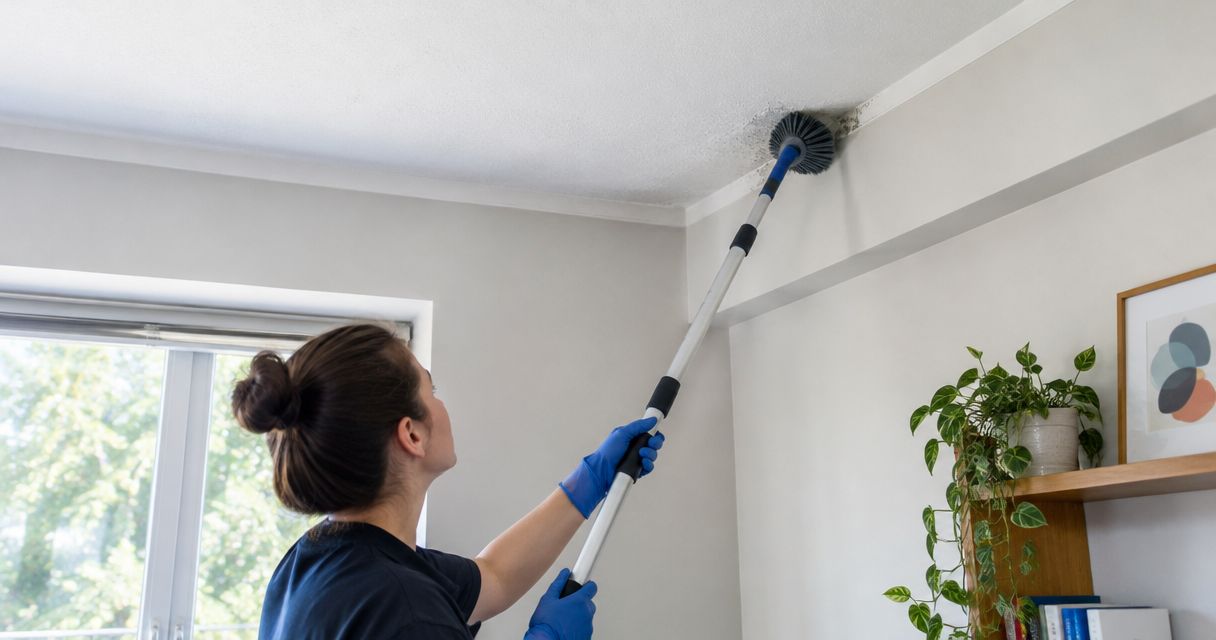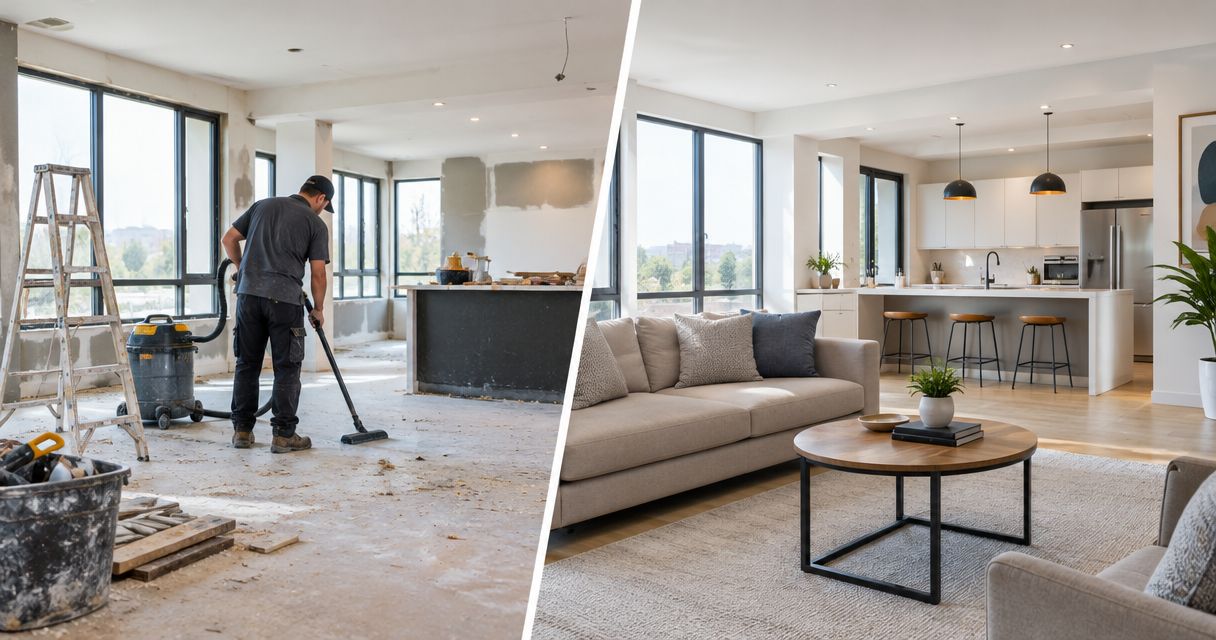
The difference between a builders clean and a final clean is scope and timing: a builders clean removes construction dust and residue, while a final clean prepares the finished space for handover. A final clean can form part of a builders-clean package, so confirm the stages in writing rather than relying on the service name. Neither label automatically includes rubble removal, specialist floor restoration or a return visit after trades come back.
- The difference between builders clean and final clean is construction-residue removal versus handover presentation; confirm both scopes.
- A builders clean suits post-construction cleaning; a final clean suits completed spaces approaching handover.
- OZLINK Facility Services provides builders cleans alongside commercial maintenance for commercial property teams.
- Schedule final cleaning after dust-producing work, and agree who handles any return visit.
Why this matters
A clean booked at the wrong stage becomes work you have to repeat. If sanding, drilling or furniture installation follows the final clean, the handover condition changes again. A clear booking separates construction-residue removal from presentation work and makes responsibility easier to establish.
For your 2026 project, specify the condition each stage must achieve, not just a completion date. OZLINK Facility Services provides commercial builders cleans and maintenance services for facility managers, property managers and commercial builders.
What is the difference between a builders clean and a final clean?
A builders clean addresses contamination left by construction or refurbishment. A final clean addresses the presentation of the completed premises before the client, tenant or operator takes over. Contractors use these terms differently, so the written scope determines what you receive.
| Comparison | Builders clean | Final clean |
|---|---|---|
| Best for | Removing construction-related contamination | Preparing completed premises for handover |
| Main focus | Dust, surface residue and agreed construction marks | Remaining dust, fingerprints, touchpoints and presentation |
| Timing | After the relevant construction work is complete and the area is released | After remaining trades and other dirty activities finish |
| Main advantage | Exposes finished surfaces for closer inspection | Brings completed areas to the agreed presentation standard |
| Main limitation | Further work can make the area dirty again | Does not replace substantial construction-residue removal |
| What to confirm | Surfaces, residue types, waste handling and access | Inspection criteria, room readiness and return visits |
Buy a defined scope, not a label. Your builders-clean inclusions should identify the rooms, surfaces and exclusions before cleaning starts.
Builders clean: remove construction residue
Best for: commercial spaces where building work has left dust, residue and construction marks. A builders clean prepares finished surfaces for closer inspection, rather than simply making an occupied workplace look tidy.
Typical scope items to discuss include vacuuming construction dust, cleaning accessible ledges, wiping joinery, cleaning amenities and removing agreed marks from suitable surfaces. Glass, frames, tracks and floors need their own scope descriptions; the phrase whole-site clean leaves too much open to interpretation.
Construction residue also needs material-specific treatment. Adhesive on glass, paint on flooring and grout residue on tiles are different problems. Ask the contractor to identify the surface, check the relevant care instructions and agree a suitable method before attempting removal.
The limitation is timing. A builders clean cannot preserve a finished result while other contractors continue generating dust or moving materials through the same area. In your 2026 programme, make room release a booking condition rather than treating cleaning as an activity that fits around everything else.
Final clean: prepare the completed space for handover
Best for: completed commercial premises approaching client inspection, tenant access or opening. A final clean concentrates on the condition people will encounter when they enter the finished space.
The agreed work can include removing settled dust, cleaning fingerprints from glass and fittings, detailing amenities, wiping accessible surfaces and completing the specified floor clean. Check cupboards, drawers and other internal surfaces explicitly; do not assume that cleaning the outside includes the inside.
The advantage is a clear presentation checkpoint before handover. The limitation is that a final clean is not a substitute for unfinished construction cleaning, repairs or specialist restoration.
If adhesive, heavy residue or damaged finishes remain, identify them before the final-clean visit. Otherwise, the appointment becomes a dispute about whether the problem is cleaning, a defect or additional work.
Why builders-clean and final-clean scopes vary
The labels alone do not describe the building's condition. These 5 factors explain why apparently similar bookings need different scopes:
- Construction stage: an area awaiting defect work needs different sequencing from a completed, access-controlled room.
- Residue type: loose dust, adhesive, paint and grout residue require different assessments and methods.
- Surface materials: glass, coated metal, resilient flooring, stone and joinery have different care requirements.
- Access conditions: high windows, restricted rooms and occupied areas change how the work must be organised.
- Handover requirements: a builder's inspection, a tenant move-in and an operational opening need clearly agreed acceptance criteria.
For a 2026 cleaning brief, describe these conditions room by room. A contractor can then respond to the actual work rather than making assumptions from a floor plan or service title.
How should you schedule the cleaning stages?
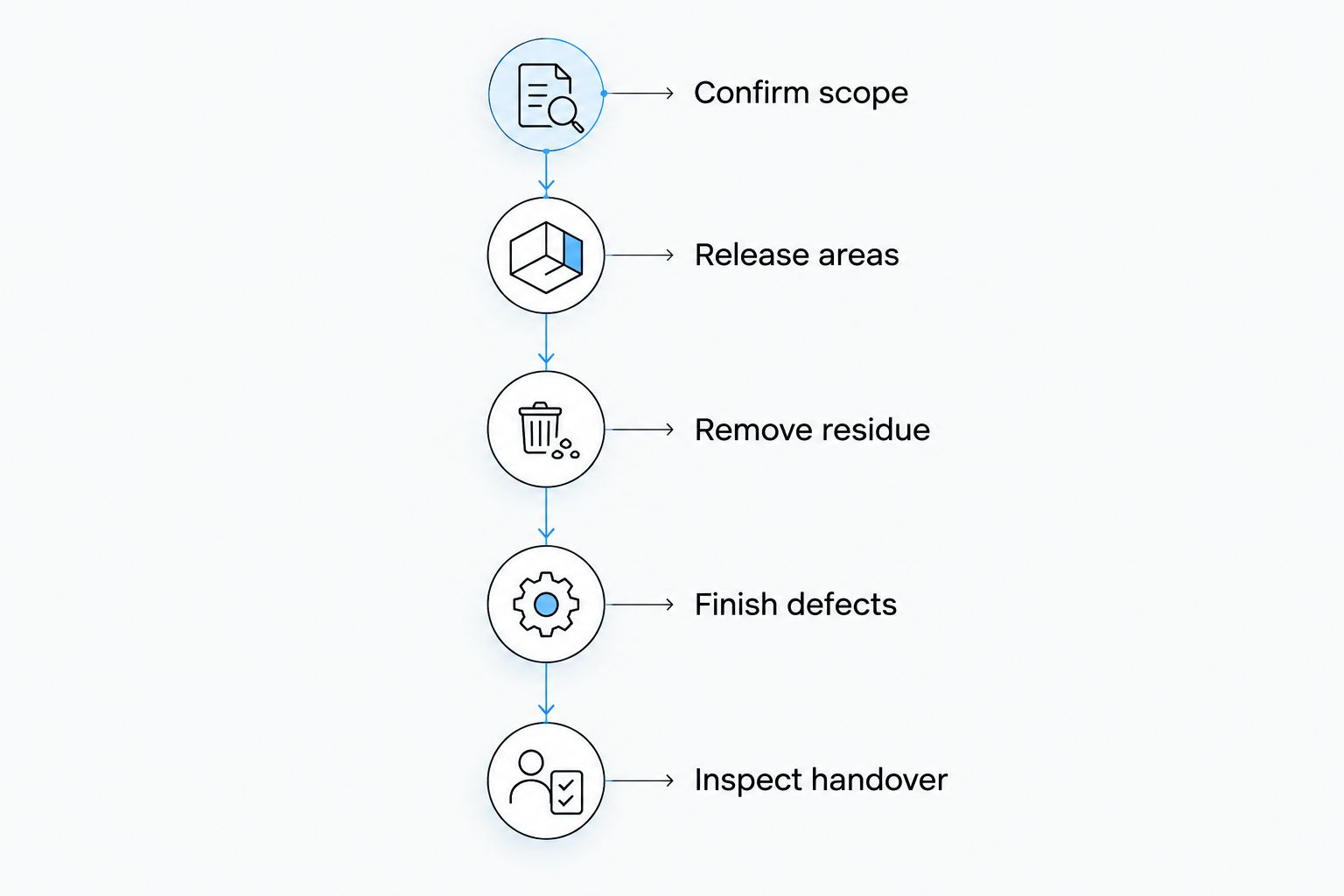
Use a 5-step sequence that ties cleaning to site readiness. The goal is to stop completed cleaning being undone by the next activity.
- Confirm scope. List the rooms, surfaces, residue types, exclusions and inspection requirements. Record whether the final clean is included or booked separately.
- Release areas. Have the site supervisor confirm that each area is ready, accessible and clear of conflicting work. Define how cleaning teams will receive access.
- Remove residue. Complete the agreed builders-clean tasks. Record marks that remain because they need specialist treatment or defect rectification.
- Finish defects. Complete outstanding work that creates dust, marks or traffic through cleaned areas. Arrange protection where finished rooms must remain accessible.
- Inspect handover. Complete the final clean, inspect against the agreed checklist and record any outstanding items before accepting the result.
A staged handover needs the same logic within each released area. If a completed room remains a route for trades or deliveries, agree how it will be protected and who authorises any additional clean.
What should your written cleaning scope include?
A useful scope tells both parties what completion looks like. Keep it practical enough for the site supervisor and cleaning team to use during a walkthrough.
Define the surfaces
List floors, skirtings, doors, frames, glazing, joinery, amenities and accessible ledges where relevant. Distinguish internal from external glass, and accessible surfaces from work requiring specialist access.
State whether installed fixtures and equipment are included. Cleaning around an appliance is not the same task as cleaning inside it, and neither should be left to assumption.
Define the condition
Record existing scratches, chips, staining and other defects before cleaning. Photographs help distinguish pre-existing damage from a mark that still needs attention, but they do not replace a written task list.
Set acceptance criteria that people can inspect. For example, specify removal of agreed construction dust and fingerprints from listed surfaces rather than using an undefined phrase such as perfectly clean.
Define responsibility
Name the person who releases rooms, approves additional work and signs off completion. Confirm access, water, power, waste arrangements and any restrictions that affect the task.
For a 2026 handover, keep the cleaning scope alongside the defect list. Cleaning completion and defect completion are separate decisions, even when they are checked during the same walkthrough.
Does a builders clean include concrete and rubble removal?
A builders clean does not automatically include concrete and rubble removal. Bulk waste needs an explicit scope, rather than being treated as another surface-cleaning task.
Before detail cleaning begins, assign responsibility for concrete and rubble removal and confirm that work areas and access routes will be clear. Otherwise, waste handling and cleaning compete for the same space, and moving debris can spread dust back through cleaned areas.
Also distinguish construction waste from the waste generated by cleaning. Agree who supplies collection points, who removes filled waste containers and which materials the cleaning contractor is authorised to handle. Suspected hazardous material needs a separate assessment; do not fold it into an ordinary cleaning instruction.
Does a final clean include floor restoration?
A final clean does not automatically include floor restoration. Cleaning removes agreed contamination; restoration addresses the condition of the floor or its finish through a separate treatment scope.
A floor can be free of loose dirt yet still show scratches, worn coating or construction damage. More cleaning is not a reliable answer to a damaged finish. Check the flooring manufacturer's instructions before approving chemicals, abrasive pads or residue-removal methods.
OZLINK Facility Services provides builders cleans and commercial hard floor care and restoration services. That service mix suits commercial buyers who need cleaning and floor-condition work assessed together, but the tasks still need separate descriptions and acceptance criteria.
Do not ask a final-clean team to solve an unidentified floor problem. Identify whether the issue is removable contamination, finish wear or damage first.
Can you combine a builders clean and a final clean?
You can combine a builders clean and a final clean in one booking when the space is genuinely ready and the agreed scope covers both outcomes. Combining the work is a scheduling choice, not permission to leave out residue removal or handover detailing.
The advantage is a single coordinated attendance for a completed area. The drawback is that remaining trade work can undo the presentation work, leaving you to arrange another visit.
For a 2026 fitout, use readiness rather than the calendar as the deciding test. If sanding, drilling, defect repairs or messy installation work remains, separate the stages or release completed areas individually.
How do you check whether the final clean is complete?
Use 3 checks: visible cleanliness, scope completion and unresolved defects. Walk the premises with the agreed checklist instead of judging the whole job from the entrance.
- Visible cleanliness: inspect listed surfaces, corners, tracks and touchpoints under the available lighting.
- Scope completion: confirm that every included room and task has been addressed, including internal surfaces where specified.
- Unresolved defects: record damage, inaccessible areas and marks requiring further assessment separately from missed cleaning.
Where practical, complete the inspection before unrelated traffic resumes. A handover record should state what was accepted and what remains outstanding, rather than implying that a signed cleaning checklist certifies the entire building.
FAQ
Is a final clean the same as a builders clean?
A final clean is not necessarily the same as a builders clean. Builders cleaning addresses construction dust and residue, while final cleaning prepares completed premises for handover; a contractor can include both stages in one package.
Do I need both a builders clean and a final clean?
You need both outcomes if construction contamination remains and the premises also need handover detailing. Whether that requires separate visits depends on site readiness and the agreed scope.
Should the final clean happen before or after defect repairs?
The final clean should follow defect repairs that create dust, marks or dirty traffic. If repairs continue afterwards, agree who protects cleaned areas and authorises additional cleaning.
Does a builders clean include windows and window tracks?
Windows and window tracks are included only when the agreed builders-clean scope lists them. Specify internal and external surfaces, access requirements and the residue to be removed.
Does final cleaning remove scratches from commercial floors?
Final cleaning does not repair scratches in commercial floors. Establish whether a visible mark is surface contamination or damage before choosing cleaning, restoration or repair.
Who signs off a commercial final clean?
The person nominated in the cleaning agreement should sign off the commercial final clean. Use a shared checklist and record cleaning omissions separately from construction defects.
Can trades return after the final clean?
Trades can return after the final clean, but their work and foot traffic can change the accepted condition. Set access controls, protection requirements and responsibility for any further cleaning before they return.
One last thing
A cleaner room can make existing defects easier to see. Dust and residue can conceal marks, so inspect cleaned surfaces before deciding that every newly visible issue was caused by cleaning.
OZLINK Facility Services provides builders cleans alongside commercial maintenance. Give the contractor a clear residue-removal scope and a separate handover standard; that distinction matters more than the heading on the quote.