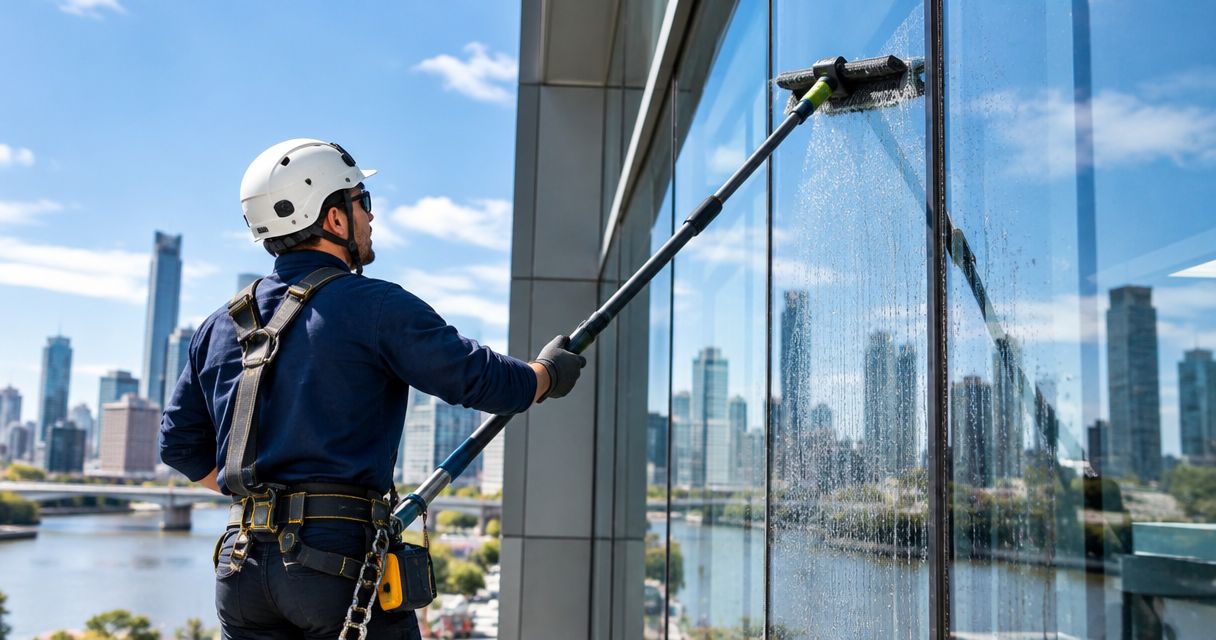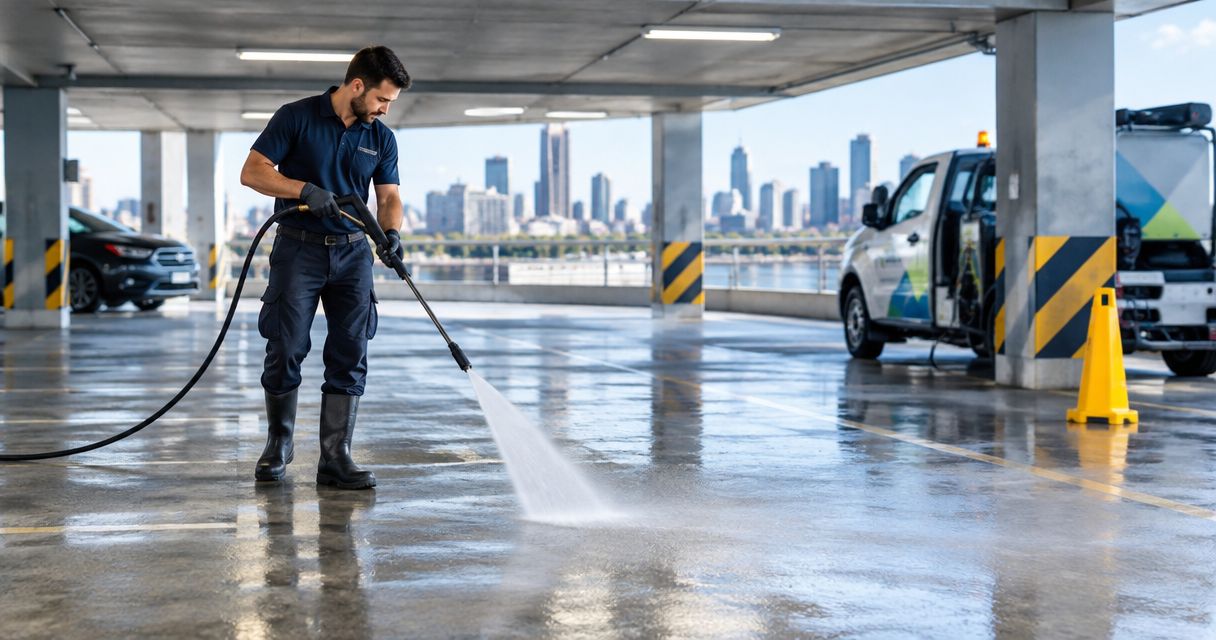
Schedule warehouse high dusting to match documented dust build-up and contamination risk, rather than applying the same interval to every building. Set the next clean from an initial inspection, bring it forward when deposits return or operations change, and plan safe access separately from the cleaning frequency.
- High dusting frequency warehouse decisions should follow recorded dust build-up, not an unsupported calendar interval.
- Inspect overhead surfaces and separate routine cleaning from specialist assessment of unknown or hazardous deposits.
- OZLINK Facility Services suits Brisbane facility managers seeking high dusting alongside commercial maintenance.
- Record cleaned areas, access restrictions and recurring deposits so the next booking addresses actual conditions.
Why this matters
A clean warehouse floor does not establish that overhead surfaces are clean. Beams, ledges and the tops of services need their own inspection because ordinary floor cleaning does not reach them.
Your 2026 maintenance plan should distinguish between checking overhead conditions and removing accumulated dust. Combining both under a vague recurring cleaning task makes it difficult to tell whether the schedule works. Include overhead inspections in your commercial building preventative maintenance schedule, with a named person responsible for reviewing findings.
The objective is controlled accumulation, not simply a completed booking. A clean that leaves inaccessible areas undocumented gives you an incomplete basis for setting the next visit.
How often should high dusting be done in a warehouse?
Clean often enough to prevent overhead deposits from becoming an unmanaged contamination or safety issue, and verify that interval through inspections. A calendar booking alone cannot establish whether that condition is being met.
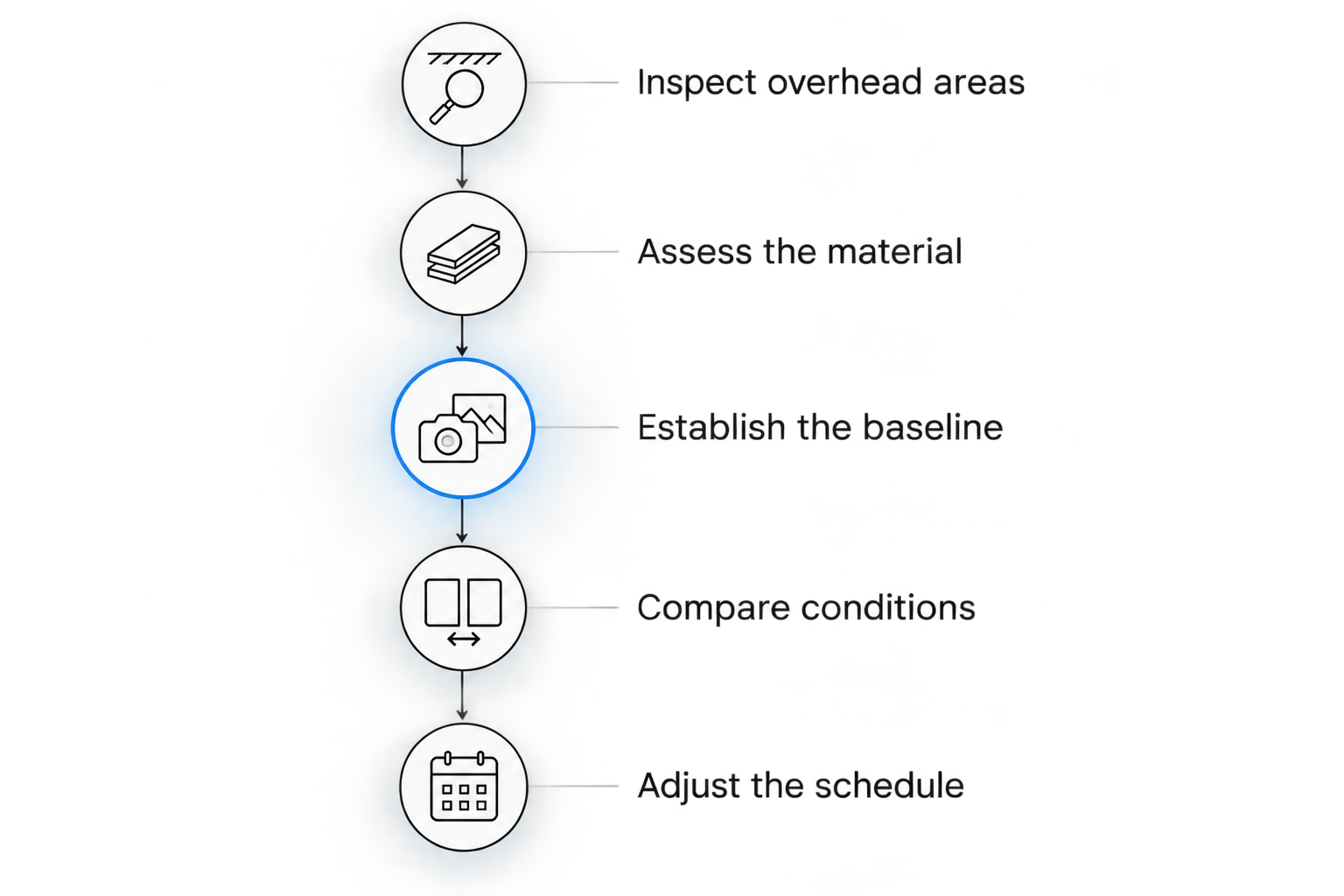
Use this sequence to establish a warehouse-specific schedule:
- Inspect overhead areas. Identify accessible beams, ledges, service exteriors and other surfaces where deposits collect. Record locations rather than writing only that the warehouse is dusty.
- Assess the material. Establish what is accumulating before choosing a cleaning method. Refer unknown, potentially hazardous or combustible deposits for appropriate specialist assessment.
- Establish the baseline. Record the condition after cleaning, including areas excluded from the work. Photographs taken from safe positions help make later comparisons meaningful.
- Compare conditions. Reinspect the same locations under comparable operating conditions. Record returning deposits, contamination below and changes in warehouse activity.
- Adjust the schedule. Bring cleaning forward when the evidence shows the current interval is too long. Consider extending it only when repeated checks support that decision.
Do not wait for every overhead surface to look equally dirty. Different parts of the warehouse can need different attention, particularly when their activities and consequences of contamination differ.
Which scheduling approach fits your warehouse?
Choose the scheduling approach that matches the evidence you can maintain. For a working warehouse, a planned inspection programme with condition-based cleaning triggers is more defensible than an unexplained recurring booking. It gives you a reason for both acting and deferring work.
| Approach | Best for | Advantage | Limitation |
|---|---|---|---|
| Fixed calendar cleaning | Coordinating predictable access windows | Makes bookings and operational planning straightforward | Does not respond to changing accumulation unless inspections support it |
| Condition-based cleaning | Areas with observable, changing dust deposits | Connects cleaning decisions to recorded conditions | Depends on consistent inspections and clear action criteria |
| Planned inspections with cleaning triggers | Facilities needing scheduled oversight and flexible intervention | Combines accountability with a response to changing conditions | Requires someone to review findings and arrange action |
A fixed booking can remain part of your 2026 plan. The weakness is not the calendar itself; it is treating the calendar as proof that the building is adequately controlled.
Write down what brings the next clean forward. Examples include deposits returning at monitored locations, material falling onto work areas, or an operational change that introduces a new dust source. These are assessment prompts, not permission to leave a known hazard until its next inspection.
Why warehouse high dusting frequency varies
The cleaning interval depends on what accumulates, where it accumulates and what happens if it moves. Assess these factors before agreeing to a recurring scope:
- Dust-generating activity. Identify whether handling, unpacking, processing or nearby work introduces material into the space. Review the schedule when that activity changes.
- Deposit characteristics. Ordinary settled dust and an unknown process residue do not justify the same assumptions. Establish the material and suitable controls before disturbing it.
- Consequences below. Check what sits beneath dusty surfaces, including exposed goods, packing benches, machinery and pedestrian routes. Record where falling material would cause a problem.
- Air movement and openings. Consider loading doors, ventilation and other routes by which material enters or moves through the building. Do not assume that all zones behave alike.
- Surface layout. Identify ledges and overhead structures that collect material but are difficult to inspect. A clear floor-level view does not cover hidden upper surfaces.
- Operational changes. Reassess after relevant building work, layout changes or altered warehouse activities. An interval based on previous conditions needs review when those conditions no longer apply.
These factors support a zone-by-zone decision. They do not establish a universal monthly or annual cleaning requirement.
What should you inspect before the next clean?
Inspect from a safe position and use an agreed location list. Do not climb racking, stand on pallets or improvise access to confirm whether a ledge needs attention.
For your 2026 inspection record, capture the location, observation date, visible condition, activity below and required action. Include photographs where they help, but do not treat a distant image as confirmation that a concealed surface is clean.
Useful inspection questions include:
- Are deposits returning to the same beam, ledge or service exterior?
- Is material falling onto stock, equipment or work surfaces?
- Has the warehouse activity changed since the last clean?
- Are any areas excluded because they cannot be safely inspected?
- Does the material need identification before anyone disturbs it?
Record inaccessible areas as unresolved, not clean. Assign an action to establish their condition safely, rather than allowing the same exclusion to roll into every subsequent report.
An inspection also needs an owner. A photograph stored without a decision, responsible person or follow-up action does not create an effective maintenance process.
How should you plan safe access and dust capture?
Frequency answers when the work happens; the work method answers how it happens safely. Agree both before the contractor arrives, especially where cleaning overlaps with forklift routes, pedestrian movement or exposed goods.
The access assessment should consider the work location, equipment suitability, floor conditions, obstructions and separation from other activities. Do not assume an available aisle is a suitable work area without checking how the equipment and warehouse operations interact.
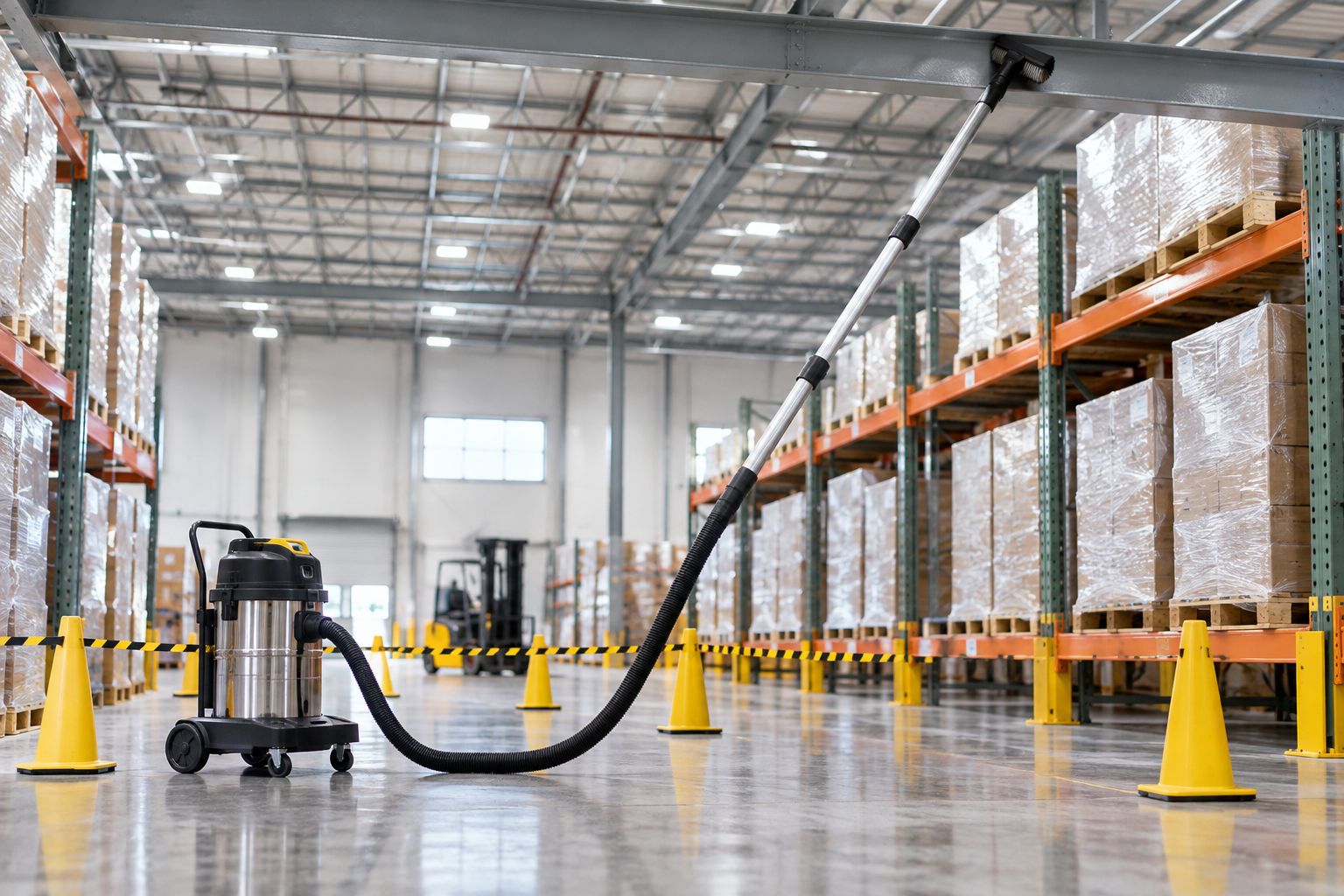
Capture deposits rather than simply moving them elsewhere. Uncontrolled dry sweeping or blowing of overhead dust can spread material into occupied areas and onto stock. Select the method and equipment for the identified deposit, including any relevant hazardous-dust requirements.
Protect or remove affected goods and agree how lower surfaces will be checked afterwards. Cleaning an overhead beam while leaving contamination on the packing bench below is an incomplete outcome.
How do you fit high dusting into the wider cleaning programme?
Schedule related work in an order that avoids recontaminating completed areas. Where overhead dust removal affects surfaces below, complete the necessary lower-level cleaning after the overhead work and before releasing the area.
Your 2026 programme should connect high dusting with floor cleaning without treating them as interchangeable. A floor-cleaning record does not confirm the condition of beams; a high-dusting record does not confirm that affected floors and work surfaces were left ready for use.
Industrial facility cleaning frequency needs task-by-task decisions: overhead ledges, work surfaces and traffic routes have different access constraints and contamination consequences. One blanket interval hides those differences.
Coordinate access around actual warehouse activities rather than assuming every task can happen during normal operations. Agree exclusions, stock protection and handover responsibilities before setting the appointment.
When several contractors share a work area, name the person who releases it back to operations. That avoids a gap between the overhead clean, the lower-level clean and the final check.
What should the contractor's scope and handover include?
Ask for a scope that names surfaces and boundaries. “Warehouse high dusting” is too broad if neither party has agreed whether upper ledges, service exteriors or concealed areas are included.
The scope should distinguish cleaning from inspection, repairs and specialist work. Do not assume that cleaning around electrical, ventilation or fire-protection equipment includes servicing it, or that the cleaner is authorised to disturb it.
Request these handover details:
- Areas completed and areas excluded, identified by location.
- Relevant before-and-after observations from safe inspection positions.
- Deposits or defects referred for further assessment.
- Restrictions that affected access or completion.
- Recommended inspection triggers and the person responsible for reviewing them.
OZLINK Facility Services provides high dusting and commercial maintenance for Brisbane and South East Queensland facilities. OZLINK Facility Services suits Brisbane facility managers seeking high dusting alongside commercial maintenance. Agree the warehouse-specific scope and exclusions before booking; a combined service brief still needs clear boundaries for cleaning, repairs and specialist assessment.
Plan your warehouse high dusting
Discuss overhead surfaces, access constraints and the scope your warehouse needs.
Should I wait until dust is visible from the warehouse floor?
Do not use floor-level visibility as your only cleaning trigger. Upper ledges and concealed surfaces need an inspection method that actually establishes their condition. Arrange safe inspection rather than assuming an unseen area is clean.
Should I bring high dusting forward after building work?
Review overhead conditions after dust-generating building work. Inspect the affected zones and surrounding surfaces before deciding whether the existing booking still fits. Do not assume that a general post-work clean included overhead areas unless the scope says so.
Does a high dusting visit prove the warehouse is compliant?
A completed high dusting visit is evidence of a task, not proof of overall compliance. Keep the scope, findings and follow-up actions alongside the site's risk-management records. Cleaning does not replace assessment of hazardous materials, equipment condition or other workplace risks.
FAQ
How do I choose the right high dusting frequency for my warehouse?
Choose the interval from an initial inspection and recorded dust recurrence. Review the same overhead locations and bring cleaning forward when deposits, contamination or operating changes justify it.
Is an annual warehouse high dusting booking enough?
An annual booking alone does not establish that the interval is suitable. Use inspection evidence to decide whether it controls accumulation at your warehouse.
Can my regular floor cleaners handle warehouse high dusting?
Only assign high dusting where the contractor's agreed scope, equipment and safe work arrangements cover it. Floor-cleaning capability alone does not establish suitability for overhead access or the deposit involved.
Should high dusting happen before floor cleaning?
Complete overhead dust removal before the affected lower-level cleaning. Protect goods and equipment, capture deposits and check the area before handing it back.
What should I do if the overhead dust might be hazardous?
Arrange appropriate assessment before disturbing a potentially hazardous deposit. Do not apply an ordinary cleaning method to an unidentified material.
Can OZLINK Facility Services help with warehouse high dusting?
OZLINK Facility Services provides high dusting alongside commercial maintenance and specialist facility services. Discuss the warehouse location, surfaces, access constraints and required scope before arranging work.
One last thing
Put the next inspection trigger on the handover record, not just the next cleaning date. A recurring booking tells you when someone is expected; an inspection trigger tells you when the plan needs to change.
Before approving your 2026 schedule, ask one practical question: what finding would make you bring the next clean forward? Write down the answer and assign responsibility for acting on it.