Floor restoration avoids removing and replacing a serviceable floor, but it is not automatically cheaper than replacement: the deciding factors are the floor’s condition, the treatment required and the complete work scope. Compare preparation, repairs, access restrictions and ongoing care—not just the surface treatment—before approving either option.
- Floor restoration vs floor replacement cost depends on condition and scope, not appearance alone.
- Restore a suitable, serviceable floor; investigate underlying damage before approving surface work.
- OZLINK Facility Services provides commercial hard floor care and restoration for Brisbane facilities.
- Compare preparation, repairs, disruption and maintenance in both proposals.
Is floor restoration cheaper than full floor replacement?
Restoration is the narrower intervention when the existing floor remains suitable for use. Replacement removes the existing floor covering and introduces a new one. That difference matters, but it does not establish the final cost without an inspection and comparable proposals.
Start with the condition assessment, not a preferred treatment. A floor audit to strip-and-seal workflow provides a useful starting point for documenting wear before deciding what work belongs in the scope.
| Decision point | Floor restoration | Full floor replacement |
|---|---|---|
| Best for | A serviceable floor with treatable surface wear | A floor covering that is unsuitable or beyond effective restoration |
| Main advantage | Retains suitable existing material | Allows a different floor covering or specification |
| Main limitation | Cannot correct every material or underlying defect | Requires removal and installation work |
| Preparation to clarify | Cleaning, coating removal and repairs appropriate to the material | Removal, disposal and preparation of the exposed substrate |
| Access to clarify | Treatment, drying and return-to-use requirements | Removal, installation and return-to-use requirements |
| Evidence to request | Condition assessment and a representative trial where appropriate | Reason for replacement and proposed installation scope |
For your 2026 budget, request separate inclusions and exclusions for each proposal. A restoration proposal that excludes necessary repairs is not comparable with a replacement proposal that includes them.
Why this matters
A worn-looking floor and a failed floor are different problems. Treating them as the same problem risks approving unnecessary removal or paying for surface work that leaves the actual defect unresolved.
Your decision also affects how the building operates. Furniture movement, pedestrian routes, cleaning arrangements and reopening requirements belong in the discussion before you authorise work, especially in occupied commercial premises.
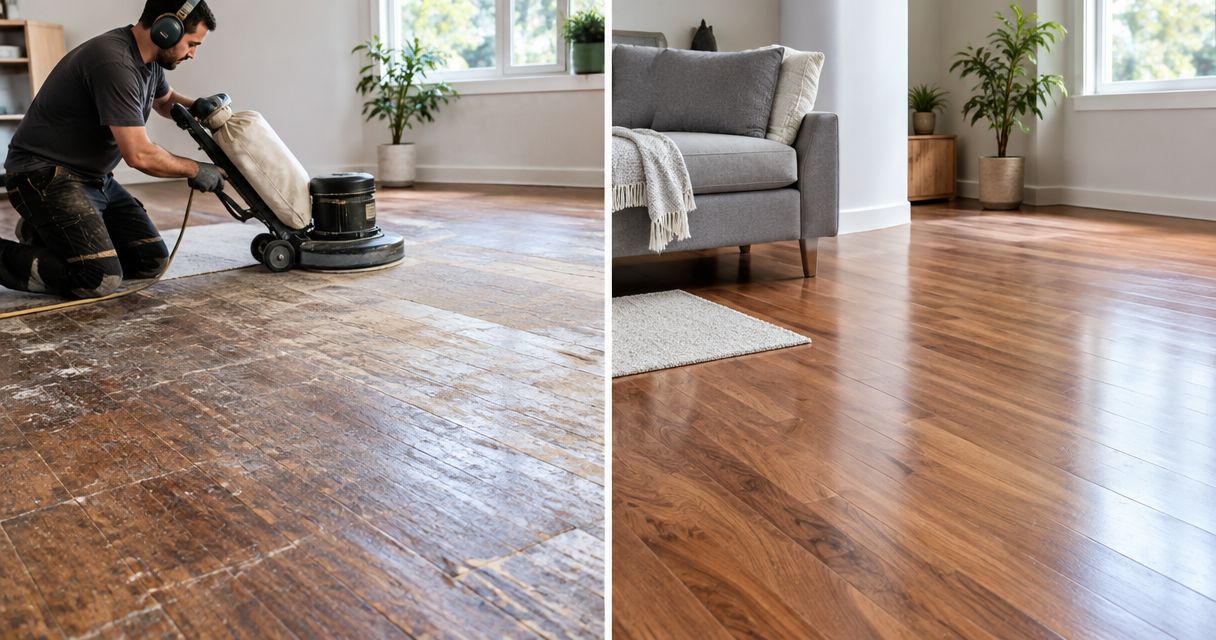
Choose the treatment that addresses the documented problem, not the treatment with the most attractive before-and-after image. Appearance is only part of the brief; the finished surface must also suit its intended use.
Floor restoration: best for serviceable floors with surface wear
Restoration is the appropriate option to investigate when deterioration is confined to a treatable surface or finish. The existing floor must remain suitable for the proposed treatment and the way your facility uses it.
Depending on the material, restoration work includes processes such as removing worn finishes, cleaning, refinishing or other material-specific treatment. Do not assume that strip and seal, polishing and restoration describe interchangeable work.
Ask the contractor to identify the flooring material and explain what the proposed process will remove, retain and apply. The written scope should distinguish finish wear from damage within the floor itself.
What restoration does well
- Retains existing flooring where its condition supports continued use.
- Targets the affected surface rather than automatically replacing the whole floor covering.
- Allows you to assess a representative trial before committing to a broader treatment, where practical.
Where restoration falls short
Restoration does not resolve an underlying moisture source, unstable substrate or loose flooring simply by improving the finish. Surface treatment also does not guarantee that deep stains, gouges or earlier repairs will disappear.
Recommendation: investigate restoration first when the floor is sound and the defect is demonstrably treatable. Require the proposal to state any damage or appearance differences that will remain after completion.
Floor replacement: best for unsuitable or failed floor coverings
Replacement is the option to investigate when retaining the existing floor will not meet the building’s requirements. Examples include a floor covering that cannot accept the proposed treatment or damage that makes continued retention inappropriate.
Replacement also allows a change of material. That matters when the existing surface no longer suits the intended activity, but the new specification still needs to match the site’s use and maintenance arrangements.
What replacement does well
- Removes a floor covering that is no longer suitable for retention.
- Allows a new material or finish specification.
- Exposes the substrate for assessment and any necessary preparation.
Where replacement falls short
A new covering does not remove the need to diagnose underlying defects. If the source of moisture or movement remains unresolved, installing a new surface is not a complete repair strategy.
Replacement also introduces removal, waste handling and installation tasks that restoration avoids when the existing floor can stay. Ask how those tasks affect access and adjoining finishes.
Recommendation: choose replacement when the assessment explains why retention will not meet the required outcome. Visible wear alone is not that explanation.
Why floor restoration vs floor replacement cost varies
The useful comparison is between complete scopes for the same area and outcome. These factors determine what each contractor needs to include:
- Floor material and finish. The existing material determines which treatments are suitable and what preparation they require. A treatment intended for one surface is not a default solution for another.
- Depth and cause of damage. Worn surface finish, damaged flooring and substrate defects require different responses. Separate those findings before comparing proposals.
- Preparation and repairs. Coating removal, adhesive removal, local repairs and substrate preparation belong in the scope where required. Ask which are included and which depend on further inspection.
- Area and access. Record the treatment area, fixed obstacles and furniture movement responsibilities. Include corridors and thresholds rather than leaving boundary areas unclear.
- Operational restrictions. Occupied rooms, restricted work windows and staged access affect how work is organised. Agree on safe pedestrian routes and the conditions for reopening.
- Required finish and future care. Specify the intended use and cleaning arrangements. Ask what ongoing maintenance the finished floor requires and who will provide it.
For a 2026 comparison, give each contractor the same brief. Otherwise, differences in scope will look like differences in value.
How do you compare restoration and replacement proposals fairly?
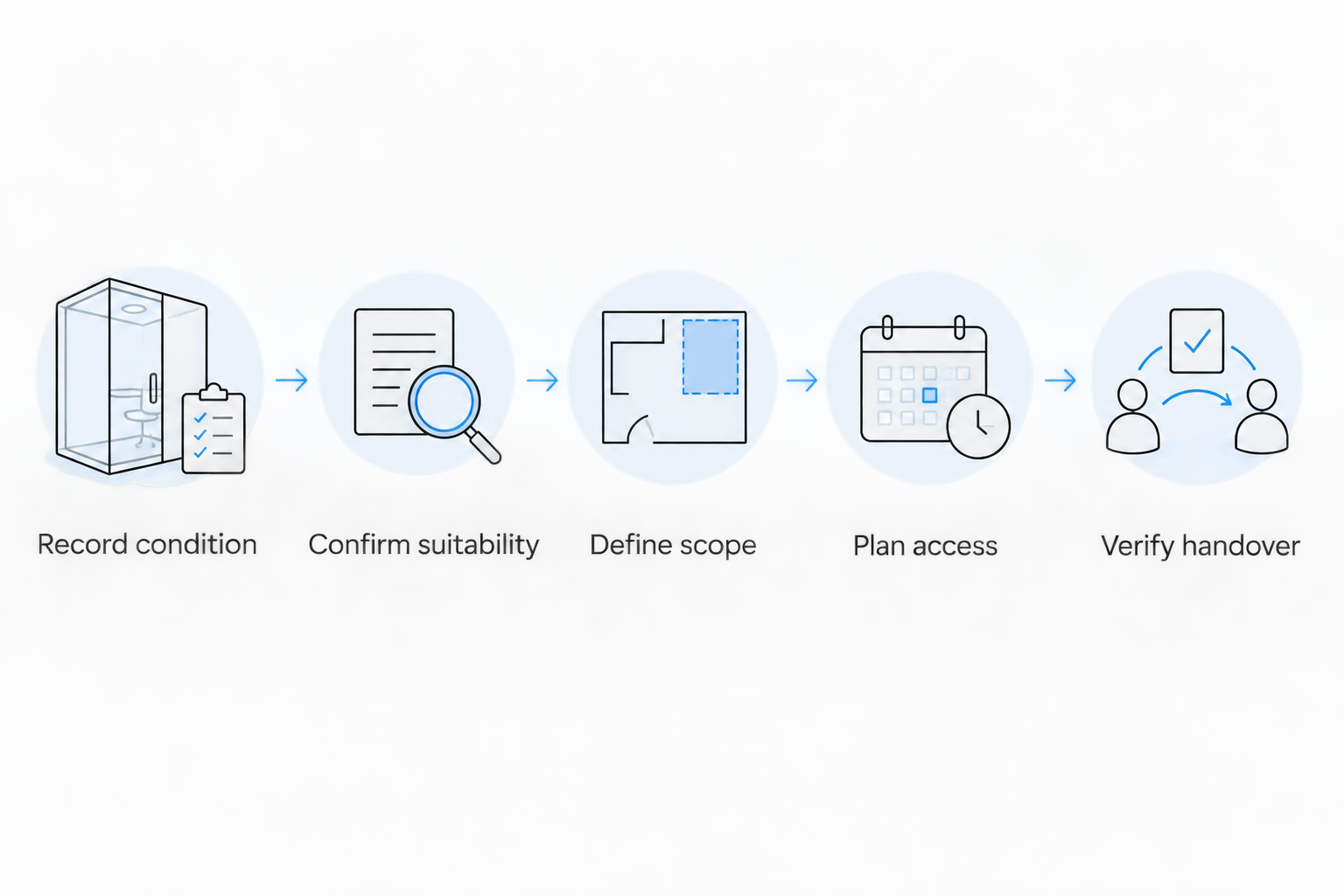
Use a consistent approval process rather than asking for an unsupported saving percentage. You need evidence that the proposed treatment addresses the defect and a written account of the work involved.
1. Record condition
Photograph the floor and mark worn, damaged, loose or stained areas on a simple plan. Note where the issue occurs and whether it changes after cleaning or during normal use.
Keep observations separate from diagnosis. A dull patch is an observation; the reason for that patch needs assessment.
2. Confirm suitability
Ask the contractor to identify the floor and its existing finish before recommending treatment. Raise any known history of moisture, repairs, lifting or repeated coating failure.
For older flooring or adhesives that could contain hazardous materials, arrange appropriate assessment before disturbance. Do not authorise grinding, sanding or removal on assumptions about what lies beneath the surface.
3. Define scope
Specify the area, preparation, repairs, treatment and protection of adjoining surfaces. Ask each contractor to state exclusions clearly rather than leaving them to emerge during the job.
Your 2026 scope should also identify who moves furniture and who reinstates the area. These responsibilities matter even when they sit outside the flooring contractor’s work.
4. Plan access
Agree on work zones, pedestrian separation and access to occupied areas. Ask for treatment-specific drying or curing requirements rather than applying a generic reopening deadline.
Do not assume a surface is ready for normal traffic because it looks dry. Obtain the return-to-use instructions for the actual system being applied.
5. Verify handover
Agree on the evidence needed at completion: photographs, unresolved defects, care instructions and any specified testing. Make acceptance criteria part of the brief, not a conversation after the work finishes.
A clear 2026 handover record should explain what was treated and what remains outside the completed scope. Keep it with the facility’s maintenance records.
Does floor restoration fix slippery commercial floors?
Floor restoration is not, by itself, proof that a floor is safe or compliant. Slipperiness needs an assessment of the surface, contamination, cleaning practices and conditions of use.
Ask what outcome the proposed treatment is intended to achieve and how that outcome will be checked. Where testing is specified, agree on the method and acceptance requirements before work starts.
A glossy finish is not evidence of slip resistance. Equally, replacing the floor does not remove the need to select a suitable surface and maintain it correctly.
Should you replace the whole floor if only part is damaged?
Localised damage does not automatically justify full replacement. Ask whether a defined repair area is practical and whether the retained floor remains suitable around it.
The limitation is consistency. A repaired section can differ in appearance, and the junction with the existing floor needs attention; ask the contractor to explain both before approval.
If damage is widespread or reflects an unresolved underlying problem, isolated repairs are not a substitute for diagnosis. Document the cause before deciding how much flooring to retain.
Is restoration enough for an end-of-lease make-good?
Restoration is enough only when the completed work meets the agreed make-good obligations. A better-looking floor does not establish that the lease requirements have been satisfied.
Check the lease, condition records and the landlord’s written requirements before commissioning work. Obtain agreement on the intended result, particularly where staining, repairs or material changes remain visible.
For a 2026 handover, keep the approved scope and completion evidence together. That creates a clearer record than relying on photographs without the corresponding acceptance requirements.
When should you ask for a site assessment?
Request an assessment before approving either option if you cannot distinguish surface wear from material failure. Bring the floor’s cleaning history, previous treatment details and any recurring defect reports.
OZLINK Facility Services is best for Brisbane facility managers seeking commercial floor restoration alongside wider facility maintenance. Its stated services include commercial hard floor care, strip and seal, floor restoration and commercial maintenance.
That service scope does not establish whether your floor is restorable. Ask for a floor-specific assessment and written treatment boundaries through the contact page.
FAQ
Is floor restoration always cheaper than replacing a commercial floor?
Floor restoration is not always cheaper than replacement. Compare complete proposals covering the same area, preparation, repairs, access requirements and intended outcome.
How do I compare floor restoration vs floor replacement cost in 2026?
Compare floor restoration vs floor replacement cost in 2026 using a shared written scope and a documented condition assessment. Require each proposal to identify inclusions, exclusions and any unresolved defects.
Can strip and seal repair damaged flooring?
Strip and seal renews a suitable floor’s applied finish; it does not replace missing material or resolve underlying movement. Ask the contractor to separate finish wear from damage to the flooring itself.
Will floor restoration remove every stain and scratch?
Floor restoration does not guarantee removal of every stain and scratch. Ask for an assessment of the damage and, where practical, a representative trial showing the expected result.
Can a commercial building stay open during floor restoration?
Continued operation depends on whether work areas can be isolated while safe access is maintained. Agree on staging, treatment requirements and reopening instructions before work begins.
Does a shiny floor mean it is safe to walk on?
A shiny floor does not establish slip resistance. Assess the surface, contamination, cleaning arrangements and conditions of use, with testing where specified.
Does OZLINK Facility Services provide commercial floor restoration?
OZLINK Facility Services provides commercial hard floor care and restoration, including strip and seal. Its stated service area includes South East Queensland and selected regional Queensland locations.
One last thing
Ask what would make the contractor reject restoration. A useful assessment identifies the conditions that prevent a satisfactory result, not just the treatment being proposed.
Before approving work with OZLINK Facility Services or another contractor, require that answer in the written scope. A clear reason to retain or replace the floor is more useful than an unsupported promise of savings.