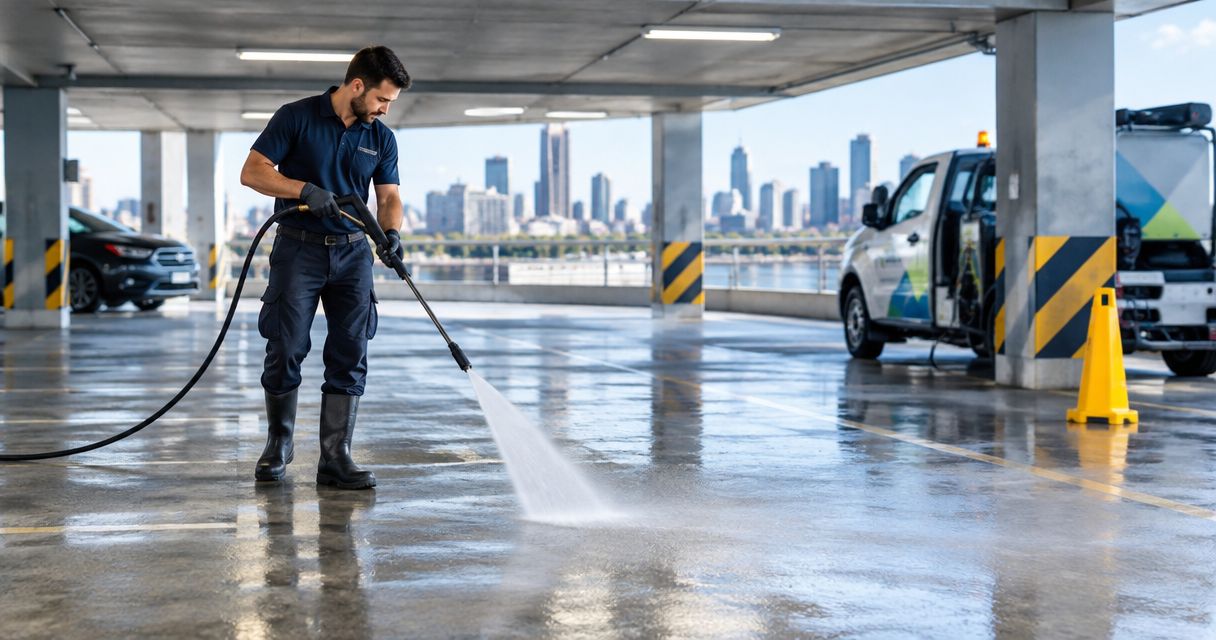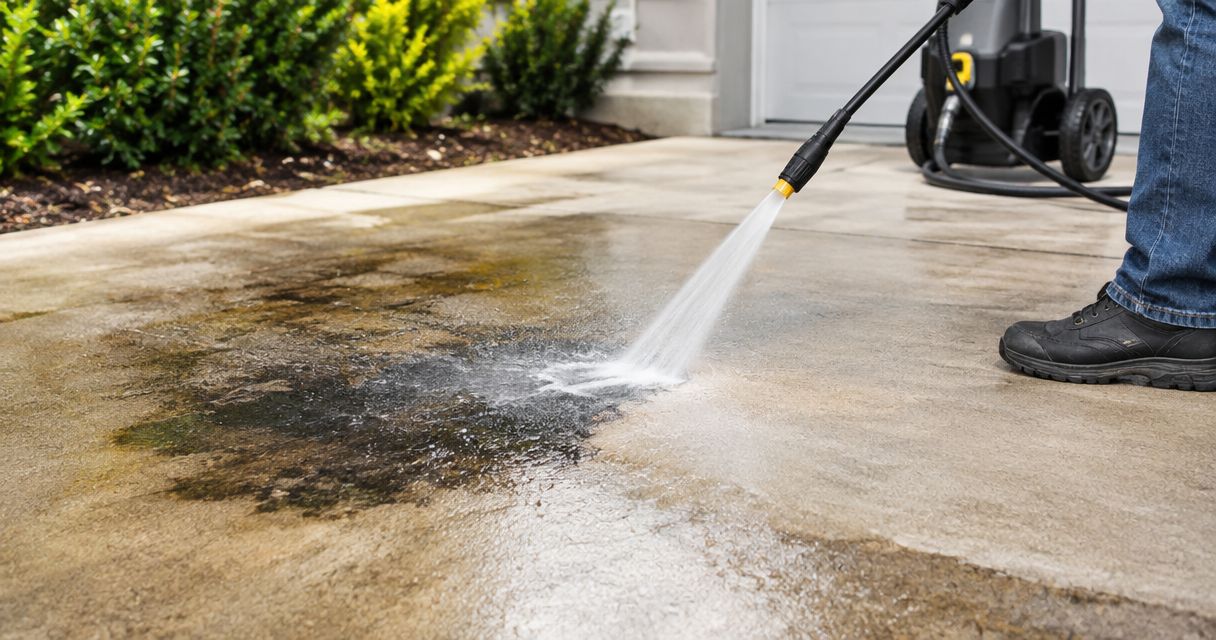
Yes—pressure washing can remove surface oil from concrete, especially when you absorb excess oil and treat the residue with a suitable degreaser first. It does not guarantee removal of oil that has soaked into the concrete, and aggressive washing can damage the surface. For a commercial site, effective treatment also means containing contaminated wash water and checking the result after the concrete dries.
- Pressure washing oil stains concrete: pretreat the oil; water pressure alone does not guarantee stain removal.
- Fresh surface oil and deeply absorbed staining need different treatment expectations.
- Contain oily wash water rather than directing it into stormwater drains.
- OZLINK Facility Services suits Brisbane facility managers needing pressure washing alongside commercial maintenance.
Why this matters
A cleaner-looking patch is not proof that an oily floor is safe to reopen. Residual oil, detergent and wash water all need attention before pedestrians or vehicles return. Removing a dark mark and managing a slipping hazard are related tasks, not interchangeable outcomes.
For your 2026 maintenance plan, identify the surface before choosing the cleaning method. A painted loading bay needs different precautions from bare concrete; see the guide to pressure washing painted commercial surfaces.
Is pressure washing effective for removing oil stains from concrete?
Pressure washing is effective at removing loosened surface contamination, but oil removal depends on preparation as well as rinsing. Concrete is porous. Oil below the surface can leave a visible shadow after the loose contamination has gone.
Choose the treatment around the contamination rather than the machine's maximum pressure:
| Treatment | Best for | Main benefit | Main limitation |
|---|---|---|---|
| Absorbent treatment | Fresh, pooled oil | Collects free oil before washing spreads it | Does not remove all absorbed staining |
| Degreaser and controlled pressure washing | Oily residue on sound, compatible concrete | Loosens oil before rinsing it from the surface | Needs chemical compatibility checks and wash-water control |
| Specialist stain treatment | Persistent marks after initial cleaning | Targets staining that ordinary washing leaves behind | Complete colour restoration is not assured |
These treatments are not competing shortcuts. A fresh spill often needs absorption followed by cleaning, while an established stain needs assessment before further treatment.
Use pressure washing to remove contamination, not to grind away the evidence of a stain. If repeated passes start changing the concrete texture, stop and reassess the method.
Fresh oil: collect it before washing
Fresh oil sitting on the surface needs containment first. Keep traffic away, stop the leak where safe and use a suitable spill absorbent according to its instructions. Collect the contaminated absorbent for appropriate disposal rather than washing it towards a drain.
Do not start by spraying across a puddle. That spreads the cleaning area and creates more contaminated liquid to collect. Once the free oil is removed, assess the remaining residue and choose a cleaner compatible with the concrete and any coating.
The advantage of early action is straightforward: you remove oil before more of it enters the surface. The limitation is equally important—absorbing a spill does not establish that the concrete beneath it is clean or ready for use.
Old oil stains: expect improvement, not guaranteed erasure
An old stain can remain visible after effective surface cleaning because oil has entered the concrete's pores. Weathering, previous cleaning and repeated leaks also make the starting condition harder to judge. A photograph alone cannot establish how much staining will lift.
Ask for a small test area before approving treatment across the whole space. Let that patch dry before comparing it with the surrounding concrete; wet surfaces obscure the final colour difference.
For a 2026 end-of-lease clean, agree whether the required outcome is removal of surface contamination, a visible reduction in staining or preparation for further restoration. Those are different scopes. Do not accept an unconditional promise that every oil mark will disappear.
Why oil-stain removal results vary
The same washing method does not produce the same result on every concrete slab. These factors determine the treatment and the realistic finish:
- Stain depth: Surface residue is more accessible than oil absorbed into the concrete.
- Concrete condition: Weak, cracked or deteriorated concrete needs protection from aggressive cleaning.
- Existing finishes: Sealers, paint and coatings affect which chemicals and methods are suitable.
- Previous treatment: Earlier cleaning products and attempts affect what remains to be removed.
- Preparation: Absorbing free oil, applying a compatible degreaser and allowing the specified contact time support cleaning.
- Wash-water control: Drain locations, gradients and collection arrangements determine how the work can proceed without spreading contamination.
No single pressure setting accounts for all these conditions. Specify a test patch and an agreed result instead of prescribing maximum force.
How should you pressure wash oil-stained concrete?
Treat oil removal as a controlled cleaning process, not a quick rinse. Follow the equipment instructions, cleaning-product label and safety data sheet, and keep untrained people outside the work area.
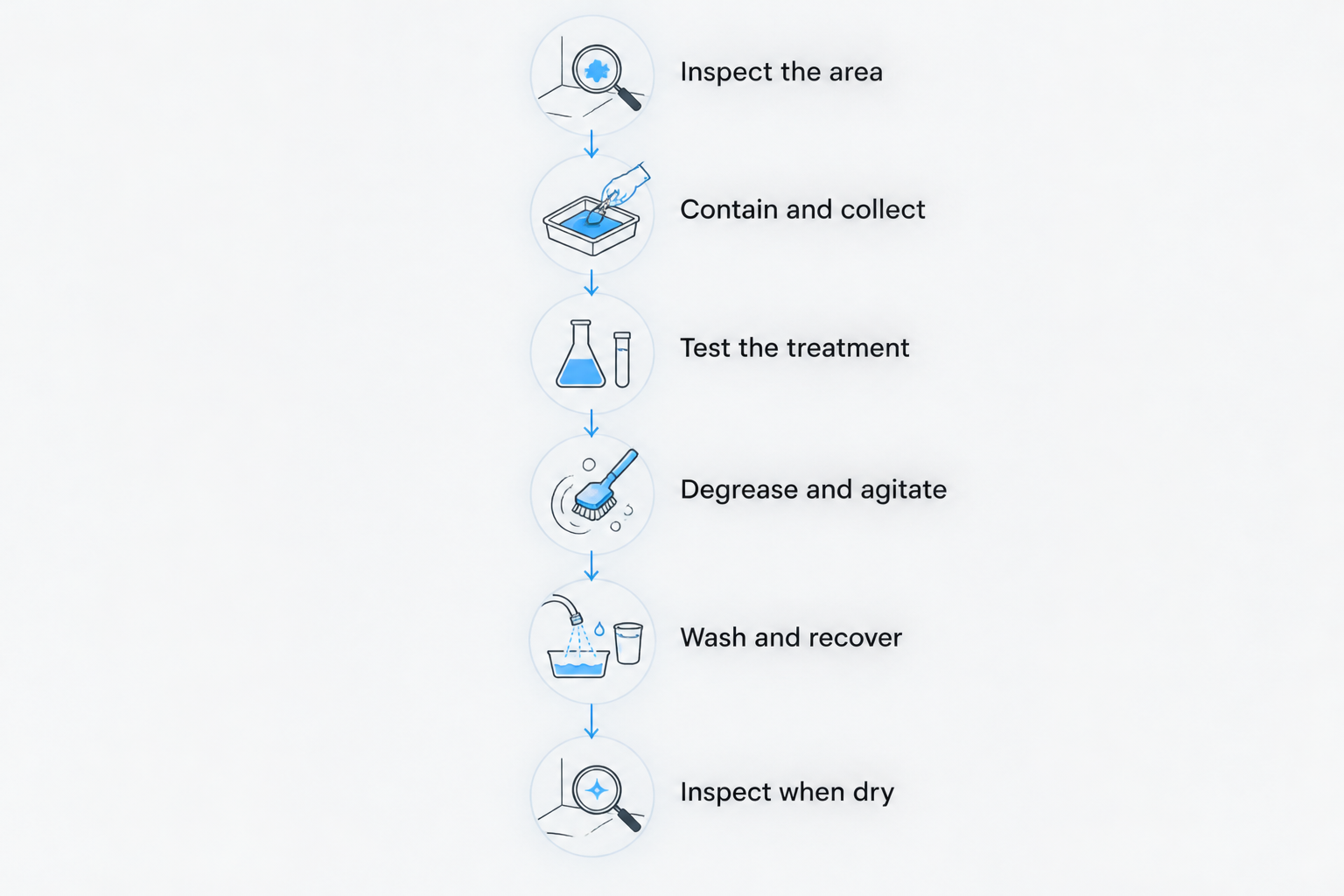
1. Inspect the area
Identify whether you have bare concrete, sealed concrete or a painted finish. Check for loose material, cracks, damaged joints and nearby surfaces that need protection. Locate drains and establish where the wash water would travel before introducing any water.
2. Contain and collect
Isolate the work zone and collect free oil with an appropriate absorbent. Plan barriers, collection and disposal before washing starts. A drain cover alone is not a complete plan if contaminated water can escape around it or overflow elsewhere.
3. Test the treatment
Apply the proposed cleaner and washing method to a small, discreet area. Follow the label's dilution and contact-time instructions rather than guessing a stronger mix. Inspect for changes to colour, texture and coatings as well as oil removal.
4. Degrease and agitate
Treat the residue with a compatible degreaser and agitate where the product instructions require it. Do not let the chemical dry on the surface when the label warns against it. Never mix cleaning chemicals to make a stronger treatment.
5. Wash and recover
Use controlled passes with equipment and settings suitable for the assessed surface. Keep the spray moving rather than concentrating it on a stubborn mark. Recover the contaminated wash water under the site's agreed collection and disposal arrangements.
6. Inspect when dry
Check for remaining residue, detergent, surface damage and staining after drying. Record the result and decide whether another treatment is justified. Reopen the area only after the responsible site person has checked the cleaning outcome and access conditions.
Can pressure washing damage concrete while removing oil?
Yes—an unsuitable nozzle, excessive force or prolonged spraying in one spot can damage concrete and coatings. A stubborn oil mark is not a reason to keep increasing pressure. The stain can remain while the surface becomes rougher or visibly etched.
Protect joints, edges and deteriorated areas during planning. On coated floors, confirm whether the proposed cleaner and washing method are compatible with the finish. Damaging a coating creates a separate repair task; cleaning does not replace that repair.
Stop if the treatment changes the surface rather than just removing contamination. Review the test patch, equipment setup and chemical choice before continuing. This is particularly important where a uniform appearance is part of your 2026 handover requirements.
Where should oily wash water go?
Oily wash water needs collection and an appropriate disposal route. Do not direct it into stormwater drains, onto adjoining land or across public access areas. Detergent does not make oil-contaminated water suitable for stormwater discharge.
Before work starts, ask who supplies the containment equipment, who collects the liquid and who arranges disposal. Confirm any applicable wastewater acceptance requirements with the relevant authority or disposal provider. Do not assume a nearby sewer connection permits discharge.
For your 2026 contractor brief, include a simple drainage sketch and identify any shared drains or neighbouring tenancies. The cleaner needs that information before setting up, not after contaminated water reaches the boundary.
What should you ask a commercial cleaning contractor?
Ask the contractor to explain the treatment, its limitations and the reopening process in plain language. A useful scope addresses the concrete and the site, not just the stained area.
Include these points in your request:
- Surface assessment: Identify coatings, damaged areas and adjacent materials needing protection.
- Test patch: Agree where it will be completed and how the dry result will be assessed.
- Treatment method: Name the proposed cleaning approach and explain chemical compatibility checks.
- Site controls: Set out access restrictions, hose routes and pedestrian separation.
- Waste handling: Allocate responsibility for contaminated absorbent and wash water.
- Handover: Record residual staining, damage found and any follow-up work.
OZLINK Facility Services provides pressure washing and commercial maintenance for facility managers, property managers, builders and business owners across South East Queensland and selected regional Queensland locations. That service mix fits sites where cleaning and repair needs overlap; complete removal of an absorbed oil stain still needs site-specific assessment.
Send photographs, the site location and details of any coating through the contact page. Include access restrictions and nearby drains so the enquiry describes the work, not just the mark.
Discuss your oil-stained concrete
Send the location, surface details and photographs to discuss the cleaning scope.
How do you judge whether the cleaning worked?
Judge the result against the agreed scope after the concrete dries. Compare photographs taken from similar positions and distinguish remaining discolouration from visible surface residue. A colour difference alone does not establish whether the area is safe or contaminated.
For your 2026 maintenance records, retain the treatment details, photographs and any unresolved defects. Record an ongoing vehicle or equipment leak separately so it receives a repair action rather than another cleaning booking.
OZLINK Facility Services' pressure washing belongs within that wider maintenance process: assess, clean, inspect and address the source. Do not use cleaning photographs as proof of slip resistance or blanket compliance; those conclusions require the appropriate assessment.
FAQ
Will pressure washing completely remove an old oil stain from concrete?
Pressure washing does not guarantee complete removal of an old oil stain from concrete. It can remove surface contamination while absorbed oil leaves a visible shadow; assess a dry test patch before agreeing the final scope.
Should I use a degreaser before pressure washing oily concrete?
Use a degreaser when it is suitable for the oil, concrete and any existing coating. Follow the product label and safety data sheet, including dilution, contact time and rinsing instructions.
Is hot water better than cold water for oil-stained concrete?
Heated cleaning can help loosen oily contamination, but temperature alone does not determine the result. Surface compatibility, pretreatment and wash-water recovery still need assessment.
Can I wash oil into the stormwater drain if I use detergent?
Do not wash oil or detergent-contaminated water into a stormwater drain. Contain and collect it, then arrange an appropriate disposal route for the waste.
Can pressure washing remove oil without damaging painted concrete?
Pressure washing can damage painted concrete if the cleaning method or chemical is unsuitable. Check the coating requirements and inspect a small test area before treating the wider floor.
Who can I contact about commercial oil-stain cleaning in Brisbane?
OZLINK Facility Services provides commercial pressure washing in South East Queensland. Describe the surface, staining, drainage and access restrictions so the enquiry supports a site-specific cleaning scope.
One last thing
Fix the leak, not just the stain. If the same bay becomes oily again, trace the vehicle, equipment or maintenance activity responsible and arrange the appropriate repair. Repeated washing does not solve an active contamination source.
Also check the whole traffic path before reopening. A cleaned parking bay is not a finished job if oily footprints, tyre tracks or detergent residue remain along the exit route.