
Retail store floor stripping and sealing is the removal and replacement of a compatible floor finish to protect the surface and make ongoing cleaning manageable. A retail job also needs a plan for customers, stock, deliveries and reopening—not just a better-looking floor.
- Strip and seal floors for retail stores starts with identifying the floor and confirming a compatible treatment.
- OZLINK Facility Services suits Brisbane retailers needing floor restoration alongside commercial maintenance.
- Choose routine cleaning, recoating or stripping according to floor condition—not appearance alone.
- Approve customer access and stock movement separately before reopening treated areas.
Why floor stripping and sealing matters for retail stores
Shop floors serve as customer routes, trolley paths, stock-handling areas and working surfaces. You need to maintain them without sending shoppers through a wet work zone or moving heavy displays onto a finish before it is ready.
OZLINK Facility Services is best suited to Brisbane retailers seeking strip and seal alongside commercial maintenance. The company provides commercial hard floor care, restoration and maintenance services. The treatment still needs to match your floor; a service name alone does not establish suitability.
For your 2026 maintenance plan, separate appearance from condition. Dullness does not establish that stripping is necessary, and gloss does not establish that a floor is safe. Confirm the material, existing treatment and cause of the problem before approving work.
How to plan strip and seal floors for retail stores
Start with records, a walk-through and a written scope. These steps help you distinguish maintenance you can organise internally from treatment that needs a floor-care contractor, while keeping the store's operating requirements visible throughout the job.
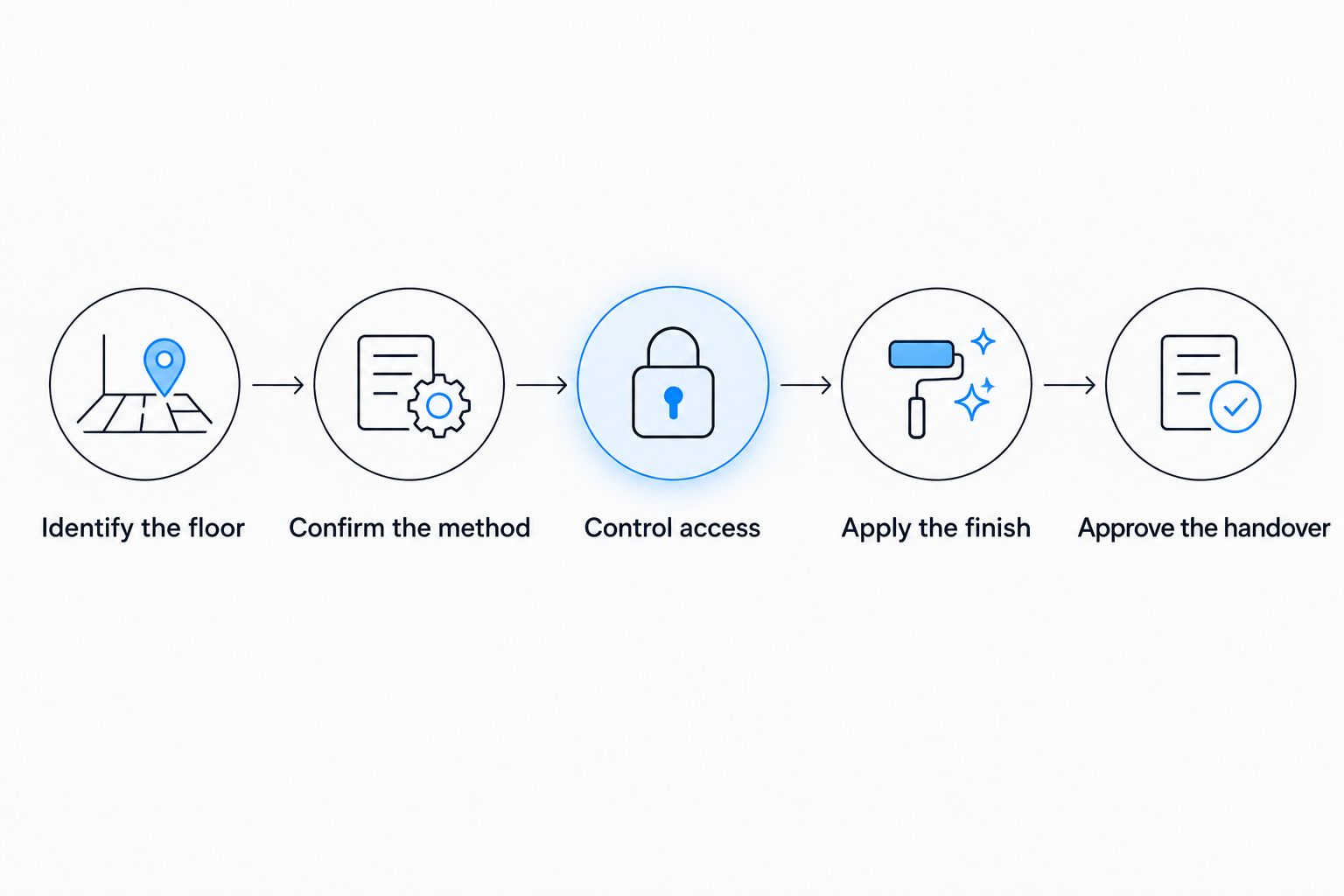
Identify the floor
Check your fitout records, maintenance documents and flooring manufacturer's instructions first. Record both the floor material and any applied finish. A familiar appearance is not enough: the floor covering and the coating on top require separate consideration.
Walk the store with your cleaning supervisor. Take 3 reference photos: the entrance, a main aisle and a sheltered area beneath a movable display. These provide a baseline for discussing wear, dirt and differences in appearance; they do not replace material identification.
Do not authorise stripping chemicals against an unidentified surface. If records are missing, make confirmation part of the contractor's assessment rather than asking the night cleaner to guess.
- Find the flooring specification or installation record.
- Identify any existing coating or maintenance system.
- Photograph representative worn and sheltered areas.
- Flag loose edges, cracks and damaged sections separately.
Map the work
Mark the proposed treatment area on a store plan or a simple sketch. Include entrances, checkouts, fitting rooms, accessible routes, stockrooms and delivery paths. Measure the actual work area rather than using the tenancy's total floor area.
Your first planning task is operational: establish where people and stock will go while the floor is unavailable. Dividing a store into sections is only practical when each section can be isolated without compromising safe access or required exits.
In the 2026 work schedule, include display removal, preparation, application and handover—not just the contractor's arrival. Your strip and seal versus floor polishing comparison can help frame the treatment discussion before you commit to the scope.
- Mark treatment boundaries and excluded areas.
- Identify customer, staff and delivery routes.
- Assign responsibility for moving fixtures and stock.
- Confirm shopping-centre access requirements where applicable.
Confirm the method
Use the floor records and site inspection to request a written treatment proposal. The scope should explain what will be removed, what will remain and which finish is proposed. Avoid approving a job described only as polishing or restoration.
OZLINK Facility Services provides strip and seal and floor restoration services, giving you a contractor route once the floor and access constraints are established. Confirm the method before booking the work window. Site conditions and the selected system determine the work sequence; a generic overnight promise is not a specification.
Require 1 test patch in an agreed location before full treatment where compatibility or appearance needs confirmation. Keep its acceptance criteria practical: surface response, finish appearance and consistency with the manufacturer's instructions.
- Request the proposed preparation and finish system.
- Confirm suitability against the flooring documentation.
- Agree on a test location and acceptance criteria.
- Separate repairs from cleaning and coating work.
Control access
Prepare the access plan internally with your store manager, then confirm it with the contractor. Barriers, signage and staff instructions must work together. A warning sign does not physically prevent a shopper or delivery trolley from entering the treatment area.
Give responsibility for each boundary to a named person. Also decide who can change the work sequence if a delivery arrives early or a neighbouring tenancy needs access. Unplanned shortcuts through the work zone defeat an otherwise sound schedule.
Record 2 release times in the plan: pedestrian access and heavy stock movement. Have the contractor confirm each against the selected finish instructions and actual conditions; do not assume that permission to walk means permission to roll a loaded display across the surface.
- Set physical boundaries around the work zone.
- Keep required exits and safe routes available.
- Notify staff, security and delivery contacts.
- Assign authority for changing or releasing access.
Prepare the surface
Before the contractor starts, remove movable stock and displays according to the agreed scope. Record anything that cannot move. An excluded area beneath a fixed fixture should remain an explicit exclusion, not become a surprise at handover.
Ask the contractor to explain how stripping residue and wastewater will be collected and managed. Preparation must follow the selected system's instructions, including any required rinsing and drying. Do not substitute a generic chemical recipe for those requirements.
Inspect the exposed floor before coating proceeds. A split seam, loose tile or damaged substrate needs a repair decision; adding finish does not turn a physical defect into a sound surface. Keep those decisions in the job record so appearance and repairs remain separate acceptance items.
- Clear agreed areas and protect adjacent surfaces.
- Record fixed fixtures and treatment exclusions.
- Confirm residue and wastewater management arrangements.
- Resolve exposed defects before approving the next stage.
Apply the finish
Leave product application to people trained in the selected system. Your role as the retailer is to verify that the agreed treatment is being followed and that the area remains controlled. Do not direct extra coats simply because you want more shine.
Application rate, coat sequence and drying requirements belong to the product instructions. Conditions inside the store also matter, so keep ventilation and building access arrangements consistent with the contractor's plan. Avoid sending another trade through the area during application.
For a 2026 refurbishment, schedule dusty or overhead work before the final floor treatment wherever the project sequence allows. A freshly finished floor should not become the access route for unfinished fitout work without an agreed protection plan.
- Confirm the applied system matches the approved scope.
- Keep unrelated trades outside the treatment area.
- Follow the specified application and drying sequence.
- Record interruptions or changes to the agreed method.
Approve the handover
Inspect the completed area with the contractor before restoring normal operations. Use your baseline photos and scope to distinguish finish appearance, untreated exclusions and pre-existing damage. Record unresolved items rather than relying on a verbal promise.
Request written instructions for cleaning, spill response, permitted equipment and the return of fixtures. A maintenance system only works when the daily cleaning team knows how to care for it. Hand those instructions to the people doing the cleaning, not just the person approving the invoice.
Keep the handover with your 2026 maintenance records. Include the treatment date, floor areas, applied system and access release decisions so the next manager does not have to reconstruct what happened.
- Inspect the finish and agreed treatment boundaries.
- Confirm pedestrian and stock-movement release conditions.
- Obtain cleaning and ongoing maintenance instructions.
- Record defects, exclusions and follow-up responsibilities.
Compare the floor-care options before approving work
Choose the least intensive treatment that addresses the documented problem and suits the floor. Routine cleaning, recoating, stripping and replacement solve different problems. None is a universal upgrade from the others.
| Option | Best for | Main benefit | Key limitation |
|---|---|---|---|
| Routine cleaning | Floors needing soil removal without finish renewal | Maintains the surface without removing the existing finish | Does not replace a worn coating or repair damage |
| Scrub and recoat | Compatible finishes suitable for maintenance recoating | Renews the finish without a full strip where the system permits | Requires a sound, compatible existing coating and correct preparation |
| Strip and seal | Compatible floors requiring removal and replacement of the applied finish | Resets the finish system on a suitable surface | Requires isolation, preparation and a controlled return to use |
| Repair or replacement | Loose, damaged or unsuitable flooring | Addresses defects that cleaning cannot resolve | Requires a separate scope and coordination with store operations |
OZLINK Facility Services offers strip and seal and floor restoration, but those services do not remove the need to identify unsuitable or damaged flooring. Ask for the floor-care scope and any repair scope to be stated separately, with clear boundaries between them.
Decisions about flooring options for retail stores belong in replacement planning, not automatically in a finish-renewal job. Keep changing the floor material separate from maintaining an existing surface so you can compare the disruption and responsibilities accurately.
When assessing proposals, compare the same treatment areas, exclusions and handover requirements. A shorter scope is not equivalent simply because both documents use the words strip and seal.
Common mistakes retail stores make
Treating every dull floor as a stripping job
Entrance soil, cleaning residue and coating wear need different responses. Ask the contractor to identify the problem before selecting the treatment. Stripping without a diagnosis creates disruption without establishing that the work addresses the cause.
Booking around closing time alone
The store's closing time is only one scheduling constraint. Stock relocation, centre access, preparation and return-to-use requirements also belong in the plan. Approve the reopening conditions before approving the work date, especially when deliveries arrive before customers.
Using shine as the safety acceptance test
A visual inspection cannot establish slip resistance. Ask what evidence supports the proposed finish for the location and how spills, cleaning residue and entrance moisture will be managed. Do not describe a floor as compliant merely because it has been sealed.
Moving displays back without release approval
A floor released for pedestrian access is not automatically ready for every load or cleaning task. Confirm when shelving, wheeled fixtures and stock can return. Include the merchandising team in that instruction so a display reset does not bypass the handover.
Leaving the daily cleaners out of the decision
The team maintaining the floor needs the new system's instructions. Otherwise, your treatment scope and daily cleaning method remain disconnected. Add the handover to your 2026 cleaning brief, including permitted products and the process for reporting wear or damage.
Discuss your retail floor treatment
Confirm the floor condition, treatment scope and store access requirements before booking work.
FAQ
What is strip and seal for a retail store floor?
Strip and seal removes an existing applied finish and replaces it with a compatible finish system. It is a floor-care treatment, not a repair for loose flooring or damaged substrates.
Can every retail floor be stripped and sealed?
No. Suitability depends on the flooring material, existing coating and manufacturer's requirements. Identify the floor before approving stripping chemicals or a replacement finish.
Is strip and seal better than polishing for a shop?
Strip and seal is appropriate when a compatible applied finish needs removal and replacement; polishing describes a different treatment whose suitability also depends on the floor. Ask the contractor to specify the method rather than approving an ambiguous service label.
Can my shop stay open during floor stripping and sealing?
Trading during treatment requires effective separation between customers and the work zone, with safe routes maintained. If that separation cannot be achieved, schedule the work while the affected area is closed.
How long before customers can walk on a sealed floor?
Customer access must follow the selected finish instructions and the contractor's release decision. Confirm heavy stock movement separately rather than treating pedestrian access as permission for every activity.
Does sealing make a retail floor slip compliant?
Sealing alone does not establish slip compliance. Assess the finish for its intended location and maintain controls for moisture, spills and cleaning residue; visual gloss is not evidence of slip resistance.
Can OZLINK Facility Services help with retail floor restoration?
OZLINK Facility Services provides commercial hard floor care, strip and seal, floor restoration and maintenance services from Brisbane. Confirm the location, flooring suitability and proposed scope directly before arranging work.
One last thing
The first stock movement deserves as much planning as the first customer entry. Your floor handover is incomplete if the store manager understands the restrictions but the delivery or merchandising team does not.
Before reopening, give both teams the same written release instructions. A clear handover connects the contractor's finished work to the way your shop actually operates.