Still chasing vacate dates, repair updates and carpet-cleaning bookings separately? Build your 2026 tenant turnover carpet steam cleaning schedule around confirmed access, completed dirty works and a drying check, so cleaning leads into handover rather than another round of repairs.
- A tenant turnover carpet steam cleaning schedule needs confirmed access, completed repairs and a drying check before handover.
- OZLINK Facility Services suits Brisbane property managers coordinating commercial carpet steam cleaning with maintenance and make-good works.
- Book carpet cleaning after dust-producing work, not simply after the tenant's planned departure.
- Keep cleaning completion and permission to reopen as separate decisions.
Why this matters
A vacate date does not tell you when a commercial tenancy is ready for carpet cleaning. Furniture, unfinished painting, missing keys and late trade visits all affect the sequence. Use readiness conditions to release the cleaning job; use dates to reserve the window.
OZLINK Facility Services provides commercial carpet steam cleaning, maintenance and end-of-lease make-good works across Brisbane, South East Queensland and selected regional Queensland locations. OZLINK Facility Services is best for Brisbane property managers coordinating commercial carpet steam cleaning with maintenance and make-good works. The scope fits a combined turnover brief; you still need to confirm site access, responsibilities and handover requirements.
For your 2026 turnover plan, make the dependencies visible in a shared record. A calendar appointment alone does not show whether the carpet is accessible or whether another contractor still needs to cross it.
Before you start
- Gather the handover requirements: lease and make-good instructions, inspection notes, carpet locations, condition photos, the vacate date and the intended incoming-tenant access date. Confirm who can approve the cleaning scope.
- Arrange access and ownership: nominate a property-side coordinator and confirm keys, security arrangements, permitted work periods, utilities and contractor access. Use a shared register, spreadsheet or existing work-order system that the coordinator can update.
- Check the hidden dependency: carpet cleaning needs a protected drying period after the work finishes. Do not let a 2026 calendar booking automatically authorise furniture delivery or occupancy; confirm suitable drying conditions and the release process with the cleaner first.
The field names below are labels you create in your own register, not buttons or menus from a particular software product. Keep the workflow manual unless your existing system supports the required approvals and notifications.
Set up the turnover record
- Create a record for the tenancy. Add Site, Tenancy, Coordinator, Vacate date, Target handover and Access contact. Give the record a unique reference so messages and photos stay attached to the correct premises.
- Add Carpet areas, Condition evidence, Known defects and Cleaning scope. Describe rooms and access routes clearly; a note saying only carpet clean leaves too much unresolved.
- Add Dirty works complete, Access confirmed, Cleaning booking, Drying check and Handover approval. Keep planned dates separate from actual completion dates.
- Assign someone to confirm each dependency. Record who supplies keys, who confirms repairs are complete and who accepts the tenancy after cleaning.
- Mark the record Awaiting readiness until the scope and dependencies are confirmed. Reserve a proposed cleaning window without representing it as a released work order.
Expected result: your 2026 turnover record shows what must happen before the cleaner attends, who owns each decision and which dates remain provisional.
Use the same record throughout the job. Creating a separate cleaning request without the repair notes separates information the cleaner needs from the person scheduling the work.
Configure the readiness gates
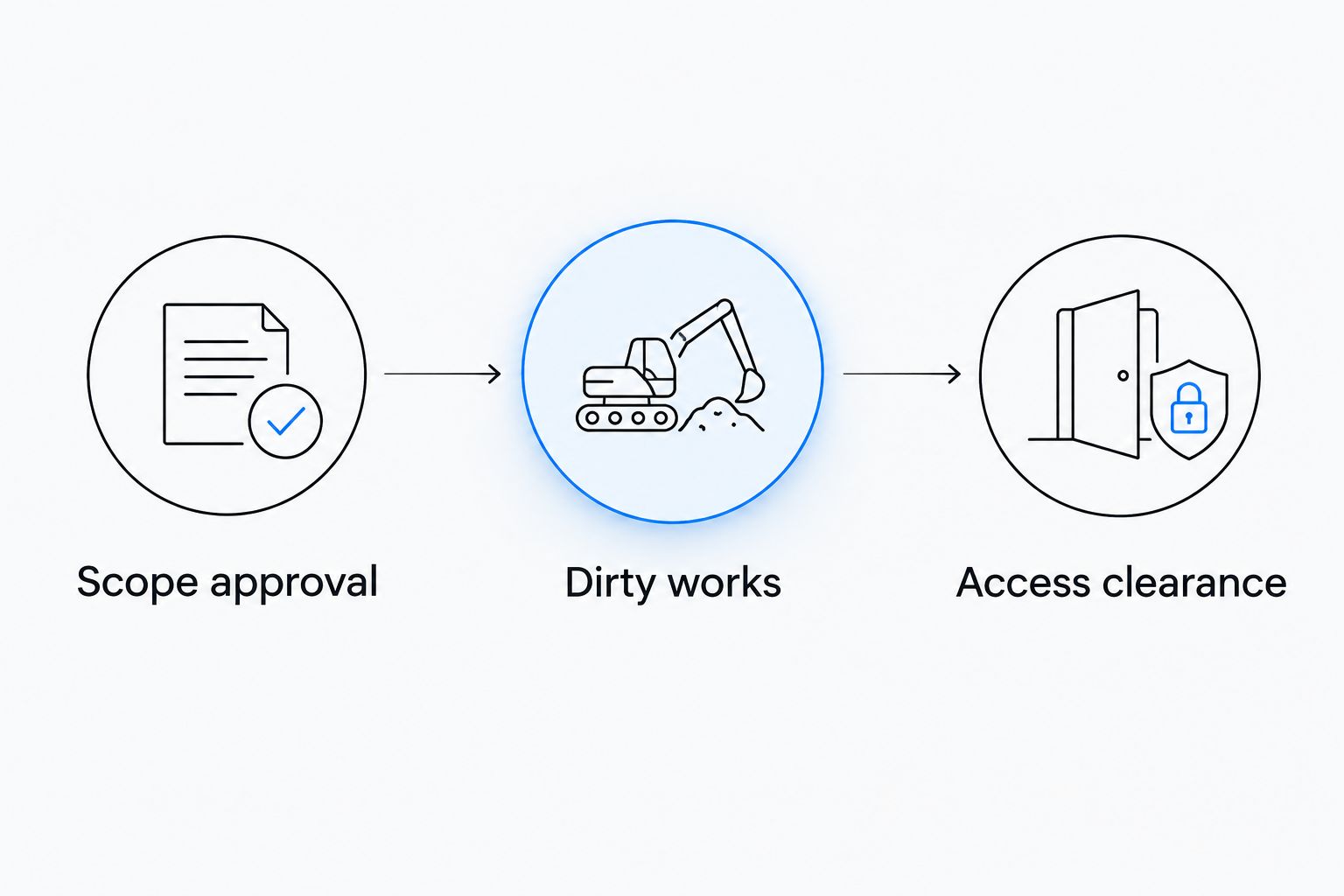
- Scope approval: obtain written agreement on the areas to clean, stain concerns, exclusions and required completion evidence. Ask the cleaner to assess carpet suitability and flag damage or conditions that require another response.
- Dirty works: list painting, carpentry, ceiling work and other activities that generate dust or require repeated access across the carpet. Complete those activities before releasing the final carpet-cleaning visit.
- Access clearance: confirm that furniture and stored items have been removed or that the agreed furniture-handling scope is clear. Check the actual route into the tenancy, not just the front-door key.
- Booking release: confirm the preceding checks with the coordinator, then issue the work order. Include the handover deadline and the requirement to report drying or condition concerns rather than concealing them behind a completion status.
Expected result: the cleaner receives a workable scope and a genuinely ready site, rather than a booking based on an assumed vacate date.
Treat Scope approval, Dirty works and Access clearance as 3 readiness gates. A missing confirmation keeps the job on hold; it does not disappear because the appointment is approaching.
A small repair still matters if it sits inside the cleaned area. If unavoidable work remains, document its location and protection requirements before deciding whether a staged clean makes sense.
Confirm the cleaning and drying window
- Give the cleaner the agreed area list, condition photos and any known carpet-care information. Ask for a site-specific assessment of the method, access needs and drying arrangements.
- Schedule carpet steam cleaning after the final dust-producing work and loose-debris removal. Coordinate nearby cleaning so people do not track soil back across the treated carpet.
- Separate the schedule into Cleaning visit, Drying period and Release inspection. Do not use the end of the cleaning appointment as the start of incoming-tenant access.
- Confirm who controls ventilation, building systems and security during drying. Agree any overnight arrangements with building management rather than leaving doors or systems operating without authorisation.
- Ask the cleaner to record treated areas, unresolved stains, existing damage, access restrictions and any follow-up required. Update the record with actual completion information.
Expected result: the schedule contains a cleaning appointment and a separate decision about when the area can reopen.
There is no sound universal drying allowance for every tenancy. Carpet construction, cleaning method, moisture load, airflow and site conditions affect the result. Use the commercial carpet steam-cleaning drying guide to frame the discussion, then obtain advice for the actual premises.
Do not compress the drying period to rescue a late repair programme. Escalate the handover conflict and agree a revised sequence before dispatching the cleaner.
Set up the handover release
- Arrange a Drying check before furniture delivery, inspections requiring unrestricted access or incoming occupancy. Confirm the check with the cleaner and the property-side coordinator.
- Inspect the cleaned areas against the approved scope. Record visible concerns, unresolved staining, damage and any areas that were inaccessible during the visit.
- Attach completion photos and the cleaner's job record. Keep evidence of pre-existing defects alongside the completion evidence so the handover file shows the condition history.
- Obtain Handover approval from the authorised property representative. Record the decision and any outstanding actions separately.
- Close the cleaning task only after the evidence is attached. Close the wider turnover record only after the relevant handover requirements are met.
Expected result: cleaning completion, reopening and lease handover remain distinct decisions with identifiable owners.
Use 2 release decisions: the cleaning work is complete, and the tenancy is ready for its next agreed use. A completed work order does not establish that every lease obligation has been met.
Adjust the schedule when the vacate date changes
A changing departure date needs an update workflow, not a second independent booking. Keep the original tenancy record and revise the affected dependencies so everyone works from the same instructions.
- Update Vacate date and record who confirmed the change.
- Recheck removals, repairs, access and the incoming tenant's requirements.
- Ask the cleaner to reconfirm the proposed visit and drying arrangements.
- Notify affected contractors and the property representative. Keep Booking release on hold until the revised readiness checks are complete.
Do not let an automatic date change send an unconditional instruction to attend. Notifications can prompt a review; the coordinator should still confirm that the tenancy is ready.
For your 2026 workflow, choose between a single final visit and staged cleaning according to site access and the remaining works—not administrative convenience.
| Workflow | Best for | Advantage | Limitation |
|---|---|---|---|
| Single final clean | Vacant tenancies with all dirty works complete | Keeps the final cleaning sequence straightforward | A late repair or removal delays the whole visit |
| Staged cleaning | Separately accessible areas with different completion dates | Lets ready areas progress without waiting for every room | Needs clear boundaries, protection and checks against re-soiling |
Staged cleaning is not permission to clean through active building work. Confirm that each released area can stay protected and that access routes do not undo the result.
Coordinate the rest of the move-out clean
Carpet cleaning is one part of the turnover sequence. Kitchens, amenities, glazing, overhead dust and general surface cleaning need their own scope, with dirty tasks finished before the final carpet treatment.
When you assess move-out cleaning timeframes, distinguish the time spent cleaning from the elapsed period needed for access, repairs, drying and inspection. A shorter cleaning appointment does not remove those dependencies.
Give every contractor the same access instructions and area-release plan. If another crew needs to cross freshly cleaned carpet, resolve the route or timing before the visit rather than relying on a verbal warning at the door.
For a combined commercial brief, ask OZLINK Facility Services to assess the relationship between carpet steam cleaning, repairs and make-good work. A combined scope keeps related instructions together; it still needs explicit exclusions, approvals and completion evidence.
Troubleshooting
The cleaner arrives before furniture removal
Put the affected area on hold and confirm what remains accessible. Obtain an agreed revised scope or booking rather than asking the cleaner to work around unspecified obstructions. Record who is responsible for clearing the remaining space.
A trade needs access after carpet cleaning
Identify the work area and route, then agree protection and any necessary follow-up cleaning. Do not mark the tenancy ready while dusty or damaging work remains unresolved. Recheck the affected carpet before approval.
The carpet is still damp at the planned handover
Keep the affected area restricted and contact the cleaner for site-specific advice. Review authorised ventilation and drying arrangements, then revise access instructions. The appointment finish time is not evidence that the carpet is ready.
Stains or odours remain after treatment
Ask the cleaner to inspect the concern and explain the next action before authorising another treatment. Cleaning does not reverse every type of staining or material damage. Retain the original photos and record the agreed outcome.
The system creates duplicate work orders
Match updates to the existing tenancy reference before creating another task. If your system supports automation, use a stable reference to update the original record and require approval before dispatch. Otherwise, keep booking control with the nominated coordinator.
Customise your workflow
For repeated turnovers in 2026, standardise the record fields and readiness checks before adding automation. Start with reminders for missing access confirmation and unfinished repairs; neither reminder should claim that the site has passed inspection.
Add fields for building-specific restrictions, shared access routes and inspection evidence where needed. Keep the template short enough that the coordinator actually updates it, with detailed documents attached rather than copied into every status note.
Send OZLINK Facility Services a defined brief: the tenancy location, carpet areas, condition photos, remaining works, access arrangements and target handover. Request confirmation of scope and sequencing, not just an attendance date.
Plan your tenancy carpet clean
Share the carpet scope, remaining works and handover deadline for a site-specific discussion.
FAQ
When should I schedule carpet steam cleaning during tenant turnover?
Schedule carpet steam cleaning after furniture removal and dust-producing works, with a separate drying check before reopening. Release the booking only when access and the cleaning scope are confirmed.
Can I book carpet cleaning before the tenant has moved out?
You can plan a provisional appointment before the tenant leaves, but confirm actual readiness before releasing it. Furniture, keys and unfinished works can change the usable cleaning window.
How long should I leave between carpet cleaning and handover?
Obtain a site-specific drying allowance from the cleaner rather than applying a universal interval. Keep handover conditional on the drying check and the authorised property representative's approval.
Should carpet cleaning happen before or after painting?
Complete painting and other dust-producing or messy works before the final carpet clean. If later work is unavoidable, agree protection, access routes and any follow-up cleaning beforehand.
Can tenant turnover automatically trigger a carpet-cleaning booking?
Tenant turnover can trigger a booking review, but it should not automatically authorise attendance. Confirm scope, completed dirty works and access before dispatching the cleaner.
Does carpet steam cleaning remove every stain?
Carpet steam cleaning does not guarantee removal of every stain or correction of existing damage. Ask the cleaner to assess concerns and record any limitations before treatment.
Can one contractor coordinate carpet cleaning and make-good works?
OZLINK Facility Services provides commercial carpet steam cleaning, maintenance and make-good services. Confirm the combined scope, site responsibilities and sequence for your tenancy before booking.
One last thing
Put the drying check in the calendar before you finalise the cleaning visit. Working backwards from the release decision exposes a handover conflict while you can still change the sequence—not when the incoming tenant is waiting at the door.