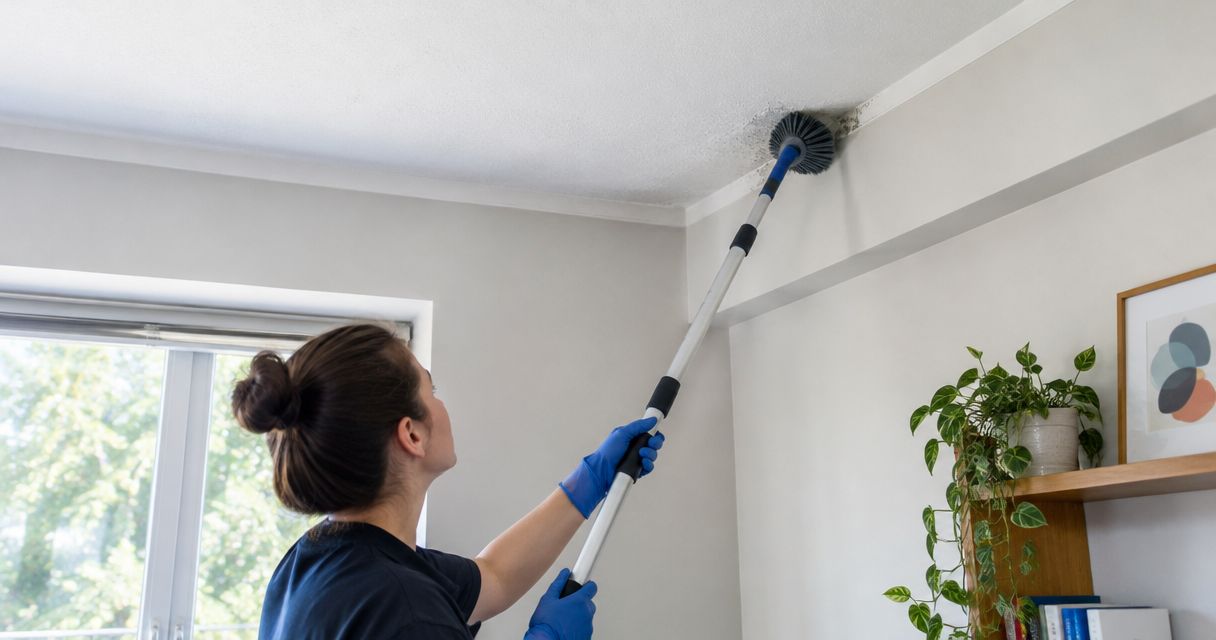
In Queensland in 2026, paid cleaners working in regulated early childhood education and care services generally need a blue card, the state's working with children check. After-hours cleaning does not automatically remove that requirement, and a police check does not replace a blue card where one is required.
- Working with children check: cleaners' childcare duties in Queensland generally require a blue card, including regular after-hours cleaning.
- A police check, company assurance or educator's supervision does not replace required blue card clearance.
- Confirm each cleaner's identity, clearance status and required organisational linking before approving access.
- OZLINK Facility Services provides childcare maintenance and compliance support; statutory screening remains a separate requirement.
Do cleaners need a working with children check for childcare sites?
Yes, for paid cleaning work covered by Queensland's regulated education and care service category. The requirement attaches to the individual and the regulated work, not simply to whether the cleaner expects to speak with children.
Queensland Blue Card Services identifies cleaning roles within its education and care service guidance. The governing framework is the Working with Children (Risk Management and Screening) Act; use the current guidance for that employment category when assessing a cleaner's duties.
Before approving the cleaner's first visit:
- Classify the work. Confirm the premises operates as a regulated education and care service and identify the actual cleaning duties.
- Check the person. Match the attending worker's identity to their blue card details and verify their current status.
- Confirm the arrangement. Establish which organisation must link the worker and complete the required steps before regulated work starts.
Treat these as entry checks, not paperwork to complete after the clean. The broader childcare centre facility maintenance compliance guide covers the surrounding maintenance responsibilities, which remain separate from personal screening.
Why this matters
A cleaning booking can look straightforward while the access arrangement is not. The company that accepted your purchase order, the supervisor who prepared the roster and the person who arrives with the keys are not necessarily the same people.
For your 2026 contractor arrangements, approve named workers rather than relying on a general statement that the cleaning company is cleared. A blue card belongs to a person; it is not a company-wide approval or evidence that the cleaning task itself is safe.
Keep these decisions separate:
- Screening: Is this person cleared for the regulated work?
- Access: Is this person authorised to enter this centre at this time?
- Task safety: Can this work proceed without exposing children, staff or visitors to hazards?
Regular cleaners: check before the first shift
Regular childcare cleaning belongs in your contractor screening process from the outset. Do not wait for a cleaner to enter an occupied room before considering the blue card requirement.
Write the work arrangement down. Include the centre, cleaning duties, expected attendance, access areas and whether the worker is employed directly or supplied through a contractor.
Ask the contractor to identify everyone who will attend, including relief staff. A roster naming only the account manager does not tell you who will enter the building.
For a recurring booking, agree on a replacement-worker rule: no unapproved substitution. That avoids a familiar failure point—a cleared regular cleaner being replaced by someone whose identity and clearance have not been checked.
After-hours cleaners: timing is not an automatic exemption
An empty centre is not, by itself, evidence that a cleaner is exempt from Queensland's blue card requirements. Assess the regulated role rather than treating the absence of children as the deciding test.
After-hours scheduling still has practical benefits. It separates cleaning equipment, wet floors and chemical use from normal learning activities, provided the work and handover are properly controlled.
Its limitation is that access often happens without the centre director present. Your process therefore needs to establish who holds keys, who can admit a replacement cleaner and who receives notice if the planned attendance changes.
Keep the approved access window in the work order. If an evening clean moves into operating hours, reassess the work area and supervision arrangements before the cleaner starts.
One-off contractors: classify the task, not the invoice
A one-off booking does not automatically make a cleaning role exempt. Nor should you assume that every visiting tradesperson falls into exactly the same screening category as a regular cleaner.
Separate the tasks before deciding. Cleaning rooms, repairing a tap and servicing equipment involve different work arrangements; determine the applicable category and any exemption with Queensland Blue Card Services.
| Attendance arrangement | Screening decision | Practical benefit | Limitation to address |
|---|---|---|---|
| Regular paid cleaning | Assess under the education and care service category; verify required clearance before work | A named recurring roster is easier to manage | Relief workers still need individual assessment |
| After-hours cleaning | Do not assume the empty building creates an exemption | Separates cleaning activity from normal childcare operations | Unattended access needs clear authorisation |
| One-off specialist cleaning | Assess the actual cleaning duties and applicable category | Allows a defined task and work area | A single visit does not establish exemption |
| Repairs or trade attendance | Check the relevant category and exemption conditions | Keeps trade work distinct from routine cleaning | A trade label does not settle every access question |
Best arrangement for recurring cleaning: a named, approved roster with a documented substitution process. For specialist work, use a task-specific assessment rather than copying the regular cleaner's approval.
Why the screening decision varies
The answer changes with the legal category and the actual arrangement—not with how confident the contractor sounds. Check these factors before recording your decision:
- Jurisdiction: Queensland uses the blue card system. Another state's working with children clearance does not automatically satisfy Queensland requirements.
- Service category: Confirm which regulated category covers the site and work rather than applying a generic commercial-office process.
- Actual duties: Record cleaning, repair or other duties accurately; job titles alone leave gaps.
- Employment arrangement: Direct employees, contractor employees, business operators and volunteers require assessment under the rules that apply to them.
- Exemption conditions: Establish whether a specific exemption applies. Do not invent one based on supervision, short attendance or evening access.
- Worker status: Verify the attending person's current clearance and required organisational arrangements, not just an old card image.
If a category or exemption is unclear, resolve it with Queensland Blue Card Services before approving the work. Record the question, the relevant duties and the basis for your final decision.
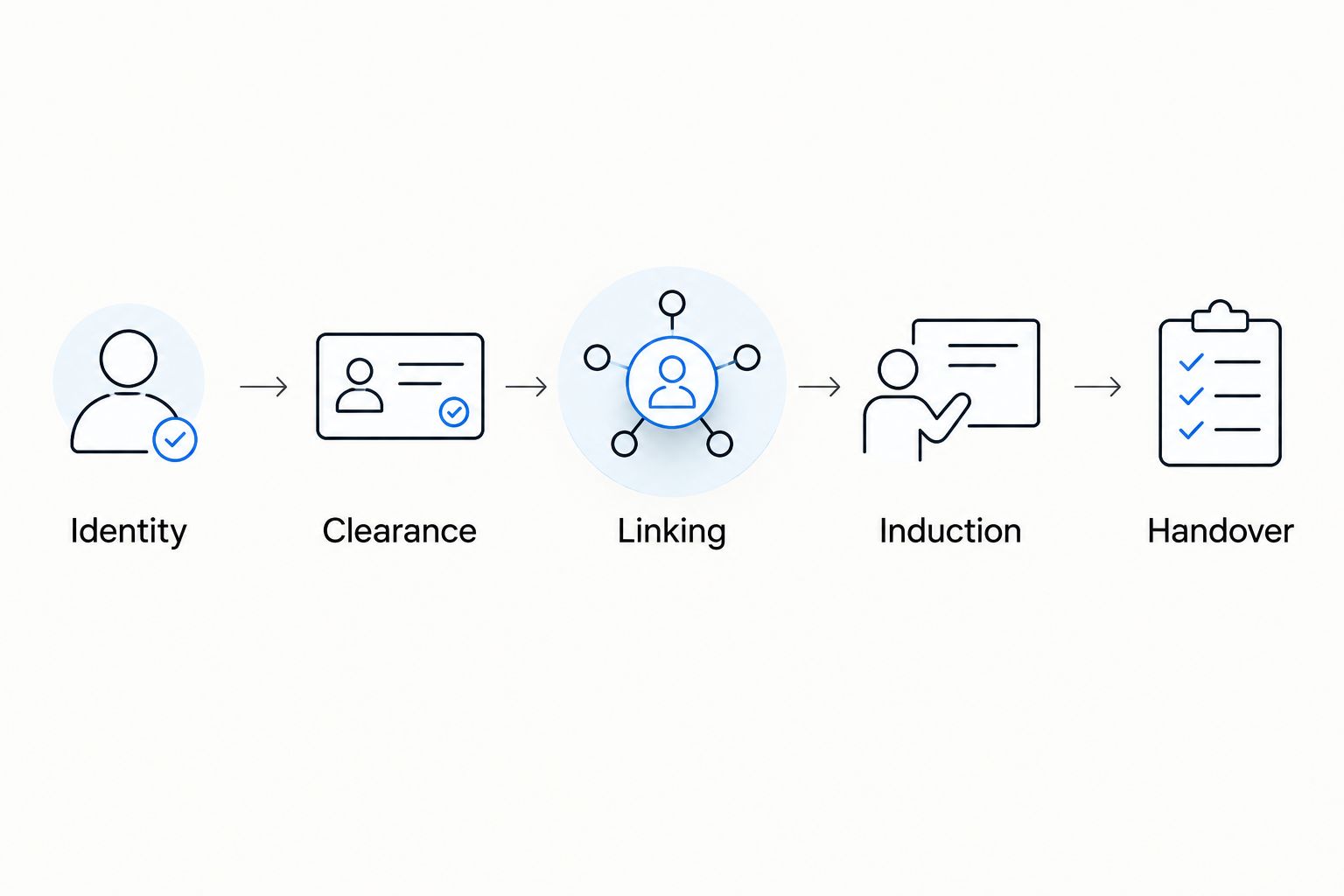
Use 5 pre-start checks for childcare cleaning
Use these 5 pre-start checks as an operational checklist, not as a substitute for the legislation. For each booking, nominate 1 responsible approver so the contractor knows who can authorise attendance.
Identity
Confirm the name of the person attending and match it to the screening details. Do not accept another worker's card or assume that a familiar uniform proves identity.
Clearance
Verify current blue card status through the appropriate Blue Card Services process. A photograph of a card is a starting document, not a complete status check.
Linking
Confirm which organisation must link the worker under the applicable arrangement. Resolve that responsibility between the centre and contractor rather than assuming the other party has completed it.
Induction
Explain permitted areas, sign-in requirements, emergency arrangements and restrictions on interaction with children. Give the cleaner a clear process for reporting an unexpected occupied room or an access change.
Handover
Agree how the cleaner reports completion, outstanding hazards and any area that must remain closed. Record 1 access entry per visit as your site procedure, including the attending worker and their arrival and departure.
Apply this checklist to replacement staff as well as the regular team. A completed 2026 induction for one worker does not approve everyone employed by the same contractor.
Keep cleaning controls separate from blue card checks
A cleared cleaner still needs a safe work plan. Blue card screening addresses suitability for regulated work; it does not assess chemical handling, floor condition, equipment placement or cleaning quality.
Your specification for commercial cleaning for childcare centres should identify the rooms, surfaces and tasks, then set access restrictions around the work. That makes the cleaning scope and the child-safety arrangements part of the same booking without confusing their purposes.
For hard-floor work, define how the area stays isolated while cleaning or treatment is underway. Require a handover that identifies any remaining wet surface, equipment or access restriction before the room returns to use.
For carpet cleaning, high dusting or window work, identify which furniture or activity areas must be moved or closed. Do not allow the possession of a blue card to become the reason these practical controls are skipped.
What records should the centre keep?
Keep enough evidence to explain who attended, why access was approved and what work occurred. Restrict access to personal screening information and follow the applicable privacy and recordkeeping requirements.
Your 2026 contractor register should distinguish between screening evidence and job records. Combining everything into an unstructured email chain makes it harder to identify an expired approval, a changed roster or an unfinished task.
Record the following in the appropriate controlled system:
- The worker's identity and contractor organisation.
- The screening status check and applicable linking arrangements.
- Any exemption decision and its documented basis.
- Induction completion and approved access conditions.
- Attendance, completed tasks and unresolved hazards.
- Changes to the roster, duties or permitted work areas.
Connect the work order to the attendance record rather than storing unrelated copies. The reactive maintenance tickets to compliance-ready records workflow explains that connection for maintenance tasks.
Where does a facility services contractor fit?
OZLINK Facility Services suits childcare operators seeking facility maintenance and compliance support. Its stated services include specialist cleaning, commercial maintenance and hard-floor care, allowing those tasks to sit within a broader facilities scope.
The boundary matters. Engaging OZLINK Facility Services does not transfer the approved provider's statutory responsibilities or replace individual screening checks, site authorisation and safe-work decisions.
When scoping work with OZLINK Facility Services or another contractor, ask for named attendance arrangements, a replacement-worker process and a clear handover. Assess the proposed people and task controls; do not treat a service description as proof of current blue card status.
Can a cleaner start while their blue card application is pending?
A pending application is not clearance to start regulated work. Queensland's No Card, No Start requirements mean the worker must hold the required valid clearance before commencing work covered by those requirements.
Do not solve a staffing gap by promising to finish the paperwork later. Arrange an appropriately cleared replacement or change the booking while you resolve the screening requirement.
Does supervising the cleaner remove the requirement?
Supervision is not a blanket exemption from blue card requirements. An educator remaining nearby does not, by itself, change the classification of regulated cleaning work.
Use supervision as an access or task control where appropriate. Establish any claimed screening exemption separately under the applicable rules.
FAQ
Do childcare cleaners need a blue card in Queensland?
Paid cleaners working in regulated Queensland education and care services generally need a blue card. Confirm the applicable work category and any specific exemption before approving attendance.
Do cleaners need a blue card if they only work after hours?
After-hours attendance does not automatically exempt childcare cleaners from Queensland's blue card requirements. Assess the regulated work rather than relying only on whether children are present.
Is a police check enough for a childcare cleaner?
A police check does not replace a blue card where Queensland law requires one. Verify the required clearance and organisational arrangements separately.
Can a relief cleaner use the regular cleaner's approval?
No, a relief cleaner needs an individual assessment and any required clearance before starting regulated work. Approval of the regular cleaner does not extend to a replacement.
Does a cleaner's interstate working with children check cover Queensland?
An interstate working with children check does not automatically satisfy Queensland's blue card requirements. Confirm the Queensland requirements before approving the worker.
Who should check a cleaning contractor's blue card?
The centre and contractor must establish their responsibilities for verification and organisational linking under the applicable arrangement. The centre should not approve access solely on an unverified company assurance.
Does a blue card prove a cleaner can safely restore childcare floors?
No, a blue card is not evidence of floor-restoration competence or task safety. Assess the work method, isolation arrangements and handover separately.
One last thing
Put the replacement-worker rule in writing. The strongest screening process still fails if someone can substitute an unchecked cleaner after the roster is approved.
For every recurring childcare cleaning arrangement in 2026, require advance notice of substitutions and approval before access. Keep the rule simple: a different person means a fresh identity, screening and access check.