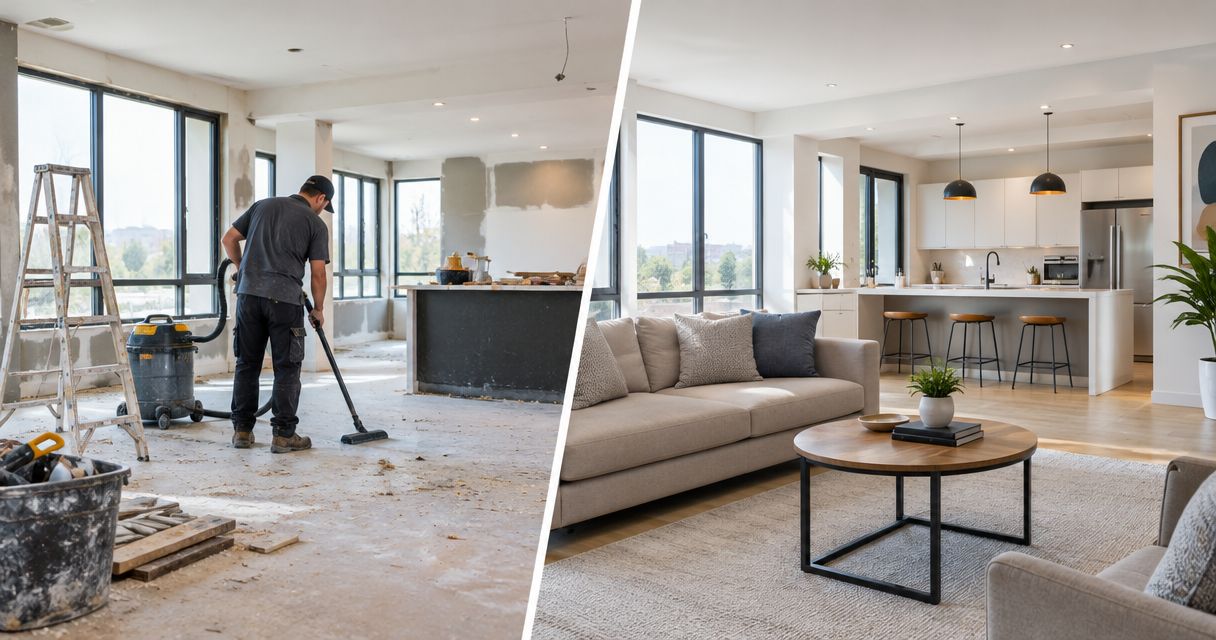
Commercial painting cost per square metre in Brisbane depends on the measured paintable area, preparation, coating specification and site access; a single rate is not a reliable project budget. For a 2026 quote, have repairs, access equipment, protection and cleaning listed separately so you can see what the painting allowance excludes.
- Commercial painting cost per square metre Brisbane quotes need a measured surface area and a written preparation scope.
- Compare wall area with wall area, not with the building’s floor area.
- OZLINK Facility Services provides commercial painting alongside maintenance and end-of-lease make-good services.
- Ask each contractor to identify repairs, access requirements, coating specifications and exclusions before comparing quotes.
Why this matters
A low square-metre rate tells you little when the quote leaves out damaged walls, difficult access or protection for occupied spaces. You need the finished scope, not just the application rate.
OZLINK Facility Services provides commercial painting and related maintenance services for Brisbane facilities. For your project, the useful starting point is a surface-by-surface brief that separates painting from repairs and other trades.
Compare the same finished job before comparing the rate. Otherwise, you are comparing different responsibilities under the same label.
How much does commercial painting cost per square metre in Brisbane?
Commercial painting requires a site-specific quote that identifies what is being painted and how it will be prepared. There is no defensible project estimate without those details: an empty tenancy with sound walls presents a different scope from an occupied building with damaged surfaces and restricted access.
For a 2026 budget, ask for the following breakdown rather than accepting an unexplained square-metre figure.
| Quote component | What the written scope should identify | What to check |
|---|---|---|
| Measured surfaces | Walls, ceilings and other included surfaces | Whether the measurement is paintable area or floor area |
| Surface preparation | Cleaning, filling, sanding and removal of unsound coatings | Whether repairs extend beyond minor preparation |
| Coating system | Surface compatibility, primer requirements and finish | Whether competing quotes specify equivalent work |
| Access and protection | Equipment, barriers, masking and protection of nearby property | Who supplies and manages each item |
| Work sequencing | Access windows, occupied areas and handover stages | Whether your operating restrictions are included |
| Completion | Cleanup, inspection and agreed rectification | What constitutes an accepted finish |
A square-metre rate is useful after these inclusions are settled. It is not a substitute for them.
Ask whether the contractor has measured the site or relied on supplied drawings. If drawings are the basis, record which drawings were used and whether site conditions have been checked against them.
Measure paintable area, not the tenancy footprint
Your tenancy’s floor area does not equal its wall area. Partitions, ceiling heights, door openings and the number of painted surfaces change the measurement.
Use a consistent method:
- Identify surfaces. List walls, ceilings, doors, frames and any other included elements separately.
- Measure dimensions. Record lengths and heights in metres before calculating areas. Convert millimetres consistently: 1 metre equals 1,000 millimetres.
- Calculate area. Multiply surface length by surface height. A surface measuring 1 metre by 1 metre has an area of 1 m².
- Confirm deductions. Ask how openings and excluded surfaces are treated, then use the same convention across quotes.
Doors, frames and detailed trim also need an agreed measurement basis. Do not assume a wall-area rate covers every painted element in the room.
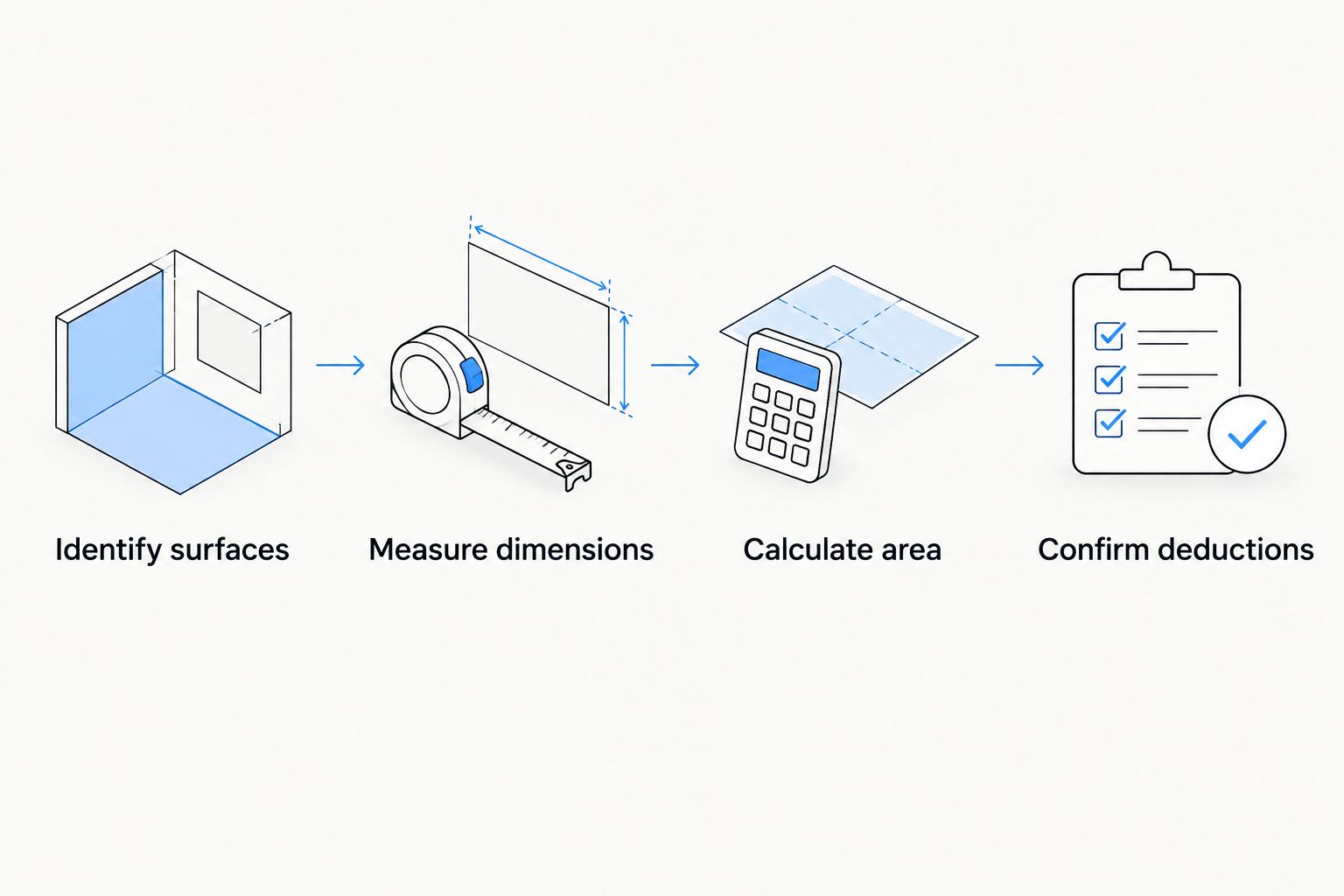
Keep the measurement schedule with the quote. If the scope changes, you can identify which surfaces were added or removed instead of debating a revised total without a clear basis.
Interior repainting: define preparation and occupancy
Interior repainting needs a clear boundary between cosmetic preparation and repair work. Filling minor surface imperfections is not the same task as rectifying damaged plasterboard or resolving a moisture problem.
Ask the contractor to identify the condition of each area before work starts. Record peeling paint, staining, impact damage and previous patching, then state which defects the painting scope includes.
Best for: refreshing internal surfaces when the existing substrate is suitable for the specified coating system.
The benefit is a clearly defined surface finish. The limitation is equally important: repainting does not resolve the underlying cause of recurring damage.
In an occupied workplace, include furniture movement, protection, isolation and room handback in the brief. Decide who clears work areas and who authorises their return to use; those responsibilities should not emerge halfway through the job.
Exterior repainting: specify access and surface condition
Exterior painting requires an assessment of both the surface and the means of reaching it safely. A wall measured from a drawing does not describe access around landscaping, neighbouring property, pedestrian routes or building entrances.
Ask what cleaning and preparation are required before coating. Also identify any defective joints, damaged substrates or water-entry issues that need separate attention.
Best for: external surfaces requiring a specified protective and decorative coating system.
The benefit is a defined treatment for the external surface. The limitation is that access, weather and unresolved building defects remain separate planning considerations; paint is not a substitute for repairs.
Your quote should explain how external work will be staged around building users. Make sure the agreed programme addresses entry points and access restrictions rather than assuming the whole perimeter is freely available.
End-of-lease painting: agree on the handover standard
End-of-lease painting starts with the required make-good outcome, not a general instruction to repaint. Check the lease obligations and any agreed landlord scope before requesting prices.
Separate painting from removal of fixtures, wall repairs, signage removal and other reinstatement work. These tasks affect what the painter receives and what the landlord inspects at handover.
Best for: tenants and property managers working towards a documented tenancy handover.
The benefit is alignment between the painting scope and the required finish. The limitation is that a painting quote alone does not establish your lease obligations or prove that the complete make-good scope has been met.
Confirm who approves colours, finishes and completed work. Written approval criteria are more useful than a vague requirement to leave everything looking fresh.
Why commercial painting costs vary
The main differences between commercial painting quotes come from the work required to reach the agreed finish. Check these factors against your own building rather than treating a headline rate as a benchmark.
- Surface condition: damaged, contaminated or unsound surfaces require preparation beyond straightforward coating application.
- Surface type: walls, ceilings, doors, frames and external substrates need their own specifications and measurement conventions.
- Coating requirements: primers, compatibility with existing coatings and the specified finish determine the application scope.
- Access conditions: height, obstructions and pedestrian routes influence equipment and work-area arrangements.
- Occupancy restrictions: staff, customers and building operations determine when and where work can proceed.
- Related repairs: carpentry, substrate repairs and other maintenance tasks need an agreed boundary with the painting work.
For your 2026 comparison, ask every contractor to respond to the same conditions. If one contractor identifies a defect that others have not addressed, clarify it with all bidders before making a decision.
Which painting scope fits your building?
Choose the scope that matches the problem. Do not commission a general repaint when your immediate requirement is a specific repair, and do not treat a local touch-up as equivalent to repainting a complete surface.
| Option | Best for | Main benefit | Main limitation |
|---|---|---|---|
| Local touch-up | Isolated marks or repaired patches | Limits work to the affected area | Colour and sheen differences can remain visible |
| Full-surface repaint | A consistent finish across an agreed wall or ceiling | Treats the complete visible surface | Requires access and preparation across that surface |
| Painting within make-good works | Lease-end reinstatement | Connects painting with the handover scope | Depends on clear repair and approval responsibilities |
Ask for a trial area when matching an existing finish matters. Assess the result under the lighting in which the space is normally used, rather than relying only on a colour name.
Choose the required finish first, then ask the contractor to price that exact scope. This keeps a smaller job from being mistaken for a better-value version of a larger one.
What should a Brisbane commercial painting quote include?
A useful quote lets you check the work before it starts and verify it when it finishes. For a 2026 project, request a written scope that covers the following points.
The surfaces and preparation
List included rooms, elevations and individual elements. Attach marked-up plans or photographs where written descriptions leave room for interpretation.
State which repairs are included and which require separate approval. Ask how newly discovered defects will be documented before additional work proceeds.
The finish and work arrangements
Record the coating specification, colours and finish for each surface group. Include any manufacturer requirements relevant to the selected coating system rather than accepting an unspecified promise of a quality finish.
Set out access windows, protection responsibilities and the sequence for returning areas to use. Ask the contractor to explain curing and use restrictions for the specified products; do not assume that touch-dry means ready for normal operations.
The exclusions and completion process
Check exclusions for furniture handling, repairs, access equipment, waste removal and final cleaning. An exclusion is not automatically a problem, but an unassigned task becomes your problem during delivery.
Agree on inspection, defect reporting and completion records. Photographs help document the condition of surfaces, but they do not replace an agreed inspection of the finished work.
How do you compare commercial painting quotes fairly?
Compare measured scope, preparation and finish before comparing totals. Send the same brief to each contractor and ask for qualifications or exclusions to be stated against that brief.
Use a comparison sheet with a separate line for every unresolved difference. Close those gaps before approval so the selected quote reflects the work you actually need.
Is a square-metre rate based on floor area or wall area?
A square-metre rate needs an explicit measurement basis. Ask whether it refers to paintable wall area, ceiling area, another defined surface or a budgeting allowance based on floor area.
Do not compare rates using different measurement methods. Have the contractors restate their scope on a common basis first.
Can painting be combined with commercial maintenance?
Painting can form part of a wider maintenance or make-good scope, provided each trade’s responsibilities and sequence are documented. Repairs should be resolved before the affected surfaces receive their final coating.
OZLINK Facility Services is a commercial painting option for Brisbane property managers coordinating maintenance and make-good works. Confirm the project-specific inclusions rather than assuming every related task is included.
Discuss your commercial painting scope
Define surfaces, repairs and site access before requesting a project quote.
FAQ
How much does commercial painting cost per square metre in Brisbane?
Commercial painting in Brisbane needs a site-specific quote based on measured paintable surfaces and an agreed specification. Compare preparation, access, repairs and exclusions before comparing square-metre rates.
Does a commercial painting quote include wall repairs?
Wall repairs are included only when the written scope says so. Ask the contractor to distinguish routine preparation from substrate repairs and work requiring separate approval.
Can I use my office floor area to estimate painting?
Office floor area is not the same as paintable wall or ceiling area. Ask for a surface measurement schedule and confirm how openings, doors and frames are treated.
Is touching up a wall better than repainting it?
Touching up suits isolated defects when the resulting appearance is acceptable. A full-surface repaint suits a consistent finish, because local repairs can leave visible colour or sheen differences.
What should I ask before approving an exterior painting quote?
Ask how the contractor will prepare the surface, reach it safely and manage access around building users. Confirm whether damaged substrates and water-entry defects require separate repairs.
Does OZLINK Facility Services provide commercial painting in Brisbane?
OZLINK Facility Services provides commercial painting in Brisbane alongside commercial maintenance and end-of-lease make-good services. Confirm the surfaces, preparation, access and related repairs included in your project quote.
One last thing
Ask for exclusions before you ask for a sharper rate. A clearly assigned repair, access task or cleaning responsibility gives you a firmer basis for approval than an unexplained reduction in the headline figure.
Keep your 2026 quote, approved scope and completion records together. The next repaint or tenancy handover starts with better information when you can identify what was treated, what was excluded and what was accepted.