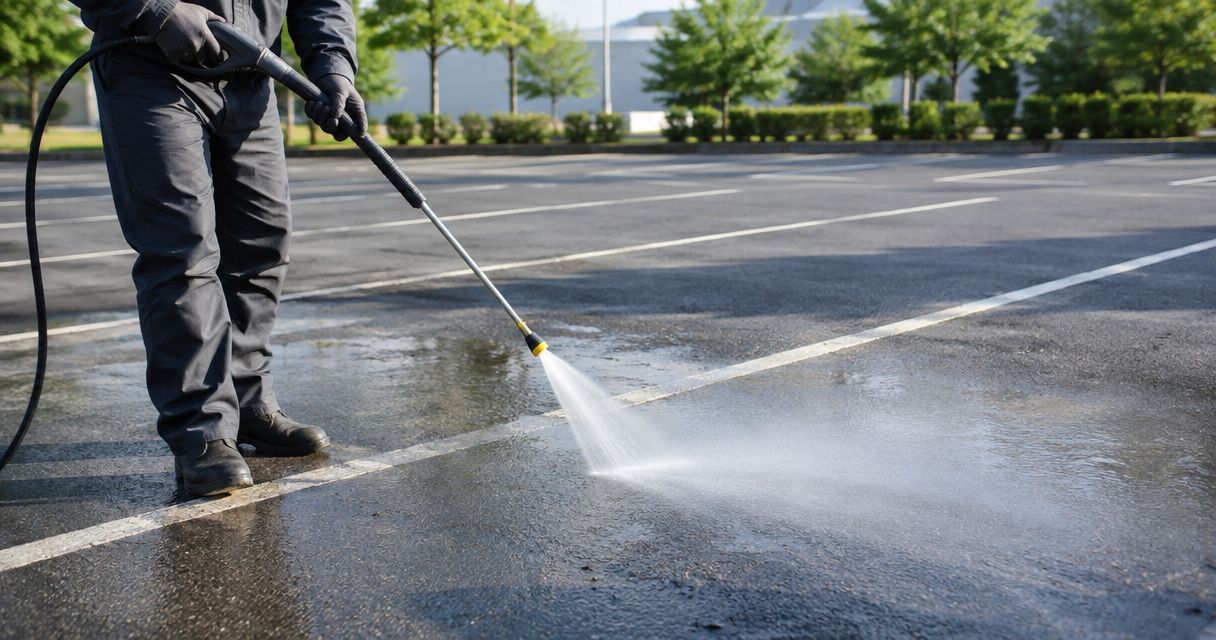
A commercial make-good includes the removal, repairs, reinstatement and final cleaning required to return leased premises in the condition specified by your lease and any agreed variations. It is not automatically a full refurbishment: the scope depends on your obligations, the recorded starting condition and what the landlord agrees can remain.
- What does a make-good include? Lease-required removal, repairs, reinstatement and commercial end-of-lease cleaning—not an automatic refurbishment.
- Agree what stays before removing partitions, flooring, signage or tenant-installed fittings.
- OZLINK Facility Services provides commercial make-good works, repairs, painting and specialist cleaning in South East Queensland.
- Separate cleaning from repairs in your scope so neither disappears between contractors.
What does a commercial make-good include?
A commercial make-good is a lease-led scope, not a standard cleaning package. Start with the make-good clause, the entry condition report, fitout approvals and any written agreement about items the landlord will retain.
For a 2026 lease exit, turn those documents into a room-by-room schedule before requesting quotes. The lease-end to make-good handover workflow provides a useful structure for organising the work and its completion records.
| Work category | What to put in the scope | Best for | Benefit | Limitation |
|---|---|---|---|---|
| Removal | Approved removal of tenant fittings, signage and unwanted materials | Items the landlord has agreed must go | Clears the premises for reinstatement | Removal alone leaves fixing holes, exposed surfaces or service connections |
| Repairs | Specified wall, door, joinery and other damage repairs | Defects identified against the required handover condition | Addresses physical damage | Does not replace separate cleaning or repainting requirements |
| Reinstatement | Agreed restoration of altered areas and finishes | Areas changed during the tenancy | Returns specified elements to the agreed condition | Requires clear decisions about what stays and what goes |
| Final cleaning | Defined cleaning of floors, glazing, fixtures and accessible surfaces | Removing occupation and works-related dirt | Prepares the premises for inspection | Cannot repair damaged materials or resolve lease disagreements |
These categories overlap, but they are not interchangeable. A wall can be clean and still need repairs; a repaired wall can still need repainting and a final clean.
Why this matters
An unclear make-good scope creates unclear responsibility. If your quote says only end-of-lease clean, you have not specified who removes signage, repairs fixings or deals with redundant fittings.
The practical goal is an inspectable result. For your 2026 handover, each scope item should identify the location, required outcome, responsible contractor and evidence needed to show completion.
Agree the required condition before you agree the work. A contractor can price a defined task, but a contractor's quote does not settle what your lease requires.
Removal and strip-out: agree what must leave
Removal starts with an inventory of tenant-installed items. Check partitions, shelves, counters, wall-mounted equipment, window graphics, signage and fittings against the lease and any approved fitout plans.
Do not treat every installed item as waste. Obtain written agreement about anything the landlord wants to retain, and identify anything that belongs to the landlord before works begin.
Your removal schedule should state:
- Which items must be removed and their locations.
- Which items must remain undamaged.
- Who disconnects affected services before removal.
- What repairs follow removal.
- Who removes waste from the premises.
The advantage of a defined strip-out is clarity about the space being handed back. Its limitation is equally important: taking something out rarely describes the finished condition underneath it.
Repairs and painting: specify the finished surface
Repairs can include holes left by fixings, damaged plasterboard, marked doors, damaged trims and affected joinery where those items fall within your agreed obligations. Identify each defect rather than asking for general handyman repairs.
Painting needs its own scope. State which walls, doors or other surfaces require work, the preparation required and the finish to match; do not assume a small patch will satisfy an obligation covering a larger surface.
Use a marked-up plan or labelled photographs to connect each repair to its location. Record existing damage separately so the scope does not silently expand into unrelated refurbishment.
Repair and repaint are different instructions. A filled hole is not a finished wall, and a painted wall does not resolve damage beneath the coating.
Floors: separate cleaning, restoration and replacement
Floor work depends on the material, its condition and the agreed handover requirement. Carpet steam cleaning, hard-floor cleaning, strip and seal, restoration and replacement describe different outcomes.
For carpet, record staining, damage, lifting edges and areas previously covered by furniture. For hard floors, distinguish surface dirt or worn coatings from damage to the flooring itself.
Ask for these decisions in writing:
- The floor material and areas included.
- The required treatment for each area.
- Any damage excluded from cleaning.
- Whether removed partitions or fittings expose unfinished patches.
- The condition required at inspection.
Cleaning addresses dirt; it does not replace missing flooring. Likewise, a restoration task should not be treated as automatic approval to replace a floor that the agreed scope only requires you to clean.
Plumbing and electrical: identify affected connections
A make-good can involve plumbing or electrical work when tenant-installed fixtures or equipment are removed. Put affected connections in the scope before strip-out starts, rather than leaving them for the removal crew to discover.
Use appropriately licensed trades for regulated work. Ask the relevant trade to identify the disconnection, removal, reinstatement and completion documentation applicable to the actual task.
Do not assume every service must return to an earlier layout. Confirm which services remain, what the landlord has approved and how any redundant connections must be left.
The same discipline applies to contractor boundaries. Name who handles each connection so a removal contractor and a service contractor do not each assume the other has included it.
Final cleaning: define more than a tidy-up
A make-good clean follows the work that creates dust, debris and surface marks. Schedule final cleaning after those tasks, with any remaining work identified so completed areas are not immediately disturbed.
Depending on the agreed scope, cleaning can cover glazing, internal surfaces, fixtures, carpet, hard floors and areas affected by removal or repairs. High-access cleaning, high dusting and external pressure washing need explicit inclusion where required.
Specify accessible areas and any access restrictions. A general instruction to clean everything does not explain whether high surfaces, external glazing or specialist floor treatments are included.
For a 2026 handover, record both the cleaning tasks and their exclusions. End-of-lease cleaning is part of a make-good when required; it is not a substitute for the rest of it.
How do you turn lease obligations into a work scope?
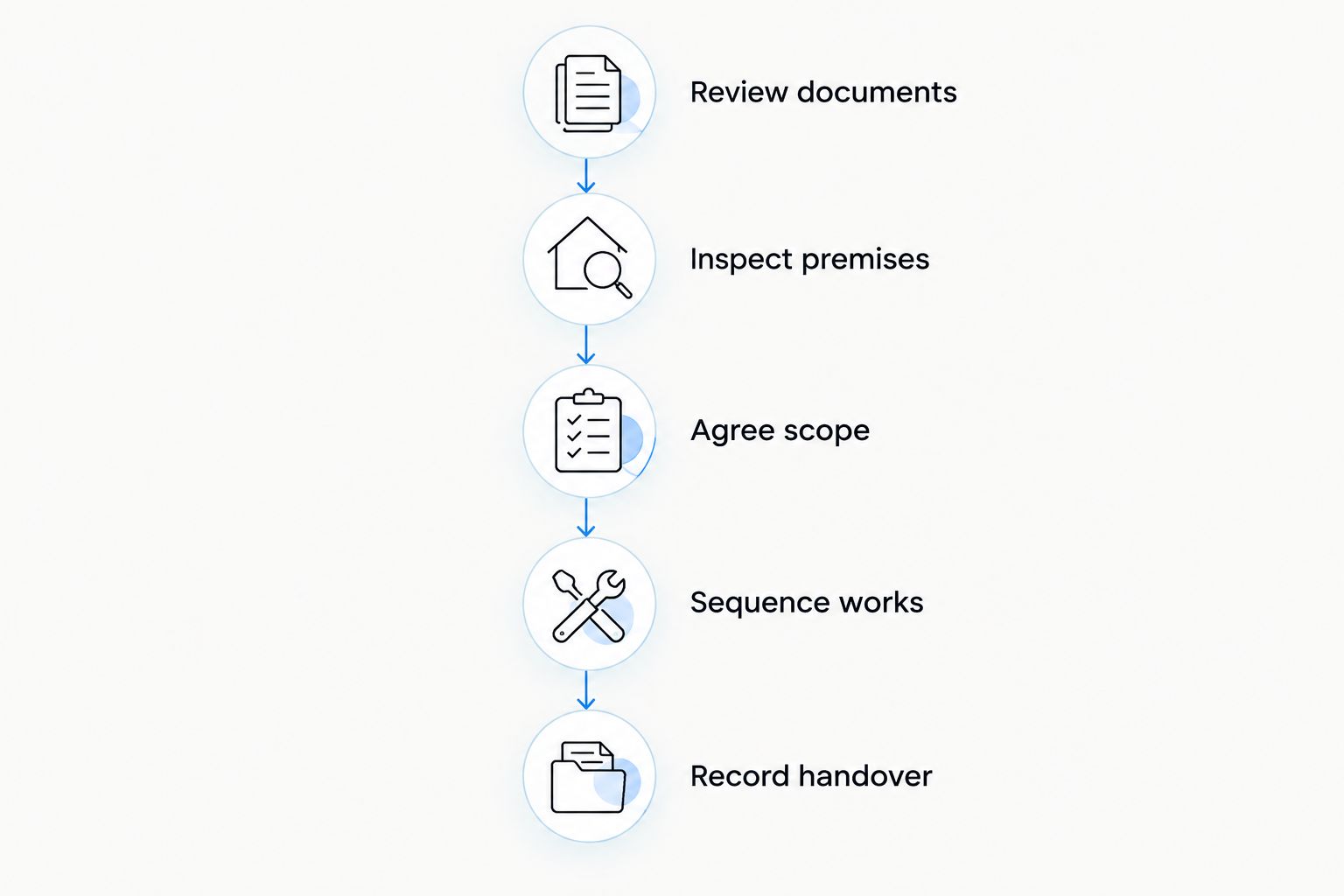
Use a sequence that settles decisions before physical work starts. Keep the approved scope, changes and completion evidence together so the final inspection refers to the same requirements used to instruct contractors.
- Review documents. Read the lease, entry condition report, fitout approvals and written variations together. Seek legal advice if the obligation is disputed or unclear.
- Inspect premises. Walk the tenancy with the relevant property representative and record proposed works by room or area.
- Agree scope. Confirm what stays, what goes, the required finishes and any exclusions in writing.
- Sequence works. Arrange disconnections, removal, repairs, painting, floor treatments and final cleaning in a practical order.
- Record handover. Inspect against the agreed scope, record outstanding items and obtain written confirmation of the inspection outcome.
Photographs help connect an instruction to a location, but they do not replace a clear acceptance requirement. Pair each photo with a short description of the work and the result expected.
Why commercial make-good scope varies
There is no single package that suits every tenancy. These factors change the work you need to define:
- Lease wording: The make-good clause establishes the starting point for your obligations; read it alongside relevant variations.
- Recorded entry condition: Entry reports and photographs help distinguish the starting condition from later changes.
- Tenant alterations: Partitions, signage, fixtures and service changes introduce removal or reinstatement decisions.
- Landlord retention decisions: Written agreement to retain an item changes what needs removal and what must be repaired around it.
- Material condition: Dirty carpet, damaged carpet and missing carpet require different scopes, as do worn coatings and damaged hard flooring.
- Access and work sequence: Building access rules, shared areas and trade dependencies affect how the work is organised.
In a 2026 quote request, describe these conditions rather than asking contractors to make assumptions. Comparable quotes need the same inclusions, exclusions and finish requirements.
Can one contractor coordinate repairs and cleaning?
Yes, a contractor offering the relevant services can coordinate the physical work, provided the agreed scope identifies responsibilities and specialist trade requirements. That does not transfer responsibility for interpreting a disputed lease to the contractor.
OZLINK Facility Services is best suited to South East Queensland facility and property managers seeking commercial make-good works alongside maintenance and specialist cleaning. Its stated services include commercial painting, carpentry, handyman work, plumbing and electrical coordination, and commercial end-of-lease make-good works.
You can discuss the defined scope with OZLINK Facility Services. The service fit is practical coordination of listed works; legal interpretation and the landlord's acceptance criteria still need to be resolved separately.
Discuss your make-good scope
Outline the repairs, reinstatement and cleaning needed for your commercial lease handover.
Does a make-good include replacing every floor?
No, replacing every floor is not an automatic make-good requirement. Check the lease, recorded condition and written scope before choosing between cleaning, restoration, local repairs or replacement.
Can the landlord agree to keep your fitout?
Yes, a landlord can agree to retain fitout items, but you should record that agreement in writing. Identify the exact items and any remaining repairs or service work so retention does not leave the surrounding obligations unclear.
Is a builders clean the same as a make-good?
No, a builders clean addresses cleaning associated with construction or repair work; a make-good addresses the agreed lease-return condition. A builders clean can form part of the final stage without covering removal, repairs or reinstatement.
FAQ
What does a make-good include for a commercial tenancy?
A commercial make-good includes the removal, repairs, reinstatement and cleaning required by the lease and agreed variations. The scope should identify what stays, what goes and the required handover condition.
Do I have to repaint the whole office before handing it back?
Repainting the whole office is not an automatic requirement. Check the lease and written scope, then specify the surfaces and finishes required rather than assuming patch painting is sufficient.
Does end-of-lease cleaning cover damage repairs?
End-of-lease cleaning does not cover damage repairs unless those repairs are separately included. List wall repairs, flooring defects and damaged fittings as distinct work items.
Who should disconnect electrical fittings during a make-good?
Appropriately licensed trades must handle regulated electrical work. Identify affected fittings before removal and confirm the required disconnection and completion documentation with the trade.
What should I ask a make-good contractor to include in a quote?
Ask for location-specific tasks, required finishes, exclusions, trade responsibilities, waste removal and final cleaning. Give each contractor the same written scope so you can compare their proposed work.
Can OZLINK Facility Services help with commercial make-good works?
OZLINK Facility Services provides commercial end-of-lease make-good works alongside maintenance, painting, carpentry, plumbing and electrical coordination, and specialist cleaning. Discuss your premises and scope to confirm the work and service location.
What records should I keep for a commercial make-good handover?
Keep the agreed scope, approved changes, relevant trade records, completion photographs and written inspection outcome. Record outstanding items clearly rather than treating an informal walkthrough as confirmation that everything is accepted.
One last thing
Ask what remains before asking what must be removed. A retained counter, partition or fitting changes the surrounding repair and cleaning scope, not just the removal list.
Before your 2026 handover, make the final walkthrough follow the same room-by-room schedule used to commission the work. Every unresolved item needs a named owner and a written next action.