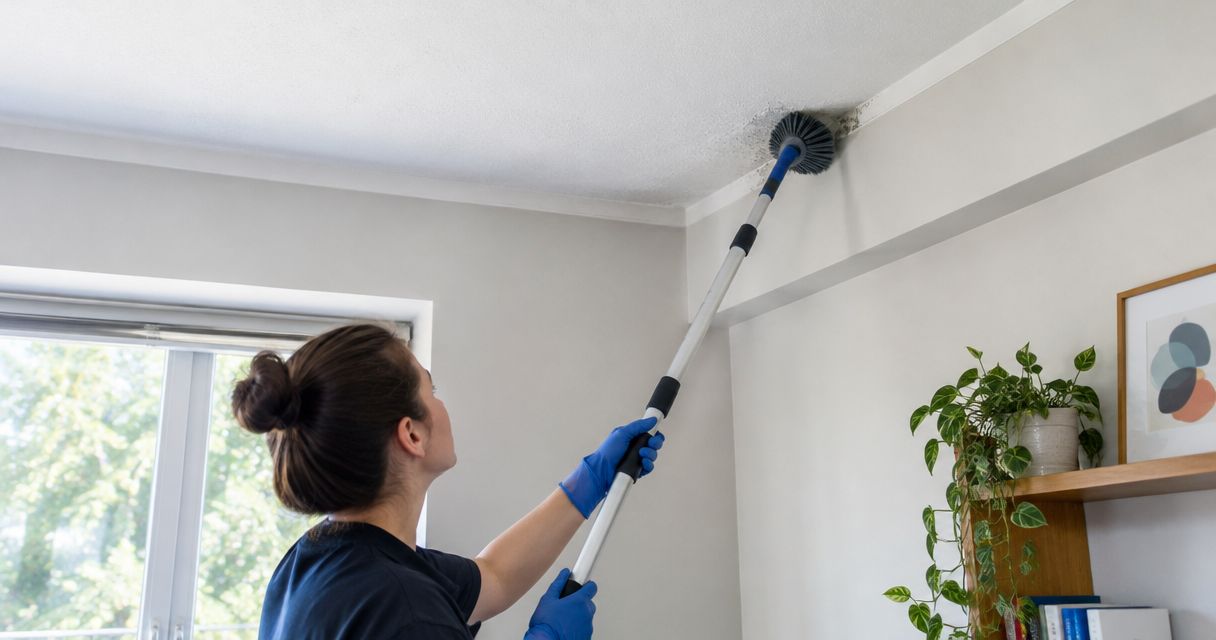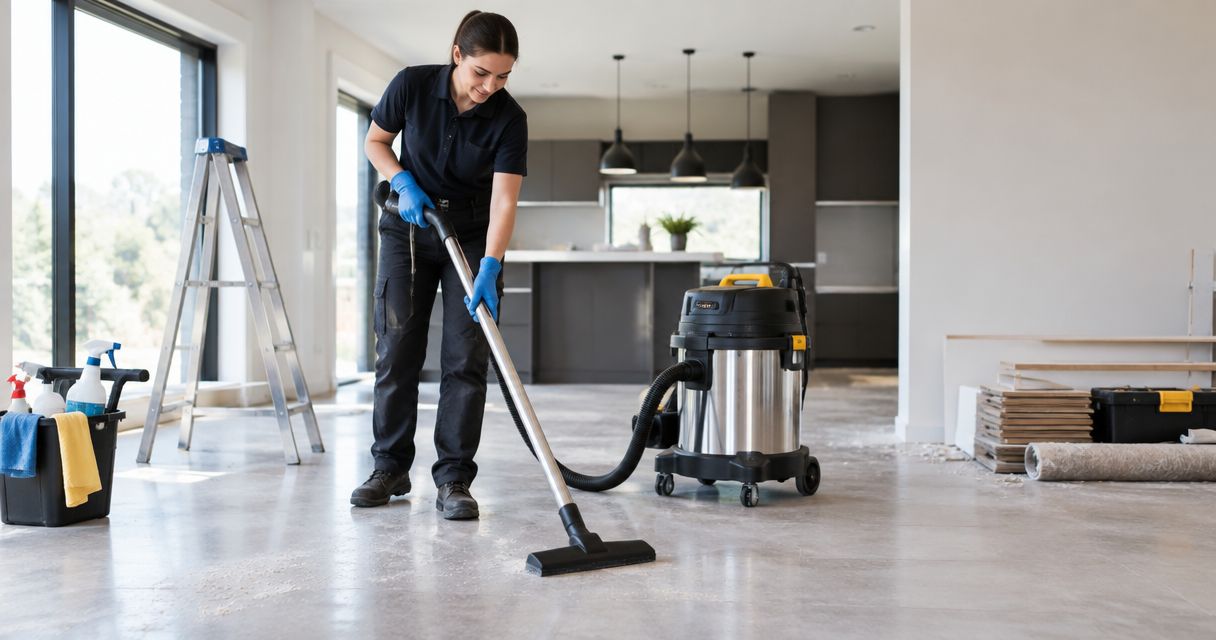
A builders clean covers post-construction dust removal, surface cleaning, floors, glazing and wet areas within an agreed scope, so the premises are ready for inspection or handover. It does not automatically include bulk building waste, hazardous materials, repairs, high-access work or specialist floor restoration; those tasks need separate agreement.
- What is included in a builders clean depends on the agreed rooms, surfaces, access requirements and handover stage.
- OZLINK Facility Services provides builders cleans for commercial projects in Brisbane and South East Queensland.
- Separate construction dust removal from repairs, bulk waste removal and specialist floor treatments in your scope.
- Book the final clean after dust-producing trades finish, then inspect before accepting the work.
What is included in a builders clean?
A builders clean should have a room-by-room schedule that identifies the surfaces to clean and the condition required at handover. A service name is not a scope: get the inclusions and exclusions in writing.
OZLINK Facility Services suits Brisbane commercial builders seeking builders cleans alongside maintenance and repairs. Its services include both, but your project scope still needs to identify which tasks belong to the cleaning package.
Use this 2026 checklist to specify the work rather than assume every item comes as standard.
| Area | Tasks to specify | Boundary to confirm |
|---|---|---|
| General interiors | Remove settled construction dust from accessible surfaces, ledges, skirtings and doors | High-level surfaces and concealed spaces |
| Floors | Vacuum or remove loose dust, then clean using a method suitable for the finish | Restoration, polishing, stripping and sealing |
| Windows and glazing | Clean agreed glass faces, frames, sills and tracks | External faces, height access and stubborn residue |
| Bathrooms | Clean toilets, basins, taps, mirrors, tiles and accessible fittings | Grout haze treatment and plumbing defects |
| Kitchens and joinery | Clean benchtops, splashbacks, cupboard fronts and agreed internal storage | Appliance interiors, protective films and occupied cupboards |
| Construction residue | Assess and remove agreed labels, adhesive marks or splashes using suitable methods | Cured coatings, scratches and damaged finishes |
| Waste | Collect cleaning-generated waste and agreed loose debris | Bulk rubble, skips and hazardous waste |
| Handover | Inspect the completed clean against the agreed schedule | Defect repairs and later trade contamination |
Why this matters
A floor can look clean while dust remains on door tops, inside joinery or in window tracks. Conversely, a mark that looks like dirt can be damaged paint, scratched glass or a defective floor finish. Cleaning and rectification need different instructions.
For your 2026 handover, separate those responsibilities before work starts. The cleaner needs an accessible work area, the builder needs a clear completion standard, and the property manager needs to know what remains unresolved.
Cleaning prepares a building for inspection; it does not certify the building or close construction defects. Keep safety, building compliance and contractual acceptance separate from the cleaning sign-off.
Which stage of builders cleaning do you need?
Builders cleaning can be divided into rough, detailed and touch-up stages. The labels are not enough: specify the actual work because contractors and project teams can use them differently.
| Cleaning stage | Best for | Main benefit | Limitation |
|---|---|---|---|
| Rough clean | Sites needing agreed debris and loose dust cleared before later work | Makes areas easier to access for the next stage | Does not deliver a finished handover presentation |
| Detailed clean | Completed areas ready for inspection | Addresses surfaces, fittings, joinery and agreed glazing in detail | Later trade work can contaminate cleaned areas |
| Touch-up clean | Completed premises needing a final presentation check | Addresses fresh dust, fingerprints and localised marks | Cannot replace an unfinished detailed clean |
Rough clean: prepare the area for later work
A rough clean addresses the agreed loose debris and construction dust while the project is still progressing. It is useful when rooms need clearing before follow-on work, but it is not permission to leave uncontrolled construction dust or unsafe access routes.
Confirm who removes packaging, offcuts and rubble. If the builder retains responsibility for bulk waste, the cleaning crew should not arrive to find those materials blocking the floors they need to clean.
Detailed clean: prepare completed areas for inspection
A detailed clean focuses on the finished surfaces included in the schedule. Specify doors, skirtings, accessible fixtures, joinery, glazing and wet areas rather than relying on the phrase 'full clean'.
The advantage is a clear inspection-ready target. The limitation is timing: sanding, drilling or other dusty work after cleaning creates another cleaning task.
Touch-up clean: address contamination before handover
A touch-up clean deals with fresh marks and settled dust after the main cleaning work. It suits areas that are already substantially clean and remain protected from further construction activity.
Agree who authorises a return visit and which rooms need attention. Do not treat a touch-up allowance as an undefined obligation to reclean the entire site after every trade visit.
What should the room-by-room scope say?
Floors: identify the material before choosing the method
Specify the floor finish, its condition and the cleaning method permitted by the manufacturer. Newly installed flooring and newly applied coatings need their care instructions checked before treatment.
Routine post-construction cleaning and restoration are different jobs. Removing loose dust and washing a suitable hard floor does not mean stripping a coating, polishing stone or restoring damaged flooring is included.
For carpets, distinguish vacuuming from extraction cleaning. If there are adhesive marks or construction stains, identify them before work begins rather than assuming a general clean will remove them.
Glass: name the faces, frames and access requirements
Write down whether the scope includes internal glass, external glass, partition glazing, frames, tracks and sills. Confirm how the cleaner will reach each surface safely.
Construction residue needs particular care on glass. Do not instruct a cleaner to scrape an unidentified deposit without checking the glass manufacturer's requirements and the proposed method; unsuitable tools can damage the surface.
Joinery: distinguish external surfaces from internal storage
Cupboard doors, shelves, drawers and benchtops are separate scope items. State whether internal storage will be empty and accessible when the cleaners arrive.
Check protective films and labels before removal. Some belong to the installation process or need to remain until another party accepts the work, so removal needs clear authorisation.
Wet areas: separate residue from installation defects
Include the accessible toilets, basins, taps, mirrors, splashbacks and tiled surfaces that need cleaning. Describe any visible grout haze, silicone residue or other deposits for assessment.
A leaking fitting, cracked tile or defective seal is not a cleaning issue. Record it for the responsible trade rather than asking the cleaner to make the problem disappear.
What is not automatically included in a builders clean?
Treat specialist work as a named scope item, not an implied extra. The following boundaries belong in your 2026 cleaning brief:
- Bulk waste removal: identify who handles rubble, pallets, offcuts, skips and disposal.
- Hazardous materials: suspect asbestos and other hazardous contamination require appropriate assessment and controls, not ordinary cleaning instructions.
- High-access work: identify elevated glazing, overhead surfaces and the access arrangements needed.
- Floor treatments: list carpet extraction, strip and seal, polishing or restoration separately from routine floor cleaning.
- Repairs: allocate paint touch-ups, damaged joinery, scratched surfaces and faulty fittings to the responsible trade.
- External works: specify pressure washing, façades, loading areas and car parks if required.
These exclusions are not a reason to ignore the work. They are a reason to assign it clearly so it does not remain unresolved at handover.
Why does a builders clean scope vary?
The required work changes with the building and its condition. Use these factors to explain differences between scopes, rather than comparing proposals by the service heading alone.
- Construction stage: an active fit-out needs a different cleaning scope from a completed tenancy awaiting inspection.
- Surface materials: glass, carpet, stone, vinyl and coated floors need suitable methods and different precautions.
- Residue condition: loose dust, adhesive deposits and cured paint are different cleaning problems.
- Access: locked rooms, high ceilings, external glazing and occupied areas change the work arrangements.
- Trade sequencing: further cutting, sanding or installation work creates contamination after cleaning.
- Handover boundary: a whole-building handover differs from a staged release of individual rooms or floors.
Include photographs of unusual residue and identify the surface beneath it. A description such as 'marks on floor' is less useful than a marked location, a clear photograph and the flooring information.
How do you check a builders clean before signing off?
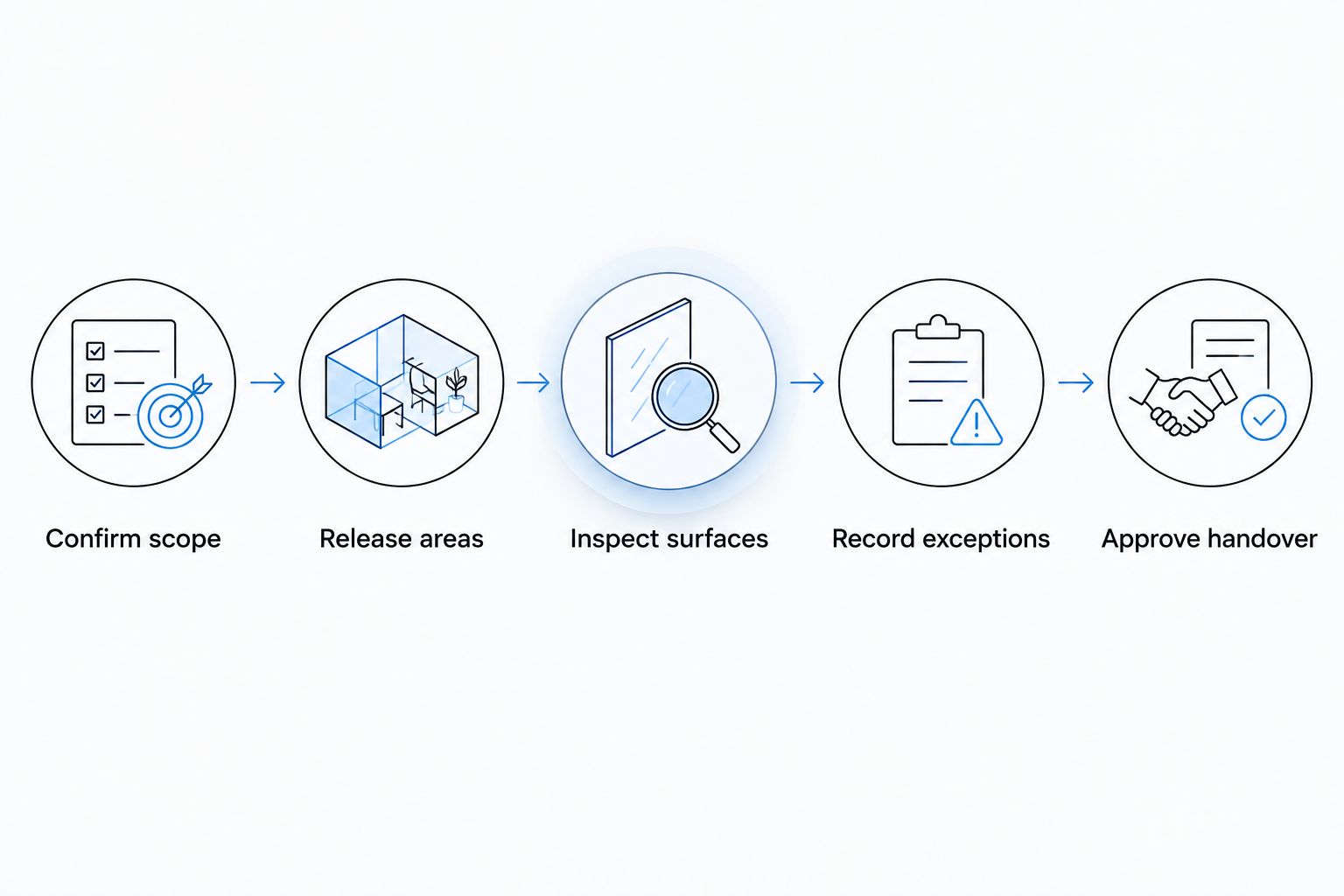
Use this 5-step acceptance process for your 2026 project. Agree the inspection criteria before cleaning starts, not during a dispute at handover.
- Confirm scope. Match the room list, surface list and exclusions to the current site condition. Identify any inaccessible areas before work begins.
- Release areas. Confirm that the relevant trades have finished and that rooms are accessible. Keep later work out of released areas where practical.
- Inspect surfaces. Check floors, ledges, doors, joinery, glazing and wet areas against the agreed schedule, not just the view from the doorway.
- Record exceptions. Separate missed cleaning from damage, unfinished installation and newly created contamination. Give each issue a location and responsible party.
- Approve handover. Record accepted areas, outstanding tasks and any agreed return visit. Keep the record with the project's handover documents.
Check the clean under the lighting available for the inspection, including natural light where practical. Record anything you cannot assess because access, lighting or unfinished work prevents a proper inspection.
Is a builders clean the same as a regular commercial clean?
A builders clean addresses construction-related dust, residue and handover preparation; a regular commercial clean maintains premises during ordinary use. The key difference is the condition being addressed, not simply how thoroughly someone cleans.
Neither label guarantees specialist treatments. State those tasks explicitly in either service scope.
Does a builders clean include repairs or make-good work?
A builders clean does not automatically include repairs or make-good work. Cleaning removes agreed contamination; make-good work addresses the alterations and reinstatement obligations specified for the premises.
A contractor can provide both services, but the work still needs separate responsibilities and acceptance criteria. Do not sign off a repair defect as a cleaning exception.
Can a builders clean happen before all trades finish?
A staged builders clean can happen before the whole project finishes if completed areas are released and protected. A final presentation clean belongs after dust-producing work in the relevant area.
For a 2026 staged handover, record exactly which rooms are released. This prevents a completed floor from being treated as available storage or a work route without acknowledging the cleaning consequences.
FAQ
What is included in a builders clean for a commercial fit-out?
A commercial fit-out builders clean covers the agreed construction dust removal, surfaces, floors, glazing, joinery and wet areas. Confirm internal cupboards, external glass, waste removal and specialist treatments individually.
Does a builders clean include cleaning inside cupboards?
Internal cupboard cleaning is included only when the agreed scope says so. Specify shelves, drawers and internal surfaces, and arrange for storage to be empty and accessible.
Will a builders clean remove paint from windows?
Paint removal from windows needs specific assessment and agreement. The proposed method must suit the glass and its manufacturer's instructions; a general glazing clean is not permission to use damaging tools.
Does a builders clean include carpet steam cleaning?
Carpet steam cleaning is not automatically included in a builders clean. Distinguish vacuuming from extraction cleaning and identify any stains or adhesive deposits before work starts.
Who removes building rubble before the cleaners arrive?
The project scope should identify who removes building rubble. If bulk waste remains the builder's responsibility, arrange its removal before it blocks the agreed cleaning work.
Does a builders clean make the building compliant?
A builders clean does not certify building compliance. Keep cleaning acceptance separate from building approvals, defect rectification and specialist safety requirements.
Can OZLINK Facility Services help with builders cleans and repairs?
OZLINK Facility Services provides builders cleans, commercial maintenance and reactive repairs. Identify the cleaning and repair tasks separately so each has a clear scope and completion standard.
One last thing
Ask what happens after the cleaners leave. If trades return, furniture arrives or access routes remain open to construction traffic, name who protects completed areas and who authorises further cleaning.
A clear post-clean access plan protects the handover result. It also makes it easier to distinguish an incomplete clean from a room that was cleaned properly and then used again.